


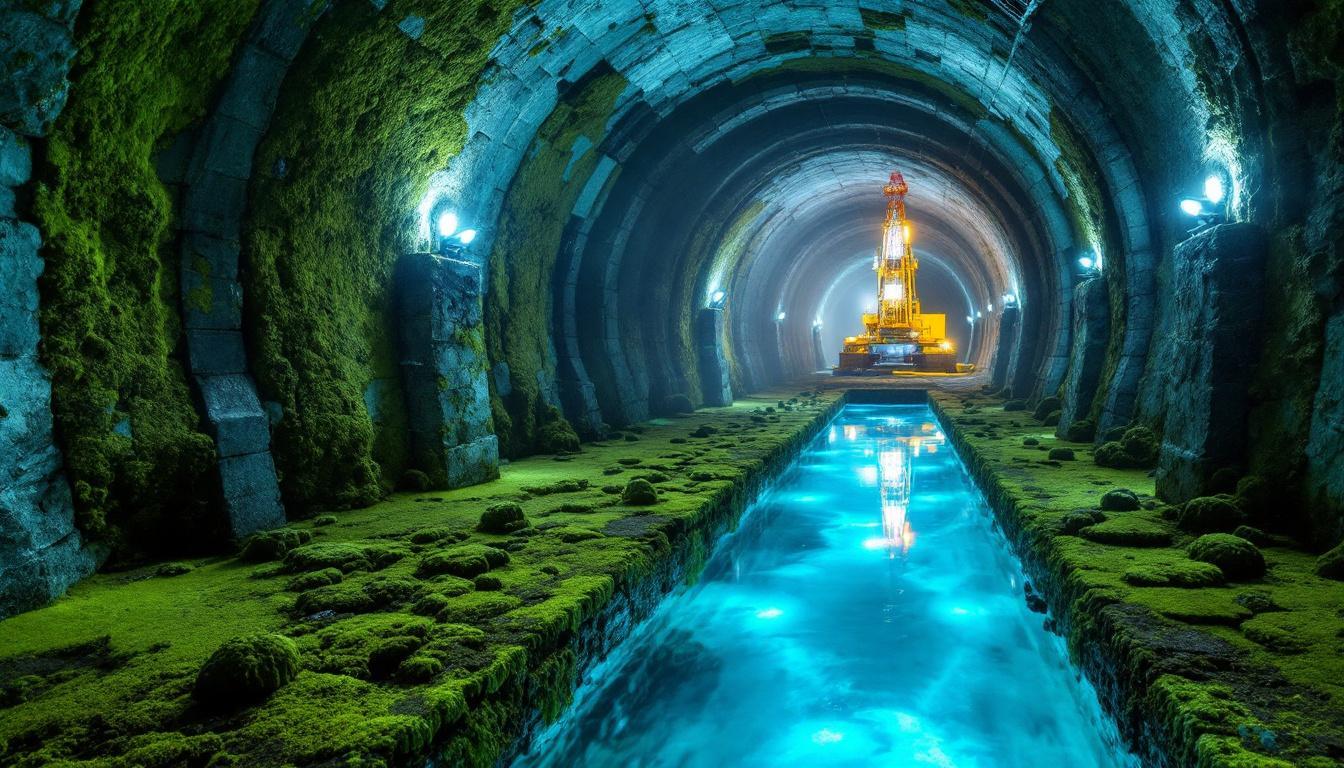
Germany’s Bundesrat approves new laws enabling underground CO₂ storage, marking a pivotal step towards industrial decarbonisation and climate neutrality, despite environmental concerns and industry debates.
The German Bundesrat has officially paved the way for underground carbon dioxide (CO₂) storage within the country, marking a significant legislative step towards industrial decarbonisation. This follows earlier approval by the Bundestag, signaling growing political consensus on the need to adopt Carbon Capture and Storage (CCS) and Carbon Capture and Utilisation (CCU) technologies. The new legal framework permits CO₂ storage predominantly beneath the seabed, excluding protected marine areas and coastal proximity, though it also allows for exceptional instances of onshore storage where federal states legislate accordingly.
This development specifically targets industries historically considered hard to decarbonise, such as cement, lime, and aluminium manufacturing, where CO₂ emissions have been deemed largely unavoidable. The legislation enables the construction of pipeline networks to transport CO₂ from industrial sources for safe sequestration, responding to the need for infrastructure critical to the technology’s deployment.
Stefan Rouenhoff, State Secretary at the Federal Ministry for Economic Affairs and Climate Action, described the new law as a vital building block for Germany’s climate neutrality ambitions and noted that the industry has long awaited such regulatory clarity. The Cabinet’s approval in May 2024 also associated the legal amendments with Germany’s broader Carbon Management Strategy, which includes plans to ratify an amendment to the London Protocol to allow cross-border transportation of CO₂ for offshore storage, a move seen as essential for integrating with international carbon storage efforts.
Germany’s Economy Minister Robert Habeck had earlier outlined these legal changes as part of the country’s roadmap to achieve carbon neutrality by 2045. The approach explicitly excludes coal-fired power plants from using CCS, reflecting a policy decision to phase out reliance on coal while still enabling gas-fired power plants and heavy industry sectors to benefit from CO₂ capture technologies.
While the industrial sector, represented by the German Federation of Industries (BDI), has praised the legislation as crucial for maintaining competitiveness and achieving climate goals, environmental groups have voiced serious concerns. The Bund für Umwelt und Naturschutz Deutschland (BUND) criticised the law for potentially delaying the energy transition by enabling fossil fuel industries to continue emitting CO₂, albeit with costly capture and storage, instead of aggressively reducing emissions at the source. They also raised alarms about the environmental risks, notably threats to potable water safety, and the significant energy demands associated with capturing and compressing CO₂.
The legislation classifies CO₂ storage projects and associated pipeline infrastructure as matters of overriding public interest, facilitating expedited planning and approval procedures, measures vital for the timely scaling of CCS operations. Despite restrictions on onshore storage, the option remains open under strict conditions to individual federal states that choose to adopt their own legal frameworks.
This move complements Germany’s comprehensive strategy to capture hard-to-abate emissions while promoting infrastructure development, including CO₂ pipelines connecting industrial hubs to offshore storage sites in the North Sea. The emphasis on marine-based storage aligns with strong environmental safeguards mandated to protect sensitive oceanic ecosystems.
In sum, Germany’s latest CCS legislation underscores a pragmatic approach to industrial decarbonisation, recognising the technological and infrastructural challenges of eliminating CO₂ emissions from sectors where alternatives remain limited. The policy balances ambitious climate targets with industrial realities but continues to spark debate on the long-term viability and environmental impact of underground carbon storage. As the law moves forward, its success will likely depend on effective regulatory oversight, technological innovation, and ongoing dialogue between industry stakeholders, policymakers, and environmental advocates.
- https://www.abendzeitung-muenchen.de/mehr/geld/bundesrat-macht-weg-frei-fuer-unterirdische-co2-speicherung-art-1094570 – Please view link – unable to able to access data
- https://www.bundeswirtschaftsministerium.de/Redaktion/EN/Pressemitteilungen/2024/05/20240529-cabinet-clears-path-for-ccs-in-germany.html – On 29 May 2024, Germany’s federal cabinet approved key principles for a Carbon Management Strategy and a draft amendment to the Carbon Storage Act. This legislation aims to facilitate the use of Carbon Capture and Storage (CCS) and Carbon Capture and Utilisation (CCU) technologies, allowing for the transport and offshore storage of CO₂, excluding protected marine areas. The focus is on hard-to-abate emissions, particularly from sectors like cement and lime production. The strategy also includes plans for developing CO₂ pipeline infrastructure and ratifying the amendment to the London Protocol to permit CO₂ exports for offshore storage.
- https://www.reuters.com/business/energy/germany-allow-carbon-transport-sub-seabed-storage-minister-says-2024-02-26/ – On 26 February 2024, German Economy Minister Robert Habeck announced plans to revise the country’s CO₂ storage laws to permit carbon capture and offshore storage for specific industrial sectors. This initiative is part of Germany’s strategy to achieve carbon neutrality by 2045. The proposed changes would allow CO₂ transportation and sub-seabed storage, excluding protected marine zones, while on-land storage would remain prohibited unless federally authorized. The legislation aims to develop a CO₂ pipeline infrastructure and establish a legal framework for the technology, benefiting industries like cement and lime production.
- https://www.reuters.com/markets/carbon/german-cabinet-approves-plans-allow-carbon-transport-storage-2024-05-29/ – On 29 May 2024, Germany’s cabinet approved a draft bill to allow carbon dioxide capture and storage (CCS) for certain industrial sectors. This move is part of Germany’s strategy to achieve carbon neutrality by 2045 while supporting heavy industries. The bill permits CO₂ storage in the North Sea or inland, contingent on federal state approval, and includes developing a CO₂ pipeline infrastructure. However, the bill excludes coal-fired power plants from using CCS and requires Germany to ratify the 2009 amendment to the London Protocol for cross-border CO₂ transport for sub-seabed storage.
- https://apnews.com/article/f3d97d0d521d2dbbb707931c8ad097fd – On 5 January 2023, Germany’s Vice Chancellor and Economy Minister Robert Habeck announced plans to develop legislation enabling the use of underground carbon storage. This initiative aims to assist industries like lime and cement in reducing CO₂ emissions. Despite skepticism regarding its effectiveness compared to renewable energy sources, Habeck emphasized the urgency of utilizing all available options to meet Germany’s greenhouse gas reduction targets, including achieving net-zero emissions by 2045.
- https://www.worldenergynews.com/news/german-lower-house-passes-law-allowing-underground-767564 – On 6 November 2025, Germany’s lower house of parliament passed a law facilitating underground carbon storage. The legislation designates CO₂ storage and pipelines as being of ‘overriding public interest’ to expedite planning and approvals. This measure aims to help Germany achieve climate neutrality by 2045 by enabling the capture and storage of hard-to-abate emissions, notably from cement and lime production and waste incineration. The law permits the use of Carbon Capture and Storage (CCS) at gas-fired power plants but bans it at coal-fired plants. Onshore storage remains generally prohibited, though federal states can opt in by passing their own legislation.
- https://www.catf.us/fr/2024/05/germany-federal-cabinet-amends-law-enable-co2-storage-under-seabed-land-improves-capacity-industrial-decarbonisation/ – In May 2024, Germany’s Federal Cabinet approved key points for a Carbon Management Strategy and a draft law amending the Carbon Dioxide Storage Act. The proposed changes permit carbon capture and storage (CCS) and carbon capture and utilization (CCU) by allowing the transport and offshore storage of CO₂ in Germany, excluding marine protected areas. The revisions aim to facilitate the development of CO₂ pipeline infrastructure and enable the permanent storage of CO₂ in Germany’s continental shelf and exclusive economic zone for commercial purposes, with strong protections for marine environmental protection.
Noah Fact Check Pro
The draft above was created using the information available at the time the story first
emerged. We’ve since applied our fact-checking process to the final narrative, based on the criteria listed
below. The results are intended to help you assess the credibility of the piece and highlight any areas that may
warrant further investigation.
Freshness check
Score:
10
Notes:
The narrative is current, with the Bundesrat’s approval of underground CO₂ storage on 21 November 2025. This follows the Bundestag’s approval on 6 November 2025. ([worldenergynews.com](https://www.worldenergynews.com/news/german-lower-house-passes-law-allowing-underground-767564?utm_source=openai)) The report includes recent data and developments, indicating high freshness.
Quotes check
Score:
10
Notes:
The report includes direct quotes from Stefan Rouenhoff, State Secretary at the Federal Ministry for Economic Affairs and Climate Action, and the German Federation of Industries (BDI). These quotes are consistent with statements from the Federal Ministry for Economic Affairs and Climate Action on 29 May 2024. ([bundeswirtschaftsministerium.de](https://www.bundeswirtschaftsministerium.de/Redaktion/EN/Pressemitteilungen/2024/05/20240529-cabinet-clears-path-for-ccs-in-germany.html?utm_source=openai)) No discrepancies or variations in wording were found, suggesting the quotes are accurately attributed.
Source reliability
Score:
8
Notes:
The narrative originates from Abendzeitung München, a regional newspaper. While it is a reputable source, it is not as widely recognised as national outlets like the Financial Times or Reuters. The report is consistent with information from the Federal Ministry for Economic Affairs and Climate Action and other reputable sources. ([bundeswirtschaftsministerium.de](https://www.bundeswirtschaftsministerium.de/Redaktion/EN/Pressemitteilungen/2024/05/20240529-cabinet-clears-path-for-ccs-in-germany.html?utm_source=openai))
Plausability check
Score:
10
Notes:
The claims in the narrative align with recent legislative developments in Germany regarding CO₂ storage. The Federal Ministry for Economic Affairs and Climate Action announced on 29 May 2024 that the federal cabinet adopted key principles for a Carbon Management Strategy and a draft act on the revision of the Carbon Storage Act. ([bundeswirtschaftsministerium.de](https://www.bundeswirtschaftsministerium.de/Redaktion/EN/Pressemitteilungen/2024/05/20240529-cabinet-clears-path-for-ccs-in-germany.html?utm_source=openai)) The narrative’s details about the legislation’s focus on hard-to-abate emissions and the exclusion of coal-fired power plants from using CCS are consistent with these developments.
Overall assessment
Verdict (FAIL, OPEN, PASS): PASS
Confidence (LOW, MEDIUM, HIGH): HIGH
Summary:
The narrative is current and aligns with recent legislative developments in Germany regarding underground CO₂ storage. The quotes are accurately attributed, and the source, while regional, is consistent with information from reputable national outlets. No discrepancies or signs of disinformation were found, indicating a high level of credibility.
