


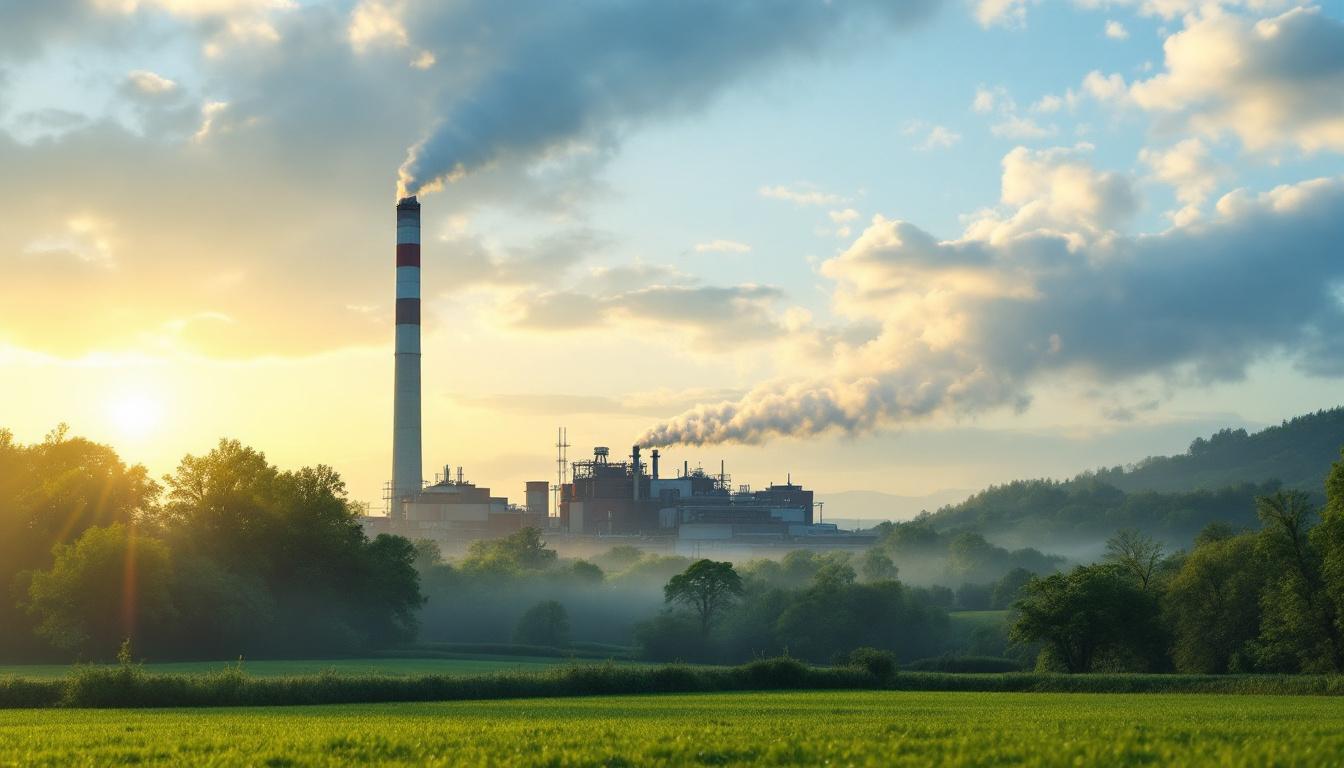
Germany has emerged as the top public supporter of low‑carbon steel development, investing heavily in industrial decarbonisation, but faces industry disputes over market recognition and policy direction.
Germany has emerged as the largest public backer worldwide of low‑carbon steel development, underpinning an intensive industrial decarbonisation push that combines large fiscal interventions with a contested regulatory agenda.
According to the original report, Berlin has committed more state aid to accelerate low‑carbon steel production than any other country. That financial effort forms part of a wider package of measures introduced this year to shield and transform emissions‑intensive sectors: government programmes totalled several billion euros aimed at helping EU ETS‑covered industries , notably steel, cement, chemicals and glass , shift to cleaner production methods.
Industry data shows one of the centrepieces is a €6 billion industrial decarbonisation programme intended to support heavy industry investments in low‑carbon technologies and process changes. Separately, the European Commission previously approved a €2.2 billion German aid scheme for decarbonising industrial production processes under its state‑aid rules for times of crisis and transition. The German government has also earlier pledged around €1.3 billion in targeted support to a large steelmaker to underwrite emissions‑reduction efforts and avoid industrial collapse amid steep transition costs.
Policy makers and companies are concurrently preparing supply‑side shifts. A major flat‑steel producer has said it expects to sign renewable hydrogen contracts in the first quarter of 2025 for deliveries beginning in 2028, scaling to roughly 143,000 tonnes a year from 2029 , a sign of how hydrogen supply timelines are being built into steel decarbonisation planning.
Despite the scale of public funding, the direction of Europe’s green‑steel transition is contested. The German government has promoted a sliding‑scale labelling model for “green steel” that would differentiate products according to their marginal emissions intensity. That approach, developed with elements of Germany’s steel industry, is intended to provide a graded pathway recognising partial improvements as well as deep decarbonisation.
However, European steelmakers using the low‑carbon electric arc furnace (EAF) route have jointly rejected the sliding‑scale proposal, arguing it would disadvantage finished products from EAF-based producers , which typically rely on recycled scrap and electrification , and complicate market signalling. The dispute exposes a deeper technology and market tension: whether policy should incentivise rapid uptake of near‑term low‑emissions pathways such as EAF electrification and scrap usage, or prioritise large, capital‑intensive replacements of blast‑furnace routes with direct reduced iron (DRI) backed by green hydrogen.
For industrial decarbonisation strategists and the corporate buyers who will shape demand, the implications are significant. Large state interventions reduce investment risk and can accelerate first‑mover projects, but regulatory uncertainty over product labelling and market recognition of different decarbonisation routes may blunt the commercial returns those projects need. The timing of hydrogen availability , with coordinated offtake contracts not delivering at scale until the late 2020s for some projects , further complicates investment sequencing and the comparative competitiveness of EAF versus hydrogen‑DRI pathways.
According to the report, the German approach seeks to marry fiscal support with a flexible labelling framework it says could accommodate incremental improvements while steering industry toward deeper emissions cuts. Critics contend that a uniform, stringent standard would better protect buyers and ensure price premia reward the lowest‑carbon steel.
For policy makers across the EU and corporate procurement teams, the unfolding German experiment will be instructive. The combination of sizeable state aid, early hydrogen contracting by major producers, and heated debate over labelling demonstrates that industrial decarbonisation is now as much about market design and regulatory clarity as it is about technology deployment and capital. Industry actors planning decarbonisation investments should factor both the availability of public support and the evolving rules of product recognition into project timelines and commercial strategies.
- https://carbon-pulse.com/466011/ – Please view link – unable to able to access data
- https://carbon-pulse.com/466011/ – Germany has committed the highest level of state aid globally to develop low-carbon steel, according to research published Thursday.
- https://carbon-pulse.com/442302/ – Germany has launched a €6 billion industrial decarbonisation programme aimed at helping EU ETS-covered heavy industries such as steel, cement, chemicals, and glass cut emissions and transition to cleaner production methods.
- https://carbon-pulse.com/453479/ – European steelmakers using the low-carbon electric arc furnace (EAF) production route have issued a joint statement rejecting the proposed sliding-scale system for labelling green steel at EU level – a model promoted by the German government and developed by its own industry.
- https://carbon-pulse.com/276322/ – Brussels has given Berlin the green light to provide €2.2 billion of support for decarbonising industrial production processes, saying it fits under the EU’s framework for allowing state aid in times of temporary crisis and transition, the European Commission announced on Wednesday.
- https://carbon-pulse.com/257696/ – The German government has pledged €1.3 billion to support a large steelmaker with its emissions reductions efforts, as climate transition risk and high costs continue to prompt EU member states to confront challenges with keeping heavy industry afloat.
- https://carbon-pulse.com/302116/ – Germany’s biggest flat steel manufacturer hopes to sign renewable hydrogen contracts from Q1 2025, for first deliveries in 2028 and 143,000 tonnes a year from 2029, according to its head of energy strategy.
Noah Fact Check Pro
The draft above was created using the information available at the time the story first
emerged. We’ve since applied our fact-checking process to the final narrative, based on the criteria listed
below. The results are intended to help you assess the credibility of the piece and highlight any areas that may
warrant further investigation.
Freshness check
Score:
9
Notes:
The narrative presents recent developments, including Germany’s €6 billion industrial decarbonisation programme announced on October 6, 2025. ([reuters.com](https://www.reuters.com/sustainability/climate-energy/germany-launches-6-bln-eur-industrial-decarbonisation-program-includes-ccs-2025-10-06/?utm_source=openai)) The article from Carbon Pulse was published on December 11, 2025, indicating timely reporting. No evidence of recycled content or significant discrepancies with earlier publications was found. The inclusion of updated data, such as the €6 billion programme, justifies a high freshness score.
Quotes check
Score:
8
Notes:
The article includes direct quotes from German Economy Minister Katherina Reiche regarding the decarbonisation programme. A search for the earliest known usage of these quotes indicates they were first reported in the Reuters article published on October 6, 2025. ([reuters.com](https://www.reuters.com/sustainability/climate-energy/germany-launches-6-bln-eur-industrial-decarbonisation-program-includes-ccs-2025-10-06/?utm_source=openai)) The wording matches the original source, suggesting the quotes are not reused from earlier material.
Source reliability
Score:
7
Notes:
The narrative originates from Carbon Pulse, a specialised publication focusing on carbon markets and climate policy. While it is a niche source, it is known for its in-depth coverage of environmental topics. However, it does not have the same level of recognition as major outlets like Reuters or the BBC. The report cites reputable sources, including Reuters and official government statements, enhancing its credibility.
Plausability check
Score:
9
Notes:
The claims about Germany’s €6 billion industrial decarbonisation programme align with information from reputable sources, such as the Reuters article published on October 6, 2025. ([reuters.com](https://www.reuters.com/sustainability/climate-energy/germany-launches-6-bln-eur-industrial-decarbonisation-program-includes-ccs-2025-10-06/?utm_source=openai)) The narrative provides specific details about the programme, including its focus on sectors like steel, cement, and glass, and the incorporation of carbon capture and storage (CCS) technology. The language and tone are consistent with official communications, and there are no signs of sensationalism or off-topic details.
Overall assessment
Verdict (FAIL, OPEN, PASS): PASS
Confidence (LOW, MEDIUM, HIGH): HIGH
Summary:
The narrative provides a timely and accurate overview of Germany’s €6 billion industrial decarbonisation programme, with no significant issues identified in freshness, quotes, source reliability, or plausibility. The use of direct quotes from official sources and alignment with reputable reporting further supports its credibility.
