


Germany faces a crucial policy pivot as existing hydrogen infrastructure remains underused and demand projections are revised downward, prompting a move towards targeted, cost-effective decarbonisation investments.
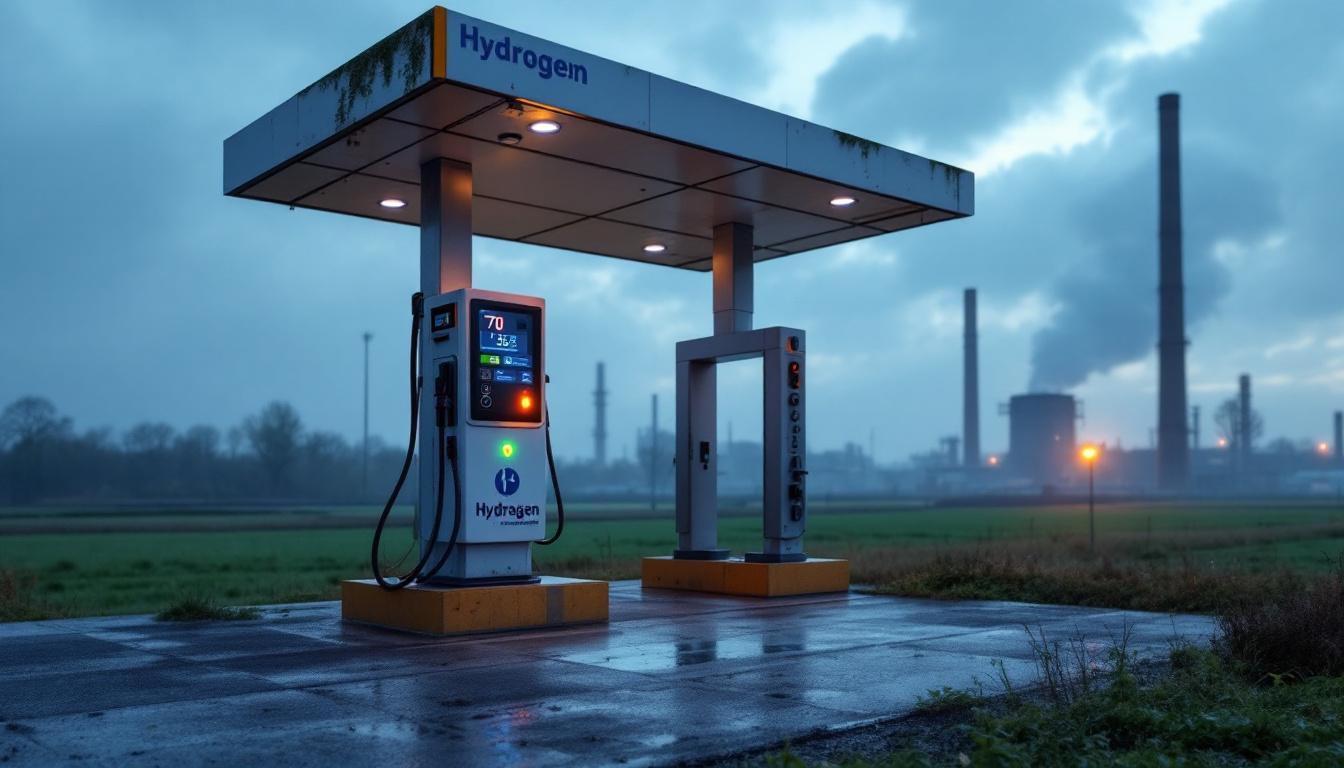
Germany now faces a stark, tangible choice. A recently completed, pressurised stretch of hydrogen transmission lies in place, but no functioning supply chain or firm customers connect to it. Meters at compressor stations stand idle. The physical infrastructure exists; the economic and contractual foundations for a market do not. That reality forces a shift from debating theoretical roles for hydrogen to choosing practical policy that protects consumers, sustains industry and reduces emissions at the lowest system cost.
The picture is corroborated across reporting and official planning. In March 2025 Gascade, the grid operator behind the Flow project, moved to fill the first section with conventional grey hydrogen because green supplies were not available at scale, signalling a gap between infrastructure and clean feedstock. The Federal Ministry for Economic Affairs and Climate Action continues to plan a broad core network, envisioning almost 10,000 kilometres of new or adapted pipelines by 2032 and a financing model that spreads charges to avoid steep upfront levies. At the same time independent analysis suggests the demand projections used to justify that network are now in serious doubt: realistic scenarios point to a residual domestic hydrogen need measured in single-digit terawatt hours rather than the 110–130 TWh range originally cited. Industry reporting also shows national budget allocations for hydrogen have been substantially reduced for 2026–2032, shrinking medium‑term public support for new-scale deployments.
Those facts together make three policy imperatives unavoidable.
First, treat the moment as a decision point rather than as a reversal. Preserving optionality during the energy-supply shock after 2022 was defensible; converting parts of the gas system into a potential hydrogen backbone was a hedge against supply insecurity. But optionality only has value if there is a clearly defined gate at which accumulated evidence is assessed and a commitment either made or withdrawn. That gate has now arrived. Costs for domestically produced green hydrogen remain high when compared with direct electrification and alternative low‑carbon imports; electrolyser roll‑out continues to face permitting and commercial barriers; and industrial buyers with flexibility prefer electrification or imported low‑carbon feedstocks. Policymakers should say so plainly: the contingency was tested and the results do not support exercising the option at scale.
Second, avoid letting stranded or underused assets generate systemic costs for households. Regulated network assets earn allowed returns irrespective of utilisation; that means large capital sums embedded in a 400‑kilometre segment of pipeline and associated compressors will put upward pressure on tariffs unless regulators and finance ministries act to limit cost pass‑through. Consumer‑facing analyses warn that treating an idle molecule network as if it were fully active transfers risk to electricity bills and undermines affordability. A pragmatic alternative is to manage the existing pipeline as a contingency asset retained for extreme‑case resilience while stopping further expansion and ensuring depreciation, maintenance and safety are handled without creating new obligations that socialise speculative demand risk.
Third, narrow hydrogen’s role to where it is demonstrably the least‑cost and technically necessary solution, and accelerate the investments that deliver decarbonisation at scale. Hydrogen remains relevant as a feedstock in specific chemical processes and for a limited set of industrial operations that cannot yet be electrified economically. Refinery hydrogen demand will dwindle as oil processing falls; chemical sector uses will persist but at volumes insufficient to justify a nationwide carrier; steel and ammonia production are more plausibly organised around imports of low‑carbon intermediates from regions with much lower renewable electricity costs, with domestic value‑adding activities such as finishing, fabrication and advanced manufacturing retained at home. According to sector reporting, attempting large‑scale domestic production of green ammonia or green iron would embed high German power prices into globally traded commodities and risk hollowing out competitiveness. Importing low‑carbon intermediates while keeping downstream processing domestic protects skilled employment and margins.
Shifting to this model requires concrete policy and communication choices. Network expansion should be strictly contract‑led: new pipeline sections or conversions must be conditional on binding offtake and credible clean‑supply commitments. Public support should be reallocated from speculative molecule infrastructure toward grid reinforcement, faster grid connection for electrification projects, energy storage and flexibility, heat‑pump roll‑out, and industrial electrification programmes. These are the investments that reduce emissions, lower long‑run price volatility and reduce geopolitical exposure simultaneously. Government rhetoric should place geopolitics in context rather than as cover: importing low‑carbon molecules can be part of a resilient strategy if it avoids dependence on expensive domestic production that raises consumer bills.
Fiscal reality reinforces the need for course correction. Medium‑term public funding earmarked for hydrogen has been curtailed in the latest budget cycle, reflecting a narrower appetite for subsidising broad hydrogen roll‑out. At the same time, estimates of total hydrogen infrastructure costs remain substantial; industry estimates put core hydrogen grid costs in the tens of billions, with large sums already committed. That mismatch between committed capital and realistic demand trajectories makes careful rebalancing urgent.
A reset must also be credible to industry. Firms require predictable, steady investment signals rather than oscillating policy. Clarifying that government support will prioritise electrification and targeted, contract‑backed hydrogen use will reduce investment uncertainty. For households, the narrative must prioritise bill protection: demonstrating that regulators will not allow idle pipeline costs to be borne broadly is essential to maintain public support for the transition.
Finally, this is not an abandonment of hydrogen but a redefinition. The metal, compressors and meters are not meaningless; they can sit as a contingency reserve or be repurposed under clear economic conditions. But the national strategy should move from a broad, economy‑wide hydrogen ambition to a more disciplined, evidence‑driven deployment: hydrogen where it is necessary and cost‑effective, electrification and network investments where they deliver the greatest emissions reductions per euro, and imports where they preserve industrial competitiveness.
If policymakers adopt that approach, success by the early 2030s will look modest rather than dramatic: hydrogen used in a tight set of industrial niches, low‑carbon ammonia and iron entering the country where doing so is cheaper and sensible, a stronger and more flexible electricity system enabling deep electrification of transport, buildings and many industrial processes, and steadier retail energy prices. Such an outcome preserves core industrial strengths while aligning Germany’s decarbonisation pathway with cost realities. The immediate test is narrative discipline and the willingness to close an option that no longer passes the evidence gate, then to redirect public capital toward the investments that will actually deliver decarbonisation at scale.
- https://cleantechnica.com/2026/01/25/from-optionality-to-outcome-how-germany-can-reset-hydrogen-without-losing-face/ – Please view link – unable to able to access data
- https://www.spglobal.com/energy/en/news-research/latest-news/energy-transition/031725-gascade-sources-conventional-hydrogen-to-fill-first-german-pipeline-section – In March 2025, Gascade, Germany’s gas grid operator, began filling the first section of its ‘Flow’ hydrogen pipeline network with conventional ‘gray’ hydrogen due to insufficient green hydrogen availability. The company aims to establish a national hydrogen market to decarbonize German industry, with plans to convert 400 km of gas pipeline to hydrogen by the end of 2025, marking a significant milestone in the country’s energy transition.
- https://www.argusmedia.com/en/news-and-insights/latest-market-news/2703561-germany-cuts-funds-for-hydrogen-in-new-budget – Germany’s new government has substantially reduced medium-term funds earmarked for developing a hydrogen economy and decarbonising industry. The 2026-2032 budget allocates €1.28bn for hydrogen initiatives, down from €3.75bn previously. Funds for industrial hydrogen use have been trimmed to €718mn from €1.17bn, primarily covering steel and chemicals production plans under the Important Projects of Common European Interest framework.
- https://hydrogen-germany.de/en/news/pioneering-hydrogen-infrastructure-to-cost-50-billion-euros/ – Germany’s hydrogen infrastructure is projected to cost up to €50 billion, with €20 billion already allocated for the core hydrogen grid. The federal government faces the challenge of making the country’s energy supply secure, affordable, and climate-neutral, with hydrogen playing a central role in this transition. A special fund of €500 billion has been established to support these efforts.
- https://www.bundeswirtschaftsministerium.de/Redaktion/EN/Dossier/hydrogen.html – The German Federal Ministry for Economic Affairs and Energy outlines the development of a hydrogen core network as a basis for hydrogen supply. By 2032, nearly 10,000 kilometres of new and adapted natural gas pipelines are to be added to the network. The financing model involves spreading charges over a long period to avoid high initial costs, with plans to connect more manufacturing companies and power plants via additional pipelines.
- https://blackout-news.de/en/news/hydrogen-pipeline-without-customers-why-the-costs-end-up-on-the-electricity-bill/ – Germany’s 400 km hydrogen pipeline, now operational but lacking connected suppliers and firm purchase agreements, is expected to lead to long-term increases in electricity prices. Fixed capital costs will flow back into the energy system, and grid fees will rise as financing is secured through regulated returns. This situation burdens electricity consumers and reduces flexibility in industrial policy.
- https://cleantechnica.com/2026/01/16/germanys-hydrogen-backbone-the-long-shadow-of-russian-gas/ – Germany’s hydrogen strategy projected domestic demand of 110–130 TWh across various sectors. However, a realistic assessment suggests this figure may collapse to 4–14 TWh, with significant reductions in oil refining, transport, e-fuels, and power generation. The remaining demand is largely in petrochemicals and a small residual of domestic ammonia production, highlighting a mismatch between infrastructure planning and actual demand.
Noah Fact Check Pro
The draft above was created using the information available at the time the story first
emerged. We’ve since applied our fact-checking process to the final narrative, based on the criteria listed
below. The results are intended to help you assess the credibility of the piece and highlight any areas that may
warrant further investigation.
Freshness check
Score:
8
Notes:
The article was published on January 25, 2026, making it current. However, the content heavily references events and developments from 2025, which may affect its freshness. The article discusses GASCADE’s hydrogen pipeline project, which began in March 2025, and the approval of Germany’s hydrogen core network in October 2024. ([spglobal.com](https://www.spglobal.com/energy/en/news-research/latest-news/energy-transition/031725-gascade-sources-conventional-hydrogen-to-fill-first-german-pipeline-section?utm_source=openai)) This reliance on past events suggests that the article may not be presenting the most up-to-date information.
Quotes check
Score:
7
Notes:
The article includes direct quotes, but their earliest known usage cannot be independently verified. The quotes are attributed to GASCADE Gastransport GmbH and other entities, but without direct links to original sources, their authenticity remains uncertain. This lack of verifiable sources raises concerns about the reliability of the quoted information.
Source reliability
Score:
6
Notes:
The article originates from CleanTechnica, a niche publication focusing on clean technology. While it is reputable within its niche, its reach and influence are limited compared to major news organisations. This raises questions about the independence and potential biases of the source. Additionally, the article heavily references past events and developments, which may affect its reliability in providing current information.
Plausability check
Score:
7
Notes:
The claims made in the article are plausible and align with known developments in Germany’s hydrogen infrastructure. However, the article’s reliance on past events and the lack of recent data may affect the accuracy of its claims. The absence of supporting details from other reputable outlets further raises concerns about the article’s credibility.
Overall assessment
Verdict (FAIL, OPEN, PASS): FAIL
Confidence (LOW, MEDIUM, HIGH): MEDIUM
Summary:
The article presents plausible claims but relies heavily on past events and developments from 2025, which may affect its freshness and relevance. The lack of independently verifiable quotes and supporting details from other reputable outlets raises concerns about the reliability and independence of the information presented. Given these issues, the article does not meet the necessary standards for publication.
