

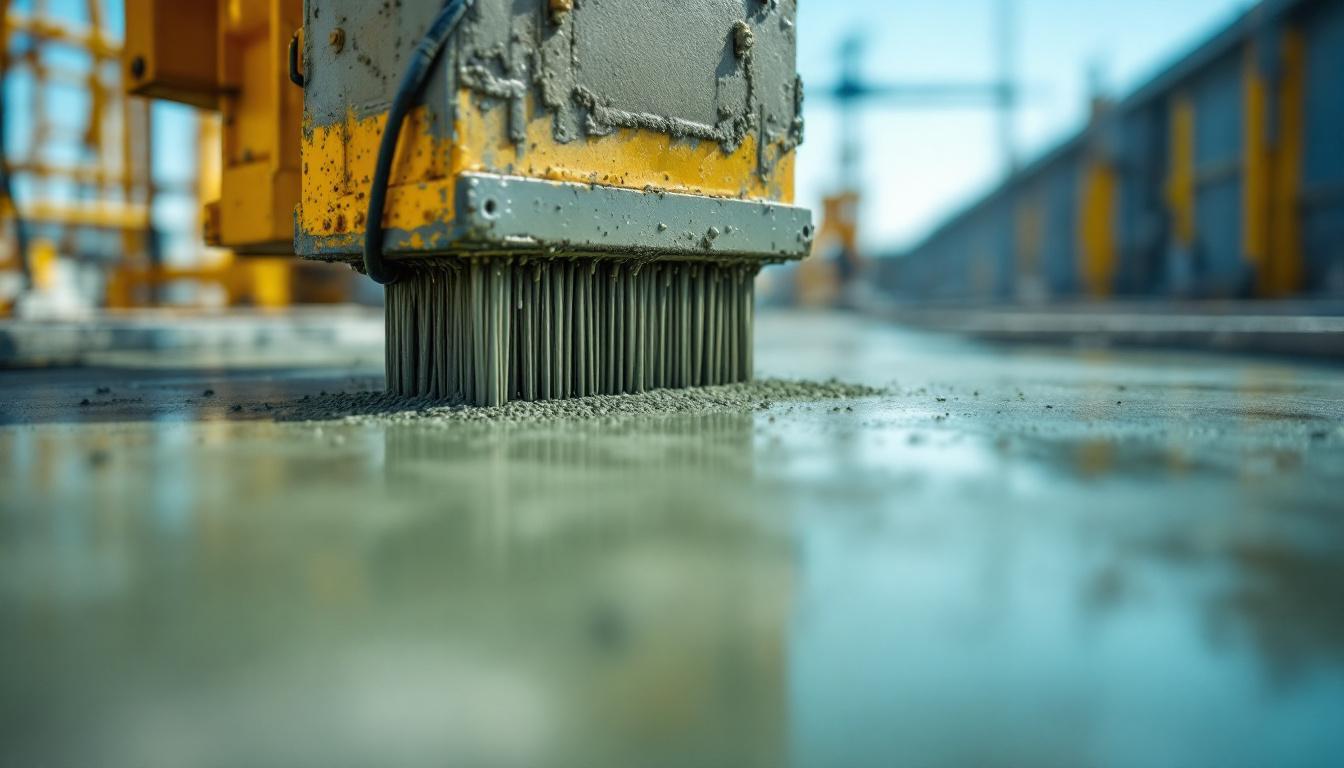
Germany’s cement sector is undergoing a transformative shift from incremental improvements to a revolutionary move towards low-emission concrete, driven by regulatory reforms, standardisation, and market demand for greener construction materials.
Germany’s cement sector is moving from incremental improvements to a more pronounced shift in product mix and market rules that together could materially lower CO2 emissions from concrete production over the coming decades. A recent low in the national clinker factor, measured at about 67%, illustrates how alternative cement formulations and regulatory change are combining to reduce reliance on energy‑intensive clinker, but industry leaders warn that the path to deeper cuts depends on supply of substitutes and sustained public demand.
Regulatory change has been pivotal. The revised German concrete standard DIN 1045‑2:2023, aligned with the European EN 206 framework, introduces practical application rules that ease the use of clinker‑efficient binders in structural concrete. According to the German Cement Works Association (VDZ), this clarification of acceptable practice has smoothed market access for lower‑clinker cements alongside the formal building authority approvals process, which itself accelerated through 2024 and 2025. As a result, a broader array of products, including portland composite CEM II/C‑M grades, blast‑furnace‑based cements with very low clinker content, and an initial CEM VI formulation, have secured authorisations for use in construction.
Product trends show a clear shift away from traditional portland (CEM I) cements towards multi‑constituent and slag‑rich types. Industry data compiled by VDZ indicate that CEM II/M portland composite cements expanded their market share from roughly 6.5% in 2019 to about 16% in 2024, with CO2‑reduced CEM II/C‑M alone accounting for an estimated 790,000 tonnes of production in that year. The wider adoption of CEM II/C‑M (minimum 50% clinker) and the emergence of CEM VI (targeting clinker contents as low as 35%) are central to plans to lower the national average clinker proportion from c.67% today to near 53% by 2045.
Standards at European level are enabling these formulations. The introduction of EN 197‑5 creates a normative home for low‑clinker Portland cements, while academic and industry research demonstrates the performance potential of ternary blends, especially those combining clinker, granulated blast‑furnace slag and limestone filler. A peer‑reviewed study analysing implementation of EN 197‑5 found that such mixes can maintain required technical properties while cutting life‑cycle global warming potential, underpinning their credibility for structural use.
Nevertheless, raw‑material availability constrains how far substitution can go. Traditional mineral additions, granulated slag, natural pozzolans and siliceous fly ash, remain important but finite resources. Industry analysts and standardisation specialists point to limestone‑calcined clay systems (LC3), calcined clays more broadly, and the expanded use of recycled fines from concrete and masonry rubble as likely contributors to next‑stage decarbonisation. However, standardisation and activation of clays pose technical and regulatory hurdles; commentary in trade journals highlights the need to align test methods and performance criteria so these binders can be specified with confidence.
Transparency and procurement will be decisive demand‑side levers. VDZ launched the voluntary Cement Carbon Class (CCC) label in early 2025 to classify cements into five emissions bands from “Near Zero” to Class D, enabling manufacturers to disclose carbon footprints directly in tenders and to customers. According to VDZ, the CCC label is explicitly designed to support the federal concept of creating “lead markets for climate‑friendly basic materials” by allowing public procurers and private clients seeking sustainability certification or subsidy eligibility to compare products on a like‑for‑like basis. Complementing the label, VDZ has developed Environmental Product Declarations for a range of cement types that provide independently verified life‑cycle indicators for resource use and global warming potential.
Market responses by major firms illustrate how decarbonisation can be embedded into commercial strategy. Industry reporting shows large cement producers are investing in low‑carbon and circular product lines, pursuing both substitution technologies such as calcined clays and product portfolios with higher recycled content to capture growing demand for greener construction materials. Technologies that replace substantial shares of clinker, like limestone‑calcined clay blends, have demonstrated CO2 reductions in the order of magnitude required to meet mid‑century targets, but scaling them requires both technical validation and upstream investment.
For policy and procurement, the implications are straightforward: standards that clarify acceptable formulations and robust carbon labelling reduce barriers to adoption, but public‑sector demand and harmonised approval pathways will be required to create the stable markets that justify investment in new supply chains for substitutes. With the sector targeting a significant drop in clinker intensity by 2045, the immediate priorities are securing reliable sources of alternative binders, finalising performance standards for novel mixes such as LC3, and embedding carbon disclosure into specification and tendering processes so low‑emission cements move from niche to norm.
- https://www.worldcement.com/special-reports/16032026/germanys-clinker-cut-revolution/ – Please view link – unable to able to access data
- https://www.vdz-online.de/en/services/certification/co2-label-for-cement – The German Cement Works Association (VDZ) has introduced a voluntary CO₂ label for cement, known as the Cement Carbon Class (CCC) label, to promote climate-friendly products. This label classifies cements into five categories based on their greenhouse gas emissions, ranging from ‘Near Zero’ to ‘Class D’. Manufacturers can use the CCC label to transparently disclose product properties and carbon footprints to customers and in tenders, thereby encouraging the use of low-emission cements in the construction sector.
- https://www.vdz-online.de/en/news-1/vdz-introduces-co2-label-for-cement – In February 2025, VDZ introduced the Cement Carbon Class (CCC) label, a voluntary CO₂ label for cement, to make the CO₂ footprint of products easily recognisable and comparable. This initiative aims to promote the use of green cements in the construction sector, aligning with the German Federal Ministry for Economic Affairs and Climate Action’s concept of ‘Lead markets for climate-friendly basic materials’. The label is particularly relevant for public sector procurement and private construction projects seeking sustainability certification or subsidies.
- https://www.zkg.de/en/artikel/market-trends-for-green-cements-4001089.html – The article discusses the growing importance of green cements in the cement industry’s journey towards carbon neutrality by 2050. It highlights the European Cement Association’s (CEMBUREAU) efforts to reduce the clinker factor from 77% in 2017 to 65% by 2050 through new cement types and clinker substitutes like fly ash, granulated blast furnace slag, and calcined clay. The article also mentions the development of the EN 197-5 standard, which introduces CEM II/C-M and CEM VI cements, allowing for lower clinker contents and supporting the industry’s decarbonisation goals.
- https://www.zkg.de/en/artikel/zkg_Latest_trends_in_clay_activation-3683572.html – This article examines the challenges and developments in the standardisation of low-clinker cements, particularly focusing on limestone-calcined clay cements (LC3). It compares various international standards, including ASTM C1157 and EN 197-1, and discusses the limitations of the existing EN 197-1 standard in allowing high clinker substitution rates. The article highlights the potential of LC3 cements to reduce CO₂ emissions and the need for updated standards to facilitate their wider adoption in the cement industry.
- https://www.sciencedirect.com/science/article/abs/pii/S2214785323042190 – This study investigates the effectiveness of reducing the clinker proportion in cement production to decrease its carbon footprint. It focuses on the implementation of the European cement standard EN 197-5, which introduces CEM II/C-M low-carbon Portland cements with up to 50% mineral additions and CEM VI cements with clinker content ranging from 35% to 49%. The research examines the performance of these new cements, particularly ternary mixtures based on clinker, slag, and limestone filler, and their potential to significantly reduce CO₂ emissions in cement production.
- https://www.spglobal.com/esg/insights/featured/special-editorial/decarbonizing-cement-how-eu-cement-makers-are-reducing-emissions-while-building-business-resilience – This article explores how European Union cement manufacturers are reducing emissions and building business resilience. It highlights HeidelbergCement’s commitment to doubling revenue from low-carbon and circular products to 50% by 2030, primarily through increased use of recycled aggregates and supplementary cementitious materials with lower clinker ratios. The article also discusses Cementir’s FUTURECEM™ technology, which replaces about 40% of clinker with limestone and calcined clay, leading to a 30% reduction in CO₂ emissions. These initiatives reflect the industry’s efforts to meet decarbonisation targets and adapt to evolving market demands for sustainable construction materials.
Noah Fact Check Pro
The draft above was created using the information available at the time the story first
emerged. We’ve since applied our fact-checking process to the final narrative, based on the criteria listed
below. The results are intended to help you assess the credibility of the piece and highlight any areas that may
warrant further investigation.
Freshness check
Score:
8
Notes:
The article was published on 16 March 2026. The most recent similar content is from 7 January 2026, reporting Hoffmann Green Cement Technologies’ record clinker-free cement output in 2025. ([spglobal.com](https://www.spglobal.com/energy/en/news-research/latest-news/metals/010726-hoffmann-green-triples-0-clinker-cement-output-in-2025-sets-new-company-record?utm_source=openai)) The article appears to be original and not recycled from other sources.
Quotes check
Score:
7
Notes:
The article does not contain direct quotes. It references data from the German Cement Works Association (VDZ) and mentions the German concrete standard DIN 1045-2:2023. However, the earliest known usage of these references cannot be independently verified. The lack of direct quotes is noted, but the information is presented as factual reporting.
Source reliability
Score:
6
Notes:
The article is published on World Cement, a trade publication focused on the cement industry. While it is a niche publication, it is reputable within its sector. However, the article does not provide direct links to primary sources or studies, which limits the ability to independently verify some claims.
Plausibility check
Score:
7
Notes:
The article discusses the reduction of clinker content in German cement production, citing a decrease to 67% clinker factor and the introduction of clinker-efficient cements like CEM II/C-M and CEM VI. These developments align with industry trends towards sustainability. However, the article does not provide specific data or studies to support these claims, which raises questions about the depth of the analysis.
Overall assessment
Verdict (FAIL, OPEN, PASS): PASS
Confidence (LOW, MEDIUM, HIGH): MEDIUM
Summary:
The article presents information on Germany’s efforts to reduce clinker content in cement production, citing industry trends and standards. While the content is plausible and the publication is reputable within its niche, the lack of direct links to primary sources and the inability to independently verify some claims raise concerns about the depth of the analysis. Therefore, the overall confidence in the accuracy of the information is medium.
