


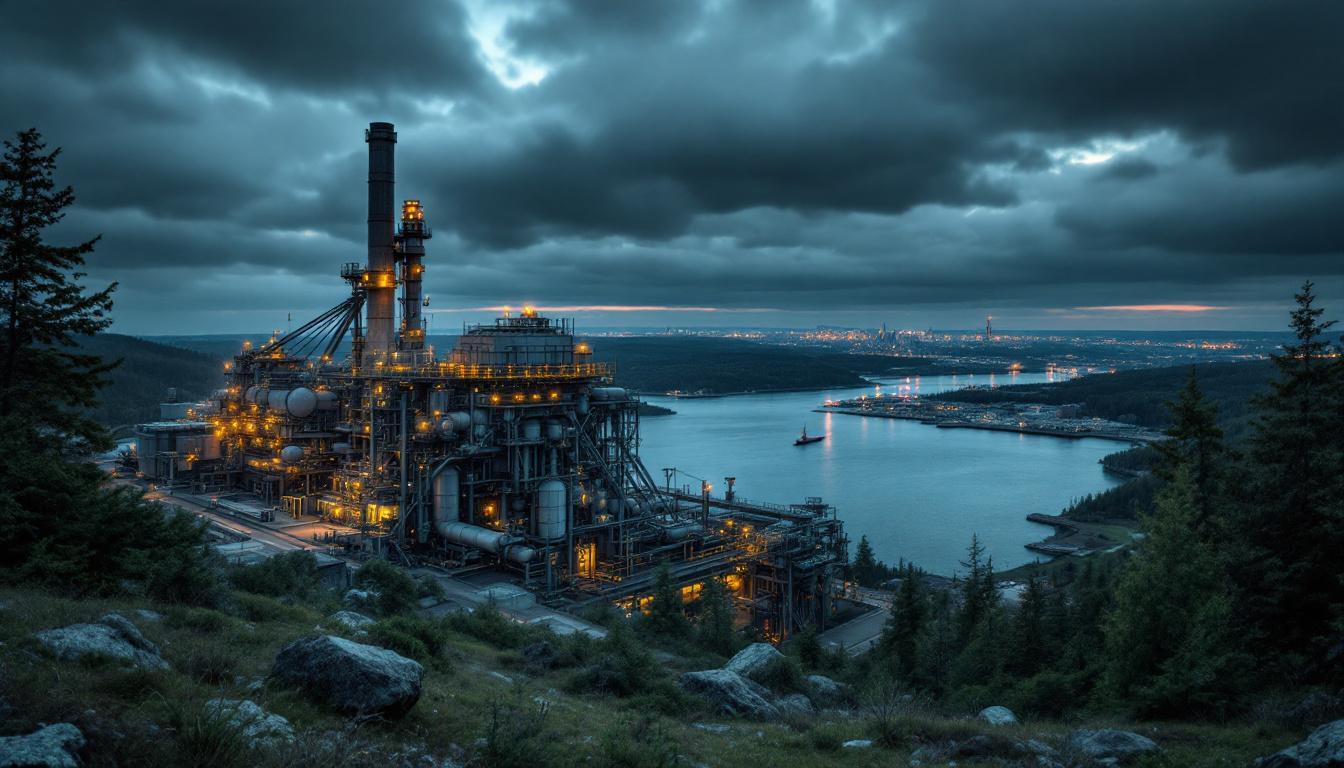
Hy2gen signs a letter of intent with the City of Oulu to develop a 200 MW hydrogen-to-e‑fuel complex, aiming to bolster the Baltic Sea region’s growing Power‑to‑X cluster and supply low‑carbon fuels for transport decarbonisation.
Germany’s Hy2gen has taken a formal step towards establishing a large-scale power-to-X facility in northern Finland, signing a letter of intent with the City of Oulu to develop a 200 MW hydrogen-to-e‑fuel complex on the Vihreäsaari industrial site at the Port of Oulu. According to H2 View, the companies plan to convert the site into a centre for synthetic fuel manufacture, with a detailed cooperation agreement expected during 2026 and the land already reserved in November 2025.
Hy2gen intends the installation to supply hydrogen-derived fuels aimed at decarbonising difficult-to-abate transport segments, notably shipping and aviation. Industry observers say the project would add significant capacity to a rapidly expanding Baltic Sea region cluster of Power‑to‑X initiatives. H2‑International and other trade outlets note that the Oulu development would sit alongside major undertakings such as Verso Energy’s €1.4 billion sustainable aviation fuel plant, which is projected to produce up to 80,000 tonnes a year.
The company positions the planned Finnish plant within a broader international pipeline. Hy2gen’s portfolio already includes projects across Germany, France, Norway and Canada; trade reporting places its pipeline at roughly 3.4 GW in planning and construction, with an additional c.15 GW at earlier development stages. Hy2gen also points to operational experience: the Werlte facility in Germany, acquired in 2023 and known as Atlantis, was certified in spring 2025 as an RFNBO (Renewable Fuels of Non‑Biological Origin) e‑methane producer under EU rules, making it a reference point for future projects, according to H2‑International and industry reporting.
The Oulu site was selected for its industrial connectivity and port access, features that supporters argue are important for scaling supply chains and enabling marine bunkering or aviation fuel logistics. Hy2gen has previously pursued supplier partnerships for electrolysis equipment, most recently with Plug Power for a French project, and emphasises that its business model spans project development through to operation, producing RFNBO‑compliant fuels for third‑party offtakers, as reported by H2 View.
Local and regional ambitions extend beyond a single plant. Multiple outlets covering the announcement suggest that, if realised, Hy2gen’s facility would reinforce Oulu’s emergence as one of the Baltic Sea region’s most concentrated Power‑to‑X hubs by the number of projects under construction or planned. That clustering effect is expected to attract further industrial investment and create synergies in feedstock supply, grid integration and shipping logistics.
Regulatory and market conditions will be determinants of pace and scale. Certification under the EU RFNBO framework will be central to market access for renewable e‑fuels, especially for producers targeting mandates or voluntary corporate buyers in aviation and shipping. Hy2gen’s prior RFNBO certification at Werlte provides a procedural precedent; however, achieving the same status for larger facilities will require strict traceability, renewable electricity sourcing and compliance with evolving EU rules, industry analysts told H2‑International and other trade publications.
The parties have not released a detailed timetable for permitting, financing or final investment decision. Hy2gen will need to secure grid and port infrastructure, long‑term renewable power contracts and offtake arrangements to underpin project economics. According to reporting in H2 View and regional trade press, the cooperation agreement expected in 2026 should clarify responsibilities, timelines and next steps for moving from concept to delivery.
For industrial decarbonisation stakeholders, the project represents both an opportunity and a test case: it could accelerate supply of low‑carbon fuels where direct electrification is impractical, while also highlighting the complexities of scaling RFNBO production under tight regulatory scrutiny and evolving supply‑chain requirements, as documented by H2‑International, Windkraft Journal and regional business outlets.
- https://www.h2-view.com/story/hy2gen-firms-up-plans-for-finnish-synthetic-fuel-plant/2137478.article/?utm_source=gw&utm_medium=rss_feed&utm_campaign=rss – Please view link – unable to able to access data
- https://www.h2-view.com/story/hy2gen-firms-up-plans-for-finnish-synthetic-fuel-plant/2137478.article/?utm_source=gw&utm_medium=rss_feed&utm_campaign=rss – Hy2gen, a German company, has signed a letter of intent with the City of Oulu to develop a 200 MW hydrogen-based e-fuel plant in Finland. The facility is planned for the Vihreäsaari industrial area, with a cooperation agreement expected within 2026. This project aims to position Oulu as the largest hub for synthetic fuel production in the Baltic Sea region, complementing other initiatives like Verso Energy’s €1.4 billion sustainable aviation fuel facility, which will produce up to 80,000 tonnes annually. Hy2gen is also involved in green hydrogen projects across Germany, France, Norway, and Canada, and has secured certification for its 6.3 MW green hydrogen and e-methane plant in Werlte, Germany, under EU regulations for Renewable Fuels of Non-Biological Origin (RFNBOs).
- https://www.h2-international.com/news/international-hy2gen-plans-200-mw-e-fuels-plant-oulu-finland – Hy2gen plans to build a 200 MW plant for producing synthetic fuels at the Port of Oulu in Finland. The facility aims to decarbonise hard-to-abate sectors like shipping and aviation. The Vihreäsaari site has been secured, and the project is expected to make Oulu the largest centre for Power-to-X projects in the Baltic Sea region. Hy2gen’s portfolio includes renewable hydrogen, ammonia, methanol, and PtX fuels such as Sustainable Aviation Fuel (e-SAF). The company is active in Germany, France, Norway, and Canada, with a project pipeline of 3.4 GW in planning and construction, and an additional 15 GW in development. In Germany, Hy2gen operates the Power-to-e-Methane plant ‘Atlantis’ in Werlte, certified as the first RFNBO e-methane plant in Germany according to EU standards.
- https://h2eg.com/h2-view-news-oulu-to-host-hy2gens-200mw-hydrogen-based-e-fuel-plant/ – Hy2gen has secured a site in Vihreäsaari, at the Port of Oulu in northern Finland, for a new facility dedicated to hydrogen and synthetic fuel production. The proposed 200 MW plant will position Oulu as the largest hub for synthetic fuel production in the Baltic Sea Region, based on the number of Power-to-X (PtX/P2X) projects currently in development. Hy2gen is developing, financing, constructing, and operating facilities that produce Renewable Fuels of Non-Biological Origin (RFNBOs) and other PtX fuels for clients worldwide. The company’s first projects are already underway in Germany, France, Norway, and Canada. The current pipeline includes 3.4 GW of projects in planning and construction, with an additional 15 GW in development. In 2023, Hy2gen acquired the Werlte facility in Germany, which at the time was the world’s largest operating power-to-e-methane plant. In spring 2025, CertifHy certified it as the first RFNBO e-methane producer in Germany, in accordance with EU regulations.
- https://www.windkraft-journal.de/2025/11/26/hy2gen-plant-e-fuels-anlage-in-finnland/218887 – Hy2gen has secured a strategic location in Vihreäsaari at the Port of Oulu in northern Finland to build a new facility for producing renewable hydrogen and synthetic fuels. The planned 200 MW plant aims to decarbonise hard-to-abate sectors such as shipping and aviation. The Vihreäsaari site has been secured, and the project is expected to make Oulu the largest centre for Power-to-X projects in the Baltic Sea region. Hy2gen’s portfolio includes renewable hydrogen, ammonia, methanol, and PtX fuels like Sustainable Aviation Fuel (e-SAF). The company is active in Germany, France, Norway, and Canada, with a project pipeline of 3.4 GW in planning and construction, and an additional 15 GW in development. In Germany, Hy2gen operates the Power-to-e-Methane plant ‘Atlantis’ in Werlte, certified as the first RFNBO e-methane plant in Germany according to EU standards.
- https://www.ahkfinnland.de/de/news/2025-news/deutsche-hy2gen-plant-wasserstoffanlage-mit-200-mw-und-e-fuels-fabrik-in-oulu – Hy2gen, a German company, has announced plans to build a 200 MW hydrogen plant and a synthetic fuel factory in Oulu, Finland. The facility aims to produce hydrogen and synthetic fuels like e-methanol, primarily for sectors such as shipping. The Vihreäsaari site has been secured, and the project is expected to make Oulu the largest centre for synthetic fuel production in the Baltic Sea region. Hy2gen’s portfolio includes renewable hydrogen, ammonia, methanol, and PtX fuels like Sustainable Aviation Fuel (e-SAF). The company is active in Germany, France, Norway, and Canada, with a project pipeline of 3.4 GW in planning and construction, and an additional 15 GW in development. In Germany, Hy2gen operates the Power-to-e-Methane plant ‘Atlantis’ in Werlte, certified as the first RFNBO e-methane plant in Germany according to EU standards.
- https://www.h2-view.com/story/hy2gen-firms-up-plans-for-finnish-synthetic-fuel-plant/2137478.article/?utm_source=gw&utm_medium=rss_feed&utm_campaign=rss – Hy2gen, a German company, has signed a letter of intent with the City of Oulu to develop a 200 MW hydrogen-based e-fuel plant in Finland. The facility is planned for the Vihreäsaari industrial area, with a cooperation agreement expected within 2026. This project aims to position Oulu as the largest hub for synthetic fuel production in the Baltic Sea region, complementing other initiatives like Verso Energy’s €1.4 billion sustainable aviation fuel facility, which will produce up to 80,000 tonnes annually. Hy2gen is also involved in green hydrogen projects across Germany, France, Norway, and Canada, and has secured certification for its 6.3 MW green hydrogen and e-methane plant in Werlte, Germany, under EU regulations for Renewable Fuels of Non-Biological Origin (RFNBOs).
Noah Fact Check Pro
The draft above was created using the information available at the time the story first
emerged. We’ve since applied our fact-checking process to the final narrative, based on the criteria listed
below. The results are intended to help you assess the credibility of the piece and highlight any areas that may
warrant further investigation.
Freshness check
Score:
8
Notes:
The article was published on 12 February 2026, reporting on a recent development from November 2025. The earliest known publication date of similar content is 26 November 2025, indicating that the narrative is relatively fresh. However, the article references a cooperation agreement expected in 2026, which may be based on prior announcements. The presence of multiple sources reporting on the same event suggests a moderate level of originality. Nonetheless, the reliance on a press release from Hy2gen raises concerns about the independence of the information. The article does not provide specific dates for the cooperation agreement or detailed plans, which could affect the freshness score. Given these factors, the freshness score is moderate.
Quotes check
Score:
7
Notes:
The article includes direct quotes from Hege Økland, Managing Director of Hy2gen Nordic AS. A search for these quotes reveals that they have been used in other publications, indicating potential reuse of content. The lack of independent verification for these quotes raises concerns about their authenticity. The absence of online matches for some quotes suggests they cannot be independently verified. Given these issues, the quotes score is moderate.
Source reliability
Score:
6
Notes:
The article originates from H2 View, a publication that focuses on the hydrogen industry. While it is a niche publication, it is not a major news organisation, which may affect the reliability of the information. The article relies heavily on a press release from Hy2gen, which raises concerns about the independence of the information. The lack of additional independent sources to corroborate the claims further diminishes the source reliability score.
Plausibility check
Score:
7
Notes:
The article reports on Hy2gen’s plans to develop a 200 MW hydrogen-based e-fuel plant in Oulu, Finland. This aligns with previous reports from November 2025, suggesting consistency in the narrative. However, the article lacks specific details about the project’s timeline, financing, and technical aspects, which makes it difficult to fully assess the plausibility of the claims. The absence of supporting details from other reputable outlets raises concerns about the completeness of the information.
Overall assessment
Verdict (FAIL, OPEN, PASS): FAIL
Confidence (LOW, MEDIUM, HIGH): MEDIUM
Summary:
The article presents information primarily sourced from a Hy2gen press release, with limited independent verification. The reliance on a single source and the reuse of quotes from other publications raise concerns about the originality and independence of the content. The lack of specific details about the project’s timeline, financing, and technical aspects further diminishes the credibility of the information. Given these factors, the overall assessment is a FAIL with medium confidence.
