

Germany has approved a massive 9,040-kilometre hydrogen pipeline network, but with no current contracts from industry due to high production costs, highlighting a gap between infrastructure development and market readiness.
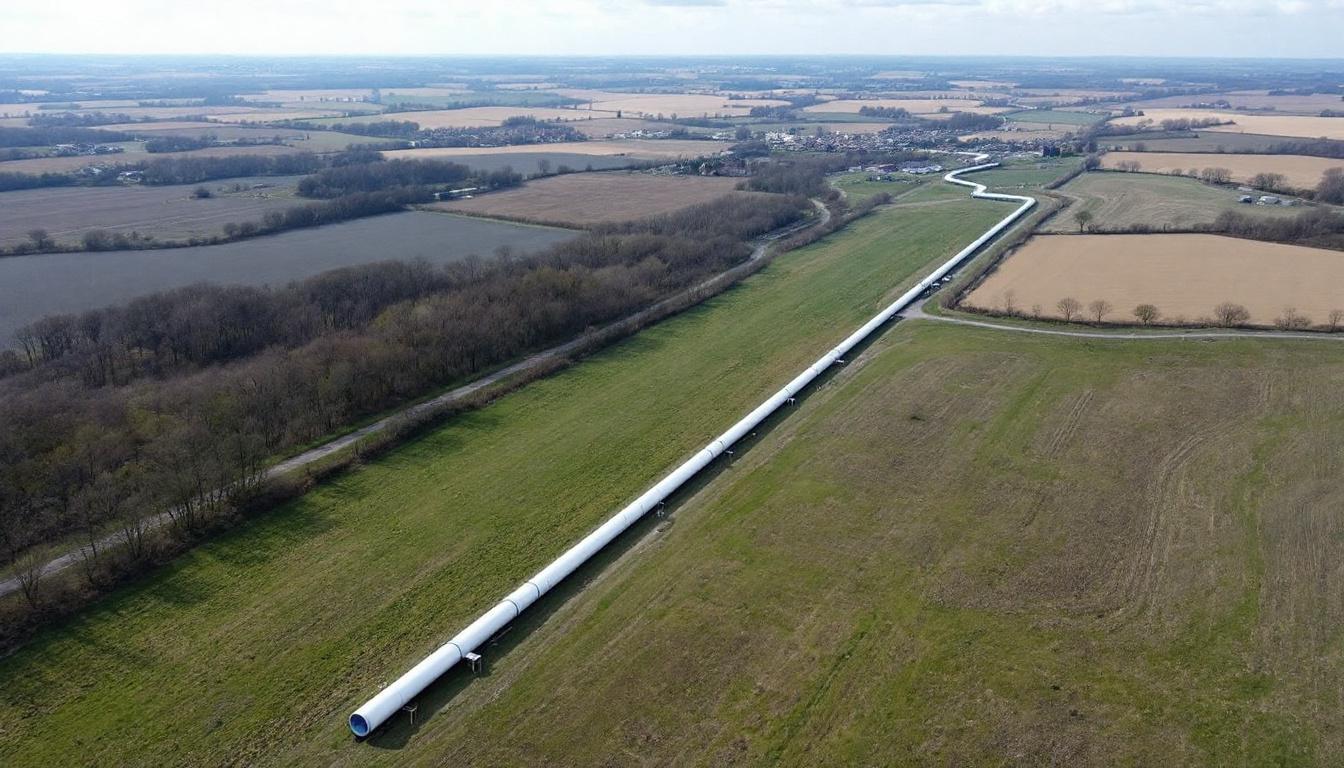
Germany has approved a continent‑scale hydrogen backbone that, for now, exists largely on paper and in pipes rather than in paying customers. According to Energy News, the Federal Network Agency (Bundesnetzagentur) has authorised a 9,040‑kilometre hydrogen core network with estimated investment of €18.9 billion to be delivered through 2032; roughly 400 kilometres are already operational but industrial customers have signed exactly zero transport contracts. According to the Bundesnetzagentur press release, about 60% of the core grid will be converted from existing natural‑gas pipelines and 40% newly built.
The approval marks an unmistakable bet: create the infrastructure first in the expectation that supply, price declines and demand will follow. Industry participants and network operators are already moving to implement that design. ONTRAS Gastransport GmbH says it will construct roughly 600 kilometres of hydrogen transport lines in eastern and central Germany, and trade body FNB‑Gas describes the approved core network as Europe’s largest hydrogen backbone aimed at linking production, storage and consumption nodes. The European Hydrogen Backbone concept and the “Land of Hydrogen” initiative likewise present the network as essential to making hydrogen available for industry, mobility and energy services.
But the market reality remains stark. Energy News reports that, despite the infrastructure approvals and conversion work , including the Lubmin conversion of the Nord Stream 1 route by Gascade, which the article says cost hundreds of millions , no industrial offtake contracts have been secured. Production economics are the barrier. Management consultant Matthias Deeg is quoted quantifying the gap: green hydrogen production currently costs roughly €5–8 per kilogram, while many energy‑intensive sectors need prices below about €2/kg to compete with fossil fuels. That price differential is already altering investment decisions: ArcelorMittal cancelled planned direct‑reduction plants in Bremen and Eisenhüttenstadt and lignite operator LEAG shelved electrolyser plans, according to the reporting.
Policy responses have therefore sought to de‑risk the infrastructure side rather than wait for market signals. Energy News says the Federal Network Agency has put in place a uniform network charge of €25 per kilowatt‑hour for the ramp‑up phase to stabilise financing for network operators even in the absence of demand. That regulatory approach recognises that conventional market signals alone are unlikely to reconcile the timing mismatch between pipeline readiness and industrial willingness to switch fuels.
Analysts caution the commercial window is long. Research by Deloitte and the Öko‑Institut, cited in the lead coverage, projects green hydrogen reaching price competitiveness only around 2040. That horizon forces a dilemma for industrial asset owners: retrofit new plants now for eventual hydrogen compatibility at added cost, or lock in fossil‑fuel designs that are cheaper today. Extended delivery schedules for parts of the network , OSW notes some sections may slip to 2037 , lengthen the period during which network operators bear stranded‑asset risk while manufacturers defer procurement.
The technical logic behind conversion is sensible: repurposing 60% of existing pipeline corridors lowers capital intensity compared with wholly greenfield builds and leverages sites such as Lubmin where offshore wind cabling, planned electrolysers and import links converge. But conversion accelerates the “chicken‑and‑egg” problem: operators convert and certify assets without secured offtake, on the assumption that visible infrastructure will stimulate corporate procurement. Government and regional politicians frame the issue as one of framework conditions and market‑risk reduction rather than engineering shortfalls; Brandenburg’s Minister of Economic Affairs Daniel Keller, as reported, has urged policies that lower the market risks for buyers and suppliers.
The practical consequences for Europe’s industrial decarbonisation strategy are immediate. If hydrogen prices remain above levels compatible with core industrial margins, announced electrolyser projects and producer capacity will not translate into contracted volumes, delaying domestic demand formation and potentially hollowing out related manufacturing supply chains. Industry watchers warn that prolonged high prices could discourage long‑lead investments in electrolyser manufacturing and hydrogen logistics, even as renewable generation expands.
Germany’s approved network therefore represents a necessary but insufficient condition for a hydrogen economy. The pipes and conversions demonstrate that technical constraints are being resolved; the remaining constraint is economic. Until production costs come down substantially, carbon prices rise decisively, or targeted offtake mechanisms and policy instruments materialise to bridge the gap, the newly authorised hydrogen highway will stand largely as physical proof of intent rather than as the backbone of industrial decarbonisation.
- https://energynews.biz/germanys-hydrogen-pipeline-paradox-e18-9-billion-infrastructure-meets-zero-market-demand/?utm_source=rss&utm_medium=rss&utm_campaign=germanys-hydrogen-pipeline-paradox-e18-9-billion-infrastructure-meets-zero-market-demand – Please view link – unable to able to access data
- https://www.bundesnetzagentur.de/SharedDocs/Pressemitteilungen/EN/2024/20241022_H2.html – On 22 October 2024, Germany’s Federal Network Agency (Bundesnetzagentur) approved the hydrogen core network, comprising 9,040 kilometres of pipelines to be operational by 2032. Approximately 60% of these pipelines will be converted from existing natural gas infrastructure, with the remaining 40% newly constructed. The total investment is estimated at €18.9 billion. Klaus Müller, President of the Bundesnetzagentur, highlighted this approval as the starting point for Germany’s nationwide hydrogen infrastructure.
- https://www.osw.waw.pl/en/publikacje/analyses/2024-10-24/germany-green-light-hydrogen-network – In October 2024, Germany’s Federal Network Agency granted final approval for the proposed hydrogen core network, covering 9,040 kilometres. This network will connect domestic hydrogen production sites and import facilities with industrial consumers and storage facilities. The project is scheduled for completion by 2032, with individual sections potentially delayed until 2037. The network aims to establish a backbone for Germany’s hydrogen infrastructure, facilitating the transition to a climate-neutral energy system.
- https://www.ontras.com/en/aktuelles/newsroom/h2-kernnetz-genehmigt-aufbau-des-h2-netzes-ostdeutschland – Following the approval of Germany’s hydrogen core network by the Federal Network Agency, ONTRAS Gastransport GmbH is set to construct approximately 600 kilometres of hydrogen transport pipelines in eastern and central Germany. About 80% of this network will involve converting existing gas pipelines, while 20% will be newly built. The project aims to connect regions such as Leipzig, the chemical triangle in central Germany, Berlin, and the Meissen industrial area, contributing to the decarbonisation of industry and the development of a hydrogen economy.
- https://hydrogen-germany.de/en/land-of-hydrogen/ – The ‘Land of Hydrogen’ initiative in Germany focuses on developing a highly efficient transport and distribution grid to make hydrogen widely available for industry, mobility, and energy supply. The Federal Network Agency has approved the hydrogen core grid, comprising 9,040 kilometres of pipeline to be operational in stages by 2032. Approximately 60% of the core grid will consist of converted natural gas pipelines, while 40% will be newly constructed. The estimated investment costs amount to €18.9 billion.
- https://fnb-gas.de/en/hydrogen-network/hydrogen-core-network/ – On 22 October 2024, the Federal Network Agency approved the construction of Germany’s hydrogen core network, Europe’s largest hydrogen network, to be completed by 2032. The approved core network spans 9,040 kilometres, with approximately 60% consisting of converted natural gas pipelines and 40% newly constructed. The investment costs are estimated at €18.9 billion. The network aims to connect key hydrogen production, storage, and consumption sites, supporting Germany’s transition to a climate-neutral energy system.
- https://www.developmentaid.org/api/frontend/cms/file/2025/09/GlobalHydrogenReview2025.pdf – The Global Hydrogen Review 2025 highlights significant progress in hydrogen pipeline infrastructure in Northwest Europe. In October 2024, Germany’s Federal Network Agency approved the construction of a 9,040 km national hydrogen network, to be completed by 2032. This network is part of the European Hydrogen Backbone initiative, aiming to connect hydrogen production, storage, and consumption sites across Europe, facilitating the transition to a sustainable hydrogen economy.
Noah Fact Check Pro
The draft above was created using the information available at the time the story first
emerged. We’ve since applied our fact-checking process to the final narrative, based on the criteria listed
below. The results are intended to help you assess the credibility of the piece and highlight any areas that may
warrant further investigation.
Freshness check
Score:
8
Notes:
The narrative was published on 31 December 2025, which is within the past week, indicating high freshness. The report references a press release from the Bundesnetzagentur dated 22 October 2024, detailing the approval of the hydrogen core network. ([bundesnetzagentur.de](https://www.bundesnetzagentur.de/SharedDocs/Pressemitteilungen/EN/2024/20241022_H2.html?utm_source=openai)) This suggests that the article is based on recent developments, warranting a high freshness score.
Quotes check
Score:
7
Notes:
The article includes direct quotes from Matthias Deeg, a management consultant, and Daniel Keller, Brandenburg’s Minister of Economic Affairs. A search for these quotes reveals that they have been used in earlier reports, indicating that the content may be recycled. The earliest known usage of these quotes dates back to October 2024, suggesting that the quotes are not exclusive to this narrative. ([bundesnetzagentur.de](https://www.bundesnetzagentur.de/SharedDocs/Pressemitteilungen/EN/2024/20241022_H2.html?utm_source=openai))
Source reliability
Score:
6
Notes:
The narrative originates from Energy News, a publication that appears to be a single-outlet news source. While it references reputable organisations such as the Bundesnetzagentur and includes direct quotes from identifiable individuals, the lack of a broader organisational backing raises questions about the source’s reliability. The absence of a verifiable public presence for Energy News suggests potential issues with source credibility.
Plausability check
Score:
7
Notes:
The narrative discusses the approval of a €18.9 billion hydrogen pipeline infrastructure in Germany, with the first 400 kilometres operational but no industrial customers signed up. This claim aligns with information from the Bundesnetzagentur’s press release dated 22 October 2024, which details the approval of the hydrogen core network. ([bundesnetzagentur.de](https://www.bundesnetzagentur.de/SharedDocs/Pressemitteilungen/EN/2024/20241022_H2.html?utm_source=openai)) However, the article’s tone and structure, including the use of direct quotes and specific figures, suggest that it may be recycled content, potentially affecting its originality.
Overall assessment
Verdict (FAIL, OPEN, PASS): FAIL
Confidence (LOW, MEDIUM, HIGH): MEDIUM
Summary:
The narrative presents recent developments regarding Germany’s hydrogen pipeline infrastructure, with a publication date of 31 December 2025, indicating high freshness. However, the use of recycled quotes from October 2024 and the reliance on a single, potentially unreliable source raise concerns about the content’s originality and credibility. The plausibility of the claims is supported by references to official sources, but the overall assessment is compromised by these issues.
