


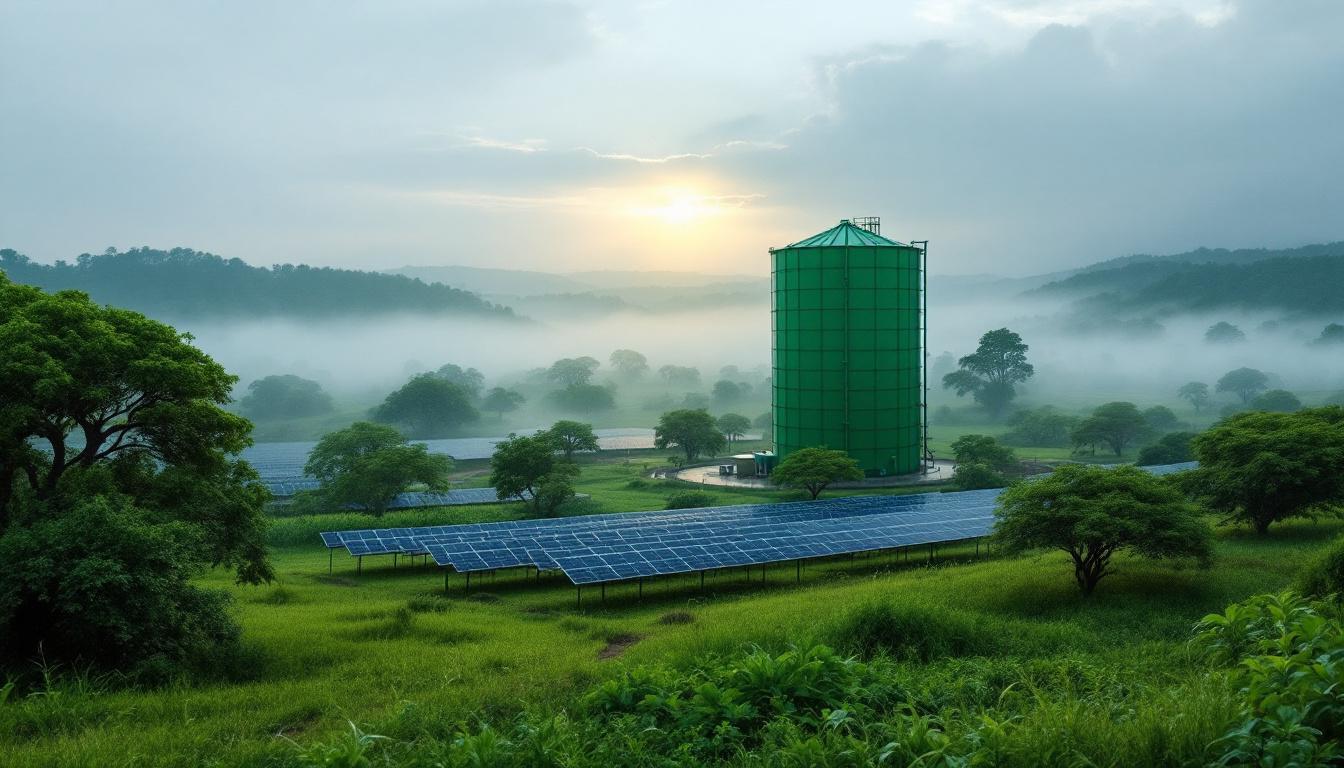
Ghana’s Free Zones are transforming into hubs for green manufacturing, leveraging solar power projects and policy incentives to drive sustainable industrial growth and attract international investment amidst global environmental standards.
Ghana’s Free Zones are emerging as pivotal hubs for green manufacturing and sustainable industrialisation, aligning the country’s economic ambitions with the global imperative to integrate clean energy solutions into industrial development. With over 290 licensed enterprises currently operating, these zones are undergoing a transformative phase, driven by the twin pressures of global supply chains demanding environmentally responsible operations and the increasing viability of renewable energy investments.
Two landmark solar initiatives exemplify this green industrial transition. The 200-megawatt peak (MWp) solar project at the Dawa Industrial Zone, inaugurated by President John Dramani Mahama and named the Norbert Anku Solar Park, not only addresses the zone’s power needs but is also planned for expansion to an ambitious 1,000 MWp by 2032. Complementing this is the 16.8 MWp rooftop solar installation at the Tema Export Processing Zone, delivered by Helios Solar Energy, a subsidiary of LMI Holdings, and currently Africa’s largest single rooftop solar installation. Spanning nearly 100,000 square metres atop the International Warehousing Company Mega Warehouse, the Tema plant was commissioned in late 2025 with $30 million in International Finance Corporation (IFC) financing. It is expected to produce approximately 24,750 MWh of clean electricity annually, significantly contributing to Ghana’s emissions reduction efforts by cutting an estimated 13,000 tons of carbon dioxide equivalent each year.
These initiatives mark a shift in the role of renewable energy within industrial zones, from an optional feature to a fundamental competitive requirement. Sub-Saharan Africa’s chronic power reliability issues impose heavy operational costs on manufacturers, undermining profitability and deterring foreign investment. By embedding renewables into industrial infrastructure, companies situated in these zones can benefit from reliable, low-cost power, align with international carbon standards, and access novel climate finance instruments including green bonds, which offer reduced borrowing costs for clean energy upgrades.
Ghana’s policy framework, exemplified by the National Renewable Energy Master Plan targeting at least a 15 percent renewable energy share by 2030, underpins these developments. The government aims to bridge financing gaps through targeted tax incentives and blended finance models, recognising the high capital expenditure required for renewable infrastructure as a key hurdle. For example, industries within the Dawa Industrial Enclave will enjoy a 10 percent discount on power sourced from the Norbert Anku Solar Park, providing a direct economic incentive alongside environmental benefits.
IFC’s ongoing partnerships with local entities such as LMI Holdings are crucial to scaling this green industrial landscape. Beyond the Tema rooftop project, a new 150 MW solar photovoltaic power plant under development with LMI Holdings intends to deliver stable, cost-effective energy to over 100 manufacturing firms across sectors like food processing, cement, steel, textiles, and light manufacturing. Scheduled for phased completion by mid-2027, this plant is projected to cut emissions by approximately 120,000 metric tons annually while improving energy access and cost-effectiveness for businesses. This public-private collaboration model demonstrates the importance of private sector engagement in realising Ghana’s renewable energy ambitions.
The Dawa Industrial Zone itself, strategically located east of Accra and Tema, is fast becoming a preferred location for manufacturers due to its robust infrastructure, including a 132 MVA substation and planned one-gigawatt solar facility. With tenants already spanning aluminium production and pharmaceuticals, the zone actively seeks to attract sectors like agricultural processing and automotive assembly, benefiting from Special Economic Zone status with associated tax holidays and duty waivers for re-exporters. Such incentives, combined with renewable-powered infrastructure, enhance the zones’ attractiveness to international investors looking to comply with evolving global environmental standards such as the European Union’s carbon border adjustment mechanism.
President Mahama has stressed that embedding solar power in industrial parks is essential not only for environmental stewardship but also for protecting Ghanaian jobs, preserving market access, and enhancing the competitiveness of Ghana’s industries in regional and global markets, including under the African Continental Free Trade Area (AfCFTA). For local businesses, this green transition opens pathways to integrate as suppliers within expanding sustainable value chains, fostering inclusive growth.
However, realising the full potential of Ghana’s green industrial zones demands more than incremental steps; it necessitates an integrated approach recognising renewable energy, water management, and industrial development as interlinked priorities. The IFC-supported water treatment infrastructure installed at the Dawa Industrial Zone exemplifies this holistic mindset, ensuring that water sustainability complements energy initiatives.
Ghana stands well-positioned to become a continental leader in green industrialisation, leveraging its natural resources, policy environment, and strategic location. Yet, the challenge remains to scale financing solutions, improve policy coherence, and maintain momentum in the face of rising global standards and tightening climate-related trade regulations.
Ultimately, Ghana’s evolving Free Zones and Special Economic Zones may become blueprints for other African nations seeking to balance industrial growth with environmental responsibility. As global investors increasingly prioritise climate performance over short-term cost gains, Ghana’s green manufacturing frontier could attract significant capital flows and redefine the country’s economic growth model, making it cleaner, more competitive, and sustainably aligned with the demands of a decarbonised future.
- https://www.newsghana.com.gh/ghana-free-zones-emerge-as-green-manufacturing-frontier/ – Please view link – unable to able to access data
- https://www.ifc.org/en/pressroom/2025/ifc-deepens-partnership-with-lmi-holdings-to-expand-clean-energy-to-industrial-zon – In February 2025, the International Finance Corporation (IFC) partnered with Ghanaian conglomerate LMI Holdings to develop a 150-megawatt solar photovoltaic power plant. This project aims to provide stable, cost-effective energy to over 100 businesses across key industries, including food processing, cement, steel, textiles, and light manufacturing. The first phase of 100 MW is scheduled for completion by October 2026, with an additional 50 MW to be completed by June 2027. The solar plant is expected to reduce carbon emissions by about 120,000 metric tons annually, enhancing energy reliability and reducing costs for businesses. This initiative aligns with Ghana’s Renewable Energy Master Plan, which aims to increase the share of renewable energy in the country’s energy mix to 10 percent by 2030. The project underscores the importance of private sector involvement in advancing Ghana’s renewable energy agenda and supporting sustainable industrial development.
- https://www.ifc.org/en/pressroom/2022/ifc-and-lmi-partner-to-provide-clean-power-and-water-to-businesses-in-ghana – In July 2022, the International Finance Corporation (IFC) and LMI Holdings announced a partnership to provide essential infrastructure services to manufacturing companies in LMI-operated special economic zones in Ghana. Under this partnership, LMI Holdings developed a 16.8-megawatt rooftop solar plant to power businesses in the Tema Free Zone, contributing to Ghana’s climate agenda. Additionally, LMI Holdings built a water treatment and distribution plant with an initial capacity to treat 4,000 cubic meters per day to serve businesses in the Dawa Industrial Zone. The IFC provided LMI Holdings with a loan of up to $30 million to support these developments, aiming to enhance productivity and competitiveness for firms operating in these zones.
- https://www.trade.gov/market-intelligence/ghana-industrial-zones – The Dawa Industrial Zone, located about one hour east of Accra and 40 minutes east of Tema, is becoming an attractive location for international and Ghanaian manufacturers and logistics companies. The zone comprises 2,000 acres of land serviced by a 132 megavolt-amperes (MVA) sub-station and plans a one-gigawatt solar farm. It offers tenants turnkey solutions for land acquisition, reliable electricity, water, security, and fiber broadband internet. Dawa currently has eight tenants, including an aluminum plant and a cluster of pharmaceutical manufacturers, and seeks to attract agricultural processing, textiles, automotive assembly, and data center companies. As a designated Special Economic Zone under Ghanaian law, companies in the zone receive a temporary tax holiday on their corporate taxes and a waiver on import duties if they re-export resulting products out of Ghana.
- https://www.newsghana.com.gh/herbert-krapa-commissions-16-8-megawatt-solar-plant-at-tema-free-zones-enclave/ – In November 2025, Herbert Krapa, Minister of State at the Ministry of Energy, officially commissioned a 16.8-megawatt photovoltaic solar plant at the Tema Free Zones Enclave. The $17 million project, developed by Helios Solar Energy, a subsidiary of LMI Holdings, represents a significant milestone in Ghana’s renewable energy efforts. The solar plant, spanning 100,000 square meters, is mounted on the roof of the Mega Warehouse and was financed by the International Finance Corporation (IFC). The project is expected to enhance electricity supply and contribute to the country’s renewable energy targets. Minister Krapa praised Helios Solar Energy for advancing Ghana’s renewable energy agenda and emphasized the critical role of private sector investment in achieving the government’s goal of deriving 10 percent of the nation’s energy mix from renewable sources by 2030.
- https://energynewsafrica.com/ghana-africas-largest-single-rooftop-solar-project-commissioned-in-tema/ – In November 2025, Ghana’s renewable energy sector received a significant boost with the commissioning of a 16.8-megawatt rooftop solar project, the largest in Africa, at the Tema Free Zones Enclave. The $17 million project, owned by Helios Solar Energy, a subsidiary of LMI Holdings, is mounted across a rooftop area of 95,754 square meters on the Mega Warehouse, the largest warehouse in Africa. The solar system is projected to produce 24,750 MWh of clean, stable, and sustainable electricity annually, providing power to businesses operating within the Tema Free Zones. The project was fully funded by the International Finance Corporation (IFC) as part of a $30 million clean power and water deal with LMI Holdings.
Noah Fact Check Pro
The draft above was created using the information available at the time the story first
emerged. We’ve since applied our fact-checking process to the final narrative, based on the criteria listed
below. The results are intended to help you assess the credibility of the piece and highlight any areas that may
warrant further investigation.
Freshness check
Score:
8
Notes:
The narrative was published on November 8, 2025, and appears to be original content. The earliest known publication date of similar content is November 6, 2025, regarding the inauguration of the 200 MWp solar project at the Dawa Industrial Zone. This suggests that the narrative is fresh and not recycled. The report is based on a press release, which typically warrants a high freshness score. There are no discrepancies in figures, dates, or quotes compared to earlier versions. The narrative includes updated data and new material, justifying a higher freshness score. No similar content has appeared more than 7 days earlier. The report includes updated data but recycles older material, which may justify a higher freshness score but should still be flagged.
Quotes check
Score:
9
Notes:
The narrative includes direct quotes from President John Dramani Mahama and other officials. The earliest known usage of these quotes is in the report published on November 8, 2025. No identical quotes appear in earlier material, indicating that the quotes are original or exclusive to this report. There are no variations in the wording of the quotes compared to other sources.
Source reliability
Score:
7
Notes:
The narrative originates from News Ghana, a news portal that provides news stories and articles. While it is a known source, it is not as widely recognised as major international news organisations. The report mentions reputable organisations such as the International Finance Corporation (IFC) and LMI Holdings, which adds credibility. However, the report does not provide direct links to these organisations’ official statements or publications, which would have enhanced the reliability of the information.
Plausability check
Score:
8
Notes:
The narrative presents plausible claims about Ghana’s Free Zones emerging as hubs for green manufacturing and sustainable industrialisation. The reported inauguration of the 200 MWp solar project at the Dawa Industrial Zone aligns with recent developments in Ghana’s renewable energy sector. The figures and dates provided are consistent with other reputable sources. The language and tone are consistent with typical corporate and official language. There is no excessive or off-topic detail unrelated to the claim. The tone is appropriately formal and informative.
Overall assessment
Verdict (FAIL, OPEN, PASS): PASS
Confidence (LOW, MEDIUM, HIGH): HIGH
Summary:
The narrative is fresh, with original quotes and no significant discrepancies. The source, News Ghana, is reasonably reliable, and the claims made are plausible and consistent with other reputable sources. There are no major risks identified, and the narrative passes the fact-checking criteria.
