


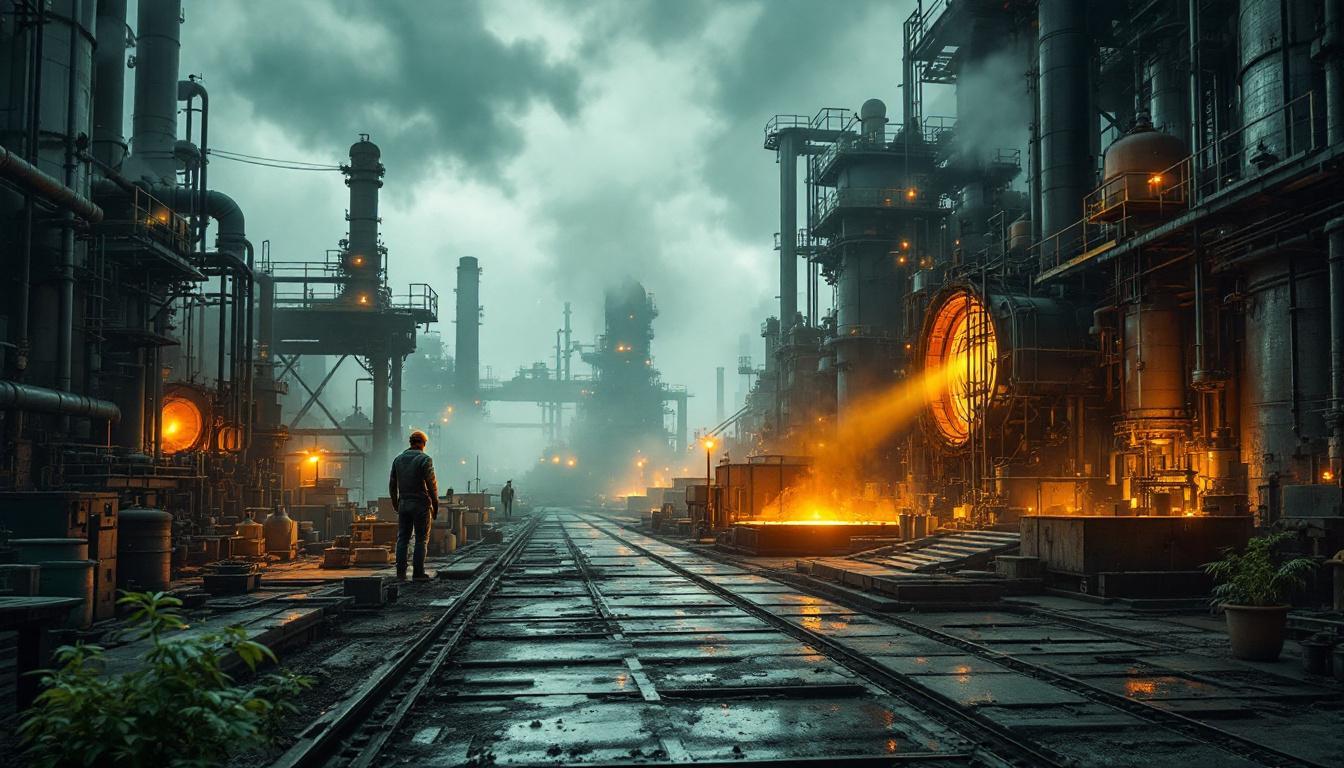
Glass Futures has achieved a significant milestone in decarbonising high‑temperature manufacturing, completing pilot trials of biofuels, electric boosting, and hydrogen, demonstrating their technical feasibility at industrial scale and shaping the future of sustainable glass production.
Glass Futures has reported a major step forward in efforts to decarbonise high‑temperature manufacturing after completing a series of pilot trials that tested biofuels, electric boosting and hydrogen on its 30 tonnes‑per‑day line in St Helens, UK. The multi‑pathway campaign, which Glass Futures says began in October 2025, has, the organisation adds, proven the technical feasibility of several low‑carbon fuel routes at a scale close to industrial operation.
According to Glass Futures, engineers installed a bespoke system to deliver waste‑derived liquid biofuels and successfully fired four novel, low‑cost fuels for sustained periods. The organisation also commissioned a custom electric‑boost (e‑boost) system integrated with site control systems and exercised it across a broad range of power settings, including rapid switching intended to demonstrate demand‑side response potential for local grids. A new hydrogen delivery capability was brought online too, enabling trials using hydrogen supplied by Ryze Power and blends with natural gas, including runs at 100 percent hydrogen.
Justin Kelly, CEO of Glass Futures, said, “The successful completion of these trial programmes marks a crucial milestone not just for Glass Futures, but for the industry’s journey to net zero. We have demonstrated, at industrial scale, the technical viability of a number of alternative low‑carbon fuel pathways that have never before been trialled in this way. It is a testament to the resilience, ingenuity and collaboration of the entire Glass Futures team.”
The pilot furnace itself has been progressing through a phased commissioning programme. Glass Futures reports the oxy‑fired pilot was first lit in mid‑2025 and has since entered extended continuous melting operation, work that set baseline performance metrics ahead of the low‑carbon campaigns. Industry participants point to prior industrial trials conducted in late 2024 and early 2025, in which several liquid biofuels were evaluated at production plants, as providing useful comparative data for the pilot activity.
Glass manufacturers and ancillary suppliers were directly involved. Barry King, Engineering Manager at Encirc, said, “Encirc is delighted to be part of Glass Futures’ groundbreaking trials in biofuels, electric and hydrogen technologies. Collaboration and innovation are at the heart of our decarbonisation journey, and working together on these pioneering projects brings us closer to finding viable alternatives to fossil fuels. By exploring new energy pathways side by side with industry partners, we’re helping to shape a more sustainable future for glass manufacturing and the communities we serve.”
The programme builds on public support for fuel‑switching research. Glass Futures notes its early Industrial Fuel Switching work received funding from the UK Department for Energy Security & Net Zero, and the organisation has since secured Innovate UK backing for the AI‑GLASS project under the Made Smarter Innovation Programme to collect operational data and validate advanced furnace models. Those digitalisation efforts are intended to underpin improved sensing and intelligent control systems that can drive further efficiency and emissions reductions.
Outside the pilot, manufacturer‑led trials have also produced encouraging results. Ardagh Group reported a successful biofuel trial at its Knottingley container plant, part of a wider government‑backed industrial fuel‑switching initiative that included several major glassmakers. According to Glass Futures and industry reports, trials have additionally involved electric‑boost installations at multiple facilities and hydrogen experiments in custom ceramics kilns, underscoring a sector‑wide push to diversify energy vectors.
Glass Futures cautions, however, that technical readiness and commercial adoption remain uneven across pathways. The organisation is collating trial data to assess how each option performs against product quality, operational reliability and integration with existing supply chains. Rob Ireson, Head of Innovation at Glass Futures, said, “These results show that waste‑derived biofuels, e‑boosting technologies, and other emerging solutions can all play a critical role in decarbonising high‑temperature sectors without compromising product quality or operational reliability. Now, we need coordinated action across supply chains, regulators, and energy providers to turn these technical successes into deployable solutions.”
Industry stakeholders and policymakers will face difficult trade‑offs as they move from demonstration to deployment. Biofuels offer a near‑term route that can often be retrofitted to existing burners but raise questions about sustainable feedstock availability and lifecycle emissions. Hydrogen promises deep emissions cuts when produced from low‑carbon sources, yet its cost, supply infrastructure and burner optimisation for glass applications are still evolving. Electric boosting can lower combustion demand and enable grid services, but widespread adoption will depend on power costs, grid capacity and plant electrification strategies.
Glass Futures says the next trial campaigns will explore next‑generation raw materials, process innovations and product trials for both flat and container glass, while members work through combinations of fuels and technologies best suited to their operations. The organisation frames the completed campaign as a catalyst for further research and investment to close remaining technical and commercial gaps and accelerate the sector’s transition to net zero.
- https://www.glassonline.com/completed-first-trials-mark-new-chapter-in-glass-futures-mission/ – Please view link – unable to able to access data
- https://www.glassonline.com/completed-first-trials-mark-new-chapter-in-glass-futures-mission/ – Glass Futures has achieved a significant milestone in its mission to accelerate the decarbonisation of energy-intensive industries by successfully completing alternative fuel trial programmes. These trials tested biofuels, electric melting, and hydrogen capabilities on its 30 tonnes-per-day pilot line. The trials, which began in October 2025, demonstrated the technical potential of low-carbon fuel technologies at industrially relevant scales. Key successes include the installation of a bespoke biofuel delivery system, the trialling of a custom electric-boost system, and the commissioning of a new hydrogen fuel delivery system, enabling successful firing of hydrogen supplied by Ryze Power and natural-gas blends, up to 100 percent hydrogen.
- https://www.glass-international.com/news/glass-futures-completes-alternative-fuel-trials – Glass Futures has completed alternative fuel trial programmes at its pilot facility in St Helens, UK, testing biofuels, electric melting, and hydrogen capabilities on its 30 tonnes-per-day line. The trials, which began in October 2025, demonstrated the technical potential of low-carbon fuel technologies at industrial scales. Key achievements include the installation of a bespoke biofuel delivery system, the trialling of a custom electric-boost system, and the commissioning of a new hydrogen fuel delivery system, enabling successful firing of hydrogen supplied by Ryze Power and natural-gas blends, up to 100 percent hydrogen.
- https://www.glass-international.com/news/glass-futures-pilot-furnace-now-fully-operational – Glass Futures’ 30 tonnes-per-day oxy-fired pilot furnace in St Helens, UK, has begun continuous melting after successful commissioning. The furnace, lit in June 2025, is now operating 24/7, running experiments to understand its performance under standard conditions. These tests will set the benchmark for future trials with low-carbon alternatives such as hydrogen, biofuels, and hybrid electric boost, which are due to commence over the next few weeks. This milestone builds on industrial trials conducted at the end of 2024 and early 2025, during which five different types of liquid biofuels were tested in glass and ceramic production.
- https://www.glass-international.com/news/glass-futures-completes-decarbonised-fuel-trials – UK glass manufacturers participated in successful trials focused on the use of alternative fuels in industrial manufacturing. Organised by Glass Futures, the trials aimed to decarbonise industrial manufacturing processes. One trial involved the use of liquid biofuels in glass production at four UK container glass plants. Another involved an electric-boosting system at a Guardian float glass plant and an Encirc container glass facility. The third demonstrated hydrogen and hydrogen-natural gas blend firing in a custom-designed ceramics pilot-kiln at the Glass Futures pilot facility in the UK.
- https://www.glass-futures.org/news/groundbreaking-alternative-fuel-trials-achieve-major-milestone-toward-industrial-decarbonisation/ – The successful completion of major industrial fuel switching trials marks a significant step toward improving energy efficiency and reducing carbon emissions within energy-intensive industries, supporting the UK’s goal to transition towards net zero while ensuring alternative energy solutions are viable long-term. Key achievements include industrial trials involving the UK’s largest glass and ceramic manufacturers, successful implementation and trial of a new electric-boosting system at an industrial scale, and the demonstration of hydrogen and hydrogen-natural gas blend firing in a custom-designed ceramics pilot-kiln at the Glass Futures pilot facility.
- https://www.ardaghgroup.com/press-releases/detail/13149/Ardagh%2Btrials%2Blower-carbon%2Bbiofuel – Ardagh Glass Packaging-Europe (AGP-Europe), an operating business of Ardagh Group, has successfully completed an industrial fuel switching trial to produce glass packaging using biofuel in the furnace at its Knottingley, UK facility. The £6 million industrial fuel switching trial, funded by the UK Government’s Net Zero Innovation Portfolio programme and led by Glass Futures, brought together several manufacturers in both the glass and ceramics sectors, including AGP-Europe, Encirc, O-I Glass, Pilkington UK, and DSF Refractories & Minerals. The project’s goal was to evaluate the feasibility of using alternative liquid bio-derived fuels in the glass melting process, with the aim of completely replacing natural gas with lower-carbon biofuel in the furnace.
Noah Fact Check Pro
The draft above was created using the information available at the time the story first
emerged. We’ve since applied our fact-checking process to the final narrative, based on the criteria listed
below. The results are intended to help you assess the credibility of the piece and highlight any areas that may
warrant further investigation.
Freshness check
Score:
8
Notes:
The article reports on recent trials completed by Glass Futures, with the latest publication date being 26th February 2026. ([glass-international.com](https://www.glass-international.com/news/glass-futures-completes-alternative-fuel-trials?utm_source=openai)) This suggests the content is current and not recycled. However, similar trials have been reported in the past, such as those in March 2025. ([glass-international.com](https://www.glass-international.com/news/glass-futures-completes-decarbonised-fuel-trials?utm_source=openai)) The article does not specify the exact dates of the trials, which raises questions about the freshness of the information presented.
Quotes check
Score:
7
Notes:
The article includes direct quotes from Justin Kelly, CEO of Glass Futures, and Rob Ireson, Head of Innovation at Glass Futures. A search for these quotes reveals that they have been used in previous publications, such as in March 2025. ([glass-international.com](https://www.glass-international.com/news/glass-futures-completes-decarbonised-fuel-trials?utm_source=openai)) This suggests that the quotes may have been reused, potentially indicating recycled content. The lack of new, independently verifiable quotes raises concerns about the originality of the reporting.
Source reliability
Score:
6
Notes:
The article is published on Glass Futures’ official website, which is a reputable source for information about their activities. However, as the content originates from the organisation itself, it may be subject to bias and lacks independent verification. The absence of external sources or third-party confirmations diminishes the reliability of the information presented.
Plausibility check
Score:
7
Notes:
The claims about the successful completion of trials using biofuels, electric boosting, and hydrogen in glass manufacturing are plausible and align with ongoing industry efforts to decarbonise high-temperature manufacturing processes. However, the lack of independent verification and the potential reuse of quotes from previous reports raise questions about the novelty and accuracy of the information presented.
Overall assessment
Verdict (FAIL, OPEN, PASS): FAIL
Confidence (LOW, MEDIUM, HIGH): MEDIUM
Summary:
The article presents information about recent trials conducted by Glass Futures, but the reliance on self-reported data without independent verification, the reuse of quotes from previous publications, and the lack of external sources raise significant concerns about the accuracy and originality of the content. These issues prevent the article from meeting the necessary standards for publication under our editorial indemnity.
