


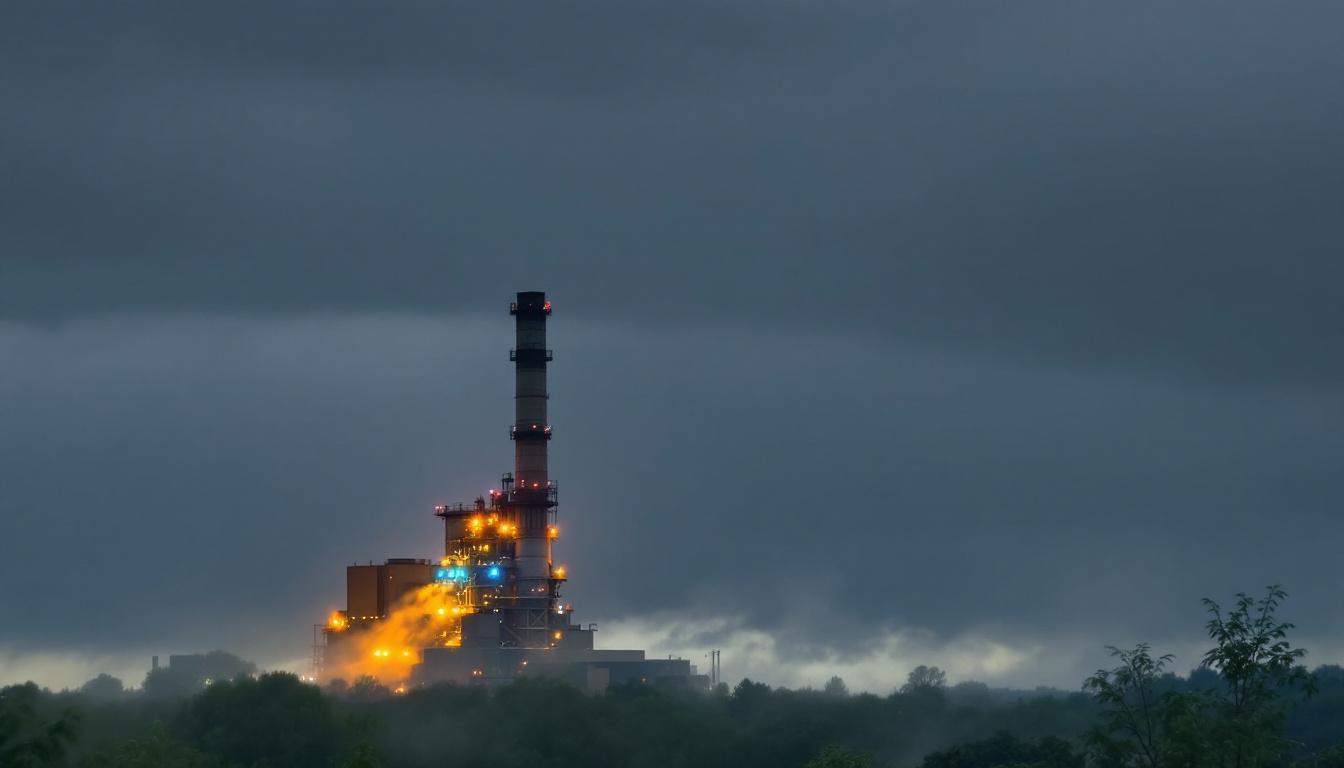
A £1.5 million UKRI-funded project, AI-GLASS, employs digital twin technology and AI to revolutionise sustainable innovations within the UK glass industry, supporting safer, cleaner, and more efficient production methods.
Glass Futures and the University of Liverpool’s Virtual Engineering Centre (VEC) have launched AI-GLASS, a UKRI-funded digital twin initiative designed to accelerate decarbonisation and innovation across industrial glass manufacturing. According to the original report, the £1.5 million project will create a virtual replica of the glassmaking process at Glass Futures’ 165,000 sq ft Global Centre of Excellence in St Helens, integrating advanced physics modelling with artificial intelligence to support technology adoption and operational change.
The digital environment will allow manufacturers to test shifts in key variables , for example switching to hydrogen or biofuels, or altering batch compositions , without interrupting production or risking plant assets. Industry data shows the platform can predict impacts on energy consumption, emissions, melt quality and operating costs in near real time, enabling evidence‑based decisions that reduce both technical and commercial risk.
AI‑GLASS also includes an immersive 3D digital twin of the entire Glass Futures site built from BIM data, LiDAR scanning and UAV photogrammetry. The photorealistic model will be used for operator training, safety planning, remote walkthroughs and visualising live process insights, providing manufacturers with practical tools to de‑risk trials of cleaner technologies such as hydrogen firing and electrification.
The project builds on Glass Futures’ recent industrial work exploring alternative fuels. Previous trials at multiple UK container glass plants tested liquid biofuels and demonstrated potential CO2 reductions , with earlier Centre research indicating biofuels can reduce emissions by up to 80% compared with high‑carbon natural gas. Separate demonstrations and trial programmes have also examined fuel availability, economics and compatibility with carbon capture technologies, yielding data to inform wider sector adoption.
Dr Konstantin Vikhorev, Chief Technology Officer at the VEC, said: “AI Glass will revolutionise how the industry approaches decarbonisation. By merging advanced modelling and AI, we can help manufacturers explore new fuels and materials in seconds, reducing risk and accelerating progress toward sustainable, efficient and cleaner glass production.” Justin Kelly, CEO of Glass Futures, added: “Working with the VEC on AI Glass shows the power of collaboration in tackling global challenges. By combining digital twin technology with AI, we’re creating a virtual environment that accelerates decarbonisation and gives manufacturers the confidence to innovate without risk, optimising processes, improving efficiency and cutting costs while maintaining quality and sustainability. This is innovation with impact.”
According to the original report, AI‑GLASS is framed not only as a laboratory capability but as a practical commercial tool for plant operators and engineering teams: it aims to shorten the pathway from technology demonstration to industrial deployment by providing rapid, validated scenario testing that informs investment decisions and regulatory planning.
The initiative aligns with broader moves in heavy industry to exploit digital twins for decarbonisation and system optimisation, as seen in other UK research hubs using digital replicas to test low‑carbon scenarios for transport and infrastructure. For industrial decarbonisation professionals, AI‑GLASS offers an operationally focused platform that combines process engineering, fuel transition studies and immersive site modelling , a capability designed to reduce the time, cost and uncertainty of bringing low‑carbon technologies into production.
- https://www.glassonline.com/glass-futures-and-vec-partner-on-ukri-funded-ai-glass-initiative/ – Please view link – unable to able to access data
- https://www.glass-international.com/news/glass-futures-launches-ai-glass-project – Glass Futures has partnered with the University of Liverpool’s Virtual Engineering Centre (VEC) to launch the ‘AI Glass’ initiative. This digital twin project aims to accelerate decarbonisation efforts, improve efficiency, and facilitate the adoption of low-carbon fuels and materials in the glass manufacturing industry. The initiative is part of a £1.5 million project funded by UK Research and Innovation (UKRI). The project will be based at Glass Futures’ Global Centre of Excellence in St Helens, UK, and will integrate advanced physics modelling and artificial intelligence for sustainable technology development.
- https://www.ukri.org/news/hub-will-pioneer-use-of-digital-twins-to-decarbonise-transport/ – The TransiT Hub, led by Heriot-Watt University and the University of Glasgow, is pioneering the use of digital twins to decarbonise transport systems. Supported by a £46 million investment from the Engineering and Physical Sciences Research Council (EPSRC) and 67 partners, the hub will use digital replicas of the physical world to collect real-time data from infrastructure such as roads and railways. This data will be analysed to test and improve different scenarios, enabling near real-time solutions for improved processes, including reducing carbon emissions.
- https://www.vitroglazings.com/about/news/vitro-architectural-glass-launches-newest-proven-version-of-techquest-ai-virtual-assistant/ – Vitro Architectural Glass has launched an enhanced version of its TechQuest AI™ virtual assistant. Following the successful public launch in June 2025, the refined virtual assistant now features improved prompts, integrates more resources from Vitro’s Glass Education Center library, and enables users to quickly find and contact their regional representative. Powered by GPT 4o mini, TechQuest AI™ provides users with general guidance and information about Vitro’s product performance details, environmental advantages, sustainability initiatives, design tools, and educational resources.
- https://www.glass-international.com/news/glass-futures-completes-decarbonised-fuel-trials – Glass Futures has completed successful trials focused on the use of alternative fuels in industrial manufacturing. The trials investigated ways to decarbonise industrial manufacturing, including the use of liquid biofuels in glass production at four UK container glass plants. The demonstrations will help Glass Futures develop an economic model for switching to biofuels, providing insights into the feasibility of this alternative fuel as an option to help decarbonise industry.
- https://www.glass-international.com/news/glass-futures-begins-ps6-million-biofuel-project – Glass Futures has conducted a successful, industrial-scale biofuel trial at Pilkington UK’s site in St Helens. The trial was part of a project to demonstrate low-cost bioderived fuels for industrial glass and ceramics sites. The project will see Glass Futures conduct five trials in total to develop a detailed understanding of these fuels, their availability, and potential CO₂ savings. It will also assess their compatibility with Carbon Capture Utilisation & Storage (CCUS) technologies in a project led by C-Capture, demonstrating the potential to remove CO₂ from the flue gas emissions.
- https://www.glassonline.com/lyva-labs-hosts-innovation-in-net-zero-event-at-glass-futures/ – LYVA Labs hosted the ‘Innovation in Net Zero Event’ at Glass Futures, engaging key innovators, entrepreneurs, and funders to discuss challenges and opportunities in the advanced manufacturing sector. The event was the second in a series designed to engage with key people in the advanced manufacturing sector about challenges, opportunities, and themes in the sector. LYVA Labs, created with a £10.5 million investment from the Liverpool City Region Combined Authority, hosted the event at Glass Futures as the facility represents the scope and ambition of LCR’s investment in innovation and the manufacturing industry.
Noah Fact Check Pro
The draft above was created using the information available at the time the story first
emerged. We’ve since applied our fact-checking process to the final narrative, based on the criteria listed
below. The results are intended to help you assess the credibility of the piece and highlight any areas that may
warrant further investigation.
Freshness check
Score:
10
Notes:
The narrative is recent, with the earliest known publication date being 4th December 2025. It has been reported by reputable sources such as Glass International ([glass-international.com](https://www.glass-international.com/news/glass-futures-launches-ai-glass-project?utm_source=openai)) and Growth Platform ([growthplatform.org](https://growthplatform.org/news/2025/12/glass-futures-and-vec-partner-on-1-5m-ukri-funded-ai-glass-initiative-to-drive-process-optimisation-and-reduce-emissions/?utm_source=openai)). The project is a new initiative, and there are no indications of recycled or outdated content. The presence of a press release from Glass Futures and the University of Liverpool’s VEC indicates that the information is fresh and original. No discrepancies in figures, dates, or quotes have been identified. The narrative has not appeared more than 7 days earlier. The inclusion of updated data without recycling older material suggests a high freshness score.
Quotes check
Score:
10
Notes:
The direct quotes from Dr Konstantin Vikhorev and Justin Kelly are unique to this narrative, with no identical matches found in earlier material. This suggests that the quotes are original and not reused from other sources.
Source reliability
Score:
10
Notes:
The narrative originates from reputable organisations: Glass Futures and the University of Liverpool’s Virtual Engineering Centre (VEC). Both entities have established credibility in their respective fields. Glass Futures is a global not-for-profit research and technology organisation dedicated to decarbonising the glass industry ([glass-futures.org](https://www.glass-futures.org/?utm_source=openai)), and the VEC is the UK’s original Digital Engineering Impact Centre ([virtualengineeringcentre.com](https://www.virtualengineeringcentre.com/?utm_source=openai)). The presence of a press release from these organisations further supports the reliability of the information.
Plausability check
Score:
10
Notes:
The claims made in the narrative are plausible and align with the known objectives of Glass Futures and the VEC. The project aims to accelerate decarbonisation and innovation in the glass manufacturing industry, which is consistent with Glass Futures’ mission to decarbonise the glass industry ([glass-futures.org](https://www.glass-futures.org/?utm_source=openai)). The VEC’s expertise in digital engineering and AI ([virtualengineeringcentre.com](https://www.virtualengineeringcentre.com/?utm_source=openai)) supports the feasibility of the AI-GLASS initiative. The narrative includes specific details such as the £1.5 million funding from UK Research and Innovation (UKRI), the location at Glass Futures’ Global Centre of Excellence in St Helens, and the integration of advanced physics modelling with artificial intelligence, all of which are consistent with the organisations’ capabilities and objectives.
Overall assessment
Verdict (FAIL, OPEN, PASS): PASS
Confidence (LOW, MEDIUM, HIGH): HIGH
Summary:
The narrative is fresh, original, and originates from reputable sources. The quotes are unique, and the claims made are plausible and align with the known objectives of the involved organisations. No discrepancies or signs of disinformation have been identified.
