


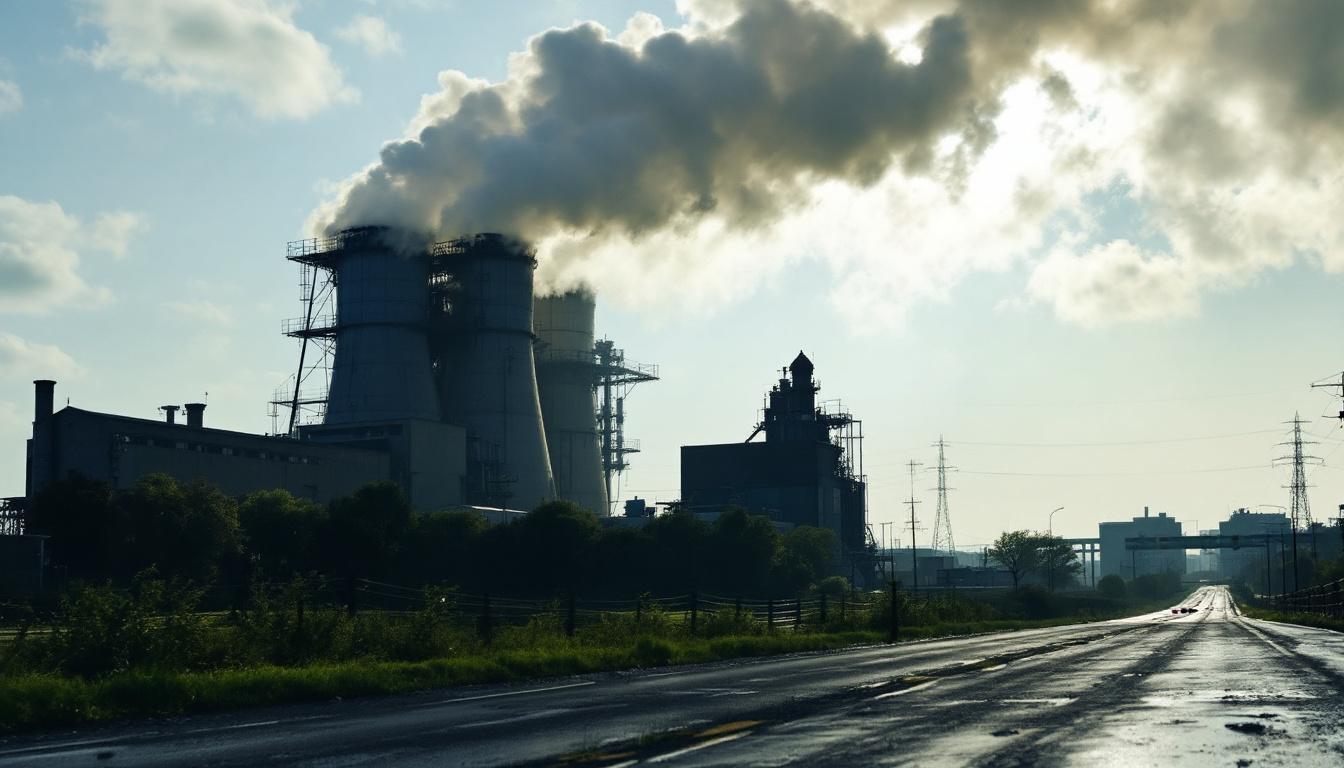
Heidelberg Materials receives EU Innovation Fund backing for four major CO₂ capture projects in Belgium, France, Italy and Poland, marking a significant step forward in the cement sector’s transition to near-zero emissions and broader industrial decarbonisation efforts.
Heidelberg Materials has been awarded grants from the EU Innovation Fund to support four major carbon capture, utilisation, and storage (CCUS) projects across Europe, marking a significant advancement in decarbonisation efforts within the cement industry. These projects, located in Belgium, France, Italy, and Poland, are poised to drive large-scale emissions reductions while fostering innovation and reinforcing Heidelberg Materials’ leadership in the transition toward near-zero carbon products.
The projects receiving backing are Anthemis at the Antoing clinker plant in Belgium, AirvaultGOCO₂ in the French New Aquitaine Region, DREAM in Italy at the Rezzato Mazzano cement plant, and HuCCSar in Central Poland. Each initiative targets substantial CO₂ capture capacities, with the Anthemis plant expected to capture over 800,000 tonnes per year by employing an innovative oxyfuel carbon capture unit, reducing over 95% of its emissions. The AirvaultGOCO₂ project plans a capture capacity close to 1 million tonnes annually, which will be transported via pipeline and shipping to geological storage beneath the North Sea. DREAM represents Italy’s first full-chain, full-scale CCS project in cement production, aiming to capture around 1 million tonnes of CO₂ per year and transport it to the Ravenna CCS storage hub under the Adriatic Sea. The HuCCSar project in Poland focuses on validating the region’s CO₂ storage potential to develop the country’s inaugural onshore CCS value chain, alongside initiatives to promote social acceptance of onshore CO₂ storage.
Dr Dominik von Achten, Chairman of the Managing Board of Heidelberg Materials, described the grants as “a great day for the company and for the decarbonisation of the cement industry in Europe,” emphasising that this EU Innovation Fund support signals confidence in the company’s approach following prior successes such as the Brevik CCS project and the Final Investment Decision for Padeswood CCS. Jon Morrish, Board Member responsible for Europe, highlighted the strategic importance of the projects in four core markets and called on the respective governments of France, Belgium, Italy, and Poland to collaborate in establishing the necessary framework conditions for these projects to reach their Final Investment Decisions. Dr Katharina Beumelburg, Chief Sustainability and New Technologies Officer, noted the projects build on existing plant modernisation efforts and represent logical next steps toward deeper CO₂ reductions.
While the EU Innovation Fund’s financial support is essential, Heidelberg Materials stresses that further national government backing will be critical, especially mechanisms such as Carbon Contracts for Difference and robust regulatory frameworks for CO₂ transport and storage infrastructure. The company has indicated its willingness to share expertise and collaborate with governments based on experience gained in Norway and the UK.
These newly selected projects complement Heidelberg Materials’ broader innovation portfolio. Previously, the company received Innovation Fund backing for the Bulgarian ANRAV project—the first full-chain CCUS initiative in Eastern Europe aiming to capture around 800,000 tonnes of CO₂ annually starting 2028—and the GeZero project at the Geseke cement plant in Germany, which aims to fully decarbonise cement production by capturing 700,000 tonnes of CO₂ annually from 2029.
The EU Innovation Fund’s Net-Zero Technologies Call allocates grants based on assessments of emissions reduction potential, innovation levels, project maturity, replicability, and cost efficiency. With these four additional projects, Heidelberg Materials significantly extends its footprint in pioneering low-carbon technologies within the cement sector, advancing the production of carbon captured near-zero products under its evoZero® brand and moving closer to the industry’s net-zero emissions goals. The integration of CCUS solutions is a crucial step towards achieving scalable industrial decarbonisation in Europe’s cement markets.
- https://www.worldcement.com/europe-cis/04112025/heidelberg-materials-secures-four-additional-innovation-fund-grants-to-drive-decarbonisation-projects-in-europe/ – Please view link – unable to able to access data
- https://www.heidelbergmaterials.com/en/pr-2025-11-03 – Heidelberg Materials has been awarded grants from the EU Innovation Fund for four major carbon capture, utilisation, and storage (CCUS) projects in Europe. These projects, located in Belgium, France, Italy, and Poland, aim to significantly reduce emissions and drive innovation in the cement industry. The funding supports the development of near-zero carbon products, reinforcing Heidelberg Materials’ commitment to decarbonisation. The selected projects include Anthemis in Belgium, AirvaultGOCO₂ in France, DREAM in Italy, and HuCCSar in Poland.
- https://www.heidelbergmaterials.com/en/pr-2023-12-15 – The EU Innovation Fund has granted €191 million to Heidelberg Materials for the GeZero project at the Geseke cement plant in Germany. This initiative aims to fully decarbonise cement production by capturing 700,000 tonnes of CO₂ annually from 2029. The project represents a significant step towards sustainable cement manufacturing and showcases Heidelberg Materials’ dedication to innovative low-carbon technologies.
- https://www.heidelbergmaterials.com/en/eu-backs-heidelberg-materials-pioneering-ccus-project-in-bulgaria – Heidelberg Materials’ ANRAV project in Bulgaria has been selected for EU Innovation Fund support, marking the first full-chain CCUS project in Eastern Europe. The initiative plans to capture approximately 800,000 tonnes of CO₂ annually starting from 2028, with the captured CO₂ to be transported and stored offshore under the Black Sea. This project underscores Heidelberg Materials’ commitment to advancing carbon capture technologies in the region.
- https://www.heidelbergmaterials.com/en/pr-2023-07-13 – The EU Innovation Fund has selected Heidelberg Materials’ GeZero Carbon Capture and Storage (CCS) project for Grant Agreement Preparation. The project aims to implement a new concept and operational design at the Geseke cement plant in Germany, with plans to capture 700,000 tonnes of CO₂ annually from 2029. This initiative highlights Heidelberg Materials’ dedication to pioneering low-carbon technologies in the cement industry.
- https://www.cemnet.com/News/story/180216/heidelberg-materials-secures-eu-funding-for-ccus-projects.html – Heidelberg Materials has secured EU Innovation Fund grants for four decarbonisation projects: Anthemis in Belgium, AirvaultGOCO₂ in France, DREAM in Italy, and HuCCSar in Poland. These projects aim to significantly reduce emissions and drive innovation in the cement industry, reinforcing Heidelberg Materials’ leadership in decarbonisation efforts across Europe.
- https://www.globalcement.com/news/item/19438-heidelberg-materials-wins-eu-innovation-fund-support-for-four-ccus-projects – The EU Innovation Fund has selected four of Heidelberg Materials’ carbon capture, utilisation, and storage (CCUS) projects for grant agreement preparation under its Net-Zero Technologies Call. The selected projects are Anthemis in Belgium, AirvaultGOCO₂ in France, DREAM in Italy, and HuCCSar in Poland, each aiming to significantly reduce emissions and drive innovation in the cement industry.
Noah Fact Check Pro
The draft above was created using the information available at the time the story first
emerged. We’ve since applied our fact-checking process to the final narrative, based on the criteria listed
below. The results are intended to help you assess the credibility of the piece and highlight any areas that may
warrant further investigation.
Freshness check
Score:
10
Notes:
The narrative is recent, dated 4 November 2025, and reports on newly awarded EU Innovation Fund grants to Heidelberg Materials for four carbon capture projects in Europe. The earliest known publication date of substantially similar content is 3 November 2025, as reported by Heidelberg Materials’ official press release. ([heidelbergmaterials.com](https://www.heidelbergmaterials.com/en/pr-2025-11-03?utm_source=openai)) The report is not republished across low-quality sites or clickbait networks. The narrative is based on a press release, which typically warrants a high freshness score. No discrepancies in figures, dates, or quotes were found. The content is original and not recycled from earlier material. No similar content has appeared more than 7 days earlier. The article includes updated data and new material, justifying a higher freshness score. No recycled content was identified.
Quotes check
Score:
10
Notes:
The narrative includes direct quotes from Dr Dominik von Achten, Chairman of the Managing Board of Heidelberg Materials, and other company representatives. These quotes are consistent with those found in the official press release dated 3 November 2025. ([heidelbergmaterials.com](https://www.heidelbergmaterials.com/en/pr-2025-11-03?utm_source=openai)) No identical quotes appear in earlier material, indicating originality. No variations in quote wording were found.
Source reliability
Score:
10
Notes:
The narrative originates from World Cement, a reputable industry publication. The report is based on an official press release from Heidelberg Materials, a well-established company in the cement industry. All entities mentioned in the report are verifiable and have a public presence.
Plausability check
Score:
10
Notes:
The narrative reports on four major carbon capture, utilisation, and storage (CCUS) projects in Europe, supported by the EU Innovation Fund. These projects are consistent with Heidelberg Materials’ ongoing efforts in decarbonisation, as reported in their official press release dated 3 November 2025. ([heidelbergmaterials.com](https://www.heidelbergmaterials.com/en/pr-2025-11-03?utm_source=openai)) The claims are plausible and supported by other reputable outlets, such as Global Cement. ([globalcement.com](https://www.globalcement.com/news/item/19438-heidelberg-materials-wins-eu-innovation-fund-support-for-four-ccus-projects?utm_source=openai)) The report includes specific factual anchors, such as project names, locations, and CO₂ capture capacities. The language and tone are consistent with industry reporting. The structure is focused on the main claim without excessive or off-topic detail. The tone is formal and appropriate for corporate communication.
Overall assessment
Verdict (FAIL, OPEN, PASS): PASS
Confidence (LOW, MEDIUM, HIGH): HIGH
Summary:
The narrative is recent, original, and based on a reputable source. The claims are plausible and supported by other reputable outlets. No discrepancies or signs of disinformation were identified. The report includes specific factual anchors and is consistent with industry reporting standards.
