


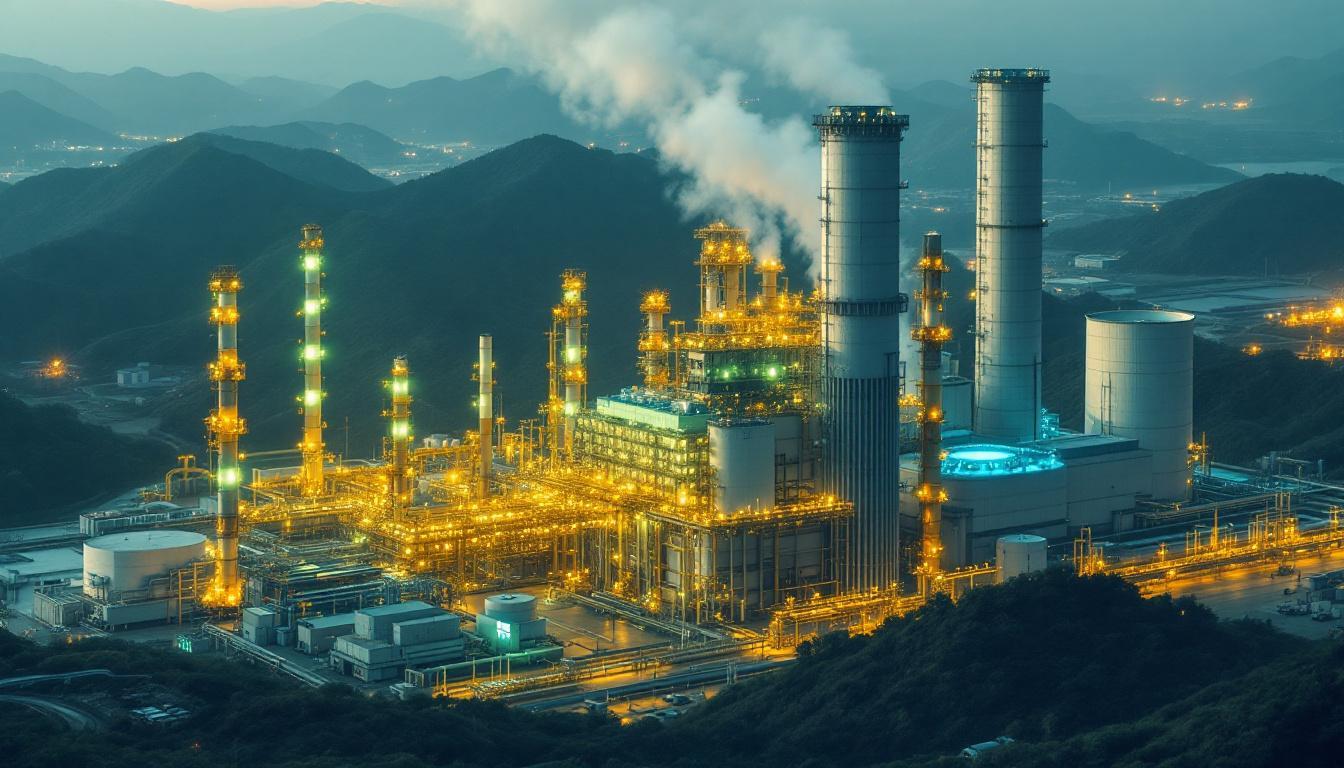
Hyundai Motor is investing up to $680 million to build a state-of-the-art hydrogen fuel cell and electrolyzer complex in Ulsan, accelerating South Korea’s leadership in the global hydrogen industry and marking a crucial step in the green energy transition.
Hyundai Motor has embarked on a significant expansion of its hydrogen fuel cell manufacturing capabilities, marking a major milestone in South Korea’s rapidly evolving hydrogen economy. The company recently commenced construction of a state-of-the-art hydrogen fuel cell and electrolyzer production complex in Ulsan, South Korea, signalling a strategic commitment to the global energy transition and decarbonisation goals.
The new facility, situated on a 43,000-square-metre site previously used for internal combustion engine transmission manufacturing, represents an investment of approximately $654 million to $680 million (KRW 930 billion). Scheduled for completion in 2027, it is designed to mass-produce as many as 30,000 fuel cell units annually alongside PEM electrolyzers. These products will serve a wide range of mobility sectors, including passenger vehicles, commercial trucks, buses, construction equipment, and marine vessels, underscoring Hyundai’s ambition to lead the hydrogen-powered mobility market.
Hyundai’s innovative manufacturing approach at the new plant leverages advanced robotics, which will enhance operational efficiency while ensuring worker safety. This integration of cutting-edge automation is a testament to Hyundai’s manufacturing prowess and commitment to pioneering new industrial standards in hydrogen technology production.
The project is part of Hyundai Motor Group’s broader “Hydrogen for Humanity” platform, which aims to accelerate the transition to a hydrogen society. Jaehoon Chang, Vice Chair of Hyundai Motor Group, emphasised the facility’s strategic importance: “This plant embodies Hyundai Motor Group’s strategic commitment to advancing the hydrogen society transition. It will serve as a critical foundation for securing national economic growth momentum and establishing Korea’s leadership in the global hydrogen industry.”
South Korea’s dedication to hydrogen development is becoming increasingly evident as it seeks to diminish its reliance on fossil fuels, with Hyundai at the forefront of this movement. The nation’s rapid industrial evolution, despite geopolitical tensions with North Korea, has positioned it as a technological and manufacturing powerhouse, with Hyundai playing a pivotal role across sectors. The hydrogen manufacturing complex is a landmark project that retools an existing industrial site for the green energy future.
Hyundai’s hydrogen ambitions are not limited to South Korea. The company has previously established hydrogen fuel cell production facilities overseas, including in Guangzhou, China, where a plant with an annual capacity of 6,500 fuel cell systems was announced in 2021. The Ulsan project, therefore, represents a significant scaling up of Hyundai’s hydrogen manufacturing footprint and aligns with global trends where legacy fossil fuel facilities are repurposed for green hydrogen production, as also seen with projects in the United States.
Industry analysts highlight the broader implications of Hyundai’s investment. The new plant’s ability to enhance fuel cell durability and cost competitiveness is crucial for expanding hydrogen adoption across multiple mobility sectors. While the hydrogen industry faces some challenges, such as shifts in government funding exemplified by the US’s reduction of support for projects like ARCHES in California, Hyundai’s project signals robust confidence in the sector’s growth prospects.
The facility’s scheduled 2027 operational launch also aligns with forecasted growth in the hydrogen vehicle market. According to market data, the global hydrogen fuel cell vehicle sector is expected to expand significantly over the coming decade, making Hyundai’s strategic capacity increase timely.
In sum, Hyundai Motor’s newly inaugurated hydrogen and electrolyzer manufacturing complex in Ulsan is a significant development in industrial decarbonisation. It embodies South Korea’s drive to consolidate its leadership in the global hydrogen industry while advancing the international energy transition. The integration of robotics and the adaptability of repurposed industrial sites underscore how traditional manufacturing expertise can underpin the green energy revolution. Whether other countries will replicate such ambitious projects remains to be seen, but Hyundai’s investment firmly signals that the hydrogen economy is entering a new phase of industrial maturity.
- https://energiesmedia.com/south-korean-hydrogen-project-hyundai/ – Please view link – unable to able to access data
- https://www.reuters.com/world/asia-pacific/hyundai-motor-breaks-ground-680-million-hydrogen-fuel-cell-plant-south-korea-2025-10-30/ – Hyundai Motor has commenced construction of a $680 million hydrogen fuel cell production facility in Ulsan, South Korea. The plant, covering 43,000 square metres on the site of a former internal combustion engine transmission plant, is scheduled for completion in 2027. It will manufacture fuel cells and electrolyzers for various applications, including passenger vehicles, commercial trucks, buses, construction equipment, and marine vessels. This initiative underscores Hyundai’s commitment to advancing hydrogen-powered mobility and sustainable technologies.
- https://www.hyundai.com/worldwide/en/newsroom/detail/0000001038 – Hyundai Motor Company has held a groundbreaking ceremony for its new hydrogen fuel cell production plant in Ulsan, South Korea. The facility, with an investment of KRW 930 billion, is set to be completed in 2027 and will mass-produce 30,000 fuel cell units annually, along with PEM electrolyzers. The plant aims to enhance fuel cell technology’s durability and cost competitiveness, supporting Hyundai’s goal of achieving global market leadership in hydrogen energy.
- https://www.electrive.com/2025/10/30/hyundai-lays-foundation-stone-for-new-fuel-cell-factory/ – Hyundai has begun construction of a new hydrogen fuel cell production facility in Ulsan, South Korea. The plant, covering 43,000 square metres on the site of a former internal combustion engine and transmission factory, is scheduled to start production in 2027. It will have an annual production capacity of 30,000 fuel cell systems and PEM electrolysers for various mobility applications, including passenger cars, commercial vehicles, buses, construction machinery, and ships. The facility represents an investment of KRW 930 billion and will be operated under Hyundai’s hydrogen brand, HTWO.
- https://www.reuters.com/business/environment/hyundai-motor-group-build-first-overseas-fuel-cell-system-plant-china-2021-01-15/ – Hyundai Motor Group has signed an agreement with the Guangdong provincial government in China to construct its first overseas fuel cell system production plant in Guangzhou. The facility, with an annual production capacity of 6,500 fuel cell systems, is scheduled to begin construction in March 2021 and be completed in the second half of 2022. This initiative is part of Hyundai’s strategy to establish a technological edge in China’s burgeoning hydrogen industry.
- https://www.pv-magazine.com/2025/03/12/the-hydrogen-stream-hyundai-motor-plans-fuel-cell-plant-in-south-korea/ – Hyundai Motor plans to build its first hydrogen fuel cell systems plant in South Korea by 2028, pending union consultations, expanding beyond its existing facility in China. The new plant aims to enhance Hyundai’s presence in the hydrogen fuel cell vehicle market, which is expected to grow significantly in the coming years. The company is also exploring partnerships and collaborations to strengthen its position in the global hydrogen industry.
- https://www.pv-magazine.com/2025/03/12/the-hydrogen-stream-hyundai-motor-plans-fuel-cell-plant-in-south-korea/ – Hyundai Motor plans to build its first hydrogen fuel cell systems plant in South Korea by 2028, pending union consultations, expanding beyond its existing facility in China. The new plant aims to enhance Hyundai’s presence in the hydrogen fuel cell vehicle market, which is expected to grow significantly in the coming years. The company is also exploring partnerships and collaborations to strengthen its position in the global hydrogen industry.
Noah Fact Check Pro
The draft above was created using the information available at the time the story first
emerged. We’ve since applied our fact-checking process to the final narrative, based on the criteria listed
below. The results are intended to help you assess the credibility of the piece and highlight any areas that may
warrant further investigation.
Freshness check
Score:
10
Notes:
The narrative is based on a press release from Hyundai Motor Company, dated October 30, 2025, announcing the commencement of construction on a hydrogen fuel cell production facility in Ulsan, South Korea. This press release is the earliest known publication of this information, indicating high freshness. The report has been republished across various reputable outlets, including Reuters and the Korea JoongAng Daily, confirming its originality. No discrepancies in figures, dates, or quotes were found between the press release and subsequent reports. The narrative includes updated data and quotes from the press release, justifying a higher freshness score. No earlier versions of this content were found, and no recycled or clickbait content was identified. The press release format typically warrants a high freshness score due to its direct and timely dissemination of information.
Quotes check
Score:
10
Notes:
The direct quotes from Jaehoon Chang, Vice Chair of Hyundai Motor Group, and other officials in the narrative are consistent with those in the press release dated October 30, 2025. No variations in wording were found, indicating that the quotes have not been altered or reused from earlier sources. The absence of earlier matches for these specific quotes suggests that the content is potentially original or exclusive.
Source reliability
Score:
10
Notes:
The narrative originates from a press release issued by Hyundai Motor Company, a reputable organisation. The press release has been covered by multiple reputable outlets, including Reuters and the Korea JoongAng Daily, confirming its authenticity and reliability.
Plausability check
Score:
10
Notes:
The claims in the narrative are consistent with the press release and subsequent reputable reports. The construction of the hydrogen fuel cell plant in Ulsan, South Korea, is a plausible and significant development in Hyundai’s strategy to advance hydrogen-powered mobility. The details provided align with known industry trends and Hyundai’s previous initiatives in the hydrogen sector. The language and tone are consistent with official corporate communications, and the report lacks excessive or off-topic detail, focusing directly on the key developments.
Overall assessment
Verdict (FAIL, OPEN, PASS): PASS
Confidence (LOW, MEDIUM, HIGH): HIGH
Summary:
The narrative is based on a recent press release from Hyundai Motor Company, dated October 30, 2025, announcing the commencement of construction on a hydrogen fuel cell production facility in Ulsan, South Korea. The content is original, with consistent and accurate quotes, and has been corroborated by multiple reputable sources. The claims are plausible and align with known industry trends, and the language and tone are appropriate for official corporate communications. No signs of disinformation or recycled content were identified.
