

The International Maritime Organization advances a comprehensive workplan to align safety standards with rapid technological changes, including nuclear, wind, and battery systems, amid growing decarbonisation efforts in shipping.
The International Maritime Organization’s Sub‑Committee on Ship Design and Construction concluded its 12th session in London on 23 January with a package of work items aimed at aligning safety regulation with rapid decarbonisation-driven technology change in shipping. According to the IMO, the session produced a draft workplan that will be forwarded to the Maritime Safety Committee (MSC 111) for consideration in May 2026 and sets out milestones for regulatory action on battery, wind and nuclear propulsion systems.
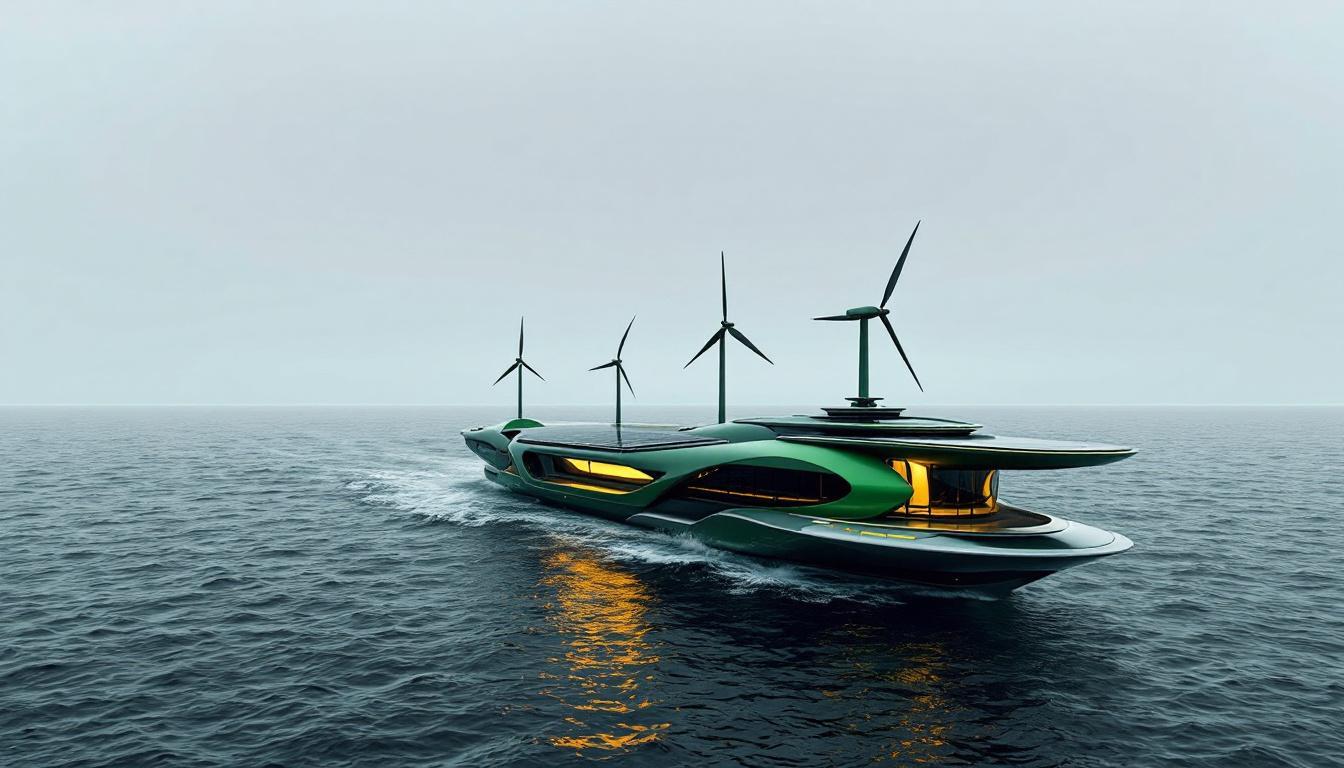
The workplan tasks the Sub‑Committee with preparing new or revised safety requirements under the SDC’s remit for three technology streams: nuclear power; wind propulsion and wind‑assisted systems; and lithium‑ion batteries, including swappable traction battery containers. If adopted by the MSC, the timetable envisages regulatory steps over the coming years, notably proposed amendments to SOLAS regulation II‑1/41 to permit batteries as the primary source for ship electrical power and lighting by 2028, interim safety guidelines for wind propulsion by 2029 and the revised Nuclear Code together with SOLAS chapter VIII amendments by 2030. The IMO said the completion of the workplan was a “major achievement”. He added: “This will ensure that safety considerations evolve in parallel with the rapid technological progress driven by the IMO’s Strategy on the Reduction of GHG Emissions from Ships”.
To support that regulatory drafting, the Sub‑Committee set up a correspondence group on GHG safety to gather and analyse information on nuclear and wind power and to prepare draft text for the proposed SOLAS battery amendments. That group is expected to submit a written report to SDC 13 in 2027.
Alongside the GHG safety workplan, the Sub‑Committee advanced measures addressing two other safety and sustainability priorities. It finalised draft guidance on remote inspection techniques for surveys of essential safety systems and agreed revised guidance for the use of fibre‑reinforced plastics within ship structures, advancing fire‑safety considerations tied to lightweight construction materials.
Underwater radiated noise (URN), an environmental and operational concern for both marine ecosystems and ship design, was a further focus. The Sub‑Committee reported progress under the URN Action Plan endorsed at MEPC 82 in 2024 and recommended a two‑year extension of the three‑year experience‑building phase to MEPC 84, extending practical testing and data collection through to 2028. The aim is to allow more time to address implementation gaps and barriers identified during the initial phase.
Complementing that extension, the Sub‑Committee agreed draft technical guidance to co‑optimise energy efficiency and URN reduction at both new‑build and retrofit stages. The circular, intended for MEPC approval, acknowledges synergies between energy‑saving design and noise mitigation and draws on experience from URN/EE workshops held in 2023 and 2025. To underpin longer‑term policy, SDC also agreed terms of reference for an IMO‑commissioned study to estimate current and future in‑water URN emissions, and asked the Secretariat to explore funding options for the research. That study is expected to inform the establishment of an emissions baseline and support the development of reduction targets.
For practitioners in industrial decarbonisation and ship design, the SDC’s outputs signal a clearer regulatory trajectory: safety frameworks are being developed in parallel with emissions‑reduction technology deployment, and regulators intend to provide interim guidance and formal SOLAS amendments on multi‑modal low‑carbon systems over the next four years. Shipowners, designers and suppliers should anticipate involvement in the correspondence and experience‑building processes and prepare for amendments that may change compliance pathways for power systems, structural materials and retrofit approaches.
- https://cyprusshippingnews.com/2026/02/04/imo-draft-workplan-agreed-on-safety-rules-for-battery-wind-and-nuclear-powered-ships/ – Please view link – unable to able to access data
Noah Fact Check Pro
The draft above was created using the information available at the time the story first
emerged. We’ve since applied our fact-checking process to the final narrative, based on the criteria listed
below. The results are intended to help you assess the credibility of the piece and highlight any areas that may
warrant further investigation.
Freshness check
Score:
8
Notes:
The article reports on the IMO Sub-Committee on Ship Design and Construction’s 12th session held from 19 to 23 January 2026, with the draft workplan being submitted to the Maritime Safety Committee (MSC 111) for approval in May 2026. The content appears to be original and not recycled from other sources. However, similar information has been reported by other reputable sources, such as the IMO’s official website and AJOT.COM. ([imo.org](https://www.imo.org/en/mediacentre/meetingsummaries/pages/sdc-12.aspx?utm_source=openai)) This suggests that while the article is timely, it may be summarising information from these sources. The earliest known publication date of similar content is 29 January 2026. ([imo.org](https://www.imo.org/en/mediacentre/pages/whatsnew-2419.aspx?utm_source=openai)) Given the recency of the information, the freshness score is 8. However, the reliance on other reputable sources for similar information slightly reduces the originality score.
Quotes check
Score:
7
Notes:
The article includes a direct quote from IMO Secretary-General Arsenio Dominguez: “This will ensure that safety considerations evolve in parallel with the rapid technological progress driven by the IMO’s Strategy on the Reduction of GHG Emissions from Ships.” A search for this quote reveals it has been used in other reputable sources, such as the IMO’s official website. ([imo.org](https://www.imo.org/en/mediacentre/pages/whatsnew-2419.aspx?utm_source=openai)) This suggests the quote may have been sourced from the IMO’s press release. The lack of independent verification of the quote raises concerns about its authenticity. Therefore, the quotes check score is 7.
Source reliability
Score:
6
Notes:
The article originates from Cyprus Shipping News, a niche publication focusing on maritime news. While it provides detailed coverage of maritime topics, its reach and influence are limited compared to major news organisations. The reliance on a single, niche source for the information raises concerns about the independence and reliability of the reporting. Therefore, the source reliability score is 6.
Plausibility check
Score:
8
Notes:
The claims made in the article align with the IMO’s ongoing efforts to develop safety regulations for emerging technologies in shipping, such as battery, wind, and nuclear propulsion systems. These initiatives have been reported by other reputable sources, including the IMO’s official website and AJOT.COM. ([imo.org](https://www.imo.org/en/mediacentre/pages/whatsnew-2419.aspx?utm_source=openai)) The timeline and milestones mentioned in the article are consistent with the IMO’s stated plans. However, the lack of independent verification of some details, such as the establishment of the SDC Correspondence Group on GHG Safety, raises minor concerns. Therefore, the plausibility check score is 8.
Overall assessment
Verdict (FAIL, OPEN, PASS): FAIL
Confidence (LOW, MEDIUM, HIGH): MEDIUM
Summary:
The article provides timely information on the IMO’s draft workplan for safety regulations concerning battery, wind, and nuclear-powered ships. However, it relies heavily on information from the IMO’s official website and AJOT.COM, both of which are not independent verification sources. The lack of independent verification sources raises concerns about the reliability of the information presented. Additionally, the use of a direct quote from IMO Secretary-General Arsenio Dominguez, which has been used in other reputable sources, suggests the quote may have been sourced from the IMO’s press release, raising concerns about its authenticity. Therefore, the overall assessment is a FAIL with MEDIUM confidence.
