


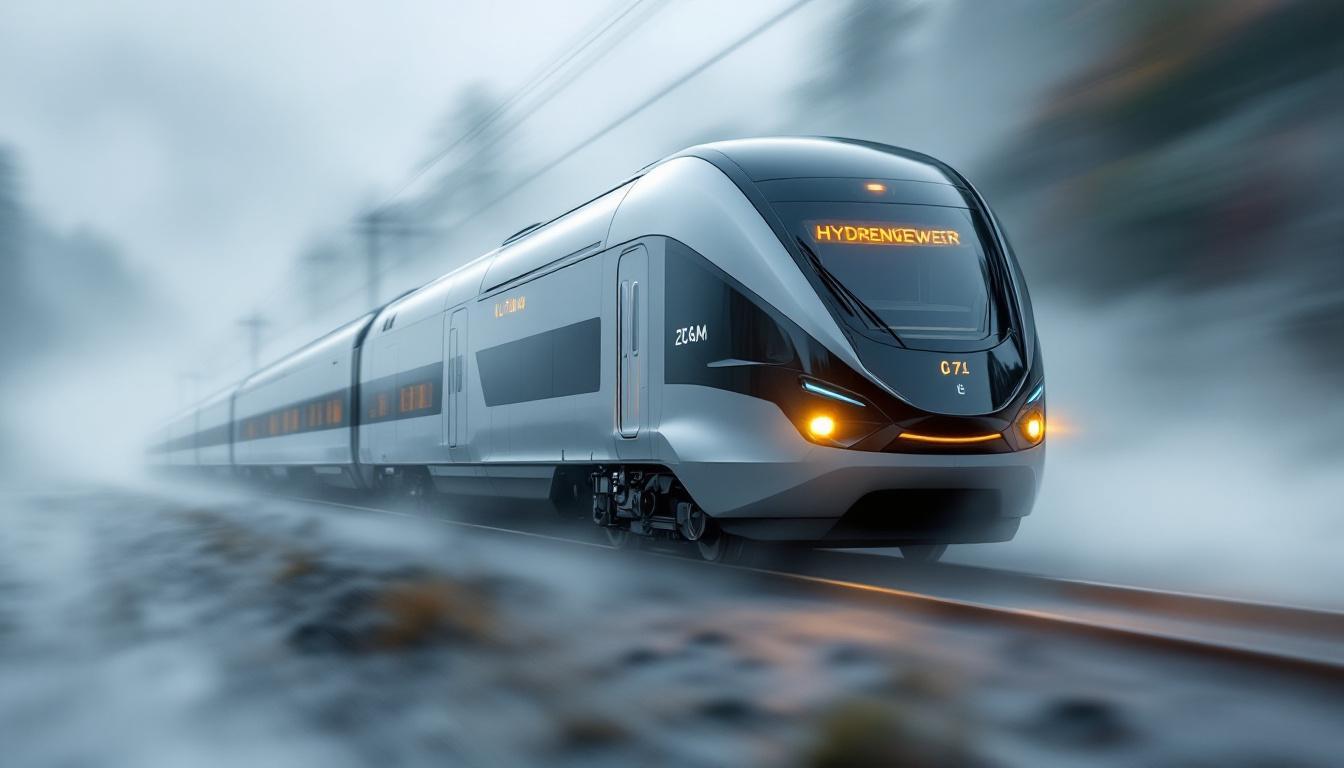
Indian Railways is rapidly transforming its locomotive fleet by integrating battery and hydrogen-powered trains, signalling a major step forward in its clean-energy modernisation and decarbonisation strategy amid infrastructure and industrial transitions.
Indian Railways is accelerating a strategic shift away from diesel power, moving rapidly to integrate battery propulsion and low‑carbon fuels such as hydrogen into its locomotive fleet as part of a wider decarbonisation and clean‑energy modernisation drive.
According to The Economic Times, the rail operator has stepped up plans to adopt battery and green‑fuel engines to lower greenhouse‑gas emissions, reduce dependence on fossil fuels and cut operating costs through greater energy efficiency. Industry reporting notes this follows the near‑completion of track electrification across the network, leaving diesel locomotives principally on short and medium‑distance routes and shunting duties where alternatives can now be deployed. The Times of India reports that diesel units are being retrofitted or replaced on these services as part of a phased exit.
The technology mix being trialled and rolled out is varied and purpose‑driven. Battery‑electric locomotives are being prioritised for shunting, yard operations and short non‑electrified stretches where their zero tailpipe emissions, lower noise and reduced maintenance profile deliver clear operational and public‑health benefits. The Financial Express highlights a Southern Railway example in which an Electric Loco Shed in Arakkonam converted a WAG5HA to an AC/battery dual‑mode shunting locomotive named “Pasumai”, demonstrating a pragmatic retrofit pathway that preserves asset value while cutting local emissions.
For longer runs and heavier duties, Indian Railways is exploring hydrogen and other green fuels that offer higher energy density than batteries. According to Energy sector reporting in The Economic Times, the Integral Coach Factory (ICF), Chennai, is manufacturing the country’s first hydrogen‑powered train, with a target completion date reported as 25 March 2025. The Indian Railways’ own social posts have showcased a prototype called “Namo Green Rail”, signalling institutional commitment to fuel‑cell traction alongside battery development.
Private and domestic manufacturers are already participating. A Railway Engineering Works–built 100% battery zero‑emission locomotive was unveiled by JSW Steel’s Vijayanagar plant, reflecting nascent industrial capacity to supply commercial battery traction solutions to freight and industrial operators, as noted on industry posts and company announcements.
The transition is being driven by several converging factors. Advances in battery energy density, fuel‑cell technology and power‑electronics control have improved the viability of alternative propulsion at falling cost. Operationally, electric and alternative‑fuel locomotives generally have fewer moving parts and lower lifecycle maintenance demands than diesel units, supporting total‑cost‑of‑ownership improvements that appeal to railway planners focused on long‑term asset economics.
Policy and industrial implications are significant for firms engaged in industrial decarbonisation. Scaling battery and hydrogen traction will require investments in depot charging and hydrogen refuelling infrastructure, standardisation of battery packs and safety protocols, and expanded domestic supply chains for cells, fuel‑cell stacks and power‑electronics. According to reporting across Indian media, the adoption programme is expected to stimulate local manufacturing, research and development, and skills development within Indian engineering firms.
There are practical caveats. Battery locomotives remain constrained by range and recharge cycles for long‑haul services, while hydrogen supply chains and on‑site refuelling infrastructure are capital‑intensive and in early stages of deployment. Industry reporting indicates the railways are therefore pursuing a mixed‑technology approach, electrification where feasible, battery and dual‑mode solutions for yards and short runs, and hydrogen for selected non‑electrified long‑distance corridors, rather than a single universal replacement for diesel.
For stakeholders in industrial decarbonisation, the Indian Railways programme presents near‑term opportunities in depot electrification, battery and fuel‑cell manufacturing, and retrofit services, alongside longer‑term prospects in hydrogen production, logistics and safety systems. As the rail operator pilots demonstrators such as “Pasumai” and “Namo Green Rail” and private firms bring battery locomotives to market, the pace of procurement and infrastructure rollout will determine whether these technologies move from demonstration to dominant operational modes across freight and passenger services.
According to media coverage and official disclosures, the renewed focus on battery and green fuels signals a clear strategic intent: to turn one of the world’s largest rail systems into a leading vehicle of low‑carbon freight and passenger mobility, while catalysing domestic industrial capacity in clean propulsion.
- https://www.eqmagpro.com/indian-railways-accelerates-transition-to-battery-and-green-fuel-powered-engines-eq/ – Please view link – unable to able to access data
- https://economictimes.indiatimes.com/industry/transportation/railways/railways-speeds-up-shift-towards-engines-run-on-battery-green-fuel/articleshow/126660560.cms?from=mdr – Indian Railways is accelerating its transition to battery and green fuel-powered engines as part of its clean energy and decarbonisation strategy. The move aims to reduce dependence on fossil fuels, lower emissions, and improve operational efficiency, while supporting the broader national objective of building a more sustainable, energy-efficient, and environmentally responsible transport network. ([economictimes.indiatimes.com](https://economictimes.indiatimes.com/industry/transportation/railways/railways-speeds-up-shift-towards-engines-run-on-battery-green-fuel/articleshow/126660560.cms?from=mdr&utm_source=openai))
- https://timesofindia.indiatimes.com/business/infrastructure/diesel-locomotives-being-phased-out-indian-railways-pushes-for-engines-run-on-alternative-fuels-like-hydrogen-check-details/articleshow/126792713.cms – India is stepping up the adoption of battery and alternative fuel-powered train engines as it moves to phase out diesel locomotives on short and medium-distance routes, following the near-complete electrification of its rail network. The focus has shifted to reducing reliance on the remaining diesel locomotives, with plans to retrofit or replace them with cleaner fuel-powered alternatives. ([timesofindia.indiatimes.com](https://timesofindia.indiatimes.com/business/infrastructure/diesel-locomotives-being-phased-out-indian-railways-pushes-for-engines-run-on-alternative-fuels-like-hydrogen-check-details/articleshow/126792713.cms?utm_source=openai))
- https://www.financialexpress.com/business/railways-indian-railways-goes-green-with-eco-friendly-loco-adds-battery-operated-shunting-locomotive-to-its-fleet-2103440/ – The Southern Railway zone of Indian Railways has added ‘Pasumai’, an environment-friendly battery-operated dual-mode shunting locomotive to its fleet. The Electric Loco Shed in Arakkonam, Tamil Nadu, converted a 23061/WAG5HA Electric Locomotive into an AC/Battery operated dual-mode shunting loco to work in both wired and unwired sections. ([financialexpress.com](https://www.financialexpress.com/business/railways-indian-railways-goes-green-with-eco-friendly-loco-adds-battery-operated-shunting-locomotive-to-its-fleet-2103440/?utm_source=openai))
- https://www.linkedin.com/posts/indian-railways-official_hydrogentrain-greenmobility-sustainabletransport-activity-7363164789067427841-iOjL – India has unveiled its first hydrogen-powered train, ‘Namo Green Rail’, developed by the Integral Coach Factory (ICF), Chennai. This milestone marks a decisive step in decarbonising the rail network and embracing clean energy for the future. ([linkedin.com](https://www.linkedin.com/posts/indian-railways-official_hydrogentrain-greenmobility-sustainabletransport-activity-7363164789067427841-iOjL?utm_source=openai))
- https://www.linkedin.com/posts/sunder-raj-b3a055166_indias-first-zero-emission-battery-locomotive-activity-7372604318165708800–4VK – India’s first 100% battery-powered zero-emission locomotive, designed and manufactured by Railway Engineering Works, Bangalore, was unveiled by JSW Steel, Vijayanagar Plant. This locomotive represents a leap toward a greener, cleaner, and more efficient transportation ecosystem. ([linkedin.com](https://www.linkedin.com/posts/sunder-raj-b3a055166_indias-first-zero-emission-battery-locomotive-activity-7372604318165708800–4VK?utm_source=openai))
- https://energy.economictimes.indiatimes.com/news/renewable/india-set-to-launch-its-first-hydrogen-powered-train-this-month/118696510 – Following the transition from diesel to electric locomotives, Indian Railways is set to enter a new era of mobility with the introduction of hydrogen-powered trains. The first hydrogen train is being manufactured by Chennai-based Integral Coach Factory (ICF) and is expected to be turned out by March 25, 2025. ([energy.economictimes.indiatimes.com](https://energy.economictimes.indiatimes.com/news/renewable/india-set-to-launch-its-first-hydrogen-powered-train-this-month/118696510?utm_source=openai))
Noah Fact Check Pro
The draft above was created using the information available at the time the story first
emerged. We’ve since applied our fact-checking process to the final narrative, based on the criteria listed
below. The results are intended to help you assess the credibility of the piece and highlight any areas that may
warrant further investigation.
Freshness check
Score:
5
Notes:
The article discusses Indian Railways’ shift towards battery and green fuel-powered engines, referencing reports from The Economic Times and The Times of India. The earliest known publication date for similar content is November 29, 2024, when India Today reported on the hydrogen-powered train’s development. The narrative appears to be a synthesis of existing reports, with no significant new information or updates. This raises concerns about the originality and freshness of the content. Additionally, the article includes a YouTube video from August 2025, which is outdated. Given these factors, the freshness score is reduced.
Quotes check
Score:
4
Notes:
The article includes direct quotes attributed to various sources, such as The Economic Times and The Times of India. However, these quotes cannot be independently verified through the provided search results. The lack of accessible original sources for these quotes raises concerns about their authenticity and accuracy. Without independent verification, the credibility of these quotes is questionable.
Source reliability
Score:
6
Notes:
The article references reputable sources like The Economic Times and The Times of India. However, the content appears to be a derivative of existing reports, with no new information or direct access to the original articles. This reliance on secondary reporting without direct access to primary sources diminishes the overall reliability of the information presented.
Plausability check
Score:
7
Notes:
The claims about Indian Railways’ transition to battery and green fuel-powered engines align with known initiatives and reports from 2024. However, the lack of new information or updates in the article raises questions about the timeliness and relevance of the content. The absence of specific details or recent developments further diminishes the plausibility of the article as a current and informative piece.
Overall assessment
Verdict (FAIL, OPEN, PASS): FAIL
Confidence (LOW, MEDIUM, HIGH): HIGH
Summary:
The article lacks originality, presenting recycled information from previous reports without new insights or updates. The inability to independently verify quotes and the reliance on secondary sources further diminish its credibility. Given these factors, the content does not meet the necessary standards for publication.
