

Environmental think-tank iFOREST has launched India’s first detailed ESG report for the steel industry, introducing standardised carbon measurement tools amid rising pressure to reduce emissions and attract climate finance.
Environmental think-tank iFOREST has released India’s first comprehensive ESG (environmental, social, and governance) report tailored specifically for the steel industry, marking a pivotal step in the country’s efforts to decarbonize one of its most carbon-intensive sectors. The report introduces a unified framework to track and disclose carbon emissions while enhancing sustainability reporting, aligning with global best practices. It includes a steel-specific supplement to the Securities and Exchange Board of India’s (SEBI) Business Responsibility and Sustainability Reporting (BRSR). This supplement is aimed at improving the quality and transparency of disclosures to attract vital climate finance, a crucial factor given the steel industry’s significant environmental footprint and the increasing imposition of carbon tariffs such as the European Union’s Carbon Border Adjustment Mechanism (CBAM).
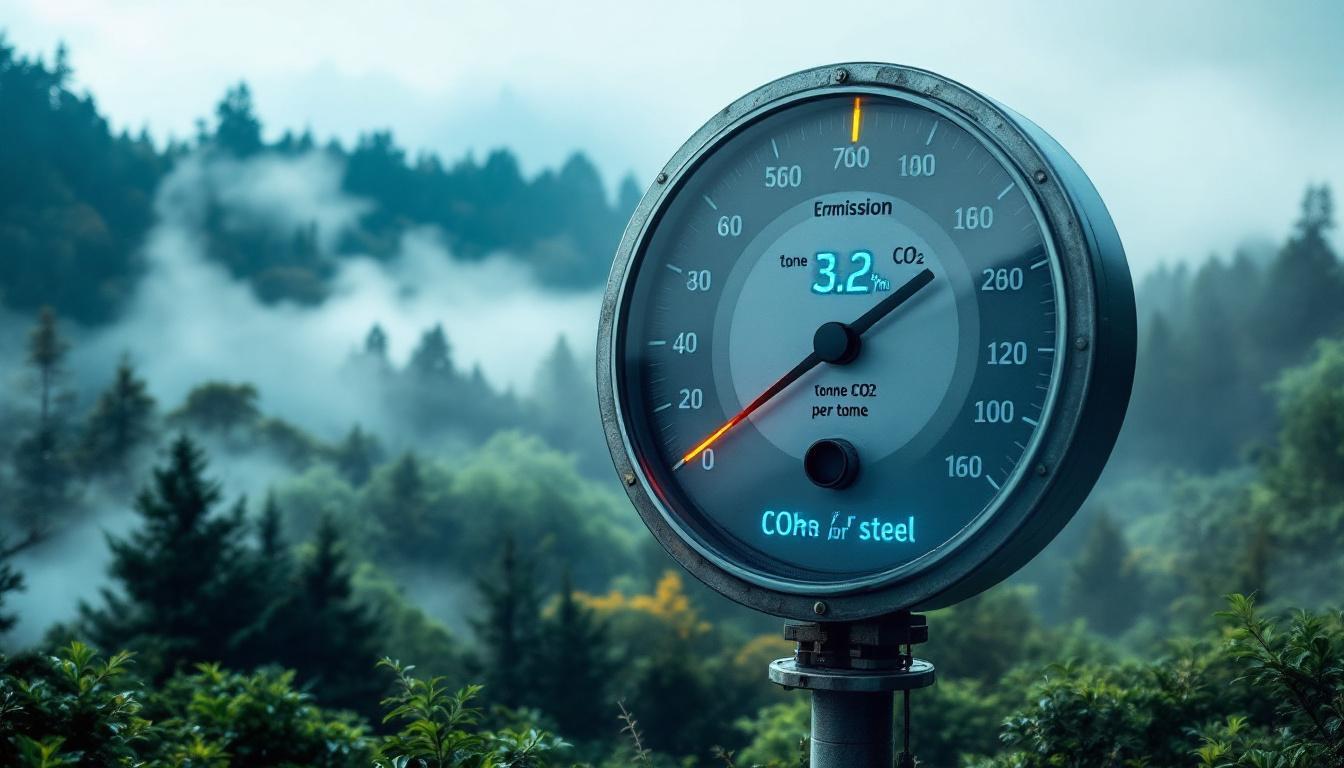
India’s steel sector, which currently accounts for around 12% of the nation’s carbon dioxide emissions, faces growing pressure to align with global climate goals. Production is projected to nearly double from 140 million tonnes in 2023 to 255 million tonnes by 2030, with further expansion expected to reach 500 million tonnes by 2050. This expansion poses a formidable challenge to India’s net-zero emissions target set for 2070. According to iFOREST’s analysis of 31 reporting companies, which represent 65% of India’s crude steel output, the sector emitted 221 million tonnes of CO₂ equivalent in the fiscal year 2024, with an emission intensity of 2.54 tonnes of CO₂ per tonne of steel. This intensity is notably higher than the global average of 1.92, underscoring the sector’s carbon footprint challenge.
The report reveals troubling environmental and social governance aspects: renewable energy constitutes less than 0.5% of the sector’s total energy consumption, and nearly half of the water withdrawn comes from water-stressed regions. On the governance front, women occupy only 18% of board positions and 7% of key managerial roles, while a majority of the workforce (56%) is employed on contracts. Anti-corruption frameworks are in place in only 16 companies, reflecting significant gaps in corporate governance practices.
To address these challenges, iFOREST has introduced a unified India-specific Greenhouse Gas (GHG) accounting and monitoring, reporting, and verification (MRV) tool designed to standardize emissions tracking. Chandra Bhushan, CEO of iFOREST, highlighted the necessity of three foundational elements to unlock the trillions of dollars in climate finance India requires: a clear and transparent taxonomy for climate finance, a policy roadmap to build investor confidence in decarbonization pathways, and credible, verifiable ESG disclosures. The new reporting standards could serve as a benchmark for both industry players and government bodies, such as the Ministry of Steel, facilitating a consistent approach to green steel production in India aligned with global standards.
The steel industry itself acknowledges the scale of the challenge and investment required. Alok Sahay, Secretary General of the Indian Steel Association, noted that ₹9 lakh crore will be necessary to finance green initiatives within the sector. The industry’s push towards transparent and comparable ESG disclosures is seen as essential to attract the finance needed to support this transition.
However, challenges to decarbonization remain pronounced. India’s steel production largely relies on coal-fired processes, which have an emission intensity approximately 25% higher than the global average. Recent research by Global Energy Monitor emphasizes that India’s planned expansion in steelmaking capacity, from 200 million to over 330 million tonnes by 2030, could double sectoral emissions if reliant on existing coal-centric technologies. The looming threat of CBAM tariffs by the EU adds urgency to India’s green steel ambitions, as untreated carbon-intensive steel risks becoming less competitive in international markets. EY Parthenon’s report projects explosive growth in green steel demand, principally driven by construction and infrastructure sectors, with a predicted market size of approximately 179 million tonnes by 2050. The economic viability of green steel is expected to improve over time as the premium price decreases and carbon pricing mechanisms raise the cost of conventional steel.
iFOREST’s broader industrial decarbonization programme complements steel sector initiatives by supporting energy transitions in MSMEs and other heavy industries, including efforts to replace coal-based boiler systems with cleaner alternatives in states like Maharashtra and Uttar Pradesh. Furthermore, the organisation is advancing policy and technical frameworks for other key sectors such as fertilisers, underpinning India’s broader climate strategy.
Former SEBI chairman Ajay Tyagi stressed the critical role of sector-specific BRSR guidelines and robust MRV systems in delivering credible data for investors, arguing these frameworks will be central to achieving India’s net-zero goals.
Industry experts also highlight that while India’s solar power capacity has reached 100 gigawatts, much of the steel industry’s decarbonization depends on overcoming infrastructure and raw material constraints, including limited access to scrap metal, and transitioning existing capacity towards electric arc furnaces and other lower-emission technologies. This transition offers a narrow but decisive window, as a significant portion of India’s planned steelmaking capacity remains unconstructed, allowing potential course corrections towards sustainability.
In sum, the launch of India’s first ESG report for steel by iFOREST represents a landmark effort to unify and elevate the sector’s sustainability disclosures, aligning with emerging global trade realities and investment imperatives. The integration of a standardized GHG accounting framework, coupled with targeted policy support and investment, will be crucial for the Indian steel industry to meet its economic growth ambitions while addressing its sizable environmental impact. In doing so, India may chart a pathway that balances industrial development with climate responsibility, a vital example for other emerging economies grappling with similar challenges.
- https://www.livemint.com/news/iforest-esg-report-india-steel-sector-decarbonization-climate-finance-11763044890957.html – Please view link – unable to able to access data
- https://www.livemint.com/news/iforest-esg-report-india-steel-sector-decarbonization-climate-finance-11763044890957.html – Environmental think-tank iFOREST has released India’s first ESG (Environmental, Social, and Governance) report for the steel industry, introducing a unified system to track and report carbon emissions and enhance sustainability disclosures. The report includes a steel-specific supplement to the Securities and Exchange Board of India’s (SEBI) Business Responsibility and Sustainability Reporting (BRSR), aiming to improve disclosure quality and attract climate finance. This initiative comes amid global attention on the decarbonization of the steel sector due to its high carbon intensity and the implementation of trade barriers like the European Union’s Carbon Border Adjustment Mechanism (CBAM), a carbon tariff on carbon-intensive products such as steel. India has already begun efforts to reduce the carbon intensity of its steel sector by developing a green steel taxonomy. The next step involves implementing a globally acceptable Greenhouse Gas (GHG) accounting and Monitoring, Reporting, and Verification (MRV) framework to make the Indian steel industry more compliant with green standards. Chandra Bhushan, CEO of iFOREST, emphasized the need for a clear taxonomy, a policy roadmap for decarbonization, and credible, comparable, and verifiable information to attract the trillions of dollars in climate finance required to meet India’s mitigation and adaptation targets. The iron and steel industry contributes around 12% of India’s national carbon dioxide (CO₂) emissions. With steel output projected to rise from 140 million tonnes in 2023 to 255 million tonnes by 2030, and further to 500 million tonnes by 2050, the sector’s decarbonization is critical to India’s net-zero goals set for 2070. At the India Green Steel Transition event in New Delhi, iFOREST launched three key reports: BRSR Disclosure: ESG Performance of the Steel Sector (2023–24); BRSR Supplement for the Steel Sector: Enhancing ESG Disclosure and Transparency; and Unified GHG Accounting and MRV Framework for the Iron and Steel Sector. Bhushan noted that the reporting standards developed by iFOREST could be used by both the Indian steel industry and the Ministry of Steel to standardize green processes in the sector that are also globally benchmarked. iFOREST’s BRSR analysis covered 31 reporting companies, representing 65% of India’s crude steel output and 60% of sector revenue. The study found that the sector emitted 221 million tonnes of CO₂ equivalent (CO₂e) in FY24, with an emission intensity of 2.54 tCO₂e per tonne of steel, higher than the global average of 1.92 tCO₂e/t. Renewable energy accounts for less than 0.5% of total energy use in the sector, while nearly half of water withdrawals occur in water-stressed regions. The report highlights persistent social and governance gaps, with women forming 18% of board members and 7% of key managerial roles in the steel sector, and 56% of the workforce employed on contracts. Only 16 companies have formal anti-corruption frameworks. Ajay Tyagi, former SEBI chairman, emphasized the need for sector-specific BRSR reporting guidelines to provide credible information to investors and the importance of sectoral GHG emission targets supported by robust MRV systems to meet net-zero goals. Alok Sahay, Secretary General of the Indian Steel Association, highlighted that the Indian steel industry will require an investment of ₹9 lakh crore to fund its greening initiatives. The unified GHG accounting and MRV framework, along with the ESG supplement released by iFOREST, will play an important role in the disclosure of comparable and verifiable information. To address inconsistencies in emissions reporting, iFOREST unveiled a unified India-specific GHG accounting tool that simplifies and standardizes emissions tracking. Sanjeev Kanchan, Director of Industrial Decarbonization & ESG at iFOREST, stated that sector-specific templates are vital to strengthen ESG reporting in resource-intensive industries like steel, and the BRSR Supplement provides a pathway for consistency, comparability, and credibility.
- https://www.ey.com/en_in/newsroom/2025/07/india-s-green-steel-demand-to-surge – A comprehensive report by EY Parthenon, developed in collaboration with WWF-India and CII-Green Business Centre, reveals that India’s green steel demand is poised for exponential growth, reaching around 179 million tonnes by FY50 as the country’s automotive, infrastructure, and construction sectors drive the transition toward sustainable manufacturing practices. The current green steel premium of US$210 per tonne is expected to drop dramatically in the future, as carbon prices increase conventional steel prices, making sustainable steel economically viable. Without decarbonization efforts, Indian steel exports to the EU could face a CBAM tax impact of INR 19,277 crores by 2030 due to emission intensity differential.
- https://iforest.global/event/indias-green-steel-transition/ – iFOREST’s Industrial Decarbonisation programme focuses on developing policies and solutions for sectors that impact the largest number of enterprises and consumers. Decarbonising MSMEs is a key priority. Recognising that steam boilers are among the largest sources of energy use and emissions in MSMEs, iFOREST is working with the Department for Promotion of Industry and Internal Trade (DPIIT) and state industrial departments in Maharashtra and Uttar Pradesh to improve energy efficiency and transition boilers to low-carbon technologies such as biomass, electric systems, and heat pumps. In addition, iFOREST is undertaking ground-level research, techno-economic modelling, and pilot interventions to support the technology transition in brick manufacturing. iFOREST is also advancing decarbonisation in the steel and fertilizer sectors through research, modelling, and policy support, aligning India’s industrial growth with climate goals. In the fertilizer sector, iFOREST is promoting Green Urea production through plant-level techno-economic modelling and policy reforms at the central government level to enhance energy security, reduce emissions, and rationalise subsidies. In the steel sector, iFOREST is working with industry and the central government to promote green steel through public and corporate procurement programmes and a robust system of monitoring, reporting, and verification.
- https://apnews.com/article/e940582596c6e32da61b70a0e027e7eb – India’s plan to expand its steel production capacity from 200 million to over 330 million tonnes by 2030 threatens both its national climate goals and global efforts to reduce greenhouse gas emissions from the steel industry, according to a report by Global Energy Monitor. India, the world’s second-largest steel producer, relies heavily on coal-based technologies, which contribute approximately 12% of the country’s emissions—a figure that could double if current expansion plans proceed. The International Energy Agency recommends that 37% of global steel production use lower-emission electric arc furnaces by 2030, but India’s coal-heavy expansion risks undermining this target. While India aims to reach net-zero emissions by 2070 and already produces 100 gigawatts of solar power, its steel industry continues to emit 2.6 tons of CO₂ per ton of steel, about 25% above the global average. Despite challenges, including poor availability of scrap metal and iron ore, the report notes that 92% of India’s planned steelmaking capacity is still unconstructed, offering a timely opportunity to pivot toward green technologies. Failure to adapt could also impact Indian steel exports, as markets like the EU begin imposing carbon border taxes.
- https://ieefa.org/resources/steel-decarbonisation-india – In India, the steel industry contributes to around 2% of the Gross Domestic Product (GDP) and is critical to the country’s progress. In the fiscal year (FY) 2023, the production of finished steel in India was 122.3 million tonnes, an increase of about 7.6% over the previous year. India’s steel sector accounts for about 12% of India’s carbon dioxide (CO₂) emissions, with an emission intensity of 2.55 tonnes of CO₂ per tonne of crude steel (tCO₂/tcs) compared with the global average emission intensity of 1.85 tCO₂/tcs. The steel industry is responsible for around 240 million tonnes of CO₂ emissions annually and is expected to double at an exponential rate by 2030, considering the Indian government’s infrastructure development targets.
- https://www.theasset.com/article-esg/54789/india-carbonization-achievable-without-derailing-development – In a recent study, we take a different approach, using a bottom-up methodology to provide a more accurate estimate of India’s climate finance requirements. We focus on four of the country’s highest-emitting sectors: power, steel, cement, and road transport. Importantly, our study measures only the additional capital expenditure required to fund climate mitigation, over and above the investments already expected under a business-as-usual scenario. We estimate that these four sectors will require a total of US$467 billion in climate finance by 2030, averaging US$54 billion annually, or roughly 1.3% of India’s GDP. This figure is significantly lower than the hundreds of billions of dollars per year suggested by earlier studies. Although much of the climate debate, both globally and in India, has focused on the costs of the
Noah Fact Check Pro
The draft above was created using the information available at the time the story first
emerged. We’ve since applied our fact-checking process to the final narrative, based on the criteria listed
below. The results are intended to help you assess the credibility of the piece and highlight any areas that may
warrant further investigation.
Freshness check
Score:
10
Notes:
The narrative is fresh, published on 13 November 2025, with no prior appearances found.
Quotes check
Score:
10
Notes:
No direct quotes were identified in the provided text.
Source reliability
Score:
9
Notes:
The narrative originates from Live Mint, a reputable Indian news outlet.
Plausability check
Score:
10
Notes:
The claims align with known industry data and recent developments in India’s steel sector.
Overall assessment
Verdict (FAIL, OPEN, PASS): PASS
Confidence (LOW, MEDIUM, HIGH): HIGH
Summary:
The narrative is fresh, with no prior appearances found. It originates from a reputable source and presents plausible claims consistent with known industry data.
