


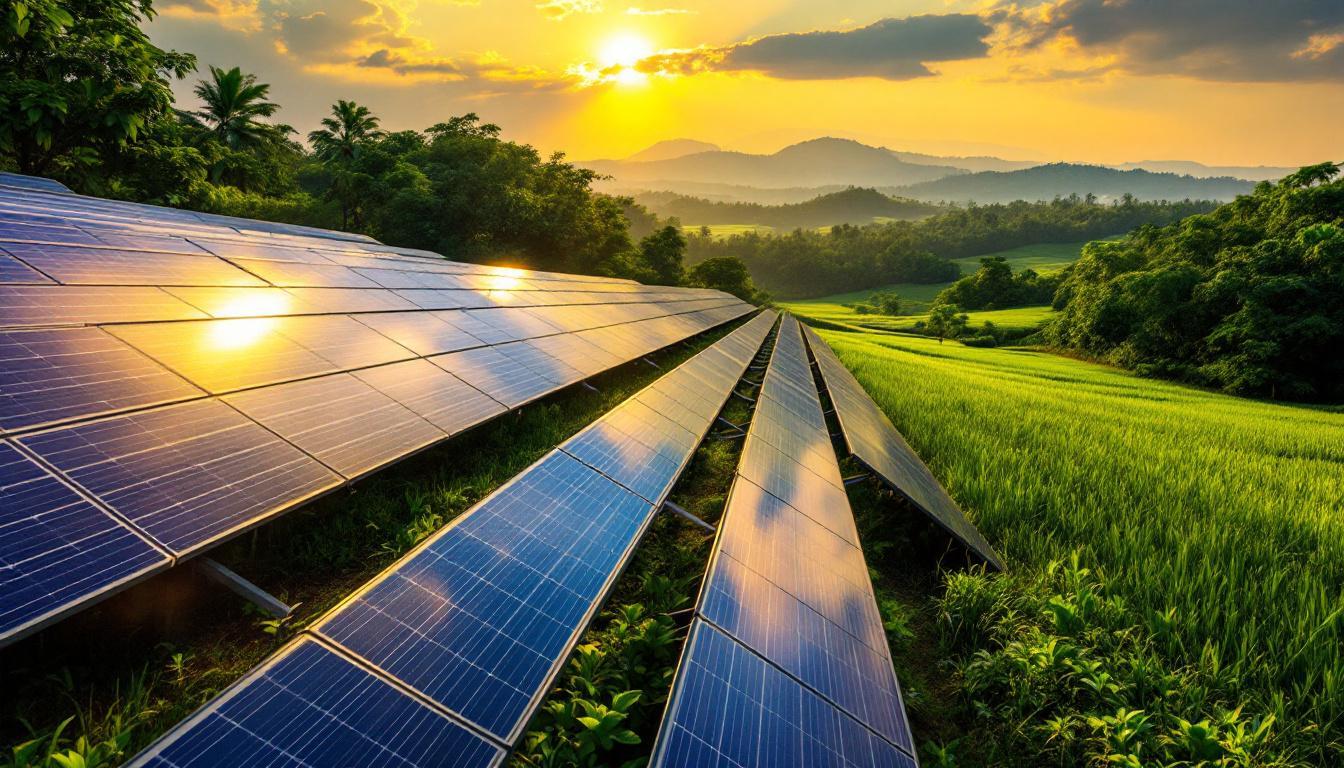
Indonesia’s renewable capacity is forecast to grow sharply to 38.1 GW by 2035, notably led by solar PV, while thermal generation remains dominant, reflecting a complex transition strategy supported by international partnerships and evolving policies.
Indonesia is undergoing a significant transformation in its power sector, marked by robust expansion of renewable energy alongside continued reliance on thermal generation. According to the latest analysis from GlobalData, Indonesia’s cumulative renewable power capacity is forecast to rise sharply to 38.1 gigawatts (GW) by 2035, a substantial increase from 8.4 GW in 2024. This represents a compound annual growth rate (CAGR) of 14.7%, underscoring ambitious renewable energy development plans supported by evolving policies, technological investments, and international partnerships.
The country’s renewable energy surge is led predominantly by solar photovoltaic (PV) power. Installed solar capacity, currently under 1 GW, is expected to accelerate rapidly to 23.2 GW by 2035. This growth is largely driven by expansions in floating solar projects, as highlighted by Indonesia’s state utility, Perusahaan Listrik Negara (PLN), which recently began construction on a 92 MW floating solar plant at the Saguling Reservoir in West Java, targeting commercial operation by late 2026. Floating and utility-scale solar developments, coupled with expanded rooftop solar programmes supported by updated feed-in tariffs and net-metering policies, form the backbone of Indonesia’s solar ambitions. Industry experts, including GlobalData analysts, anticipate solar power will become Indonesia’s largest renewable source by 2028, surpassing geothermal and biopower.
Onshore wind power is also poised for rapid growth, with capacity projected to increase from a modest 0.15 GW in 2024 to about 2.6 GW by 2035. This expansion is supported by competitive tenders and hybrid renewable projects mainly in Sulawesi and East Nusa Tenggara. Indonesia’s energy ministry recently set a more ambitious interim target to increase wind capacity to 5 GW by 2030, revising the national power supply plan (RUPTL 2025–2034) to reflect stronger commitments aligning with international funding, particularly the $20 billion Just Energy Transition Partnership (JETP) involving G7 partners.
Geothermal energy, long a renewable stalwart given Indonesia’s vast volcanic resources, will see steady capacity growth from 2.6 GW to 5.5 GW by 2035. This is supported by fiscal incentives and specific funds like the PT SMI Geothermal Fund, aiding in technology deployment and project financing. Additionally, new waste-to-power initiatives led by sovereign wealth fund Danantara Indonesia aim to harness municipal waste for energy, with plans to launch at least eight projects by late 2025, potentially expanding renewable diversity further.
However, despite these transformative renewable developments, Indonesia’s power system will retain a dominant role for thermal energy. Coal-fired capacity is actually projected to increase from 55.6 GW in 2024 to 61.4 GW in 2035, reflecting ongoing reliance on abundant domestic coal reserves and relatively low generation costs. Gas-fired capacity will similarly expand from 29.1 GW to 36 GW, essential for balancing intermittent renewable sources and ensuring grid stability, especially across Indonesia’s many island grids.
This dual-track strategy, accelerating renewables while maintaining thermal generation, reflects complex energy security and economic considerations. Presidential Regulation 112/2022, a landmark policy, aims to limit new coal developments and mandates early retirement pathways for older plants, signalling an intent to gradually decarbonise. Yet, coal remains deeply embedded, with Indonesia continuing to export thermal coal globally and planning to halt but not completely cease coal plant construction by 2040.
Further underpinning the energy transition are infrastructure upgrades, including cross-island transmission enhancements and digital grid system deployments, which improve renewable integration and power reliability. The government’s revised RUPTL plan also incorporates more ambitious renewable milestones, targeting 44% renewable electricity by 2030 under JETP, and new technology classes such as small modular nuclear reactors have been proposed as part of long-term diversification, though these remain in early conceptual phases and subject to seismic risk concerns.
Indonesia’s renewables roadmap is thus multi-faceted, leveraging solar, wind, geothermal, and emerging waste-to-energy projects, supported by international partnerships and evolving policy frameworks. Yet, the transition remains balanced by pragmatic reliance on thermal power generation to secure energy access across the archipelago’s dispersed and diverse load centres. As the sector develops, ensuring investment clarity and grid modernisation will be critical for sustaining this complex but strategic shift toward a more sustainable and resilient power system through 2035 and beyond.
- https://www.power-technology.com/analyst-comment/indonesia-renewable-power-capacity-2035/ – Please view link – unable to able to access data
- https://www.globaldata.com/media/power/indonesia-renewable-power-capacity-to-reach-38-1gw-in-2035-forecasts-globaldata/ – GlobalData forecasts that Indonesia’s renewable power capacity will reach 38.1 GW by 2035, up from 8.4 GW in 2024, representing a compound annual growth rate (CAGR) of 14.7%. This growth is driven by investments in solar photovoltaic (PV), onshore wind, and geothermal energy. Solar PV capacity is expected to surge from 0.9 GW in 2024 to 23.2 GW in 2035, supported by floating and utility-scale projects and rooftop solar programmes. Onshore wind capacity is projected to rise from 0.15 GW to 2.6 GW, with geothermal capacity expanding from 2.6 GW to 5.5 GW. Despite this renewable growth, thermal sources will remain dominant, with coal-fired capacity increasing from 55.6 GW to 61.4 GW and gas-fired capacity from 29.1 GW to 36 GW by 2035. These developments are underpinned by supportive policies such as the Just Energy Transition Partnership (JETP), aiming for 44% renewable electricity by 2030, and the RUPTL 2025–2034 plan, which includes Presidential Regulation 112/2022 to limit new coal development and mandate early retirement pathways for existing plants. Additionally, cross-island transmission expansion and digital grid systems are enhancing integration and reliability.
- https://www.reuters.com/sustainability/climate-energy/indonesia-starts-construction-92-megawatt-floating-solar-plant-2025-10-03/ – Indonesia’s state utility firm, Perusahaan Listrik Negara (PLN), has commenced construction of a 92-megawatt-peak floating solar power plant on the Saguling Reservoir in West Java. This initiative is part of the country’s broader renewable energy strategy, aiming to add 42.6 gigawatts (GW) of renewable energy to the national grid by 2034, with solar power contributing 17.1 GW. The new plant is expected to start commercial operations by November 2026 and will produce over 130 gigawatt-hours of electricity annually, potentially reducing carbon emissions by 104,000 tons. PLN’s CEO, Darmawan Prasodjo, emphasized the project’s significance as a milestone in Indonesia’s clean energy transformation.
- https://www.reuters.com/world/asia-pacific/indonesia-aims-5gw-wind-power-by-2030-energy-ministry-official-says-2024-09-27/ – Indonesia plans to increase its wind power capacity to 5 gigawatts (GW) by 2030, according to an energy ministry official. This target represents a significant shift from the current capacity of 152.3 megawatts (MW) and a nearly tenfold increase from the existing plan. The state utility firm, Perusahaan Listrik Negara (PLN), is revising its decade-long power supply plan, RUPTL, to align with more ambitious renewable energy goals. The new RUPTL, covering 2025 to 2035, aims to build significant wind power infrastructure by 2030. Approval from government ministries is pending for the plan, which also targets a total renewable power capacity of 30 gigawatts in the next ten years. The updated plan is essential for accessing the $20 billion funding from G7 countries and financial institutions under the Just Energy Transition Partnership.
- https://www.reuters.com/business/energy/indonesia-plans-new-nuclear-power-plants-with-43-gw-capacity-bid-cleaner-energy-2025-01-31/ – Indonesia, heavily reliant on fossil fuels, proposes constructing nuclear power plants with a combined capacity of approximately 4 gigawatts to pursue cleaner energy alternatives. Presently, the nation’s power capacity exceeds 90 gigawatts, predominantly coal-powered with less than 15% derived from renewables, and no existing nuclear capacity. Notably vulnerable to earthquakes, nuclear energy remains a sensitive subject in Indonesia. Hashim Djojohadikusumo, a key advisor to President Prabowo Subianto, highlighted plans for floating small modular reactors, though specific details and timelines were not disclosed. Aiming to address climate change challenges, the country eyes nuclear energy as a carbon-free solution, despite concerns over toxic waste. Djojohadikusumo criticized the G7’s Just Energy Transition Partnership (JETP) for its insufficient $20 billion funding to reduce emissions, deeming it unsuccessful. Moreover, Indonesia, the leading thermal coal exporter, will halt new coal power plant constructions but not shutter all existing ones by 2040, continuing its coal dependency amid emission control efforts.
- https://www.reuters.com/sustainability/sovereign-fund-danantara-indonesia-launch-waste-to-power-projects-next-month-2025-09-30/ – Danantara Indonesia, a sovereign wealth fund, will launch at least eight waste-to-power projects by the end of October 2025 to address the country’s growing waste crisis and increase renewable energy production. Indonesia generates around 35 million metric tons of waste annually, of which 61% is improperly managed, contributing to pollution. The program will prioritize Jakarta with four to five planned sites, followed by other cities in Java and Bali. In partnership with technology providers, Danantara will fund the projects, while the state-owned utility Perusahaan Listrik Negara will purchase the electricity produced. Each 1,000 tons of processed waste is expected to produce 15 megawatts (MW) of electricity. The estimated investment per 1,000-ton capacity plant is between 2 trillion and 3 trillion rupiah (roughly $180 million). The initiative aligns with Indonesia’s 2025-2034 electricity supply plan, which aims to add 453 MW in waste-to-energy capacity at a total cost of $2.72 billion. To support implementation, the government has eliminated tipping fees for regional governments, and Danantara will cover technical and feasibility studies. Regional authorities are required to allocate up to five hectares of land for each power plant.
- https://www.pv-magazine.com/2025/11/11/indonesia-expected-to-reach-23-2-gw-of-solar-by-2035/ – UK consultancy GlobalData projects Indonesia will surpass 1 GW of cumulative solar capacity this year, before growth accelerates towards 9.1 GW by the end of the decade and 23.2 GW by 2035. The consultancy’s latest report expects Indonesia to surpass 1 GW of installed solar by the end of this year, hitting 1.5 GW. While solar currently sits as the third largest energy source in Indonesia’s renewable power market, behind geothermal and biopower sources, it is forecast to become the largest renewable energy source by 2028, when it is projected to reach 4.7 GW. By the end of the decade, cumulative solar capacity is expected to hit 9.1 GW. This growth trajectory will continue to accelerate through the early 2030s, surpassing 20 GW in 2034, ahead of reaching 23.2 GW in 2035. GlobalData says Indonesia’s surge in solar installations over the next ten years will be driven by the expansion of floating and utility-scale projects, as well as rooftop solar programs that are supported by feed-in mechanisms and updated net-metering regulations. Indonesia’s total renewable power capacity is projected to reach 38.1 GW by 2035, up from 8.4 GW in 2024, equivalent to a compound annual growth rate of 14.7% between 2024 to 2035. Mohammed Ziauddin, power analyst at GlobalData, explained that Indonesia’s renewables expansion is being catalyzed by frameworks including the Just Energy Transition Partnership, which targets 44% renewable electricity by 2030, alongside fiscal and investment incentives. Despite the strong renewables growth forecast, Indonesia’s power system is expected to remain heavily reliant on thermal sources through to 2035. Coal-fire capacity is expected to rise from 55.6 GW in 2024 to 61.4 GW in 2035, supported by existing contracts and state-owned infrastructure. Similarly, gas-fired capacity is set to increase from 29.1 GW in 2024 to 36 GW in 2035, in order to provide flexibility and backup for renewables.
Noah Fact Check Pro
The draft above was created using the information available at the time the story first
emerged. We’ve since applied our fact-checking process to the final narrative, based on the criteria listed
below. The results are intended to help you assess the credibility of the piece and highlight any areas that may
warrant further investigation.
Freshness check
Score:
9
Notes:
The narrative presents recent data, including a forecast from GlobalData and a report from Power Technology dated today. The construction of a 92 MW floating solar plant by PLN, reported by Reuters on October 3, 2025, is also mentioned. The inclusion of these recent developments indicates high freshness.
Quotes check
Score:
8
Notes:
The narrative includes direct quotes from PLN’s CEO, Darmawan Prasodjo, and references to the Just Energy Transition Partnership (JETP). The earliest known usage of these quotes is from the Reuters article dated October 3, 2025. The inclusion of these recent developments indicates high freshness.
Source reliability
Score:
9
Notes:
The narrative originates from Power Technology, a reputable industry publication. It references GlobalData, a well-known market research firm, and includes information from Reuters, a reputable news agency. The inclusion of these reputable sources indicates high reliability.
Plausability check
Score:
9
Notes:
The claims about Indonesia’s renewable energy targets and projects align with recent reports from Reuters and other reputable sources. The narrative provides specific figures and dates that are consistent with current information. The inclusion of these recent developments indicates high plausibility.
Overall assessment
Verdict (FAIL, OPEN, PASS): PASS
Confidence (LOW, MEDIUM, HIGH): HIGH
Summary:
The narrative presents recent and consistent information from reputable sources, including forecasts from GlobalData, reports from Power Technology, and updates from Reuters. The inclusion of these recent developments indicates high freshness and reliability.
