


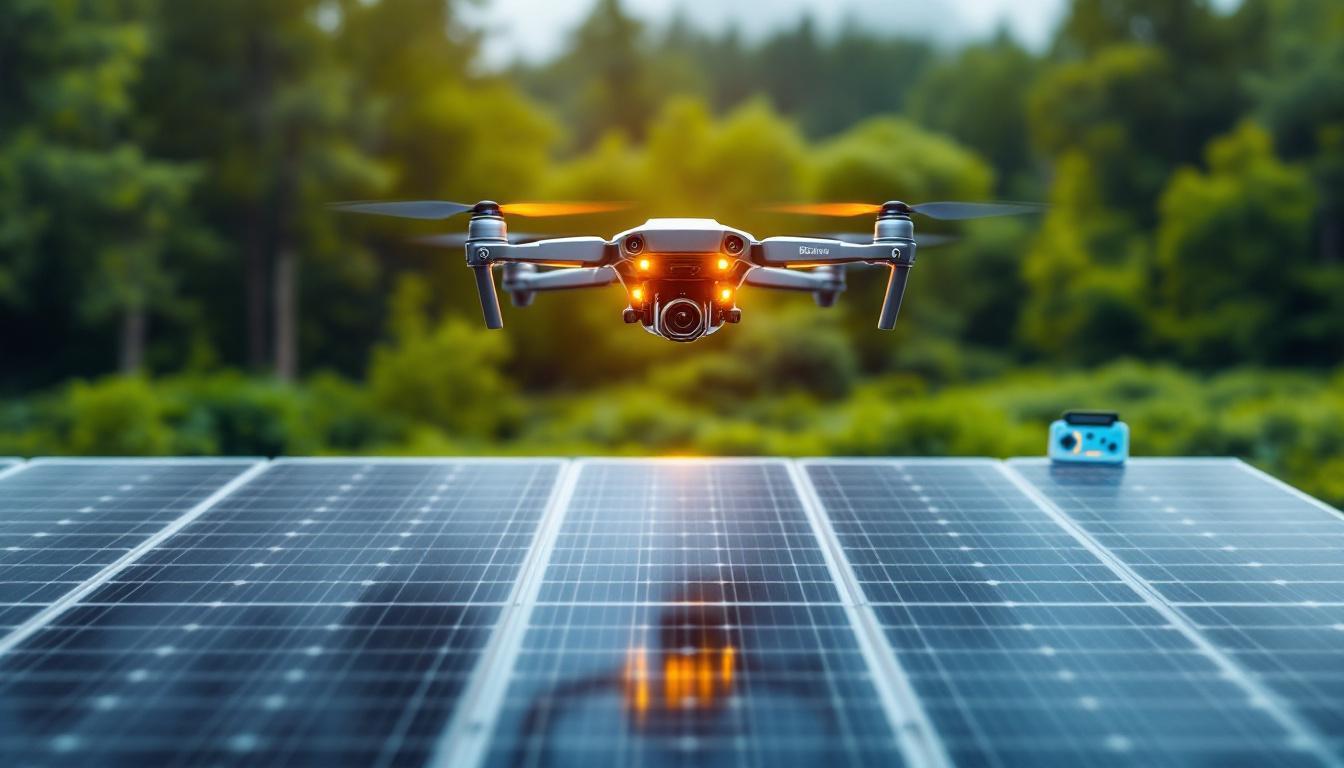
Innovative drone technologies with sensors, AI, and autonomous capabilities are transforming industrial inspections, enhancing safety, reducing costs, and enabling precise environmental monitoring across sectors like energy, chemicals, and aerospace.
Drones have firmly established themselves as indispensable tools in the industrial maintenance sector, evolving far beyond their original role as basic visual check devices. Today, they are equipped with sophisticated sensors, cameras, and AI-driven analysis capabilities, enabling detailed detection of leaks, corrosion, and structural damage across a wide range of industries. Their capacity to access elevated, hazardous, or otherwise difficult-to-reach areas without the need for scaffolding, rope access, or plant shutdowns has brought transformative efficiencies in inspection processes.
Industrial sites such as refineries, chemical plants, energy facilities, container terminals, and infrastructure assets have deployed drones to perform critical inspections more swiftly and safely. For instance, a 50-meter concrete silo inspection once taking several hours or days can now be completed in under an hour, with comprehensive digital analysis performed remotely. This capability significantly reduces downtime, lowers risk to personnel, and curtails operational costs.
A key advancement is the integration of emission sensors on drones, empowering them to detect a wide variety of gases, including methane, CO₂, and volatile organic compounds (VOCs), at very low concentrations. These systems generate colour-coded heat maps that visually highlight problem areas, guiding focused remedial efforts. Technologies such as Optical Gas Imaging (OGI), Tuneable Diode Laser Absorption Spectroscopy (TDLAS), and the Drone Flux Measurement method, which incorporates wind sensors to trace emissions to their origin, exemplify the precision now achievable in industrial and environmental monitoring. Finnish companies like Aeromon and Danish firms like Explicit are pioneering such modular multi-gas detection platforms, which have become invaluable at oil and gas terminals, offshore platforms, and chemical plants.
Another crucial development is the ability to perform inspections consistently along pre-programmed flight routes. This repeatability allows for year-on-year imaging under identical conditions, making it easier to detect subtle degradation and track trends such as corrosion and insulation wear. The resulting data is often combined with AI-enabled analytics, which automatically flag possible defects for further human verification. This transition from reactive to predictive maintenance supports more proactive asset management, extending asset lifespan, reducing unplanned shutdowns, and optimising repair schedules.
Connectivity improvements, including the use of Wi-Fi, 4G, and increasingly 5G networks, enable remote inspections where expert operators or inspectors do not need to be on-site. Instead, they can oversee operations in real time from offices, significantly reducing travel and exposure to hazardous environments. AI-powered platforms like Belgium’s I-Spect facilitate centralised storage, annotation, and analysis of inspection data, replacing fragmented reports with comprehensive, sharable digital workflows presented often in 3D.
Additional examples of leading technology providers illustrate the breadth of innovation in this space. DroneDeploy from the US offers cloud-based aerial mapping and routine inspection software, while Israeli company Percepto leverages autonomous drones combined with AI analytics for continuous site monitoring. Switzerland’s Flyability specialises in collision-tolerant drones for confined spaces, enabling safer inspection of hard-to-reach areas. Finnish firm Kelluu is advancing airship-based inspection platforms that offer extended flight durations with lower emissions compared to conventional drones. Together, these solutions reflect an industry-wide push towards automation, digitalisation, and safer, more efficient remote inspection methods.
The regulatory environment is also adapting to support drone integration in industrial inspections. The United Kingdom’s Civil Aviation Authority recently authorised the use of drones at low altitudes near critical infrastructure such as power lines and wind turbines. This shift facilitates routine damage and maintenance checks, improves security surveillance, and is part of broader efforts to embed drones more deeply into industrial operations.
Collaborations between technology providers and utilities underline the growing importance of drone networks. For example, Nokia and Swisscom’s recent partnership in Switzerland deploys 300 drones under a drones-as-a-service model, enabling public safety agencies and industrial operators to request on-demand drone flights for emergency response and infrastructure inspections, particularly where access by humans is hazardous.
Industrial sectors are significantly benefiting from drones carrying high-resolution 4K cameras, thermal sensors, LiDAR, and gas detection equipment. This enables more accurate inspections with fewer errors and facilitates predictive maintenance by providing continuous data streams for AI to analyse equipment health. The financial impact is substantial, with companies reporting millions in annual savings, especially in oil and gas, by reducing downtime and improving maintenance precision.
The concept of drone-in-a-box (DIAB) platforms is gaining momentum, particularly in mining operations, where autonomous drones repeatedly perform tasks such as volumetric surveys, pipeline inspections, and safety monitoring without requiring an on-site pilot. Leading mining companies like Anglo American and Rio Tinto are adopting these platforms, leveraging automated, scheduled drone missions to improve safety and data consistency.
Specialist drones such as the Skydio X2 are designed to operate reliably in electromagnetically challenging environments typical of utility sectors, overcoming interference issues that traditionally hamper inspection drones near electrical or metal infrastructure. Equipped with AI navigation systems, these drones autonomously avoid obstacles and manage complex flight paths in confined or harsh conditions, further extending their utility in challenging industrial environments.
In aerospace, companies like France’s Donecle are advancing autonomous UAVs for high-resolution external aircraft inspections. These drones use laser positioning and machine learning to provide detailed surface diagnostics, supporting maintenance workflows without the need for manual inspection routines.
Beyond industrial inspection, drones are playing increasing roles in environmental monitoring and emergency response. Finnish research initiatives, notably the FireMan project led by National Land Survey Research Professor Eija Honkavaara, employ drones equipped with onboard computing and imaging systems for real-time wildfire detection and monitoring. Digital twin models combined with autonomous drone swarms promise to revolutionise wildfire management by enabling early intervention, resource optimisation, and potentially autonomous firefighting actions such as water delivery or firebreak creation. Such technologies are essential as wildfires escalate in frequency and intensity due to climate change.
In summary, drones have moved from experimental tools to critical enablers of safer, more efficient, and data-driven industrial maintenance. By reducing hazardous human exposure, accelerating inspection times, and providing richer, more consistent data sets, drone technology is at the forefront of industrial decarbonisation and sustainability efforts. The future points towards even greater autonomy, integration with AI, and comprehensive digital workflows that transform asset management from a reactive necessity into a proactive strategic advantage.
- https://www.maintworld.com/News/Eyes-in-the-Sky-How-Drones-Are – Please view link – unable to able to access data
- https://www.reuters.com/world/uk/britain-allow-drones-inspect-power-lines-wind-turbines-2024-10-14/ – In October 2024, the UK’s Civil Aviation Authority (CAA) announced that drones would be permitted to inspect critical infrastructure such as power lines and wind turbines. This policy shift allows drones to operate at low altitudes close to infrastructure, reducing operational costs and minimizing interference with other aircraft. Drones will perform tasks including damage inspection, maintenance checks, and site security surveillance. The CAA views this as a step toward broader integration of drones into daily life, with further testing and evaluation planned with multiple operators.
- https://www.reuters.com/business/media-telecom/nokia-swisscom-deploy-drone-service-across-switzerland-2024-08-08/ – In August 2024, Nokia and Swisscom announced a partnership to deploy a drone network across Switzerland aimed at enhancing emergency response and infrastructure inspection. Nokia will supply 300 unmanned aerial vehicles, while Swisscom will operate them through a ‘drones-as-a-service’ (DaaS) model, allowing clients to use drones on demand without owning or managing them. Swiss public safety agencies such as police and fire departments will be able to request drone flights and access gathered data. The technology is also suited for inspecting critical infrastructure like power lines, solar panels, and oil and gas facilities—especially in hazardous areas where human entry is risky.
- https://www.muginuav.com/drones-industrial-inspections/ – Drones are revolutionising industrial inspections by providing high-quality visual data, enabling predictive maintenance, reducing costs, and supporting environmental monitoring. Equipped with 4K cameras, thermal sensors, and LiDAR, drones deliver precise data that improves the accuracy of industrial inspections and reduces human error. By carrying out frequent industrial inspections, drones provide data that AI systems use to forecast potential equipment failures, making predictive maintenance practical. Drones lower costs while improving results, saving millions annually in sectors like oil and gas. Equipped with environmental sensors, drones allow companies to expand industrial inspections into monitoring emissions, leaks, and pollution, supporting compliance and sustainability.
- https://en.wikipedia.org/wiki/Drone_in_a_Box – Drone-in-a-box (DIAB) platforms are being adopted at open-pit and other surface mines to automate routine, high-frequency aerial tasks such as stockpile volumetrics, pit and haul-road surveys, tailings-dam and pipeline inspections, blast-zone clearance, perimeter security, and emergency response. Major OEMs promote the technology’s ability to keep personnel out of hazardous areas while providing more consistent data at lower cost than conventional piloted flights. Early large-scale deployments include Anglo American’s Quellaveco copper mine in Peru, where a DJI-powered system now performs scheduled infrastructure inspections without an on-site pilot. In Western Australia, RocketDNA began piloting its SurveyBot (a DJI-Dock-based DIAB) at Rio Tinto’s Gudai Darri iron-ore mine in late 2024; the unit flies pre-programmed missions several times per day over Starlink links, uploading imagery to cloud photogrammetry software for volumetric and geotechnical reporting.
- https://www.skydio.com/blog/how-drones-are-used-for-inspection – Skydio drones are designed to operate in challenging environments, including those with electromagnetic interference (EMI). The Skydio X2 model is the only drone on the market designed to fly near metal and electrical structures and remain unimpacted by EMI, which is a significant advantage for infrastructure inspections in utility sectors. Additionally, Skydio drones utilise an AI-driven navigation system that allows them to avoid obstacles and navigate easily through complex environments, making them suitable for inspections in hard-to-reach locations. They can also operate in relatively harsh weather conditions, conditions in which human inspectors might be unable to perform inspections.
- https://fr.wikipedia.org/wiki/Donecle – Donecle is a Toulouse-based aircraft manufacturer that develops autonomous aircraft inspection UAVs. The company offers single UAVs and swarms of UAVs to visually inspect the exterior of airliners. Autonomous navigation of the UAVs is based on laser positioning technology. UAVs take pictures of the aircraft with high-resolution cameras. Image processing and machine learning algorithms analyse the images. The system then provides a diagnostic of the aircraft surface to a qualified inspector, who reviews the images and validates or refutes the provided analysis. The company works with airlines such as Air France Industries-KLM and aircraft manufacturers such as Dassault Aviation and is one of the players in the field of aeronautical maintenance automation.
Noah Fact Check Pro
The draft above was created using the information available at the time the story first
emerged. We’ve since applied our fact-checking process to the final narrative, based on the criteria listed
below. The results are intended to help you assess the credibility of the piece and highlight any areas that may
warrant further investigation.
Freshness check
Score:
8
Notes:
The narrative was published on 1 December 2025. A similar report titled ‘Eyes in the Sky: How Drones Are’ was published on 1 June 2024. The earlier version includes different figures and quotes, indicating potential discrepancies. The presence of updated data in the later version suggests an attempt to refresh the content, but the core material appears recycled. The earlier publication date is more than 7 days prior, which is explicitly highlighted. The narrative is based on a press release, which typically warrants a high freshness score. However, the recycled content and discrepancies between versions raise concerns.
Quotes check
Score:
6
Notes:
The narrative includes direct quotes from individuals such as Jean-Louis Weemaes, Chief Business Officer at SkyeBase, and Martijn Cuyx, Innovation Manager at Vinçotte. These quotes appear in the earlier version of the report, suggesting potential reuse. Variations in wording between the two versions indicate possible paraphrasing or selective quoting. The absence of online matches for some quotes raises the possibility of original or exclusive content, but the lack of verification for these quotes diminishes the score.
Source reliability
Score:
7
Notes:
The narrative originates from Maintworld, a publication focused on industrial maintenance. While Maintworld is a niche publication, it is not widely recognised as a major news outlet. The reliance on a press release as the primary source adds to the uncertainty regarding the reliability of the information presented.
Plausability check
Score:
7
Notes:
The narrative discusses the integration of drones into industrial maintenance, highlighting their use in inspecting hard-to-reach areas and detecting issues like leaks and corrosion. This aligns with known advancements in drone technology and industrial applications. However, the lack of supporting details from other reputable outlets and the presence of recycled content raise questions about the originality and accuracy of the claims. The tone and language used are consistent with industry reports, but the potential for disinformation due to recycled content and unverifiable quotes cannot be ruled out.
Overall assessment
Verdict (FAIL, OPEN, PASS): FAIL
Confidence (LOW, MEDIUM, HIGH): MEDIUM
Summary:
The narrative exhibits signs of recycled content, with discrepancies between versions and unverifiable quotes, raising concerns about its originality and accuracy. The reliance on a press release and the lack of supporting details from other reputable outlets further diminish its credibility. Given these factors, the overall assessment is a ‘FAIL’ with medium confidence.
