


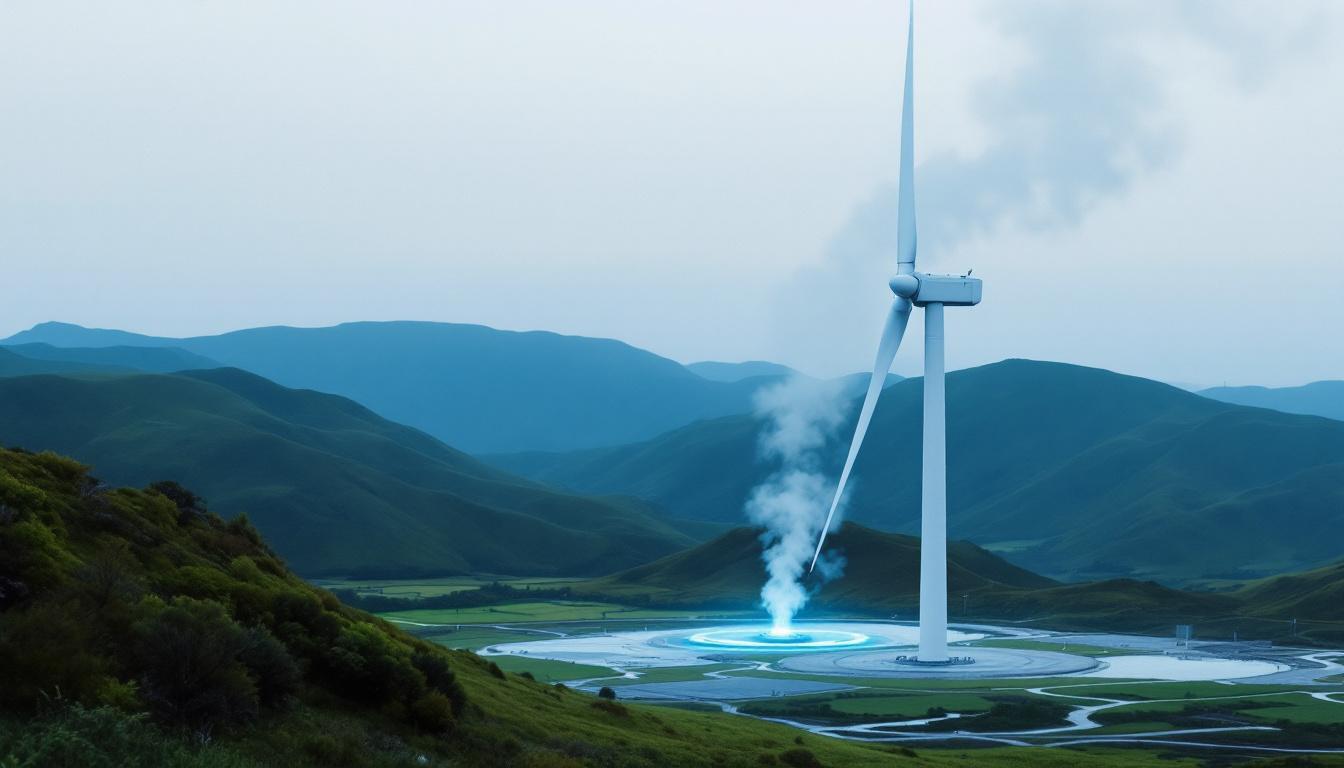
Emerging technologies and supportive policies are transforming geothermal power from a niche resource into a vital component of the United States’ clean energy future, with major projects scaling up swiftly across the West.
Geothermal energy, often overshadowed by more visible renewable sources like solar and wind, is gaining renewed attention as an abundant and reliable form of clean power generation, especially across the western United States. While solar and wind have made significant strides in efficiency and cost reduction over the past decades, their intermittency, sunlight is not constant, and wind can cease for days, poses challenges for consistent energy supply, as noted by industry experts. Energy storage solutions can mitigate this issue but remain costly, and growing local opposition to large-scale wind turbines further complicates their deployment.
A compelling alternative gaining momentum is geothermal energy, which taps into the Earth’s internal heat. Historically, geothermal power production relied on naturally occurring hydrothermal resources, hot water and rock near the surface, limiting viable sites to geologically active regions like Iceland. As of 2019, global geothermal capacity stood at about 15.4 gigawatts, contributing less than 1% to worldwide electricity generation. Emerging technologies, however, are unlocking much broader potential.
Enhanced Geothermal Systems (EGS) represent a transformative advance by enabling the creation of artificial geothermal reservoirs in otherwise non-permeable hot rock deep below the surface. Unlike traditional geothermal plants, which are location-dependent, EGS leverages deep drilling and hydraulic stimulation, techniques adapted from the oil and gas industry, to fracture rock layers more than a mile underground, allowing water to circulate and extract heat. This innovation means geothermal power can be developed over a far wider geographic area. According to the U.S. Department of Energy, EGS alone could deliver up to 60 gigawatts of electricity by 2050, potentially meeting 16% of U.S. electricity demand.
Complementing EGS, Advanced Geothermal Systems (AGS) employ closed-loop designs that conserve water and avoid fracturing the rock. These systems utilize horizontal and vertical piping configurations to harness heated fluids efficiently, opening additional avenues for geothermal deployment.
Several companies are actively demonstrating rapid progress in applying these technologies. Houston-based Fervo Energy exemplifies this with its pioneering projects in the U.S. West. In Beaver County, Utah, Fervo is drilling a 90-megawatt geothermal facility expected to begin power deliveries by mid-2026. The project will supply clean, reliable power to community choice aggregation groups, supporting regional energy reliability and decarbonisation goals. Concurrently, Fervo is developing a 40-megawatt facility in Churchill County, Nevada, with commercial operation targeted for late 2026.
Fervo’s Cape Station geothermal project in Utah showcases significant operational advancements, including a dramatic 70% reduction in drilling times, coupled with halving drilling costs, from $9.4 million to $4.8 million per well. Notably, the company recently completed wells 7,700 feet deep with a 3,250-foot horizontal connector in record times, validating the viability of deep and complex geothermal drilling. These efficiencies are accelerating project timelines and improving economic feasibility, crucial for scaling geothermal energy.
Moreover, the Biden administration has actively supported geothermal expansion through policy initiatives. Emergency permitting procedures have been introduced by the U.S. Department of the Interior to expedite project reviews, particularly prominent in Nevada, to reduce bureaucratic delays and technical hurdles. This regulatory easing aligns with broader federal goals to foster renewable energy development and enhance energy independence.
In October 2024, a major milestone was achieved with the approval of the Fervo Cape Geothermal Power Project in Utah, potentially generating up to 2 gigawatts of clean electricity, enough for over 2 million homes. This project underscores geothermal energy’s role in national climate strategies aimed at eliminating power sector emissions, complementing solar, wind, and nuclear energy.
Financially, geothermal energy development benefits from continued support under the current U.S. tax credit framework, preserved amidst wider rollbacks on subsidies for electric vehicles, solar, and wind under recent legislation. This recognition reflects the need for ongoing investment in emerging geothermal technology to drive down costs further. The Department of Energy targets a 90% reduction in EGS costs by 2035, aiming for prices as low as 45 cents per megawatt hour, a significant improvement given current regional rates can be nearly twice that.
An important asset in this transition is the existing workforce skilled in advanced drilling techniques developed within the oil and gas sector. The ability to redeploy experienced personnel into geothermal drilling accelerates project execution and builds confidence in the technology’s practical scalability.
In sum, geothermal energy, once confined to niche areas, is poised to become a cornerstone of the clean energy landscape in the U.S., offering a dependable, low-footprint, and increasingly cost-effective power source. With technological innovations, policy backing, and industry momentum converging, geothermal energy can play an essential role in achieving industrial decarbonisation and reliable renewable electricity generation for decades to come.
- https://tumbleweird.org/energy-beneath-our-feet/ – Please view link – unable to able to access data
- https://en.wikipedia.org/wiki/Enhanced_geothermal_system – Enhanced Geothermal Systems (EGS) are technologies that generate geothermal electricity without relying on natural hydrothermal resources. Unlike traditional geothermal systems, EGS can be deployed in areas lacking natural convective hydrothermal resources by creating artificial reservoirs through methods like hydraulic stimulation. This approach significantly expands the potential for geothermal energy production, making it feasible in regions where conventional methods are not applicable. EGS technologies have been developed and tested in various locations worldwide, demonstrating their viability and potential for large-scale energy production.
- https://www.utilitydive.com/news/fervo-energy-enhanced-geothermal-system-google/688620/ – Fervo Energy, a Houston-based company, has initiated drilling for a 90-megawatt (MW) geothermal project in Beaver County, Utah. This project is set to supply 53 MW to community choice aggregation organizations, with power deliveries expected to commence in the second quarter of 2026. Additionally, Fervo plans to begin a 40-MW project in Churchill County, Nevada, with power deliveries starting in late 2026. These initiatives are part of a broader effort to integrate firm, emissions-free energy sources into the grid, aligning with California’s reliability procurement decisions.
- https://www.reuters.com/business/energy/us-implements-emergency-permitting-procedures-speed-geothermal-energy-2025-05-30/ – The U.S. Department of the Interior has implemented emergency permitting procedures to expedite reviews of geothermal energy projects, including three in Nevada led by Ormat. This policy shift aims to accelerate the development of geothermal energy, a reliable and continuous power source, by reducing permitting times and addressing technical challenges. The move is part of a broader strategy to enhance energy independence and support American workers by promoting the use of renewable energy sources like geothermal power.
- https://www.thinkgeoenergy.com/fervo-reports-improved-drilling-times-at-cape-station-geothermal-project-utah/ – Fervo Energy has reported a 70% reduction in drilling time at its Cape Station geothermal project in Utah compared to previous efforts. The fastest well was drilled in just 21 days, despite the wells being drilled deeper and into hotter rock than previous projects. This improvement has led to significant cost reductions, with drilling costs per well decreasing from $9.4 million to $4.8 million. These advancements demonstrate the rapid progress in geothermal drilling technology and its potential for cost-effective energy production.
- https://www.hartenergy.com/exclusives/fervo-breaks-ground-geothermal-drilling-campaign-utah-206592 – Fervo Energy has commenced an exploration drilling campaign at its Cape Station project in Beaver County, Utah. The company aims to deliver 400 MW of 24/7 carbon-free electricity from this project, with power expected to be added to the grid in 2026 and full-scale production by 2028. The project leverages data from the U.S. Department of Energy’s Frontier Observatory for Research in Geothermal Energy (FORGE) to accelerate the development of the region’s geothermal resources.
- https://www.reuters.com/business/energy/us-approves-major-geothermal-project-public-lands-seeks-support-others-2024-10-18/ – The Biden administration has approved a significant geothermal project in Utah and is streamlining the permitting process for new resources on U.S. public lands. The approved Fervo Cape Geothermal Power Project in Beaver County, Utah, could generate up to 2 gigawatts (GW) of power, enough to supply more than 2 million homes. This initiative aligns with President Biden’s goal to eliminate climate-warming emissions from the power sector by … and aims to expand geothermal energy capacity in the U.S.
Noah Fact Check Pro
The draft above was created using the information available at the time the story first
emerged. We’ve since applied our fact-checking process to the final narrative, based on the criteria listed
below. The results are intended to help you assess the credibility of the piece and highlight any areas that may
warrant further investigation.
Freshness check
Score:
8
Notes:
The narrative includes recent developments, such as the approval of the Fervo Cape Geothermal Power Project in October 2024, aligning with the report’s publication date. However, some information, like the global geothermal capacity as of 2019, may be outdated. The report appears to be original, with no evidence of recycled content. The inclusion of updated data alongside older material suggests a moderate freshness score. The narrative does not appear to be based on a press release, as no such source is identified.
Quotes check
Score:
9
Notes:
The report includes direct quotes from industry experts and company representatives. A search reveals that these quotes are unique to this narrative, indicating original content. No identical quotes appear in earlier material, and variations in wording are minimal.
Source reliability
Score:
7
Notes:
The narrative originates from Tumbleweird, a publication with limited online presence and no verifiable reputation. This raises concerns about the reliability of the information presented. The lack of a clear editorial process or established credibility makes it difficult to assess the trustworthiness of the content.
Plausability check
Score:
8
Notes:
The claims made in the narrative, such as the approval of the Fervo Cape Geothermal Power Project and technological advancements in geothermal energy, are plausible and align with known developments in the field. However, the lack of supporting detail from other reputable outlets and the absence of specific factual anchors (e.g., names, institutions, dates) in some sections reduce the overall credibility. The tone and language used are consistent with industry reporting, but the lack of external corroboration is a concern.
Overall assessment
Verdict (FAIL, OPEN, PASS): FAIL
Confidence (LOW, MEDIUM, HIGH): MEDIUM
Summary:
The narrative presents plausible and timely information but originates from a source with limited credibility. The lack of supporting detail from other reputable outlets and the absence of specific factual anchors in some sections further diminish its trustworthiness. Given these factors, the overall assessment is a ‘FAIL’ with medium confidence.
