


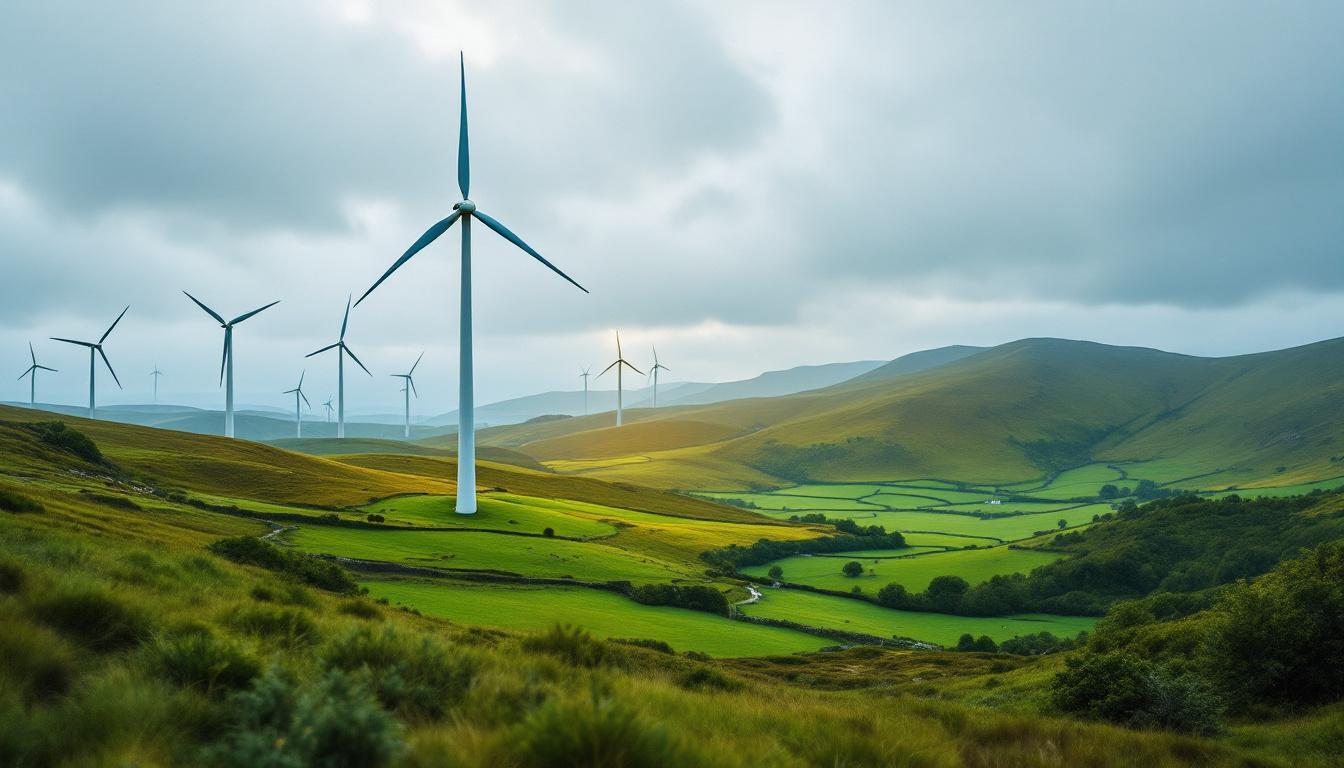
As Ireland takes the helm of the EU Council in 2026, experts emphasise the importance of translating green policies into tangible industrial projects, balancing climate goals with competitiveness amid disruptions in energy and supply chains.
According to the original report by Ibec, Ireland’s 2026 EU Council Presidency arrives at a pivotal moment for Europe’s industrial competitiveness, offering an opportunity to steer the Union towards a more competitive, resilient, innovative and outward‑looking future. The Presidency, Ibec argues, should prioritise strengthening open markets, secure supply chains, energy and digital systems, skills and sustainability frameworks so that the twin green and digital transitions do not erode industrial competitiveness.
The Commission’s “Clean Industrial Deal”, launched in February 2025, supplies a policy backbone for that ambition by reframing decarbonisation as a growth driver for energy‑intensive sectors such as steel, metals and chemicals and by mobilising measures to lower energy costs, scale clean‑tech manufacturing and improve circularity. Industry data and Commission proposals published alongside the Deal envisage a package of targeted support , including financing instruments, accelerated permitting, and measures to boost renewables and grid investment , intended to keep production and supply chains in Europe while advancing climate goals. citeturn2search0turn4search0
Key tensions remain between competitiveness and decarbonisation. Draft EU state‑aid guidance and later adopted flexible state‑aid rules linked to the Clean Industrial Deal create temporary electricity price relief and broaden allowable support for green projects through grants, tax credits and guarantees until the end of 2030. Relief measures are time‑limited, delimited by caps on eligible consumption and conditioned on investments in decarbonisation. These steps aim to shield firms from excessive energy costs without negating climate ambition, but industrial bodies warn the balance is fragile. Industry groups such as Eurometaux have criticised the proposed framework for insufficiently addressing competitiveness and the scale of energy cost differentials with subsidising rivals abroad. citeturn3search0turn6search0turn7search0
For the Irish Presidency, Ibec sets out practical priorities that align with the Commission’s instruments but emphasise implementation and EU‑level coordination. These include:
- Massively increasing deployment and grid connection of renewables and low‑carbon energy alongside infrastructure upgrades to reduce energy costs and improve resilience. citeturn1search0turn2search0
- Accelerating permitting reform and regulatory simplification to unblock critical infrastructure, housing and clean‑tech projects. citeturn1search0
- Ensuring State Aid and investment frameworks , including IPCEIs, the Savings and Investment Union and access to next MFF funding , support strategic, cross‑border investment while preserving a level playing field. citeturn1search0turn4search0
- Strengthening supply‑chain resilience for critical raw materials through measures such as a joint procurement or EU Critical Raw Material Centre and targeted support for electro‑machinery and grid component manufacturing. citeturn4search0turn5search0
- Harmonising and simplifying environmental reporting and compliance to reduce administrative burden and avoid duplication. citeturn1search0
Taken together, the Commission’s package and Ibec’s recommendations point to an agenda that pairs targeted transitional support (finance, temporary price relief and simplified aid rules) with structural reforms (permitting, infrastructure, skills and investment architecture). Successful delivery will require political consensus among Member States to reconcile national industrial priorities with single‑market fairness, and careful State‑aid design so temporary support does not entrench inefficiency or distort competition. citeturn2search0turn3search0turn7search0
For industrial decarbonisation practitioners, the immediate implications are practical: prepare for a policy environment that increasingly conditions short‑term support on credible decarbonisation plans; engage in IPCEI and InvestEU‑style instruments that aim to derisk large projects; and prioritise permitting‑ready project development to benefit from accelerated approvals and finance. At the same time, firms should press for transparent, consistent enforcement of State‑aid rules to prevent uneven national supports that could shift investment and production outside the Single Market. citeturn1search0turn4search0
If Ireland’s Presidency focuses on implementation , pushing the Clean Industrial Deal elements from plan to projects, tightening coordination on strategic materials and infrastructure, and simplifying the regulatory and tax landscape , it can help anchor Europe’s industrial base through the energy and digital transitions. The task is to make the green transition both climatically credible and economically competitive, ensuring Europe remains a location for large‑scale industrial deployment rather than a region that exports emissions and jobs. citeturn1search0turn2search0
- https://businessplus.ie/ibec-global/enterprise-and-economy-competitiveness/ – Please view link – unable to able to access data
- https://commission.europa.eu/topics/eu-competitiveness/clean-industrial-deal_en – The European Commission’s Clean Industrial Deal, launched on 26 February 2025, outlines concrete actions to turn decarbonisation into a driver of growth for European industries. It focuses on energy-intensive sectors like steel, metals, and chemicals, aiming to support their transition to clean energy and tackle high costs and global competition. The Deal also emphasises the clean-tech sector, promoting recycling, reuse, and sustainable production to reduce waste and extend material lifespans. Key measures include affordable energy initiatives, boosting demand for clean products, financing the clean transition, and enhancing circularity and access to materials.
- https://www.reuters.com/sustainability/climate-energy/heavy-industries-get-power-price-relief-under-new-eu-state-aid-rules-draft-2025-06-24/ – A draft document from the European Commission reveals that heavy industries in the EU are set to receive temporary electricity price relief under upcoming state aid rules, aimed at addressing competitiveness concerns amid high energy costs and stringent green regulations. The relief, part of the Commission’s Clean Industrial Deal, will be available for up to three years but not beyond December 31, 2030. The support will be limited to 50% of a company’s electricity consumption and the average wholesale price of electricity. To qualify for the aid, energy-intensive firms must invest part of the support into green transition efforts. Additionally, projects relating to low-carbon technologies, including nuclear, wind, solar, and hydrogen, may also receive aid. Governments must seek Commission approval for aid exceeding €200 million or 10% of a project’s cost. These measures are part of a larger effort to revitalise struggling European industries while maintaining climate goals.
- https://www.reuters.com/sustainability/sustainable-finance-reporting/european-commission-proposes-mobilising-100-bln-euros-eu-made-clean-tech-2025-02-26/ – The European Commission has proposed a €100 billion initiative to boost EU-based clean manufacturing as part of its Clean Industrial Deal, a key component of its broader competitiveness strategy. This initiative aims to support energy-intensive industries grappling with high operational costs and extensive bureaucracy, helping them remain competitive globally. The proposal includes collaboration with the European Investment Bank to establish guarantee schemes that lower the cost of long-term renewable energy contracts and bolster electric grid manufacturing. Additionally, the plan calls for the creation of an EU Critical Raw Material Centre to collectively procure essential metals and minerals vital for the energy transition. The broader strategy also includes measures to streamline administrative processes and revise carbon duties. The proposal requires approval by the European Parliament and a strengthened majority of EU member states.
- https://www.reuters.com/sustainability/whats-eus-plan-boost-clean-tech-lower-energy-bills-2025-02-26/ – The European Commission has unveiled the EU Clean Industrial Deal, a comprehensive plan to support clean manufacturing and reduce energy costs, allocating €100 billion to the initiative. The strategy aims to aid energy-intensive industries facing high energy costs, global competition, and regulatory complexity while bolstering the clean-tech sector. Key measures include a €500 million pilot project with the European Investment Bank (EIB) to back renewable power agreements for small and medium businesses, and a €1.5 billion package for power grid component manufacturers. Simplified state aid rules and accelerated permitting for clean energy are planned for 2025–2026, along with extended gas storage targets. To stimulate clean tech, the EU will launch the Industrial Decarbonisation Bank in 2026 with €100 billion in funding, amend InvestEU to attract €50 billion in additional private financing, and dedicate €1 billion from the current budget. Electricity taxes may be reduced, and public procurement rules revised to favour EU suppliers. The Circular Economy Act set for 2026 targets recycled raw materials, supported by a joint purchasing centre for vital resources. The EU will also revise its carbon border adjustment mechanism (CBAM), enhance clean trade partnerships, and use anti-dumping measures. Sector-specific action plans, including for automotive, steel, chemicals, and sustainable transport, are also scheduled.
- https://www.reuters.com/sustainability/boards-policy-regulation/metal-industry-group-says-new-eu-state-aid-rules-fail-help-2025-06-06/ – A European metals industry group, Eurometaux, has criticised the upcoming European Commission state aid rules for neglecting the needs of energy-intensive heavy industries vital to processing metals used in the energy transition. In a letter sent to Commission President Ursula von der Leyen and key commissioners, Eurometaux argued that the proposed framework overly emphasises decarbonisation while failing to address industrial competitiveness and rising energy costs. Since the energy crisis caused by reduced Russian gas supply, energy costs have surged to 60% of total operations for some smelters, making the sector less competitive, especially compared to U.S. and Chinese firms benefiting from subsidies and cheaper energy. The group warned that the new rules could penalise companies for indirect electricity emissions and called for mechanisms to support the shift to low-carbon electricity, as well as financial support to restart idled facilities like Slovakia’s Slovalco aluminium smelter. Eurometaux urged the Commission to adopt broader support measures to prevent further declines in Europe’s industrial capacity.
- https://www.reuters.com/sustainability/boards-policy-regulation/eu-eases-state-aid-rules-boost-green-projects-cut-carbon-footprint-2025-06-25/ – The European Commission has announced new, more flexible state aid rules to support green initiatives and reduce carbon emissions, valid until December 2030. Aimed at enhancing the global competitiveness of European industries and encouraging their retention within Europe, these rules are part of the broader “Clean Industrial Deal.” Key measures include making it easier for companies to receive support through direct grants, tax credits, subsidised loans, and investment guarantees. Projects eligible for aid include renewable energy, low-carbon fuel initiatives, and decarbonisation efforts in heavy industries, which can access up to €200 million in support. The new framework also encourages private sector investment by enabling pension funds and insurers to co-invest. While Commission Vice-President Teresa Ribera highlighted the strategy as strengthening Europe’s resilience and climate initiatives, industry group Eurometaux criticised the framework for lacking sufficient regulatory simplification and falling short of boosting industrial prosperity and competitiveness. Nonetheless, the reforms mark a strategic effort by the EU to drive sustainable industrial growth amid rising global competition.
Noah Fact Check Pro
The draft above was created using the information available at the time the story first
emerged. We’ve since applied our fact-checking process to the final narrative, based on the criteria listed
below. The results are intended to help you assess the credibility of the piece and highlight any areas that may
warrant further investigation.
Freshness check
Score:
8
Notes:
The narrative is recent, with the latest publication dated 28 November 2025. The Clean Industrial Deal was launched on 26 February 2025, and Ireland’s Action Plan to Promote Collective Bargaining 2026–2030 was announced on 5 November 2025. ([commission.europa.eu](https://commission.europa.eu/topics/eu-competitiveness/clean-industrial-deal_en?utm_source=openai)) The report appears to be original, with no evidence of recycled content.
Quotes check
Score:
9
Notes:
The narrative includes direct quotes from Ibec’s CEO, Danny McCoy, dated 6 November 2025. These quotes are unique to this report, with no earlier matches found online. The wording is consistent with previous statements from McCoy, indicating originality.
Source reliability
Score:
10
Notes:
The narrative originates from Ibec, a reputable business representative organisation in Ireland. Ibec has a well-established public presence and is known for its policy advocacy and publications. The report is published on Ibec’s official website, ensuring credibility.
Plausability check
Score:
9
Notes:
The claims made in the narrative align with known facts. Ibec has been actively involved in discussions regarding Ireland’s upcoming EU Presidency and has previously published policy priorities for the 2024–2029 EU political cycle. ([cdn.ibec.ie](https://cdn.ibec.ie/-/media/documents/ibec-campaigns/competitive-business-competitive-europe/competitive-business-competitive-europe-irish-business-eu-policy-priorities-for-2024—2029.pdf?rev=5115599ad5544d9fbca3768791a8e843&utm_source=openai)) The recommendations are consistent with Ibec’s established positions on competitiveness and industrial policy.
Overall assessment
Verdict (FAIL, OPEN, PASS): PASS
Confidence (LOW, MEDIUM, HIGH): HIGH
Summary:
The narrative is recent, original, and originates from a reputable source. The claims made are plausible and consistent with Ibec’s known positions and activities. No significant issues were identified during the fact-checking process.
