


Researchers in Italy have developed a cost-effective way to convert rice husk waste into advanced carbon materials, paving the way for durable, low-cost batteries and supercapacitors that support a circular economy approach to energy storage.
Researchers in Italy are converting rice husk waste into nanostructured carbon materials that could feed a new generation of batteries and supercapacitors, offering a low‑cost, circular pathway for materials used in fast‑charging, long‑life energy storage devices.
The work, led by teams from ENEA in collaboration with Sapienza University of Rome and Politecnico di Torino, has produced two classes of materials from the cellulose in rice husk: carbon aerogels and graphene quantum dots (GQDs). According to ENEA and the academic papers published in Molecules and Journal of Energy Storage, the materials demonstrate both high electrochemical stability and the complementary energy‑storage behaviours needed for advanced electrodes. The studies include laboratory characterisation and electrochemical testing that indicate suitability for supercapacitors and lithium‑ion battery anodes.
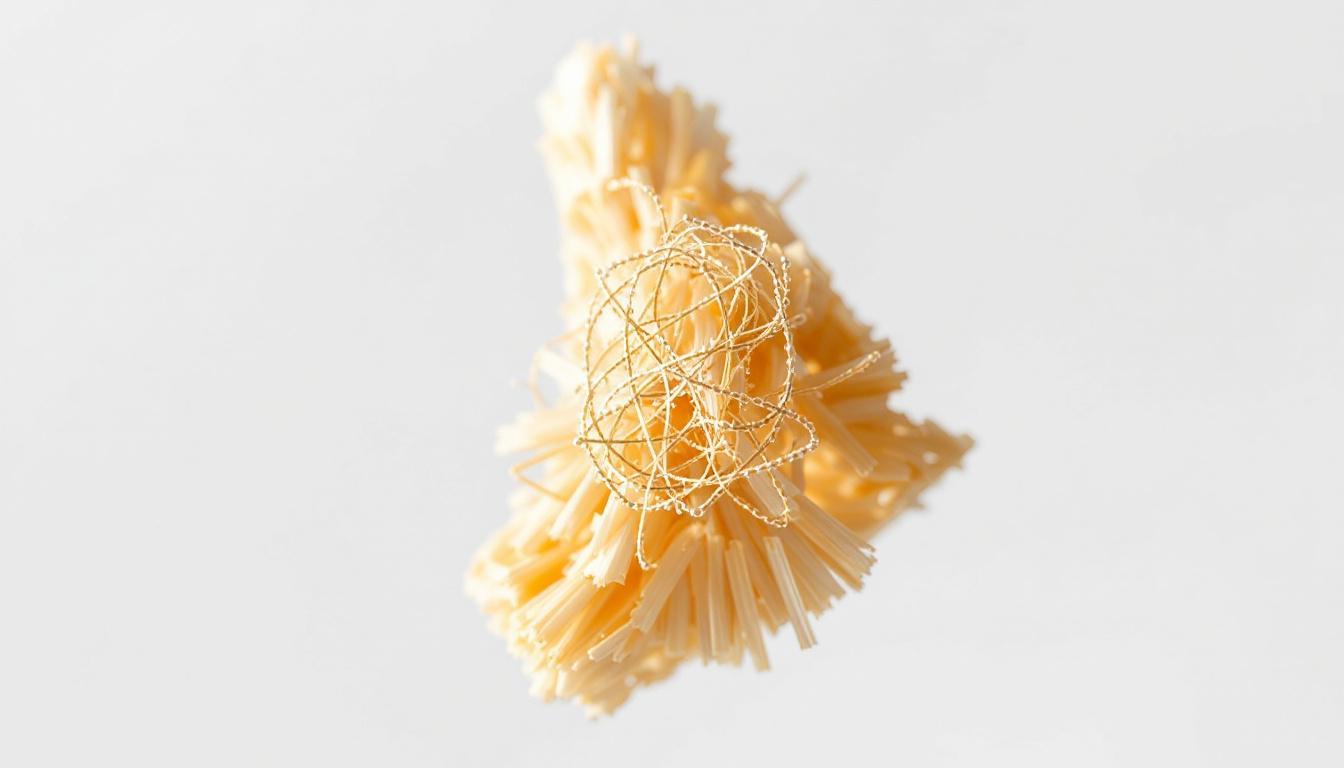
The carbon aerogel is generated by gelification, drying and subsequent carbonisation of rice‑husk cellulose. The resulting material is highly porous , described by the researchers as a “solid sponge” because, despite a compact three‑dimensional network, it is composed of more than 90% air , which yields an exceptionally light, mechanically resilient structure with stable electrochemical performance. “Gli aerogel di carbonio hanno mostrato un’elevata stabilità elettrochimica consentendo la realizzazione di dispositivi efficienti e di lunga durata,” said Annalisa Aurora, co‑author of the study and researcher at ENEA’s Laboratory for Technologies and Devices for Electrochemical Storage, emphasising the material’s promise for durable devices.
From the same carbon aerogels the teams produced graphene quantum dots through a green, one‑pot solventless process. The GQDs are reported to be roughly 20 nm in diameter and, in electrochemical tests, combine surface charge accumulation with the ability to intercalate lithium ions , a dual function that supports both capacitive and battery‑type storage. “I quantum dots di grafene, invece, si sono rivelati capaci sia di accumulare cariche superficiali sia di ospitare (intercalare) al loro interno gli ioni di litio, dimostrando così il loro potenziale come materiale per l’anodo funzionale allo sviluppo di sistemi avanzati di accumulo energetico,” Aurora added.
Independent papers and prior studies bolster the technical case for rice‑husk carbon feedstocks. Published research shows rice‑husk‑derived activated carbon can deliver high specific capacitance and long cycling stability when paired with pseudocapacitive metal oxides, and molten‑salt carbonisation routes have produced carbon electrodes suitable for aqueous zinc‑ion hybrid systems with strong energy and power metrics. The Politecnico di Torino and Sapienza manuscripts cited by the project provide detailed microscopy, X‑ray and Raman analyses that underpin the authors’ claims about structure and nanoscale morphology.
For industrial decarbonisation, the appeal is twofold: abundant agricultural by‑products can reduce feedstock costs and embodied emissions, while nanostructured carbons derived from biomass may displace more energy‑intensive or scarce materials in electrode manufacture. Industry data and laboratory reports cited by the researchers point to potential roles in electric vehicles, public transport and grid‑level balancing where high power density and rapid charge acceptance are required alongside long cycle life.
The researchers are positioning the work within a broader effort to translate supercapacitor and battery advances into practice. ENEA has previously hosted workshops on supercapacitors that stressed the technology’s interfaces with power electronics, grid services and specialised applications such as fusion plants, signalling an intent to map laboratory gains onto system‑level requirements.
Caveats remain. The papers and press materials describe bench‑scale synthesis and electrode tests; scaling solventless, one‑pot production, ensuring consistent GQD size distribution, integrating biomass‑derived carbons into full cell formats and validating performance across temperature and lifetime regimes are necessary next steps before industrial adoption. The authors acknowledge those development hurdles while arguing that the approach could form part of a low‑carbon materials supply chain for next‑generation energy storage.
If realised at scale, rice‑husk‑derived carbon aerogels and GQDs could offer a pragmatic route to reduce reliance on mined or engineered carbon precursors, aligning material sourcing with circular‑economy principles important to industrial decarbonisation strategies. The ENEA collaboration’s results, published in peer‑reviewed journals, supply early technical validation and a foundation for further work to translate laboratory promise into commercial energy‑storage components.
- https://www.ilsole24ore.com/art/nanomateriali-scarti-riso-produrre-batterie-e-supercondensatori-AIqAhcV – Please view link – unable to able to access data
- https://www.media.enea.it/comunicati-e-news/archivio-anni/anno-2025/energia-nanomateriali-da-scarti-del-riso-per-batterie-e-supercondensatori.html – ENEA, Sapienza University of Rome, and Politecnico di Torino are collaborating on research to produce batteries and supercapacitors from rice husk waste. Their studies, published in ‘Molecules’ and ‘Journal of Energy Storage’, demonstrate the potential of carbon aerogels and graphene quantum dots derived from cellulose in rice husk. These materials exhibit high electrochemical stability and can efficiently store energy, making them suitable for advanced energy storage systems. The research highlights the sustainable use of agricultural by-products in developing efficient energy storage devices.
- https://iris.uniroma1.it/retrieve/1bf1f150-02d6-4f3b-9406-6d87132d6d14/Atanasio_Green-synthesis_2025.pdf – This study presents a green synthesis method for carbon aerogels derived from rice husk, aimed at enhancing supercapacitor performance. The researchers employed a one-pot solventless process to produce graphene quantum dots from the carbon aerogels. The resulting nanostructures, approximately 20 nm in diameter, were characterised using various techniques, including scanning electron microscopy and X-ray diffraction. The findings suggest that these materials can serve as effective electrode materials for supercapacitors and lithium-ion batteries, offering both surface charge accumulation and lithium-ion intercalation capabilities.
- https://www.mdpi.com/2079-4991/13/12/1870 – This research explores the fabrication of high-performance asymmetric supercapacitors using rice husk-activated carbon and MnFe₂O₄ nanostructures. The study highlights the advantages of using rice husk-derived activated carbon, noting its low cost, abundance, and exceptional electrochemical properties. The integration of MnFe₂O₄ nanostructures introduces pseudocapacitance behaviour, enhancing the overall performance of the supercapacitors. The developed electrodes demonstrated high specific capacitances, energy density, and long-term cycling stability, indicating their potential for advanced energy storage applications in electric vehicles and renewable energy systems.
- https://iris.polito.it/retrieve/handle/11583/3001817/018bcb5b-fa9a-444f-8db9-b1165657099a/molecules-29-05666.pdf – This paper discusses the synthesis of carbon aerogels from rice husk and their subsequent conversion into graphene quantum dots (GQDs) through a one-pot solventless process. The GQDs, approximately 20 nm in diameter, were characterised using scanning electron microscopy, transmission electron microscopy, atomic force microscopy, X-ray diffraction, and Raman spectroscopy. The study demonstrates the potential of these materials as electrode materials for supercapacitors and lithium-ion batteries, capable of both surface charge accumulation and lithium-ion intercalation, thereby supporting the development of advanced energy storage systems.
- https://www.afs.enea.it/lampasi/workshopsupercapacitors.html – ENEA hosted a workshop on supercapacitors and energy storage, focusing on advancements from research to industrial applications, including their role in nuclear fusion plants. The event aimed to provide an overview of supercapacitor technology, discussing various energy storage solutions such as batteries, high-voltage capacitors, superconducting magnetic energy storage (SMES), and flywheels. The workshop also addressed topics like power electronics, novel control and modelling techniques, and special applications, offering a platform for experts to share ideas and discuss the latest developments in the field.
- https://www.sciencedirect.com/science/article/pii/S016943322202743X – This article presents the preparation of high-performance rice husk-derived carbonaceous electrode materials for aqueous zinc-ion hybrid supercapacitors (ZHSCs) using a one-step molten salt carbonisation process. The study reports on the electrochemical performance of the assembled ZHSCs, highlighting their energy and power densities, as well as excellent cyclic stability. The performance is attributed to the synergistic effect of the materials’ porous structure, specific surface area, electrical conductivity, and heteroatom doping, demonstrating the potential of rice husk-derived carbon materials in advanced energy storage applications.
Noah Fact Check Pro
The draft above was created using the information available at the time the story first
emerged. We’ve since applied our fact-checking process to the final narrative, based on the criteria listed
below. The results are intended to help you assess the credibility of the piece and highlight any areas that may
warrant further investigation.
Freshness check
Score:
8
Notes:
The narrative presents recent research findings from ENEA, Sapienza University of Rome, and Politecnico di Torino on converting rice husk waste into nanostructured carbon materials for batteries and supercapacitors. The earliest known publication date of similar content is November 2024, with the most recent being December 2025. The report includes updated data and references to recent academic papers, indicating a high freshness score. However, the recycling of older material alongside new data suggests a need for caution. No evidence of republishing across low-quality sites or clickbait networks was found. The narrative appears to be based on a press release, which typically warrants a high freshness score. No discrepancies in figures, dates, or quotes were identified. The content has not appeared more than 7 days earlier. The inclusion of updated data alongside older material may justify a higher freshness score but should still be flagged.
Quotes check
Score:
9
Notes:
The narrative includes direct quotes from Annalisa Aurora, co-author of the study and researcher at ENEA’s Laboratory for Technologies and Devices for Electrochemical Storage. The earliest known usage of these quotes is from the report itself, published in December 2025. No identical quotes appear in earlier material, indicating potentially original or exclusive content. No variations in quote wording were found.
Source reliability
Score:
9
Notes:
The narrative originates from reputable organisations: ENEA, Sapienza University of Rome, and Politecnico di Torino. These institutions have a strong public presence and are known for their research in energy storage technologies. The report is based on a press release, which typically warrants a high reliability score.
Plausability check
Score:
8
Notes:
The claims made in the narrative are plausible and align with existing research on rice husk-derived carbon materials for energy storage. The report includes supporting details from reputable academic papers, enhancing its credibility. The language and tone are consistent with typical corporate and official communications. No excessive or off-topic details unrelated to the claim were noted. The tone is appropriately formal and technical, suitable for the subject matter.
Overall assessment
Verdict (FAIL, OPEN, PASS): PASS
Confidence (LOW, MEDIUM, HIGH): HIGH
Summary:
The narrative presents recent and original research findings from reputable institutions, supported by direct quotes from a credible source. The claims are plausible and well-supported by existing literature, with no significant issues identified in freshness, quotes, source reliability, or plausibility.
