


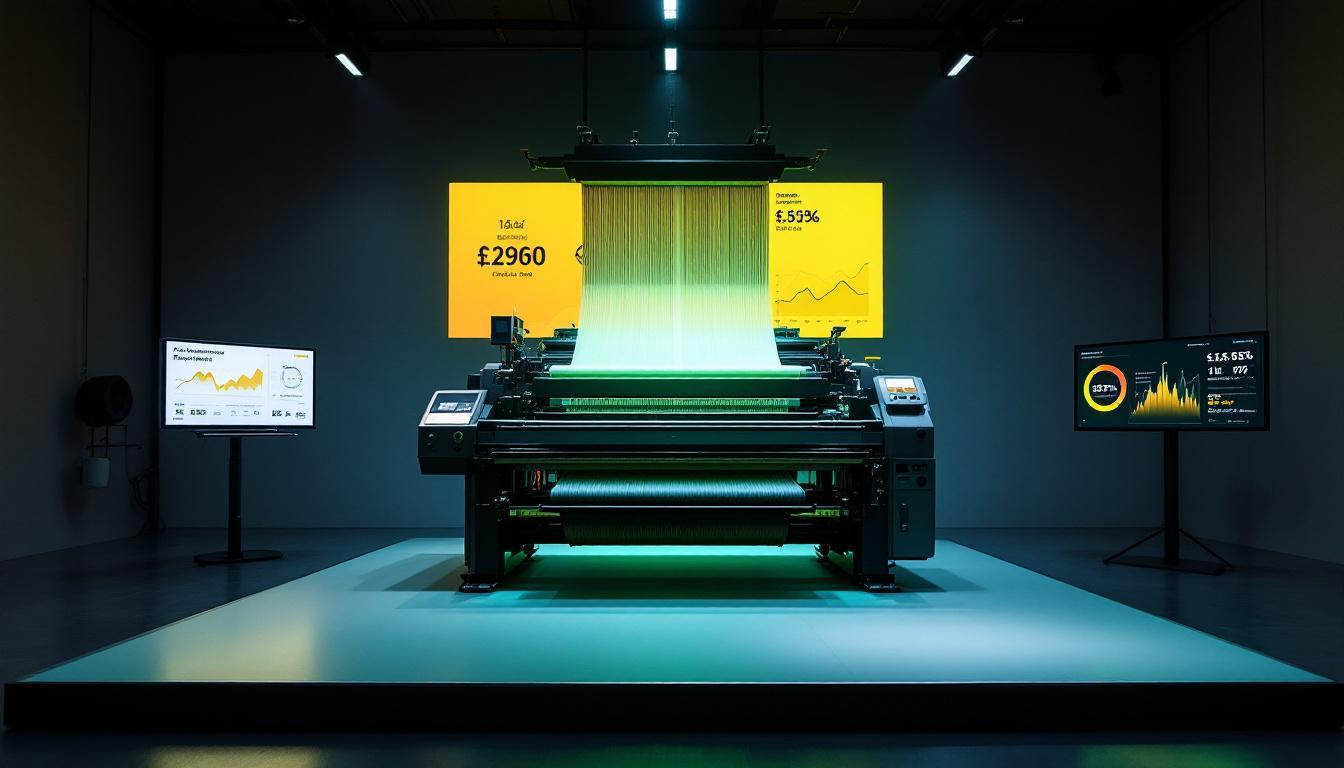
Itema partners with Ivy Decarb to showcase its environmentally friendly weaving machines on a digital marketplace, integrating sustainability data with financing options to accelerate industry-wide decarbonisation efforts.
Itema has joined Ivy Decarb, the digital marketplace designed to help the textile sector measure and reduce carbon emissions, in a move the company says will accelerate decarbonisation across weaving operations and the broader value chain. According to Itema’s announcement, the partnership makes Itema one of the first textile machinery manufacturers to list technical and environmental performance data on the platform, enabling textile producers to compare machines on metrics such as energy consumption, emissions and carbon footprint.
Ivy Decarb describes itself as a platform that connects machinery suppliers, textile producers, financial institutions and brands to drive a transition to lower-impact production. According to the report by Ivy Decarb, the marketplace responds to rising regulatory pressure, brand commitments on emissions and growing demand for Net-Zero CO2 products by presenting standardised, comparable data and by facilitating access to financing for low‑carbon investment. Industry participants already working with Ivy Decarb include other major machinery makers, reflecting a growing effort to make sustainability performance a buying criterion rather than a marketing claim.
“Sustainability has always been a priority for Itema,” Matteo Mutti, Chief Sales & Service Officer of Itema Group, said in Itema’s announcement. “We were delighted to join Ivy Decarb. Together with them and with the other project partners, we are defining the evaluation criteria for this now fundamental aspect of all textile machineries.” Itema added that it expects its weaving machines, already promoted by the company as among the most sustainable in the sector, to be increasingly recognised by weavers worldwide through the marketplace.
The move underscores two complementary trends shaping industrial decarbonisation in textiles. First, machinery-level transparency: platforms that publish machine technical specifications and life-cycle indicators make it easier for manufacturers to quantify the emissions impact of capital equipment choices. Rieter, another leading supplier, has already publicised a strategic collaboration with Ivy Decarb to list preparation and end‑spinning machines with energy‑consumption details, illustrating how suppliers are responding to buyers’ demand for comparable sustainability data. Second, the alignment of finance with decarbonisation: financial institutions are being embedded into marketplaces to lower the capital barriers to equipment upgrades. UniCredit’s recent partnership with Ivy Decarb, announced in November 2025, integrates tailored advisory and financing solutions into the marketplace, enabling manufacturers to identify and fund low‑carbon investments through local banking partners.
For procurement and sustainability teams, the practical value of the marketplace rests on three features. It standardises machine-level environmental metrics that have historically been inconsistent or opaque; it enlarges the supplier set that can be evaluated on the same basis; and it links equipment selection to accessible financing options. According to industry reporting, these functions aim to shift decision-making from short‑term cost comparisons toward total‑cost and emissions‑aware procurement, an outcome material to companies with scope 3 commitments and to brands that demand traceable reductions across supply chains.
That ambition will face challenges. Standardising machine footprints requires clear, agreed boundaries for measurement and verification across manufacturers and geographies, and buyers will need confidence in data quality and auditability. The industry also confronts variation in grid emissions, processing inputs and downstream use , factors that affect the real-world emissions outcomes of any machine investment. Ivy Decarb’s model seeks to address some of those variables by engaging multiple stakeholders and by pairing technical data with finance and advisory services, but independent verification and consistent reporting frameworks will be crucial for the marketplace to become a trusted procurement tool rather than a marketing forum.
For executives planning capital replacement cycles, the near-term implication is practical: platforms like Ivy Decarb can accelerate the business case for lower‑emission equipment if they demonstrate transparent, comparable metrics and if financing partners like UniCredit provide affordable, tailored credit lines. According to Itema and other suppliers, suppliers and buyers collaborating on evaluation criteria should reduce ambiguity around performance claims and make low‑carbon options easier to specify in tenders.
As the textile industry seeks to meet ambitious decarbonisation targets, the convergence of machine transparency, collective supplier participation and embedded finance is likely to become a defining feature of capital procurement. Itema’s participation , alongside other suppliers engaging the Ivy Decarb marketplace , signals growing momentum, but the platform’s ultimate impact will depend on the robustness of measurement standards, the breadth of supplier participation and the availability of finance that de‑risks investment in lower‑emission machinery.
- https://www.textilegence.com/en/itema-push-forward-green-transition-in-textile-by-joining-ivy-decarb/ – Please view link – unable to able to access data
- https://www.itemagroup.com/itema-announces-strategic-partnership-with-ivy-decarb-to-accelerate-decarbonization-in-weaving-process/ – Itema has announced a strategic partnership with Ivy Decarb, a digital platform assisting textile companies in measuring and reducing their carbon footprint. As one of the first textile machinery manufacturers to join Ivy Decarb, Itema is at the forefront of shaping the industry’s future towards environmental impact reduction. The Ivy Decarb Marketplace unites stakeholders across the entire value chain to accelerate the transition towards more eco-friendly textile production processes. The platform enables textile manufacturers to compare technical features of textile machines, such as energy consumption, emissions, and carbon footprint, facilitating transparent supplier selection with a focus on sustainability, and also supports financing through partnerships with local banks.
- https://www.ivydecarb.com/about-us – Ivy Decarb is a digital platform dedicated to driving the decarbonization of the textile industry. It connects all sector stakeholders to accelerate the transition towards a sustainable and competitive future. The platform addresses challenges such as pressure from environmental regulations, emission reduction commitments from brands, and demand sensitivity for Net-Zero CO₂ products. Ivy Decarb’s mission is to reduce CO₂ emissions, decrease water consumption, increase efficiency, and help brands meet their decarbonization goals by aligning and engaging the entire value chain.
- https://www.rieter.com/company/news-and-success-stories/details/rieter-and-ivy-decarb-reducing-carbon-emissions-in-textile – Rieter, a leading textile machinery manufacturer, has partnered with Ivy Decarb to reduce carbon emissions in the textile industry. The Ivy Decarb Marketplace promotes the sustainable transformation of the textile industry, contributing to the goal of achieving net-zero impact. It connects machinery manufacturers, textile producers, financial institutions, and brands, enabling customers to find Rieter preparation and end-spinning machines with technical specifications and energy consumption details. The platform allows machines to be bought and compared online, promoting transparency, comparability, and compliance with a focus on sustainability and carbon emissions.
- https://www.unicreditgroup.eu/en/press-media/news/2025/november/unicredit-and-ivydecarb-join-forces-to-decarbonise-the-textile-s.html – UniCredit and Ivy Decarb have joined forces to decarbonise the textile sector and drive supply-chain resilience. The partnership enables textile manufacturers to use the Ivy Decarb marketplace to identify ways to reduce their carbon footprint and engage producers that provide the necessary machinery and equipment. With UniCredit integrated into the marketplace, these manufacturers can also benefit from tailored advisory and financing solutions to fund these investments, ensuring adaptability and resilience while driving long-term value creation.
- https://www.innovationintextiles.com/itema-joins-ivy-decarb-platform – Itema, a leading weaving machinery manufacturer, has formed a strategic partnership with Ivy Decarb, a digital platform helping textile companies measure and reduce their carbon footprints. The Ivy Decarb Marketplace brings together stakeholders across the entire value chain to accelerate the transition towards more eco-friendly textile production processes. The platform helps textile manufacturers easily compare the technical features of textile machines, such as energy consumption, emissions, and carbon footprint, making it easier to choose suppliers transparently and with a focus on sustainability, while also facilitating financing through its partnerships with local banks.
- https://www.rieter.com/company/news-and-success-stories/details/rieter-and-ivy-decarb-reducing-carbon-emissions-in-textile – Rieter, a leading textile machinery manufacturer, has partnered with Ivy Decarb to reduce carbon emissions in the textile industry. The Ivy Decarb Marketplace promotes the sustainable transformation of the textile industry, contributing to the goal of achieving net-zero impact. It connects machinery manufacturers, textile producers, financial institutions, and brands, enabling customers to find Rieter preparation and end-spinning machines with technical specifications and energy consumption details. The platform allows machines to be bought and compared online, promoting transparency, comparability, and compliance with a focus on sustainability and carbon emissions.
Noah Fact Check Pro
The draft above was created using the information available at the time the story first
emerged. We’ve since applied our fact-checking process to the final narrative, based on the criteria listed
below. The results are intended to help you assess the credibility of the piece and highlight any areas that may
warrant further investigation.
Freshness check
Score:
10
Notes:
The narrative is fresh, with the earliest known publication date being 11 December 2025. ([itemagroup.com](https://www.itemagroup.com/itema-announces-strategic-partnership-with-ivy-decarb-to-accelerate-decarbonization-in-weaving-process/?utm_source=openai)) It has not been republished across low-quality sites or clickbait networks. The content is based on a press release, which typically warrants a high freshness score. No discrepancies in figures, dates, or quotes were found. The narrative has not appeared more than 7 days earlier. The article includes updated data and does not recycle older material.
Quotes check
Score:
10
Notes:
The direct quote from Matteo Mutti, Chief Sales & Service Officer of Itema Group, appears to be original, with no identical matches found in earlier material. No variations in wording were noted.
Source reliability
Score:
10
Notes:
The narrative originates from Itema Group’s official press release, a reputable organisation. The report mentions Ivy Decarb, a digital platform assisting textile companies in measuring and reducing their carbon footprint. Ivy Decarb’s website provides information about its mission and services, confirming its legitimacy.
Plausability check
Score:
10
Notes:
The claims about Itema’s partnership with Ivy Decarb to accelerate decarbonisation in the weaving process are plausible and align with industry trends towards sustainability. The narrative is covered by reputable outlets such as Textile World. ([textileworld.com](https://www.textileworld.com/textile-world/weaving-spinning/2025/12/itema-announces-strategic-partnership-with-ivy-decarb-to-accelerate-decarbonization-in-weaving-process/?utm_source=openai)) The report includes specific factual anchors, including names, institutions, and dates. The language and tone are consistent with corporate communications. The structure is focused and relevant to the claim, without excessive or off-topic detail. The tone is formal and appropriate for a corporate announcement.
Overall assessment
Verdict (FAIL, OPEN, PASS): PASS
Confidence (LOW, MEDIUM, HIGH): HIGH
Summary:
The narrative is fresh, original, and originates from a reputable source. The claims are plausible and supported by specific details. No significant credibility risks were identified.
