


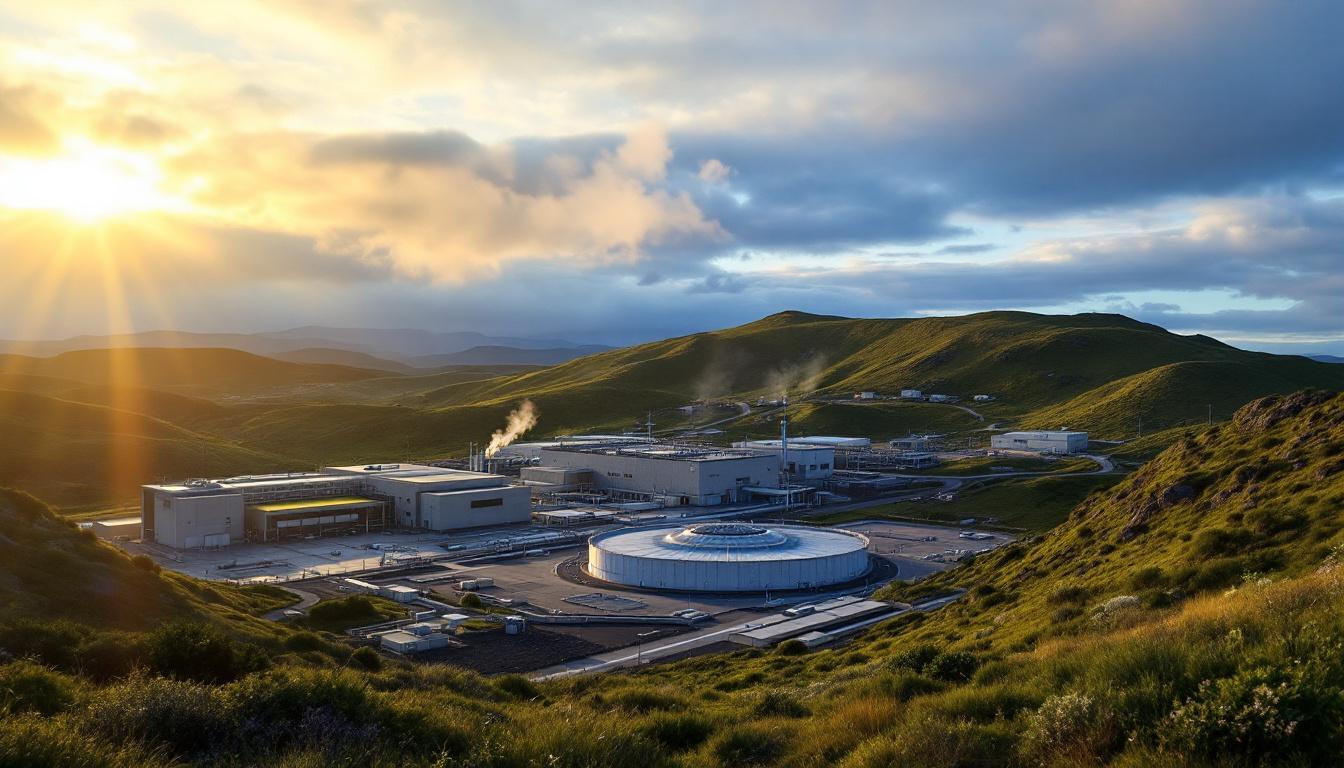
Japanese real estate companies are increasingly turning to geothermal energy through innovative offsite supply arrangements, supporting their climate targets and signalling a shift in how renewables are procured for urban properties.
Japan’s real estate sector is increasingly turning to geothermal power to meet corporate decarbonisation targets, with a fresh offsite supply arrangement linking utility-scale steam fields to urban office portfolios.
According to The Driller, Kyuden Mirai Energy has agreed to provide roughly 900 megawatt‑hours a year of geothermal-generated electricity to office buildings in Tokyo owned by Japan Prime Realty Investment Corporation (JPR). The arrangement routes power through Nippon Steel Engineering, which the company said will act as the retail supplier connecting generation to the buildings, enabling JPR to claim renewable consumption without installing on‑site generation or undertaking major building retrofits.
The deal follows a string of similar commercial contracts: Kyuden Mirai previously inked offsite power purchase agreements with Tokyo Tatemono and Panasonic, moves that industry observers see as proof that geothermal is moving beyond traditional utility markets into corporate procurement strategies. Nippon Steel Engineering said the scheme is intended to raise the share of renewables in JPR’s power mix and provide a stable, baseload low‑carbon supply to urban properties.
For JPR, the purchase supports quantified emissions targets. The company has committed to reducing greenhouse gas emissions by 46.2% from 2019 levels by 2030 and to achieving net zero by 2050, according to The Driller. Geothermal’s 24/7 output makes it attractive to owners seeking predictable offsets for building energy use, particularly where solar or wind profiles do not match occupancy patterns.
Kyuden Mirai operates multiple geothermal stations across Kyushu, including Hatchobaru, Takigami, Yamagawa and Ogiri, and has been advancing further projects in Kirishima and Yutsubo. However, the group is also managing legacy asset transitions: Fukuoka Now reported that the Hacchobaru Binary Power Plant in Kokonoe, Oita Prefecture, Japan’s first commercial binary geothermal facility, was formally retired on 31 December 2025 because of ageing equipment, while adjacent larger capacity units will remain operational. That decommissioning underscores the technical and lifecycle challenges inherent in expanding geothermal capacity even as commercial demand grows.
Kyuden Mirai and its parent group have moved to commercialise geothermal more broadly. ThinkGeoEnergy reported that Kyuden organised Japan’s first wholesale auction for geothermal electricity in October 2024, offering large volumes from its Oita and Kagoshima plants to highlight the resource’s reliability and low lifecycle emissions. Separate corporate activity by the wider Kyuden Group shows a parallel strategy of international renewable expansion: Kyuden International announced an acquisition of a U.S. solar project from Tokyo Century and Oriden, increasing the group’s overseas equity output to roughly 2,793 MW, a move that complements its domestic geothermal focus.
For industrial and real estate decarbonisation professionals, the JPR transaction signals two trends worth noting. First, offsite geothermal PPAs are emerging as a practical pathway for property owners to procure firm renewable energy that aligns with building load profiles. Second, while commercial demand and new procurement mechanisms are stimulating development, developers and investors must contend with asset maintenance, technological obsolescence and permitting hurdles that can affect supply continuity and project economics.
As Japan pursues greater share of renewables in its power system, geothermal offers predictable, dispatchable zero‑carbon generation. Institutional buyers in the built environment are beginning to treat it as a viable contractable commodity rather than an exclusively utility‑scale resource, a shift that could reshape how low‑carbon energy is sourced for large, energy‑intensive portfolios.
- https://www.thedriller.com/articles/93846-japans-real-estate-sector-taps-geothermal-power – Please view link – unable to able to access data
- https://www.thedriller.com/articles/93846-japans-real-estate-sector-taps-geothermal-power – Kyuden Mirai Energy has entered into an offsite geothermal power purchase agreement (PPA) to supply clean electricity from its geothermal plants to office buildings in Tokyo owned by Japan Prime Realty Investment Corporation (JPR). Nippon Steel Engineering acts as the retail power provider, delivering approximately 900 megawatt-hours of geothermal electricity annually to JPR’s urban office properties. This model allows companies to decarbonise without major retrofits. Kyuden Mirai has previously signed similar offsite PPAs with Tokyo Tatemono and Panasonic, aiding both firms in reducing emissions from buildings and manufacturing operations. JPR has set targets to cut total greenhouse gas emissions by 46.2% from 2019 levels by 2030 and achieve net-zero emissions by 2050. Kyuden Mirai operates four geothermal power plants across Japan, including Hatchobaru, Takigami, Yamakawa, and Ogiri, with additional projects underway in Kirishima and Yutsubo.
- https://www.eng.nipponsteel.com/en/news/detail/20260130/ – Nippon Steel Engineering has announced the implementation of a geothermal energy-derived electricity-based offsite power purchase agreement (PPA) with Japan Prime Realty Investment Corporation (JPR). This initiative aims to improve the renewable energy self-sufficiency rate in power consumption by supplying stable geothermal power to office buildings in Tokyo. The geothermal power is sourced from Kyuden Mirai Energy’s facilities, including Hatchobaru Power Station and Takigami Power Station in Oita Prefecture, and Yamagawa Power Station and Ogiri Power Station in Kagoshima Prefecture. The PPA model is designed to support JPR’s long-term climate strategy and contribute to Japan’s renewable energy goals.
- https://www.fukuoka-now.com/en/news/kyuden-shuts-down-oita-geothermal-plant/ – Kyuden Mirai Energy has decommissioned its Hacchobaru Binary Power Plant in Kokonoe, Oita Prefecture, Japan. The plant, which had been idle since January 2020, was officially shut down on December 31, 2025, due to aging equipment. Opened in 2004 as Japan’s first commercial binary geothermal facility, it began full operations in 2006 with a 2,000-kilowatt output. The adjacent Hacchobaru Geothermal Power Plant, with a total output of 110,000 kilowatts, will continue operating. This decommissioning reflects the challenges of maintaining older geothermal facilities and the ongoing evolution of Japan’s energy infrastructure.
- https://www.kyuden-intl.co.jp/en/news/detail/109 – Kyuden International Corporation, a member of the Kyuden Group, has entered into an agreement with Tokyo Century Corporation to acquire 100% of the ownership interests in a solar power generation project being developed by Oriden LLC, a U.S.-based renewable energy developer under the Mitsubishi Heavy Industries Group. This marks the Kyuden Group’s second investment in renewable energy projects in the United States. With this latest acquisition, the Kyuden Group’s total equity output from overseas power generation projects worldwide will amount to approximately 2,793 MW. Through participation in this project, the Kyuden Group will further accelerate the expansion of its renewable energy business in the U.S. market.
- https://www.thinkgeoenergy.com/kyuden-to-hold-japans-first-wholesale-geothermal-power-auction/ – Kyuden Mirai Energy, a subsidiary of Kyushu Electric Power, is set to hold Japan’s first wholesale auction for electricity generated from geothermal power plants. The auction, scheduled for October 15-16, 2024, will offer up to 600 million kWh of electricity from Kyuden’s four geothermal power plants in Oita and Kagoshima Prefectures. This initiative aims to promote the benefits of stable, renewable, and zero CO2 emissions electricity from geothermal sources, highlighting Kyuden’s commitment to expanding its geothermal energy offerings in Japan.
- https://www.thinkgeoenergy.com/kyuden-signs-offsite-geothermal-ppa-with-realty-investment-company-in-japan/ – Kyuden Mirai Energy has signed an offsite geothermal power purchase agreement (PPA) with Japan Prime Realty Investment Corporation (JPR) to supply clean electricity from its geothermal plants to office buildings in Tokyo. This agreement is structured with Nippon Steel Engineering acting as the retail power provider, delivering approximately 900 megawatt-hours of geothermal electricity annually to JPR’s urban office properties. This model allows companies to decarbonise without major retrofits. Kyuden Mirai has previously signed similar offsite PPAs with Tokyo Tatemono and Panasonic, aiding both firms in reducing emissions from buildings and manufacturing operations. JPR has set targets to cut total greenhouse gas emissions by 46.2% from 2019 levels by 2030 and achieve net-zero emissions by 2050. Kyuden Mirai operates four geothermal power plants across Japan, including Hatchobaru, Takigami, Yamakawa, and Ogiri, with additional projects underway in Kirishima and Yutsubo.
Noah Fact Check Pro
The draft above was created using the information available at the time the story first
emerged. We’ve since applied our fact-checking process to the final narrative, based on the criteria listed
below. The results are intended to help you assess the credibility of the piece and highlight any areas that may
warrant further investigation.
Freshness check
Score:
8
Notes:
The article was published on February 24, 2026, and reports on a recent offsite geothermal power purchase agreement between Kyuden Mirai Energy and Japan Prime Realty Investment Corporation (JPR). Similar agreements were announced in 2025, such as those between Kyuden Mirai Energy and Tokyo Tatemono on June 5, 2025, and with Sumitomo Mitsui Banking Corporation on February 10, 2025. ([japanenergyhub.com](https://japanenergyhub.com/ppa/2025-06-05-offsite-geothermal/?utm_source=openai)) The article provides updated information on the latest agreement, indicating freshness. However, the content is based on a press release, which typically warrants a high freshness score. ([japaninvest.jp](https://www.japaninvest.jp/contents/tdnetPdf.ashx?pkey=1408200&utm_source=openai))
Quotes check
Score:
7
Notes:
The article includes direct quotes attributed to The Driller staff. However, no independent verification of these quotes is available online. The lack of independently verifiable quotes raises concerns about their authenticity. ([thedriller.com](https://www.thedriller.com/articles/93846-japans-real-estate-sector-taps-geothermal-power?utm_source=openai))
Source reliability
Score:
6
Notes:
The Driller is a niche publication focusing on drilling and energy sectors. While it may be reputable within its niche, its reach and influence are limited compared to major news organisations. The article is based on a press release from Japan Prime Realty Investment Corporation, which may introduce bias. ([japaninvest.jp](https://www.japaninvest.jp/contents/tdnetPdf.ashx?pkey=1408200&utm_source=openai))
Plausibility check
Score:
8
Notes:
The claims about the offsite geothermal power purchase agreement align with known industry trends towards corporate decarbonisation and the adoption of renewable energy sources. Similar agreements have been reported in the past, such as those between Kyuden Mirai Energy and Tokyo Tatemono, and with Sumitomo Mitsui Banking Corporation. ([japanenergyhub.com](https://japanenergyhub.com/ppa/2025-06-05-offsite-geothermal/?utm_source=openai))
Overall assessment
Verdict (FAIL, OPEN, PASS): FAIL
Confidence (LOW, MEDIUM, HIGH): MEDIUM
Summary:
The article reports on a recent offsite geothermal power purchase agreement between Kyuden Mirai Energy and Japan Prime Realty Investment Corporation. While the content is timely and plausible, it relies heavily on a press release from JPR, which may introduce bias. Additionally, the quotes included cannot be independently verified, and the source’s limited reach and potential bias further diminish the article’s reliability. Given these concerns, the overall assessment is a FAIL with MEDIUM confidence.
