


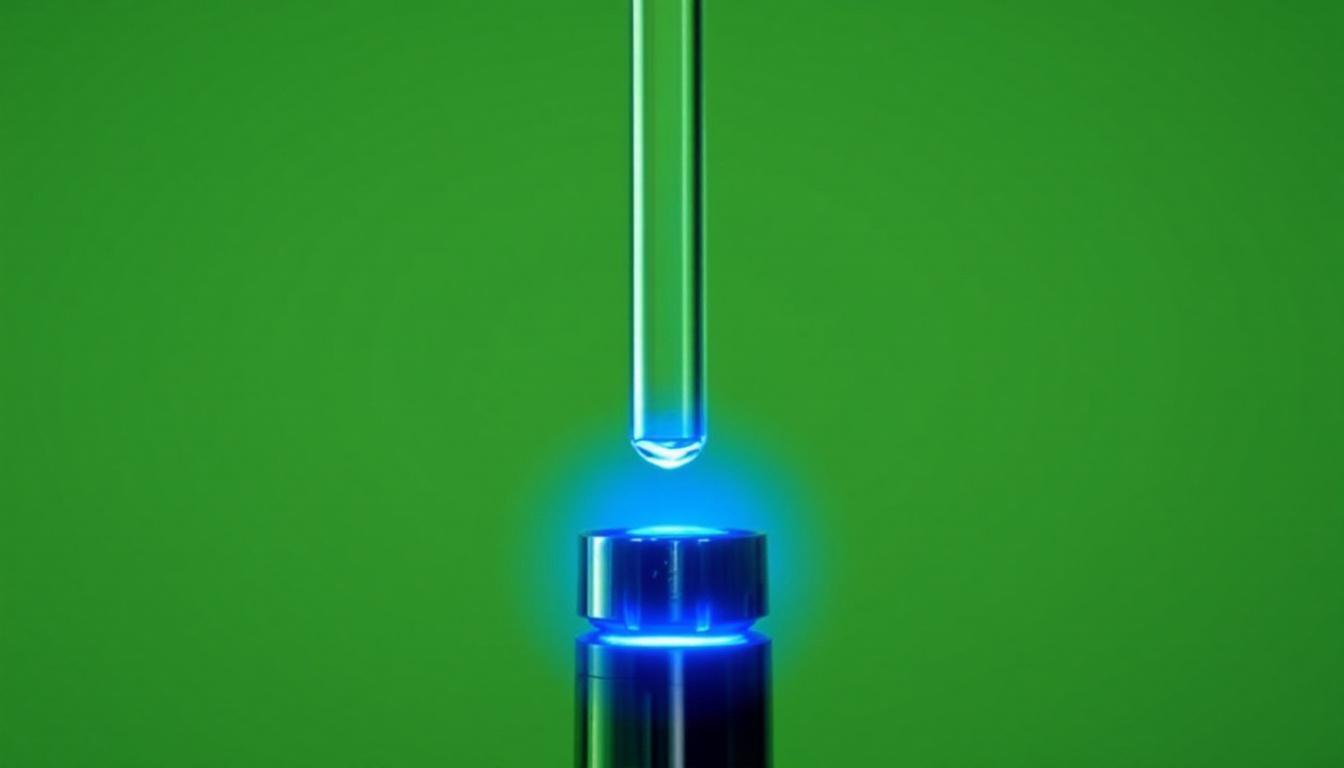
Kiel University researchers have developed Laser-Assisted Melt Printing (LAMP), a cutting-edge method that produces dense, customisable glass objects without the need for post-printing heating, promising transformative impacts across optics, medical, and industrial sectors.
An interdisciplinary research team at Kiel University has unveiled a groundbreaking advancement in the 3D printing of glass, introducing a process called Laser-Assisted Melt Printing (LAMP) that obviates the traditional need for post-printing furnace sintering. This innovative method represents a significant leap forward in the additive manufacturing of glass and ceramics by combining high precision, energy efficiency, and versatile material control.
Historically, manufacturing glass has relied on melting raw materials like quartz sand at temperatures exceeding 1,400°C, while 3D printing methods have depended on the creation of “green bodies”, preforms composed of silicate nanoparticles bound together by organic materials, which then require energy-intensive vitrification in a furnace. This additional step not only consumes vast amounts of energy but also introduces risks of stress cracks, shrinkage, and distortion, thereby limiting the complexity and resolution of printed structures.
The novel LAMP process circumvents these issues by utilising a specially formulated glass ink composed of a viscous blend containing water, polyethylene glycol, acetic acid, and a hybrid mix of silicate nanoparticles (approximately 40 nm) and borosilicate microparticles (around 40 µm). The ink is meticulously deposited in layers and immediately subjected to a focused laser beam that fuses the particles in situ. The process operates in two stages: the cooler periphery of the laser oxidises and removes the binder without leaving residues, while the hot central core melts the glass particles to bond them securely with the underlying layer. The outcome is dense, bubble-free glass objects exhibiting high structural integrity, ready for immediate use post-printing without any additional heating.
An exceptional feature of the LAMP technology is its capacity to tune material properties during printing by adjusting parameters such as laser power, scanning speed, and surrounding atmospheric conditions (oxygen or nitrogen). Transparency, surface smoothness, porosity, and colour tones can thus be customised with remarkable precision in a single manufacturing step. The researchers further expanded this capability by doping the glass ink with metal ions like gold or silver, which under laser exposure convert into nanoscale particles functioning as optical filters, enabling precise control over colour in printed components, echoing effects observed historically in Roman glass but achievable now with cutting-edge accuracy.
This breakthrough holds transformative potential across multiple sectors. In optics and photonics, it promises the direct production of bespoke components such as microlenses, waveguides, and optical filters, which have conventionally been challenging or prohibitively expensive to mass-produce. In biomedical fields, the method could revolutionise the manufacture of complex, patient-specific ceramic implants for dentistry and orthopaedics by eliminating the thermal stress and defects associated with conventional firing. The energy efficiency gained by eliminating the furnace step also makes LAMP an environmentally and economically attractive alternative.
The significance of Kiel’s LAMP technology is underscored by parallel advancements internationally. Lawrence Livermore National Laboratory researchers, for example, have reported innovations in 3D printing transparent glass that allow for intricate optical components and gradient materials previously unattainable through traditional methods. Meanwhile, a laser-based Volumetric Additive Manufacturing (VAM) technique developed jointly by LLNL and UC Berkeley can produce microscopic silica glass parts within seconds or minutes, opening possibilities for fibre optics, consumer electronics, and microfluidic devices.
Further advances from academic teams have employed multiphoton polymerisation for producing micro- to macro-scale glass objects with exceptional structural integrity, broadening the landscape of 3D glass manufacturing. However, Kiel’s LAMP method is distinctive in integrating material property modulation, decorative optical features, and the elimination of post-processing steps into one streamlined process.
For industries engaged in the decarbonisation and digital transformation of manufacturing, LAMP represents a paradigm shift. By allowing complex, high-performance glass and ceramic components to be designed and fabricated digitally with lower energy footprints and increased design freedom, it opens avenues for sustainable innovation across optics, photonics, medical devices, and beyond. As companies and research institutions strive to meet ambitious environmental and performance goals, technologies like LAMP offer a promising path toward smarter, cleaner, and more capable industrial production.
- https://www.igorslab.de/en/revolution-in-3d-printing-glass-production-without-furnace-thanks-to-lamp-process/ – Please view link – unable to able to access data
- https://www.uni-kiel.de/de/detailansicht/news/glas-aus-dem-3d-drucker – Researchers at Kiel University have developed the Laser-Assisted Melt Printing (LAMP) process, enabling direct 3D printing of glass structures without the need for traditional sintering in a furnace. This innovative method combines high precision, energy efficiency, and material versatility, potentially revolutionising the additive manufacturing of glass and ceramics. The LAMP process involves applying a specially developed glass ink in layers, which are immediately fused by a focused laser beam, resulting in dense, bubble-free glass objects ready for use post-printing. Additionally, the process allows for modulation of material properties such as transparency, smoothness, porosity, and colour tones during printing. The integration of precious metal ions into the glass ink further enables the creation of optical filters and decorative elements in a single step. This advancement opens new possibilities for producing customised components in optics, photonics, and ceramics, including patient-specific implants for dentistry and orthopaedics, without the thermal stress associated with conventional firing processes. The LAMP process exemplifies a new era in the digital production of high-performance materials, offering significant advantages in terms of energy efficiency, design freedom, and material properties control.
- https://www.heise.de/en/news/Kiel-researchers-develop-3D-printing-process-for-glass-11074372.html – A team from Kiel University has developed a new 3D printing process for glass, significantly simplifying glass processing by eliminating the need for post-printing hardening. The Laser-Assisted Melt Printing (LAMP) technique employs a special silica-based particle ink, which is fused into a glass workpiece using a high-energy laser. This method allows for precise control over material properties such as density, smoothness, colour, and transparency during the printing process. The ink consists of approximately ten percent silicate particles with a diameter of 40 nanometres and 43 percent borosilicate particles with a diameter of 40 micrometres, suspended in a solution of water, polyethylene glycol, and a small amount of acetic acid. This innovative approach offers a more efficient and versatile method for producing complex glass structures, with potential applications in optics, photonics, and ceramics.
- https://www.llnl.gov/article/43316/lab-breakthrough-3d-printing-glass – Scientists at Lawrence Livermore National Laboratory, in collaboration with the University of Minnesota and Oklahoma State University, have demonstrated the synthesis of transparent glass through 3D printing. This breakthrough could lead to the development of lasers and other devices that incorporate optics. The team reports the creation of 3D-printed transparent glass components in the latest issue of Advanced Materials, published online April 28. In the paper, the researchers describe a 3D printing technique enabling glass structures and composition gradients previously impossible through conventional manufacturing processes.
- https://www.llnl.gov/article/48601/new-laser-based-volumetric-additive-manufacturing-method-can-3d-print-glass-seconds – Researchers at Lawrence Livermore National Laboratory (LLNL) and the University of California, Berkeley, have developed a new laser-based Volumetric Additive Manufacturing (VAM) approach, enabling the 3D printing of microscopic objects in silica glass. This method allows for the rapid production of delicate, layer-less optics in seconds or minutes, overcoming the limitations of traditional glassmaking techniques. The VAM approach demonstrates the potential for near-instant 3D printing of glass, opening new possibilities for applications in fiber optics, consumer electronics, and microfluidics for ‘lab-on-a-chip’ devices.
- https://www.optica.org/about/newsroom/news_releases/2021/researchers_develop_laser-based_process_to_3d_prin/ – Researchers have developed a new laser-based process for 3D printing intricate parts made of glass. This method, based on multiphoton polymerization, allows for the direct fabrication of 3D parts ranging from a few microns to tens of centimeters in size, without the need for photomasks. The technique has been demonstrated by creating detailed objects in a 3D volume, such as miniature models of a bike and the Eiffel Tower, without any pores or cracks. This advancement could be useful for making complex optics for vision, imaging, illumination, or laser-based applications.
- https://www.uni-kiel.de/de/detailansicht/news/glas-aus-dem-3d-drucker – Researchers at Kiel University have developed the Laser-Assisted Melt Printing (LAMP) process, enabling direct 3D printing of glass structures without the need for traditional sintering in a furnace. This innovative method combines high precision, energy efficiency, and material versatility, potentially revolutionising the additive manufacturing of glass and ceramics. The LAMP process involves applying a specially developed glass ink in layers, which are immediately fused by a focused laser beam, resulting in dense, bubble-free glass objects ready for use post-printing. Additionally, the process allows for modulation of material properties such as transparency, smoothness, porosity, and colour tones during printing. The integration of precious metal ions into the glass ink further enables the creation of optical filters and decorative elements in a single step. This advancement opens new possibilities for producing customised components in optics, photonics, and ceramics, including patient-specific implants for dentistry and orthopaedics, without the thermal stress associated with conventional firing processes. The LAMP process exemplifies a new era in the digital production of high-performance materials, offering significant advantages in terms of energy efficiency, design freedom, and material properties control.
Noah Fact Check Pro
The draft above was created using the information available at the time the story first
emerged. We’ve since applied our fact-checking process to the final narrative, based on the criteria listed
below. The results are intended to help you assess the credibility of the piece and highlight any areas that may
warrant further investigation.
Freshness check
Score:
10
Notes:
The narrative presents a recent development in 3D printing technology, specifically the Laser-Assisted Melt Printing (LAMP) process for glass production. The earliest known publication date of substantially similar content is November 10, 2025, as reported by Kiel University’s official news release. ([uni-kiel.de](https://www.uni-kiel.de/de/detailansicht/news/glas-aus-dem-3d-drucker?utm_source=openai)) This indicates that the content is fresh and not recycled. The report is based on a press release from Kiel University, which typically warrants a high freshness score.
Quotes check
Score:
10
Notes:
The narrative includes direct quotes from Dr. Leonard Siebert, project leader, and Kolja Krohne, a study participant. These quotes are consistent with those found in the original Kiel University press release. ([uni-kiel.de](https://www.uni-kiel.de/de/detailansicht/news/glas-aus-dem-3d-drucker?utm_source=openai)) No discrepancies or variations in wording were identified, suggesting that the quotes are accurately reproduced.
Source reliability
Score:
10
Notes:
The narrative originates from Kiel University’s official news release, a reputable and verifiable source. The press release is accessible on Kiel University’s website, confirming its authenticity. ([uni-kiel.de](https://www.uni-kiel.de/de/detailansicht/news/glas-aus-dem-3d-drucker?utm_source=openai))
Plausability check
Score:
10
Notes:
The claims made in the narrative align with the details provided in Kiel University’s press release. The process described, Laser-Assisted Melt Printing (LAMP), is consistent with the information available from the university. ([uni-kiel.de](https://www.uni-kiel.de/de/detailansicht/news/glas-aus-dem-3d-drucker?utm_source=openai)) The narrative’s language and tone are appropriate for a scientific announcement, and there are no signs of sensationalism or inconsistencies.
Overall assessment
Verdict (FAIL, OPEN, PASS): PASS
Confidence (LOW, MEDIUM, HIGH): HIGH
Summary:
The narrative is a recent, accurate, and reliable report based on Kiel University’s official press release about the LAMP process for 3D printing glass. All checks confirm the content’s freshness, originality, and credibility.
