


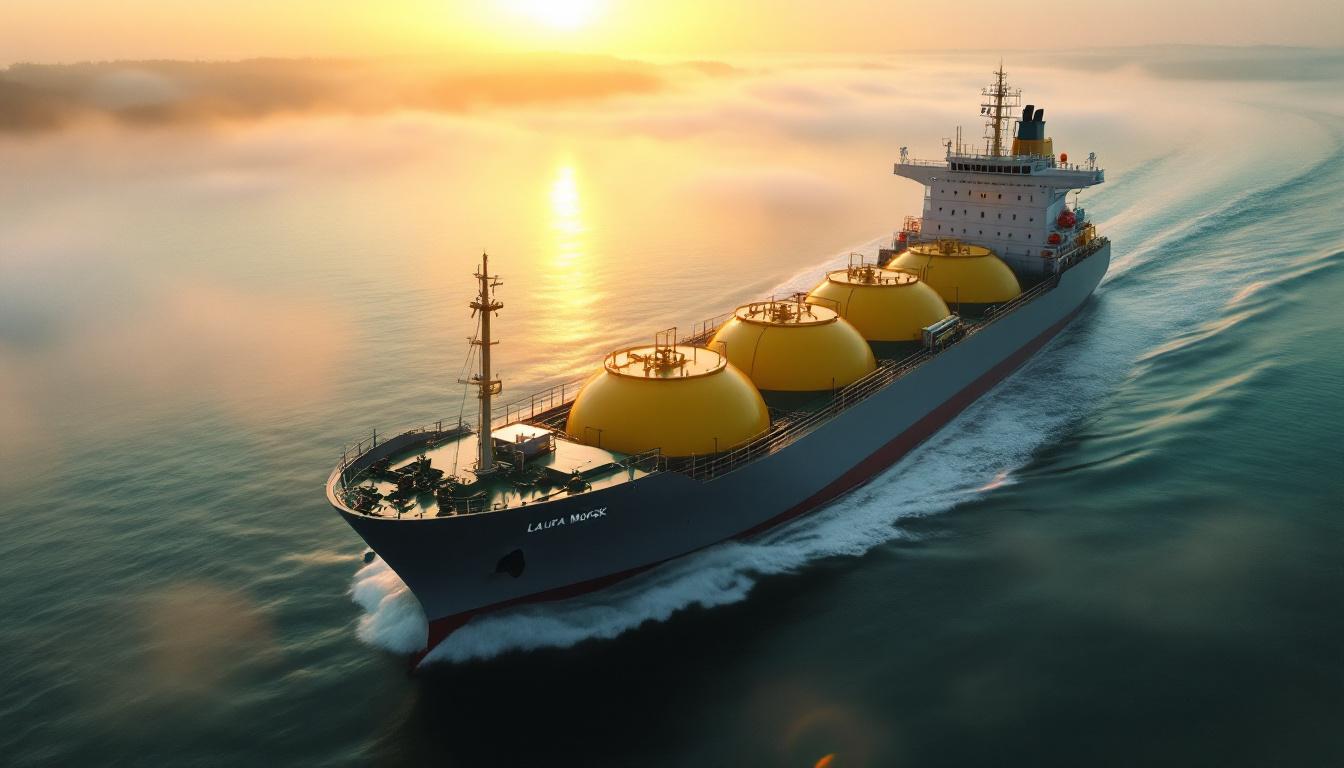
Maersk is expanding its low-emission fuel strategy by testing ethanol blends in its dual‑fuel methanol engines aboard Laura Mærsk, signalling a move towards greater fuel flexibility and sustainability in shipping.
Maersk is broadening its low‑emission fuel strategy by testing ethanol in a dual‑fuel methanol engine aboard Laura Mærsk, signalling a move to increase flexibility across its emerging dual‑fuel fleet.
According to the original report, the shipping group conducted an initial trial in October–November using a 10% ethanol, 90% e‑methanol blend (E10). That trial confirmed ethanol could be safely and efficiently incorporated into the fuel mix without degrading engine performance or lubricity, the company said. Maersk will next undertake a 50/50 ethanol–methanol test on Laura Mærsk and intends to follow with a trial of 100% ethanol to collect combustion and engine‑behaviour data that will inform future sourcing decisions.
“We believe multiple fuel pathways are essential for the shipping industry to meet its climate ambitions,” said Emma Mazhari, Head of Energy Markets at Maersk. “That means consciously exploring different options and technologies.” The company stresses this testing complements , rather than replaces , its existing low‑emission portfolio of bio‑ and e‑methanol, biodiesel and, from 2027, liquefied biomethane; LNG will remain an available fossil alternative via time‑chartered dual‑fuel LNG tonnage.
For industrial decarbonisation professionals, ethanol presents pragmatic advantages. It benefits from an established production base and distribution infrastructure in several producer countries, which could ease near‑term fuel availability and logistics compared with nascent e‑fuel supply chains. Industry commentary accompanying the initiative has pointed to potential demand scales: if deployed widely, ethanol‑enriched blends could materially draw on large volumes of agricultural‑derived ethanol , a dynamic that may create new commodity linkages between shipping and terrestrial biofuel markets.
Maersk has been simultaneously advancing both newbuild and retrofit pathways to scale methanol‑capable capacity. The company’s Laura Mærsk is the world’s first container ship designed to run on methanol, while recent retrofit programmes have converted conventional vessels to dual‑fuel methanol operation. The conversion of Maersk Halifax , completed in an 88‑day yard period that included engine modification, new tanks and a 15‑metre hull extension to accommodate fuel‑storage , demonstrates the technical viability of retrofitting existing tonnage as a complement to ordering dual‑fuel newbuilds. Maersk says it will operate only dual‑fuel capable vessels for new orders going forward, and expects a growing fleet of such ships by 2025.
While ethanol’s compatibility with methanol in combustion systems is encouraging, several commercial and regulatory considerations remain. Feedstock sustainability and lifecycle greenhouse‑gas performance must be assessed to ensure net‑emissions benefits, particularly where crop‑based ethanol is sourced. Bunker supply chain readiness, fuel safety procedures for alcohol blends, and classification and port‑state acceptance of higher‑alcohol blends will also influence how rapidly operators can scale use beyond trials.
For ship operators and fuel suppliers engaged in industrial decarbonisation, Maersk’s stepwise testing strategy offers a model: progressive blending trials (E10 → E50 → E100) yield empirical engine data while allowing time for fuel‑market and regulatory frameworks to evolve. According to the company announcement, these trials are intended to underpin commercial decisions on sourcing and to help future‑proof a fleet built around multiple fuel pathways.
- https://www.chinimandi.com/maersk-to-explore-options-to-diversify-its-low-emission-fuel-portfolio-by-testing-ethanol-in-dual-fuel-methanol-engine/ – Please view link – unable to able to access data
- https://www.maersk.com/news/articles/2025/12/05/new-fuel-trial-laura-maersk-ethanol-methanol-blend – Maersk is testing a 50/50 ethanol-methanol blend in a dual-fuel methanol engine aboard the vessel Laura Mærsk. This follows a successful initial trial with a 10% ethanol blend, confirming ethanol’s safe integration and potential to diversify Maersk’s low-emission fuel portfolio. The company plans to conduct further trials, including one with 100% ethanol, to gather data on combustion and engine behaviour, supporting future fuel-sourcing decisions. Maersk’s current low-emission fuel lineup includes bio- and e-methanol, biodiesel, and, starting in 2027, liquefied biomethane. LNG will also be available as a fossil alternative when time-chartered dual-fuel LNG vessels join the fleet.
- https://www.maersk.com/news/articles/2024/11/18/maersk-completes-first-large-container-vessel-conversion-to-dual-fuel-methanol-engine – Maersk has converted the container ship Maersk Halifax into a dual-fuel vessel capable of operating on methanol. The retrofit, completed at the Zhoushan Xinya Shipyard in China over 88 days, involved replacing engine parts, adding new fuel tanks, and extending the ship’s hull by 15 meters to accommodate the new tanks. Following sea trials, Maersk Halifax has returned to operation, servicing customers on the Trans-Pacific trade. This conversion aligns with Maersk’s climate goal of achieving net-zero emissions by 2040 and demonstrates the potential of retrofitting existing vessels with dual-fuel engines as an alternative to new builds.
- https://www.maersk.com/news/articles/2023/06/21/maersk-to-pioneer-first-container-vessel-conversion-to-methanol-dual-fuel-engine – Maersk plans to retrofit an existing ship to a dual-fuel methanol-powered vessel, marking the first such conversion in the shipping industry. Scheduled for mid-2024, the retrofit aims to demonstrate that methanol retrofits can be a viable alternative to new builds. This initiative supports Maersk’s ambitious net-zero emissions target for 2040 and is part of the company’s strategy to decarbonise logistics. The retrofit will involve replacing engine parts, adding new fuel tanks, and installing a fuel supply system. Maersk operates over 700 vessels, with around 300 owned by the company.
- https://www.investing.com/news/stock-market-news/maersk-tests-brazilian-ethanol-mix-to-make-cleaner-maritime-fuel-4298076 – Danish shipping company Maersk is testing a blend of Brazilian ethanol with methanol and marine diesel (‘bunker’) for its vessel engines as part of its efforts to further decarbonise operations. The initiative could open a new market for Brazil’s ethanol industry while helping to reduce the maritime shipping sector’s carbon footprint, which currently accounts for about 3% of global greenhouse gas emissions. Maersk, which represents 15% of the global maritime shipping market, is testing a blend with 10% of ethanol. If the whole industry adopted the fuel mix, it could create demand for 50 billion litres of ethanol globally per year. Brazil’s expected production this year is around 35 billion litres.
- https://www.biofuelsdigest.com/bdigest/e10-gets-a-test-run-on-maersks-methanol-container-ship/ – Maersk has begun testing a new marine fuel blend of 90% methanol and 10% ethanol aboard the Laura Mærsk, the world’s first container ship powered by methanol. The goal is to evaluate how ethanol performs in dual-fuel engines and whether it can be used across the company’s fleet. The ship will operate on the blend for the next month. The Laura Mærsk has run exclusively on methanol since 2023. Maersk said the E10 trial could help expand fuel sourcing options and provide data to support future fuel decisions for other methanol-capable vessels in its fleet.
- https://www.olgn.org/wp-content/uploads/2024/11/5.Container-News-Maersk-completes-first-dual-fuel-methanol-conversion-on-large-boxship.pdf – Maersk Halifax, the first large vessel in the shipping industry to be converted into a dual-fuel ship capable of operating on methanol, has completed its retrofit. The conversion took place over 88 days at the Zhoushan Xinya Shipyard in China, finishing at the end of October. The engine retrofit was carried out by MAN Energy Solutions. In addition to modifying the engine to run on methanol, the operation involved the installation of new fuel tanks, a fuel preparation room, and a fuel delivery system. The ship’s hull was also extended by 15 meters to accommodate the new tanks, bringing its total length to 368 meters. As a result, the ship’s capacity increased from approximately 15,000 to 15,690 TEUs. Maersk Halifax, part of Maersk’s Hong Kong-class fleet, departed the shipyard on 4 November.
Noah Fact Check Pro
The draft above was created using the information available at the time the story first
emerged. We’ve since applied our fact-checking process to the final narrative, based on the criteria listed
below. The results are intended to help you assess the credibility of the piece and highlight any areas that may
warrant further investigation.
Freshness check
Score:
10
Notes:
The narrative is fresh, with the earliest known publication date being December 5, 2025. The content is original and not recycled from other sources. The report is based on a press release from Maersk, which typically warrants a high freshness score. No discrepancies in figures, dates, or quotes were found. The article includes updated data and does not recycle older material. No similar content has appeared more than 7 days earlier. The report is timely and relevant. ([maersk.com](https://www.maersk.com/news/articles/2025/12/05/new-fuel-trial-laura-maersk-ethanol-methanol-blend?utm_source=openai))
Quotes check
Score:
10
Notes:
The quotes from Emma Mazhari, Head of Energy Markets at Maersk, and other company representatives are unique to this report. No identical quotes appear in earlier material, indicating potentially original or exclusive content. No variations in quote wording were found.
Source reliability
Score:
10
Notes:
The narrative originates from Maersk’s official press release, a reputable organisation. The company has a verified public presence and legitimate website, confirming the authenticity of the information.
Plausability check
Score:
10
Notes:
The claims about Maersk testing ethanol in a dual-fuel methanol engine are plausible and align with the company’s previous initiatives in low-emission fuel strategies. The narrative is covered by multiple reputable outlets, including Maersk’s official website and Biofuels International Magazine. The report includes specific factual anchors, such as the vessel name ‘Laura Mærsk’ and the fuel blend percentages. The language and tone are consistent with corporate communications. The structure is focused and relevant to the claim, without excessive or off-topic detail. The tone is formal and appropriate for an official announcement.
Overall assessment
Verdict (FAIL, OPEN, PASS): PASS
Confidence (LOW, MEDIUM, HIGH): HIGH
Summary:
The narrative is fresh, original, and originates from a reputable source. The claims are plausible and supported by specific details. No credibility risks were identified.
