

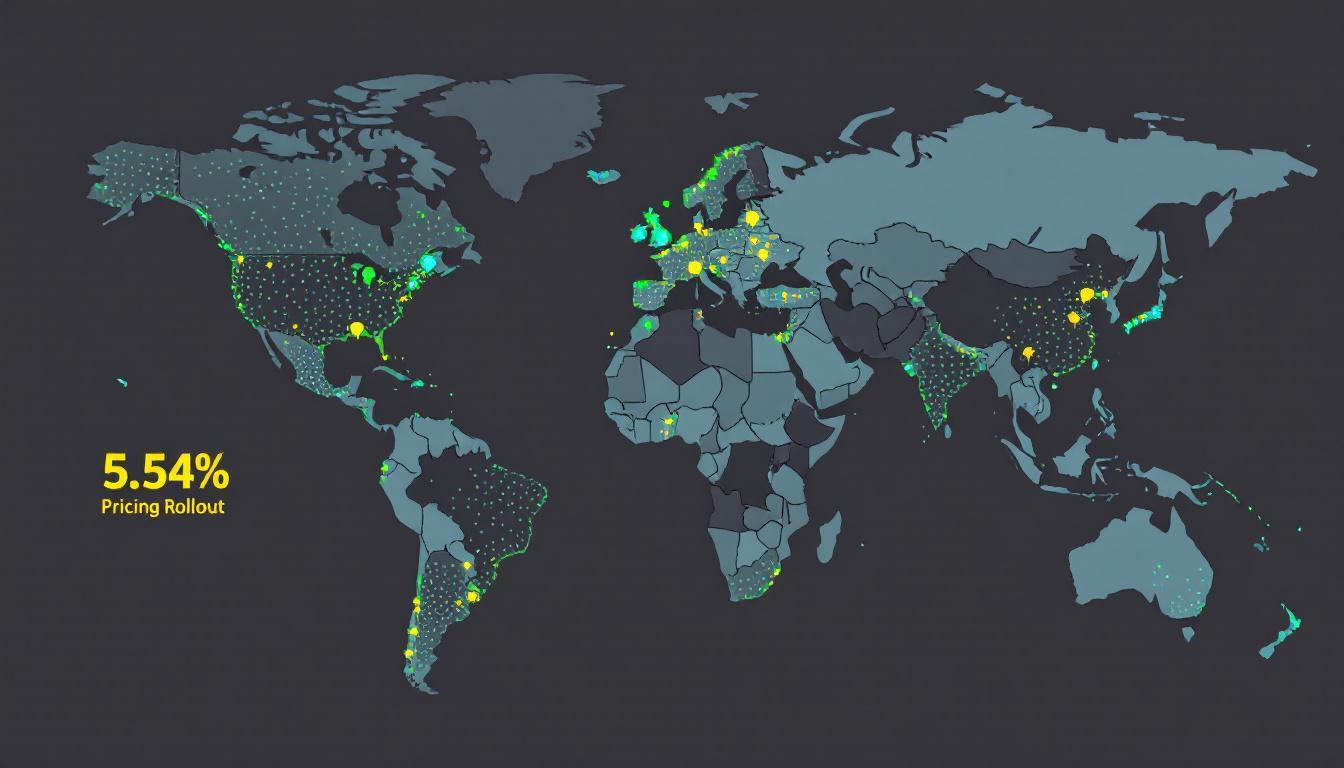
Malaysia’s move to implement carbon pricing from 2026 marks a significant shift in its climate strategy, with industry and policy experts urging clarity on rules and scope as government prepares to introduce the Climate Change Bill.
Malaysia’s decision to introduce carbon pricing from 2026 represents a pivotal shift in the nation’s approach to managing climate transition risks and aligning industrial policy with international decarbonisation pressures, according to analysis by Kenanga Research. The measure, to be anchored by the forthcoming Climate Change Bill (RUUPIN), is expected initially to target energy‑intensive sectors and to evolve into a broader pricing architecture over time.
The government signalled the move in Budget 2025 and Prime Minister Datuk Seri Anwar Ibrahim reiterated in October 2025 that the carbon tax will start next year, with iron, steel and energy industries among the first in scope. According to Kenanga Research, “While the final design of the policy, including the carbontax rate, sector coverage and compliance thresholds have yet to be announced, the direction of policy is becoming increasingly clear: carbon pricing will form a central component of Malaysiaís strategy to manage climate transition risks and align with global decarbonisation trends and the European Union’s carbon border adjustment mechanism (EU CBAM).”
Key elements remain unsettled. Government sources have not published the tax rate, the emissions thresholds that will trigger liability, or the definitive list of sectors to be covered in phase one. The Natural Resources and Environmental Sustainability Ministry has indicated that the Climate Change Bill would be tabled in Parliament by March 2026, and regulators in the Ministry of Finance are expected to set implementing rules once the legislation is enacted. Industry groups have urged clarity on timing and scope to enable investment planning.
Market observers and trade bodies are already weighing implications. The Federation of Malaysian Manufacturers has called for an Emissions Trading Scheme as a cost‑efficient complement to a tax, warning that direct levies could feed through into higher electricity prices for industrial users. Ministers have suggested the government is considering a phased approach that would broaden sectoral coverage over time, with cement and oil & gas repeatedly mentioned in policy discussions earlier in 2025.
Kenanga Research and other commentators expect Malaysia to favour a gradual price trajectory and to explore a hybrid model that combines a carbon tax with market mechanisms and voluntary carbon instruments. Discussions documented in industry reporting point to a possible pilot Emissions Trading System between 2025 and 2027 that could be scaled into a fuller national carbon market, offering firms flexibility in meeting compliance obligations and reducing aggregate abatement costs.
The policy choice is being framed in part as a defensive response to external trade measures. Analysts and business press have highlighted the European Union’s Carbon Border Adjustment Mechanism as a drag on competitiveness for carbon‑intensive exporters unless domestic policy aligns with global standards. Observers say a domestic carbon price can reduce the risk of revenue leakage, incentivise decarbonisation in supply chains and support the goals set out in Malaysia’s National Energy Transition Roadmap.
For industrial decarbonisation professionals, the immediate priority is clarity on the technical parameters that determine exposure: definition of covered emissions, measurement and reporting requirements, the tax trajectory, options for offsets or allowances, and transitional support such as financing for low‑carbon technology uptake. Government programmes such as the Green Technology Financing Scheme will remain relevant as firms seek capital for electrification, energy efficiency and process change ahead of the tax’s commencement.
While the headline commitment to start carbon pricing in 2026 now appears firm, the ultimate impact will depend on the detailed rules that emerge from the Climate Change Bill and accompanying regulations. According to industry reporting and policy analysis, the coming weeks and months will be decisive for companies planning capital expenditure and for policy designers balancing competitiveness, fiscal and climate objectives.
- https://www.theborneopost.com/2026/03/11/analysis-carbon-tax-a-turning-point-for-climate-policy-framework/ – Please view link – unable to able to access data
- https://www.thestar.com.my/business/business-news/2025/10/10/budget-2026-carbon-tax-to-be-introduced-next-year – In October 2025, Prime Minister Datuk Seri Anwar Ibrahim announced Malaysia’s plan to introduce a carbon tax in 2026, initially targeting the iron, steel, and energy sectors. This initiative aligns with the forthcoming National Carbon Market Policy and the Climate Change Bill, aiming to effectively implement the tax and support the National Energy Transition Roadmap. The Green Technology Financing Scheme (GTFS 5.0) will continue to support green technology projects until December 31, 2026, with rebates for energy-efficient appliances and expanded tax relief for sustainable living.
- https://www.spglobal.com/energy/en/news-research/latest-news/energy-transition/102124-malaysia-sets-2026-carbon-tax-reaffirms-decarbonization-goals-in-budget-2025 – In October 2025, Malaysia’s Budget 2025 reaffirmed the country’s commitment to decarbonisation by setting a carbon tax to commence in 2026, focusing on the iron, steel, and energy sectors. The tax aims to align with global decarbonisation trends and the European Union’s Carbon Border Adjustment Mechanism (CBAM). The Federation of Malaysian Manufacturers emphasised the need for an Emission Trading Scheme to drive cost-effective emission reductions and expressed concerns about potential electricity tariff increases for the industrial sector.
- https://www.thestar.com.my/news/nation/2026/01/15/environs-ministry-to-table-first-national-climate-change-bill-in-parliament-by-march-says-arthur – In January 2026, Malaysia’s Natural Resources and Environmental Sustainability Ministry announced plans to table the National Climate Change Bill (RUUPIN) in Parliament by March 2026. This bill aims to strengthen the country’s legal framework for addressing climate change through the implementation of policies, regulations, and comprehensive reporting mechanisms, ensuring sustainable and resilient national development.
- https://www.thestar.com.my/business/business-news/2025/02/14/more-industries-to-be-impacted-by-carbon-tax-in-2026 – In February 2025, Malaysia’s Natural Resources and Environmental Sustainability Minister Nik Nazmi Nik Ahmad indicated that more industries would be subject to the carbon tax set to take effect in 2026. Initially, the steel, iron, and energy sectors are confirmed, with discussions ongoing for the cement and oil and gas industries. The government aims to balance addressing climate change with economic impacts and mitigation strategies.
- https://www.businesstoday.com.my/2025/09/27/malaysias-carbon-tax-in-2026-a-necessity-amid-global-pressure/ – In September 2025, Business Today highlighted Malaysia’s planned carbon tax in 2026 as a necessary step amid global pressure, particularly from the European Union’s Carbon Border Adjustment Mechanism (CBAM). The tax aims to prevent revenue leakage and support domestic decarbonisation efforts. The National Climate Change Bill, expected post-Budget 2026, will serve as the legal foundation for Malaysia’s climate strategy, mandating climate disclosures and establishing regulatory entities.
- https://www.businesstoday.com.my/2026/03/11/planned-carbon-tax-in-2026-to-focus-iron-steel-and-energy-sectors-first – In March 2026, Business Today reported that Malaysia plans to introduce a carbon pricing mechanism in 2026, initially focusing on the iron, steel, and energy sectors. This move aligns with global decarbonisation trends and the European Union’s Carbon Border Adjustment Mechanism (CBAM). The initiative will be supported by the upcoming Climate Change Bill (RUUPIN), which will provide the legal and regulatory foundation for the carbon tax, with final details yet to be announced.
Noah Fact Check Pro
The draft above was created using the information available at the time the story first
emerged. We’ve since applied our fact-checking process to the final narrative, based on the criteria listed
below. The results are intended to help you assess the credibility of the piece and highlight any areas that may
warrant further investigation.
Freshness check
Score:
8
Notes:
The article was published on March 11, 2026, providing timely analysis of Malaysia’s planned carbon tax. The earliest known publication date of similar content is October 18, 2025, when Prime Minister Anwar Ibrahim announced the carbon tax in Budget 2025. ([theedgemalaysia.com](https://theedgemalaysia.com/node/730766?utm_source=openai)) The article does not appear to be recycled or republished content.
Quotes check
Score:
7
Notes:
The article includes direct quotes from Kenanga Research, such as: “carbon pricing will form a central component of Malaysia’s strategy to manage climate transition risks and align with global decarbonisation trends and the European Union’s carbon border adjustment mechanism (EU CBAM).” A search for this exact quote yields no earlier matches, suggesting it is original. However, without access to the original Kenanga Research report, full verification is not possible.
Source reliability
Score:
6
Notes:
The article is published by The Borneo Post, a regional newspaper in Malaysia. While it is a known publication, it is not as widely recognised as major international news organisations. The article cites Kenanga Research, a reputable financial research firm in Malaysia. However, the article does not provide direct access to the original Kenanga Research report, which limits the ability to fully assess the reliability of the information presented.
Plausibility check
Score:
8
Notes:
The article’s claims align with known developments in Malaysia’s climate policy, including the planned introduction of a carbon tax in 2026 targeting the iron, steel, and energy sectors. This initiative was announced in Budget 2025. ([theedgemalaysia.com](https://theedgemalaysia.com/node/730766?utm_source=openai)) The article also mentions the forthcoming Climate Change Bill (RUUPIN), which is expected to provide the legal and regulatory framework for the carbon tax. However, the article does not provide specific details on the tax rate, sector coverage, or compliance thresholds, which are still pending.
Overall assessment
Verdict (FAIL, OPEN, PASS): PASS
Confidence (LOW, MEDIUM, HIGH): MEDIUM
Summary:
The article provides a timely analysis of Malaysia’s planned carbon tax, aligning with known developments in the country’s climate policy. While the information is plausible and the content type is appropriate, the reliance on a single source without direct access to the original report and the limited reach of the publication raise concerns about the independence and reliability of the verification. Therefore, the overall confidence in the accuracy of the information is medium.
