


Berlin-based Minespider unveils Recircle.market, a digital platform designed to streamline the trading and refurbishment of second‑life EV batteries, supporting Europe’s evolving sustainability and circular economy goals.
Berlin-based traceability software firm Minespider this week unveiled Recircle.market, a digital marketplace intended to streamline commercial activity across the electric vehicle (EV) battery reuse, refurbishment and recycling ecosystem as Europe presses ahead with tighter sustainability rules.
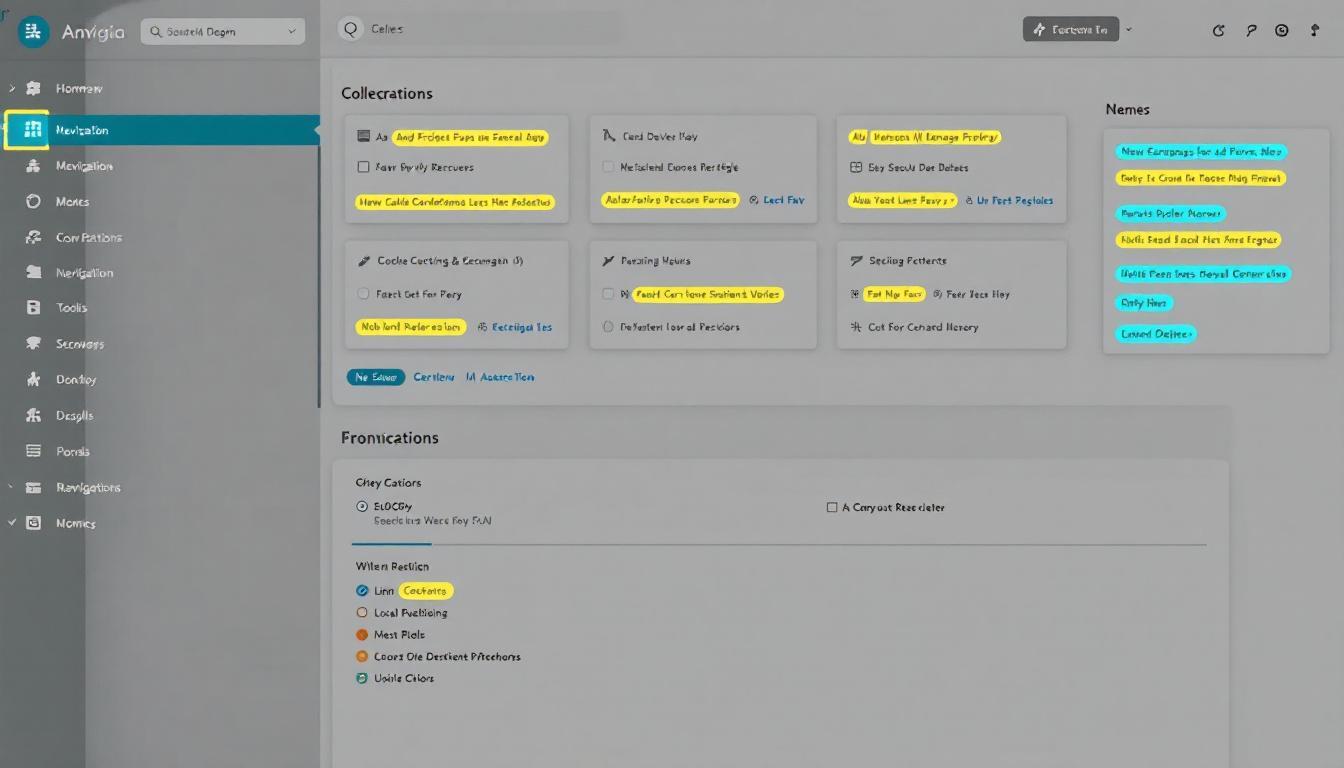
According to the company, the platform , developed from the EU-funded RECIRCULATE project , lets market participants register, list assets or services and transact directly with counterparties along the battery lifecycle. Minespider positions the marketplace as a hub for trading verified second‑life batteries, sourcing recycled materials and components, and matching demand for specialised services such as diagnostics, logistics, disassembly, refurbishment and certification.
Recircle.market is being released as a minimum viable product that integrates Digital Battery Passports (DBPs) and Digital Product Passports (DPPs) to surface standardised information on battery provenance, chemistry, operating history and health metrics. The aim is to reduce transactional friction in a sector long beset by fragmented data, unclear condition reporting and complex supply‑chain processes, the company said.
“With Recircle.market, we are building the digital backbone for Europe’s circular battery economy – connecting data, materials and market actors in one interoperable ecosystem,” said Volker Krümpel, co‑founder and general counsel at Minespider. The company said further functionality will be rolled out guided by industry feedback and forthcoming regulatory obligations.
The marketplace originates from RECIRCULATE, a three‑year initiative launched in 2023 that received €4.9 million in funding from the EU and Switzerland and brings together industrial and research partners. Project contributors include Ford Otosan, which supplied battery systems and input on labelling, and DHL, which is responsible for safe transport and storage workflows alongside technology and research collaborators.
Industry observers and policymakers see digitalisation as a prerequisite for scaling battery circularity. The European Commission’s Batteries Regulation and related Ecodesign requirements set mandatory data and recovery targets that drive demand for interoperable information systems. The regulation requires DBPs for certain batteries from February 2027, and sets targets for collection, material recovery and minimum recycled content for key elements such as cobalt, lithium and nickel, according to Commission guidance.
At the same time, regulatory timetables have shifted in parts. The Council of the European Union adopted a measure in July 2025 postponing certain due diligence obligations until 18 August 2027 to allow producers and verification bodies additional time to prepare. That delay affects third‑party verification and public reporting requirements tied to the broader battery regime, although DBPs remain a central compliance instrument from February 2027 under current legislation and implementing provisions.
RECIRCULATE and Minespider present Recircle.market as a market infrastructure that can help operators meet these overlapping obligations by providing verifiable technical and lifecycle data tied to individual battery units or components. Industry data show that recoverability targets , including a mandated 50% lithium recovery by the end of 2027 and higher targets thereafter , will increase demand for efficient sorting, grading and material matching across the supply chain, functions the marketplace aims to facilitate.
For manufacturers and original equipment makers, the platform may lower search and transaction costs for second‑life applications and certified recycling routes. For recyclers and service providers, it promises clearer signalling on feedstock quality and provenance, potentially improving downstream process optimisation and investment decisions.
Minespider stresses that the offering is intended to be interoperable with DBP and DPP standards so that records on state of health, chemistry and dynamic performance metrics can be consumed by buyers and verification bodies. The vendor frames the release as an early step towards greater market transparency rather than a finished solution, acknowledging that standards, verification frameworks and commercial practices will evolve as regulatory deadlines approach.
For professionals engaged in industrial decarbonisation, the emergence of market platforms that combine traceability with transactional functionality is notable because it links regulatory compliance to commercial value capture. If widely adopted, such systems could accelerate circular business models by making second‑life assets more fungible and recycled materials easier to source at scale.
Recircle.market’s near‑term impact will depend on uptake by OEMs, fleet operators, recyclers and logistics providers and on how harmoniously its data models align with mandated passport schemas and third‑party verification processes as they are finalised. The platform’s alignment with RECIRCULATE’s pilot partners offers early industry validation, but the company and its collaborators will need to demonstrate robust data governance and secure interoperability to earn the trust of risk‑averse buyers and auditors.
As the EU tightens performance and recovery standards for batteries, digital marketplaces that couple verified technical data with service‑matching could become an operational lynchpin for circularity. Recircle.market seeks to occupy that space, offering a commercially oriented layer above regulatory requirements that are reshaping battery value chains across Europe.
- https://evmagz.com/minespider-launches-digital-marketplace-for-battery-recycling-supply-chain/ – Please view link – unable to able to access data
- https://www.minespider.com/press/minespider-launches-recircle-market—-europes-new-digital-marketplace-for-circular-batteries – Minespider, a Berlin-based traceability software provider, has launched Recircle.market, a digital ecosystem designed to connect companies across the entire value chain of electric vehicle (EV) battery reuse, repair, refurbishment, recycling, and related services. Developed as part of the EU-funded RECIRCULATE project under Horizon Europe, the platform addresses key barriers to large-scale battery reuse and recycling, including fragmented data, low transparency of battery quality, and complex transaction processes between market actors. Recircle.market enables users to list and trade second-life batteries with verified technical and lifecycle data, source recycled battery materials and components, and connect with service providers for testing, diagnostics, logistics, dismantling, and certification. A core feature of the marketplace is its integration with Digital Battery Passports (DBPs) and Digital Product Passports (DPPs), providing transparent access to information on battery origin, chemistry, performance history, and sustainability indicators. This data-driven approach supports improved market transparency, risk reduction, and alignment with regulatory requirements, in line with the EU Battery Regulation and the Ecodesign for sustainable products regulation. The platform is built to leverage key data in these DBPs, including health of state, performance, and dynamic data, with the EU Battery Regulation making DBPs mandatory from February 2027. The Recirculate project, from which the marketplace emerges, is a collaboration between industry and scientific partners, funded by the EU and Switzerland, aiming to develop more efficient technologies for batteries’ second-life and end-of-life.
- https://www.consilium.europa.eu/en/press/press-releases/2025/07/18/simplification-council-adopts-law-to-stop-the-clock-on-due-diligence-rules-for-batteries/ – On 18 July 2025, the Council of the European Union adopted a new law to ease EU rules and boost competitiveness in the battery sector. The main goal is to postpone by two years, until 18 August 2027, the date of application of relevant due diligence obligations, giving battery producers and exporters more time to prepare. This regulation is part of the ‘Omnibus IV’ package, aiming to support industrial competitiveness by reducing regulatory complexity. As part of the EU’s battery regulation, adopted in 2023, battery producers are obliged to implement due diligence policies, have them verified and periodically audited by a third-party verification body, and publicly report on their due diligence practices to prevent or reduce batteries’ adverse impacts on the environment, including waste management. The new law provides additional time for battery makers and exporters to comply with these new environmental due diligence rules and offers more time for setting up third-party verification bodies, addressing identified problems with their authorisation process. The Commission is required to publish due diligence guidelines one year before the obligations take effect to provide timely guidance to businesses and ensure smoother implementation of the new rules.
- https://environment.ec.europa.eu/topics/waste-and-recycling/batteries_en – The European Commission has published new rules for waste batteries to promote a competitive, sustainable battery industry supporting Europe’s clean energy transition and independence from fuel imports. On 4 July 2025, the Commission introduced regulations to calculate and verify recycling efficiency and material recovery rates, aiming to boost the recycling and recovery of materials, especially critical and strategic raw materials. The new Batteries Regulation, which entered into force on 17 August 2023, establishes end-of-life requirements, including collection targets and obligations, targets for material recovery, and extended producer responsibility. The regulation sets targets for producers to collect waste portable batteries (63% by the end of 2027 and 73% by the end of 2030) and introduces a dedicated collection objective for waste batteries for light means of transport (51% by the end of 2028 and 61% by the end of 2031). It also sets a target for lithium recovery from waste batteries of 50% by the end of 2027 and 80% by the end of 2031, which can be amended through delegated acts depending on market and technological developments and the availability of lithium. The regulation provides mandatory minimum levels of recycled content for industrial, SLI batteries, and EV batteries, initially set at 16% for cobalt, 85% for lead, 6% for lithium, and 6% for nickel. Batteries must hold recycled content documentation. The recycling efficiency target for nickel-cadmium batteries is set at 80% by the end of 2025 and 50% by the end of 2025 for other waste batteries. The regulation provides that by 2027, portable batteries incorporated into appliances should be removable and replaceable by the end-user, leaving sufficient time for operators to adapt the design of their products to this requirement. This is an important provision for consumers. Light means of transport batteries will need to be replaceable by an independent professional.
- https://www.consilium.europa.eu/en/press/press-releases/2023/07/10/council-adopts-new-regulation-on-batteries-and-waste-batteries/?linkId=225016888 – On 10 July 2023, the Council of the European Union adopted a new regulation on batteries and waste batteries, aiming to improve the functioning of the internal market for batteries and ensure fairer competition through safety, sustainability, and labelling requirements. The regulation introduces performance, durability, and safety criteria, tight restrictions for hazardous substances like mercury, cadmium, and lead, and mandatory information on the carbon footprint of batteries. It establishes labelling and information requirements, including details on the battery’s components and recycled content, and an electronic ‘battery passport’ and a QR code. To give member states and economic actors enough time to prepare, labelling requirements will apply by 2026 and the QR code by 2027. The regulation aims to reduce environmental and social impacts throughout the life cycle of the battery by setting tight due diligence rules for operators who must verify the source of raw materials used for batteries placed on the market. The regulation provides an exemption for SMEs from the due diligence rules.
- https://www.electrive.com/2026/02/18/battery-recycling-minespider-creates-marketplace-for-industry-stakeholders/ – Minespider has launched Recircle.market, a digital marketplace designed to connect companies across the EV battery reuse, refurbishment, and recycling value chain. The platform enables listing and trading of second-life batteries with verified technical and lifecycle data, sourcing of recycled battery materials and components, and connecting with service providers for testing, diagnostics, logistics, dismantling, and certification. Users include OEMs, battery sellers, recyclers, and service providers. A central feature is integration with Digital Battery Passports (DBPs), providing transparent access to battery origin, chemistry, performance history, and health data. With the EU Battery Regulation making DBPs mandatory from February 2027, Minespider says the marketplace is built to leverage that data to improve trust and reduce transaction costs in what has been a fragmented market. ‘With Recircle.market, we are building the digital backbone for Europe’s circular battery economy—connecting data, materials, and market actors in one interoperable ecosystem,’ said Volker Krümpel, co-founder and general counsel at Minespider. The current release is an MVP, developed as part of the EU-funded RECIRCULATE project. The platform will be further developed based on industry feedback and regulatory requirements.
- https://www.carbon-intel.com/policy/european-union/regulation-eu-2024-1781-establishing-a-framework-for-the-setting-of-ecodesign-requirements-for-sustainable-products-amending-regulation-eu-2023-1542 – Regulation (EU) 2024/1781 establishes a framework for setting ecodesign requirements for sustainable products, amending Regulation (EU) 2023/1542. Article 83 of the regulation’s preamble states that when effectuating a battery due diligence policy, the economic operator should base it on internationally recognised due diligence standards and principles, such as those in the United Nations Guiding Principles on Business and Human Rights, the Ten Principles of the United Nations Global Compact, the United Nations Environment Programme (UNEP) Guidelines for Social Life Cycle Assessment of Products, the International Labour Organisation (ILO) Tripartite Declaration of Principles concerning Multinational Enterprises and Social Policy, the Organisation for Economic Co-operation and Development (OECD) Guidelines for Multinational Enterprises, and the OECD Due Diligence Guidance for Responsible Business Conduct. Article 77 establishes that from February 2027 onwards, light means of transport (LMT) batteries, industrial batteries with a capacity greater than 2kWh, and each electric vehicle battery placed on the market must have a ‘battery passport’ (an electronic record of the battery). As Article 123 of the regulation’s preamble states, the battery passport is intended to enhance transparency along supply and value chains for all stakeholders, by enabling the tracking and tracing of batteries and providing information about the carbon intensity of their manufacturing processes as well as the origin of the materials used and whether renewable materials are used, and the recycling and recovery processes to which the batteries could be subject to at the end of their lifetime.
Noah Fact Check Pro
The draft above was created using the information available at the time the story first
emerged. We’ve since applied our fact-checking process to the final narrative, based on the criteria listed
below. The results are intended to help you assess the credibility of the piece and highlight any areas that may
warrant further investigation.
Freshness check
Score:
8
Notes:
The article was published on February 21, 2026, reporting on Minespider’s launch of Recircle.market on February 16, 2026. The earliest known publication date of similar content is February 17, 2026, from Minespider’s official press release. ([minespider.com](https://www.minespider.com/press/minespider-launches-recircle-market—-europes-new-digital-marketplace-for-circular-batteries?utm_source=openai)) The narrative appears original, with no evidence of being republished across low-quality sites or clickbait networks. However, the article is based on a press release, which typically warrants a high freshness score.
Quotes check
Score:
7
Notes:
The article includes a direct quote from Volker Krümpel, co-founder and general counsel at Minespider: “With Recircle.market, we are building the digital backbone for Europe’s circular battery economy – connecting data, materials and market actors in one interoperable ecosystem.” ([minespider.com](https://www.minespider.com/press/minespider-launches-recircle-market—-europes-new-digital-marketplace-for-circular-batteries?utm_source=openai)) A search for this quote reveals it was first used in Minespider’s press release dated February 16, 2026. ([minespider.com](https://www.minespider.com/press/minespider-launches-recircle-market—-europes-new-digital-marketplace-for-circular-batteries?utm_source=openai)) No earlier instances of this exact quote were found, indicating it is original.
Source reliability
Score:
8
Notes:
The primary source is Minespider’s official press release, a reputable source. The article is published on EV Magz, a niche publication focusing on electric vehicle news. While EV Magz is not a major news organisation, it is a specialist outlet within its niche. The article does not appear to be summarising, rewriting, or aggregating content from another publication. However, the reliance on a single source may limit the breadth of information.
Plausibility check
Score:
9
Notes:
The claims about Recircle.market’s features and objectives align with Minespider’s known initiatives and the EU’s regulatory focus on battery recycling. The integration of Digital Battery Passports and Digital Product Passports is consistent with industry trends. The article provides specific details, such as the platform’s launch date and the quote from Volker Krümpel, enhancing credibility.
Overall assessment
Verdict (FAIL, OPEN, PASS): PASS
Confidence (LOW, MEDIUM, HIGH): MEDIUM
Summary:
The article reports on Minespider’s launch of Recircle.market, providing specific details and a direct quote from the company’s press release. While the reliance on a single source and the use of a press release as the primary source are noted, the content is original, timely, and plausible. The lack of independent verification from other reputable sources is a concern, but the information aligns with known industry trends and regulatory focuses. Given these factors, the article passes the fact-check with medium confidence.
