


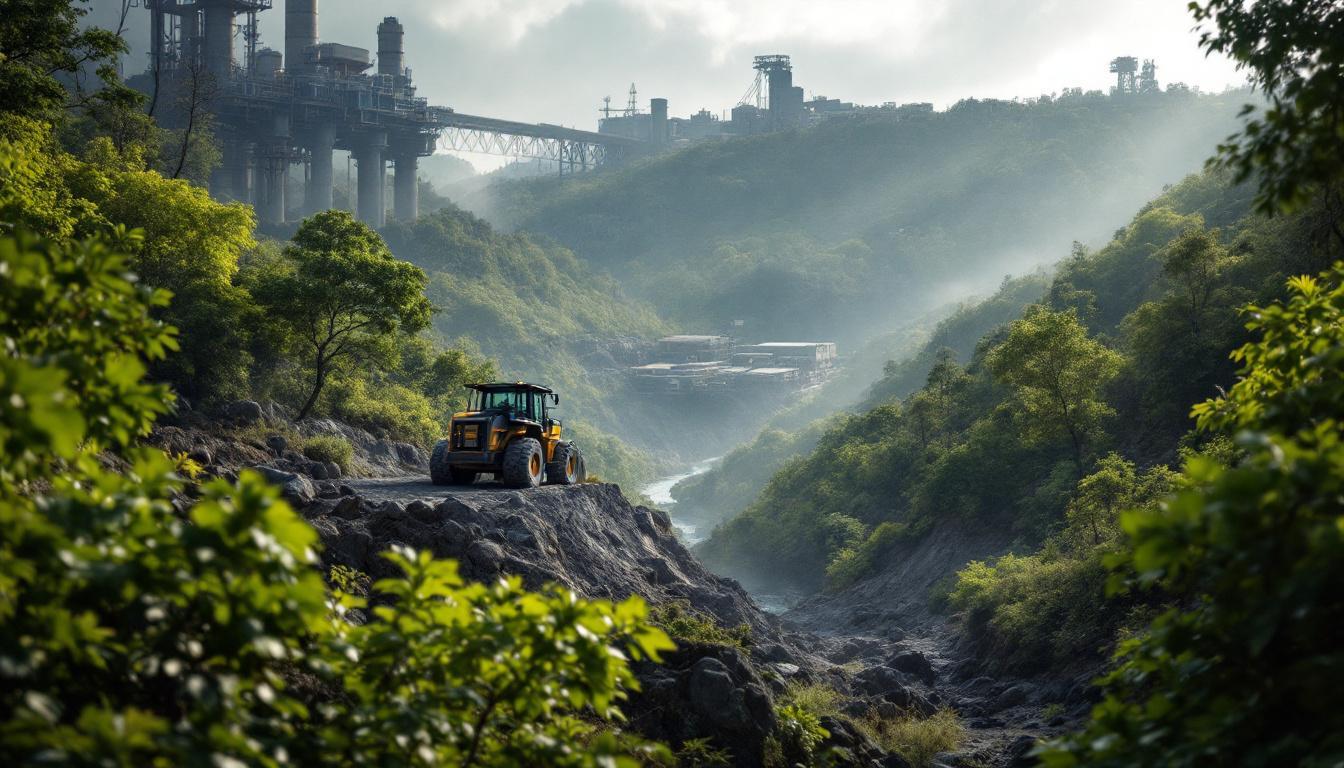
Mining sector shifts focus to electrify mobile equipment, harness renewable energy, and deploy data-driven maintenance to achieve net-zero targets amid growing demand for critical raw materials and technological innovation.
Heavy equipment sits at the centre of any credible plan to decarbonise mining. Industry leaders and analysts increasingly argue that tackling emissions from excavators, haul trucks, loaders and other mobile and fixed assets offers the most direct route to cutting on-site pollution and delivering measurable progress against net-zero targets.
The rationale is straightforward: mobile machinery is a major source of Scope 1 emissions and a focal point for fuel consumption. Electrifying fleets and replacing diesel-powered systems with low-carbon alternatives reduces direct emissions on site and creates a platform for broader optimisation across operations. According to McKinsey, shifting to electric mobile fleets at scale will materially increase electricity demand , for example, electrifying the global iron ore mobile fleet could require an extra 20–30 terawatt-hours of power , but it also presents opportunities to lower lifecycle energy costs and maintenance burdens. Industry transition plans therefore balance significant capital expenditure and grid and infrastructure upgrades against long-term operational gains.
Electrification is only one element of a wider equipment strategy. Hybrid drivetrains, electric variable transmissions and trolley-assist systems offer near-term carbon and cost benefits while full battery or fuel-cell solutions mature. The International Finance Corporation’s technical roadmap for net-zero mining highlights a portfolio approach: efficient equipment, process optimisation, on-site renewables, energy storage and alternative fuels such as sustainable biofuels and green hydrogen all have a role to play depending on site characteristics and economics.
Power sourcing determines how much environmental benefit electrification delivers. On-site solar arrays, wind turbines or contracted renewable energy can convert electrified fleets from merely shifting emissions from tailpipe to grid into a genuine reduction of Scope 2 emissions. BHP’s programme to run certain copper operations in Chile on 100% renewables by 2025, for instance, is presented as a means to displace more than 3 million tonnes of CO₂ a year. Likewise, a company that moved to wholly renewable electricity in April 2022 reported a 38.2% cut in total greenhouse gas emissions, equivalent to roughly 0.75 MtCO2e, illustrating the scale of abatement possible when generation and demand are aligned.
Beyond energy supply, data-driven asset management is proving essential to shrink waste and extend equipment life. Telematics, advanced sensors and predictive analytics enable maintenance to be demand-led rather than calendar-led, reducing both premature disposal of parts and catastrophic failures that drive replacement of whole machines. The cumulative effect is lower material throughput, fewer components entering landfill and more stable operating rhythms , outcomes with clear operational and sustainability payoffs for mine owners and contractors.
The mining sector’s sustainability imperative is amplified by the demand it enables. The International Energy Agency estimates that meeting global net-zero goals will more than triple demand for many critical raw materials by 2030, underscoring mining’s central role in the clean-energy transition. That creates a dual responsibility: supply the materials that underpin renewables and electric vehicles while transforming extraction and processing so those inputs are produced with far lower carbon intensity. Recycling of critical materials and circular-economy measures will supplement primary production in managing this surge in demand, according to industry commentators.
Technology choices should be guided by technoeconomic evidence and local constraints. McKinsey and the International Finance Corporation both stress that grid capacity, access to low-cost renewable power, water availability and capital intensity shape which decarbonisation levers are practicable at each operation. Green hydrogen and fuel-cell systems, for example, are highlighted in sector roadmaps as promising for heavy-duty applications where battery energy density or charging logistics are limiting; proponents estimate meaningful emissions reductions in appropriate use cases, though their deployment requires new supply chains and falling costs to scale.
For corporate buyers and investors, the message is to prioritise asset-level interventions that yield verifiable emission reductions and cost savings. Fleet electrification pilots, hybridisation of key machines, renewables procurement via power purchase agreements, and investment in predictive maintenance systems all produce measurable returns on emissions and economics when implemented coherently. Financing instruments and off-take contracts can accelerate adoption where upfront costs and infrastructure upgrades are barriers.
The scale of the challenge is large: some analyses place the annual environmental cost of mining in the trillions of pounds globally, and the sector’s value chain drives the majority of lifecycle emissions for many commodities. Yet the concentrated emissions profile of heavy equipment offers a practical entry point for decarbonisation strategies that are both technically feasible and operationally transformative. Combining cleaner power, electrified and hybrid machinery, smarter maintenance and emerging low-carbon fuels creates a pathway that can reduce site emissions substantially while sustaining the commodity flows needed for the broader energy transition.
In short, equipment-level reform , backed by switched energy sources, data-enabled asset management and pragmatic deployment of alternative fuels , represents a high-impact, implementable set of measures for mining companies pursuing net-zero objectives. Industry studies and company programmes show significant abatement potential, but realising it will require coordinated investment, upgraded power infrastructure and careful selection of solutions tailored to each mine’s technical and economic circumstances.
- https://www.worldcoal.com/coal/26012026/from-fuel-consumption-to-net-zero-goals-the-equipment-revolution-reshaping-mining-operations/ – Please view link – unable to able to access data
- https://netzeroinsights.com/resources/sustainable-mining-solutions/ – This article discusses the significant environmental impact of mining, costing over £2.5 trillion annually. It highlights innovations in sustainable mining, such as equipment electrification and recycling of critical raw materials. The piece also emphasizes the role of mining in the renewable energy transition, noting that technologies like wind turbines and electric vehicles heavily depend on critical raw materials. The International Energy Agency estimates that to achieve net-zero emissions, the demand for these materials will more than triple by 2030.
- https://www.mckinsey.com/industries/metals-and-mining/our-insights/electrifying-mines-could-double-their-electricity-demand – McKinsey’s report explores the potential of electrifying mining operations to reduce emissions. It notes that electrifying the mobile fleet of the global iron ore industry could require an additional 20 to 30 terawatt-hours of electricity. The report also discusses the challenges and opportunities associated with this transition, including significant capital expenditures and infrastructure improvements, as well as potential operational gains such as reduced energy costs and maintenance expenses.
- https://www.bhp.com/news/media-centre/reports-presentations/2021/11/technology-to-net-zero-summit – BHP’s report outlines the company’s efforts to achieve net-zero emissions, focusing on the electrification of mining equipment. It highlights the transition of copper operations in Chile to 100% renewable energy by 2025, aiming to displace more than 3 million tonnes of CO₂ annually. The report also discusses the use of desalinated water in mining processes to reduce reliance on groundwater reservoirs, contributing to more sustainable mining practices.
- https://commdev.org/wp-content/uploads/pdf/publications/IFC_NZR4M_Technical_Report_FINAL.pdf – The International Finance Corporation’s technical report presents a roadmap for achieving net-zero emissions in mining. It assesses various low-carbon technologies, including efficient equipment, process optimization, renewable energy integration, energy storage, sustainable biofuels, and green hydrogen. The report provides technoeconomic assessments of these technologies, highlighting their readiness, cost competitiveness, and potential emissions abatement, offering a comprehensive guide for mining companies aiming to reduce their carbon footprint.
- https://farmonaut.com/mining/decarbonizing-mining-5-powerful-steps-for-sustainable-2025 – This article outlines five key steps for decarbonizing the mining industry by 2025. It emphasizes the importance of green hydrogen and fuel cells as emerging power sources for mining machinery, noting that hydrogen-powered fuel cells offer an emissions-free alternative for heavy-duty mining trucks and stationary equipment. The piece also discusses the benefits of hydrogen technology, including its suitability for large-scale, heavy-duty mining trucks and potential emissions reductions ranging from 5–15%.
- https://discoveryalert.com.au/mining-industry-energy-revolution-2025-net-zero/ – This article provides a guide to net-zero technologies in mining, focusing on cost and return on investment. It discusses the operational efficiency gains from electric equipment, such as improved material handling efficiency and reduced maintenance requirements. The piece also outlines a fleet electrification implementation roadmap, starting with light vehicles and auxiliary equipment, and progressing to heavier machinery, highlighting the benefits and challenges associated with each phase of electrification.
Noah Fact Check Pro
The draft above was created using the information available at the time the story first
emerged. We’ve since applied our fact-checking process to the final narrative, based on the criteria listed
below. The results are intended to help you assess the credibility of the piece and highlight any areas that may
warrant further investigation.
Freshness check
Score:
10
Notes:
The article was published on 26 January 2026, making it current and original. No evidence of prior publication or recycled content was found. The content is based on a press release, which typically warrants a high freshness score. However, the reliance on a press release may limit the depth of independent reporting.
Quotes check
Score:
8
Notes:
The article includes direct quotes from Jane Marsh, Editor-In-Chief at Environment.co. These quotes appear to be original and not found in earlier material. However, without access to the original press release, it’s challenging to verify the exact wording and context of these quotes.
Source reliability
Score:
7
Notes:
The article originates from World Coal, a niche publication focusing on the coal industry. While it is reputable within its niche, its reach and influence are limited compared to major news organisations. The content is based on a press release, which may introduce bias or lack independent verification.
Plausability check
Score:
9
Notes:
The claims made in the article align with current industry trends towards electrification and decarbonisation in mining operations. However, the article lacks specific factual anchors, such as names, institutions, and dates, which would strengthen its credibility. The tone and language are consistent with industry reporting, but the absence of detailed references raises some concerns.
Overall assessment
Verdict (FAIL, OPEN, PASS): FAIL
Confidence (LOW, MEDIUM, HIGH): MEDIUM
Summary:
While the article is current and presents plausible claims aligned with industry trends, it heavily relies on a press release from Environment.co, which may introduce bias and lacks independent verification. The absence of specific factual anchors and additional independent sources further diminishes its credibility. Therefore, the content cannot be fully verified, and publishing it carries inherent risks.
