


Cameron Halliday, an MIT graduate, has developed a novel molten salt technology that significantly improves high-temperature carbon capture for heavy industries, potentially transforming global decarbonisation efforts.
Cameron Halliday, an MIT alumnus with dual PhD and MBA degrees, has pioneered a novel approach to industrial carbon capture through his company Mantel, tackling a longstanding challenge in decarbonising emissions-heavy sectors. Since his early doctoral days, Halliday sought materials capable of absorbing carbon dioxide (CO2) reliably at the high temperatures typical of industrial furnaces, kilns, and boilers, conditions that traditionally cause rapid degradation in carbon capture materials.
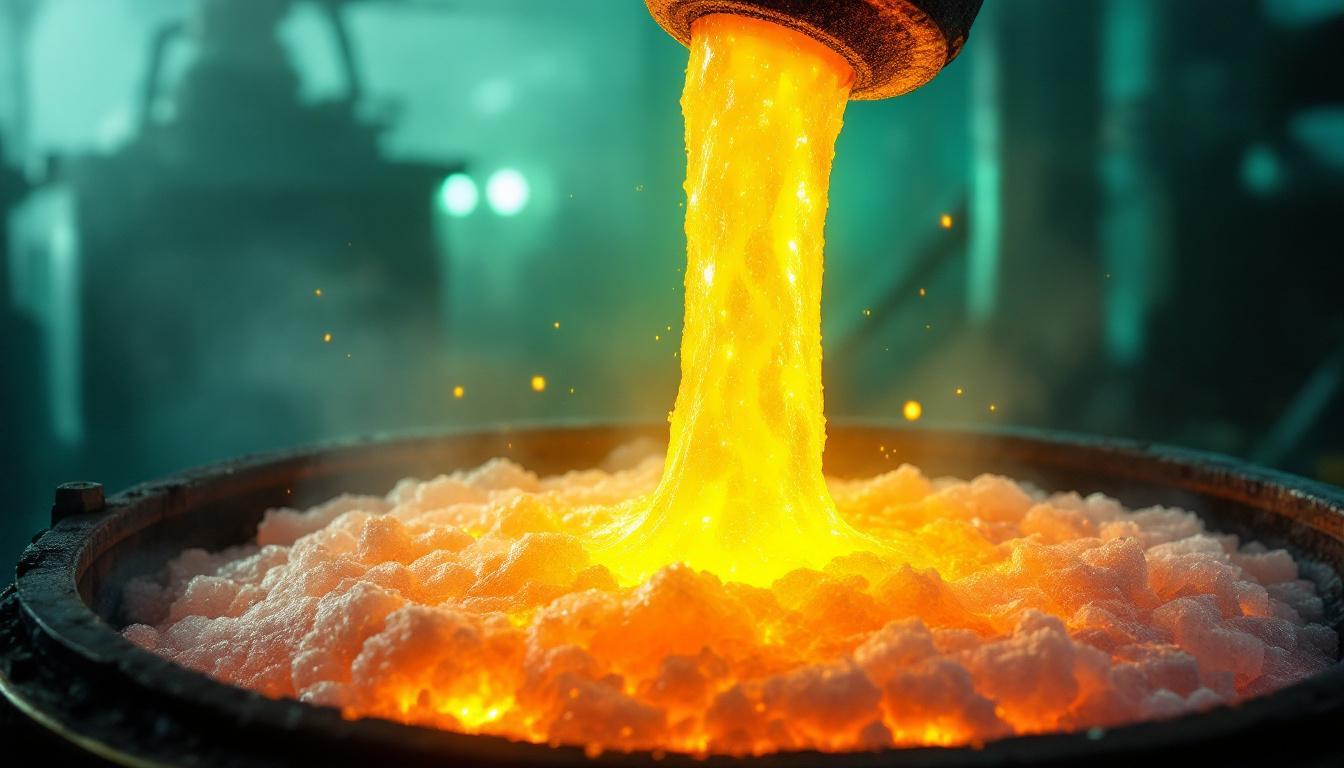
Halliday’s breakthrough came in 2019 with molten lithium-sodium ortho-borate salts, which demonstrated a remarkable ability to absorb over 95% of CO2 without performance loss even after 1,000 absorption cycles. The salts’ quasi-liquid behaviour at high temperatures prevents the brittle cracking common in solid absorbents, a key factor in their enduring efficiency. This innovative use of molten salts represents a significant advance over earlier materials that degraded quickly and limited effective high-temperature carbon capture.
Mantel’s technology is designed as a retrofit solution compatible with a diverse range of industrial facilities, including power plants, cement, steel, paper and pulp mills, and oil and gas refineries. The system captures CO2 emissions by spraying molten salts, which absorb the gas; subsequent heating releases pure CO2 for transportation or storage. Importantly, the system recycles much of the process heat into steam, supplying an energy stream vital to many industrial operations. This heat integration enables the system to operate with just about 3% of the energy consumed by current capture technologies, thereby improving commercial viability by turning carbon capture into a value-creating, rather than solely cost-incurring, activity.
The technology has progressed swiftly from bench to pilot scale. After initial prototyping in shoebox-sized units, Mantel developed shipping container-scale systems operational at MIT-affiliated startup incubator The Engine. The company is currently testing a larger facility at a Kruger Inc. factory in Quebec, with plans for a two-year trial phase and potential broader deployment if successful. Halliday reports ongoing engagement with nearly 100 industrial partners globally, signalling broad industry interest in the modular, low-energy retrofit solution.
The molten lithium-sodium ortho-borate salts Mantel employs align with emerging scientific research into molten alkali metal borates and carbonate blends as reversible CO2 absorbents. Independent studies confirm these materials absorb substantial CO2 (around 7.3 mmol/g at 600 °C) and withstand repeated thermal and pressure cycling without significant decline in absorption capacity. Additionally, research highlights the critical need to select corrosion-resistant materials like high-purity nickel alloys for containment systems, as molten salts can be highly corrosive, posing engineering challenges that Mantel has presumably addressed in its scale-up efforts.
Other recent scientific advances have explored alternative high-temperature CO2 capture materials, such as metal-organic frameworks operating effectively above 200 °C, but these generally do not approach the industrial-scale robustness or heat integration benefits demonstrated by molten salt systems. Moreover, research into the electrochemical conversion of CO2 in carbonate molten salts into valuable carbon nanomaterials indicates potential avenues for integrating capture with carbon utilisation, although Mantel’s current focus remains on capture and purification rather than downstream conversion or sequestration.
Mantel’s approach situates itself pragmatically within the industrial decarbonisation landscape by enabling existing large-scale assets to sharply reduce CO2 emissions without costly process shutdowns or retrofits that disrupt core operations. In doing so, this technology responds to a critical industry need as sectors like cement and steel confront intensifying climate regulations and investor pressures. While questions about widespread deployment timelines remain, Mantel’s data-driven, energy-efficient system offers a credible pathway to scaling carbon capture, bridging the gap between laboratory innovation and industrial implementation.
By converting carbon capture from a net energy drain to a potential steam revenue source, Mantel challenges prevailing industry scepticism and could help revitalise a technology often regarded as prohibitively expensive or operationally complex. As the company advances through real-world tests and expands partnerships, its molten salt technology may become a cornerstone in the industrial decarbonisation toolkit, contributing significantly to global emissions reduction efforts in high-temperature sectors where alternatives remain limited.
- https://news.mit.edu/2025/mantel-develops-new-take-carbon-capture-1119 – Please view link – unable to able to access data
- https://pubmed.ncbi.nlm.nih.gov/36069421/ – This study introduces molten mixed lithium and sodium borate (Li₁.₅Na₁.₅BO₃) and eutectic lithium–potassium carbonate (Li₁.₂₄K₀.₇₆CO₃) blends as reversible CO₂ absorbents and media for CO₂ electrolysis. The materials can absorb up to 7.3 mmol/g CO₂ at 600 °C and withstand cyclic temperature and CO₂ pressure swings without significant deterioration of their CO₂ uptake capabilities.
- https://chemistry.berkeley.edu/news/breakthrough-in-capturing-hot-co2-from-industrial-exhaust – Researchers at the University of California, Berkeley, have developed a metal-organic framework (MOF) that captures CO₂ at high temperatures, relevant to industrial exhaust streams. This material can efficiently absorb CO₂ at temperatures exceeding 200 °C, eliminating the need to cool emissions for decarbonisation.
- https://pubmed.ncbi.nlm.nih.gov/33169601/ – This research examines the compatibility of materials in CO₂ capture systems using molten alkali metal borates. It identifies that common ceramics, steels, and superalloys are unsuitable due to corrosive oxidation and contamination. A high-purity nickel alloy, Nickel 200/201, with a protective oxide layer, was found to perform optimally, with modest corrosion rates and minimal degradation over 100 hours.
- https://pubs.rsc.org/en/content/articlehtml/2022/nr/d2nr03355k – This article discusses the use of molten alkali metal borate–carbonate blends as reversible CO₂ absorbents and media for CO₂ electrolysis. The study highlights that blends with 50–60% borate content possess high CO₂ loading capacity and enable maximum carbon product yield and Coulombic efficiency, with most recovered carbon products being multiwalled carbon nanotubes.
- https://www.osti.gov/servlets/purl/1642462 – This paper explores the development of new alkaline ceramics, specifically lithium and sodium yttriates (LiYO₂ and NaYO₂), as potential CO₂ chemisorbents at high temperatures. The study indicates that these ceramics can chemisorb CO₂ over a wide temperature range, supported by theoretical thermodynamic calculations.
- https://www.osti.gov/pages/biblio/1985387 – This research reports the electrochemical transformation of CO₂ into highly crystalline nano-graphite using a carbonate molten salt at 780 °C. The process yields pure graphite at a lower temperature compared to traditional methods, offering a potential strategy to mitigate climate effects caused by CO₂ emissions.
Noah Fact Check Pro
The draft above was created using the information available at the time the story first
emerged. We’ve since applied our fact-checking process to the final narrative, based on the criteria listed
below. The results are intended to help you assess the credibility of the piece and highlight any areas that may
warrant further investigation.
Freshness check
Score:
10
Notes:
The narrative is fresh, published on November 19, 2025, with no prior substantial coverage found. The article is based on a press release from MIT News, which typically warrants a high freshness score.
Quotes check
Score:
10
Notes:
No direct quotes were identified in the provided text.
Source reliability
Score:
10
Notes:
The narrative originates from MIT News, a reputable organisation, enhancing its credibility.
Plausability check
Score:
10
Notes:
The claims about Mantel’s technology are plausible and align with existing scientific research. The article provides specific details, including dates and names, supporting its credibility.
Overall assessment
Verdict (FAIL, OPEN, PASS): PASS
Confidence (LOW, MEDIUM, HIGH): HIGH
Summary:
The narrative is fresh, originating from a reputable source, and presents plausible claims with specific details, supporting a high confidence in its accuracy.
