


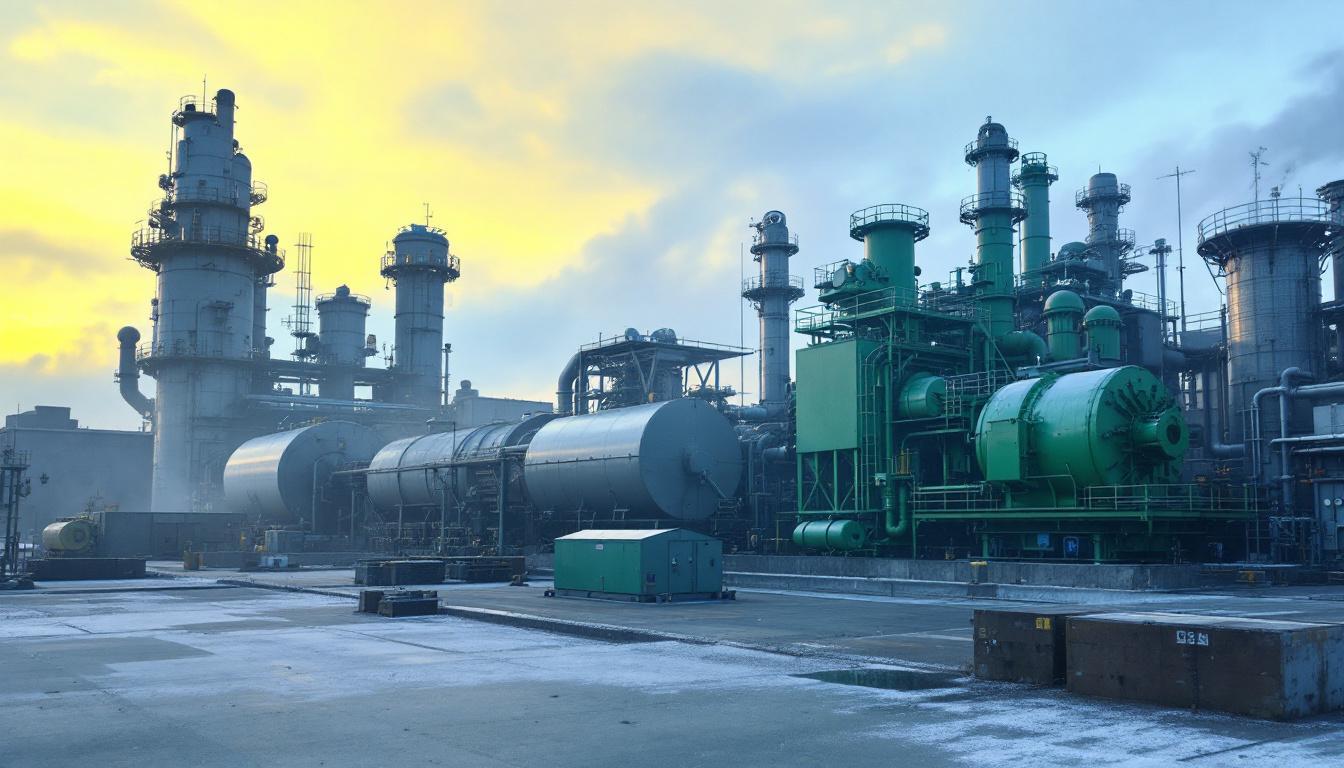
A coalition led by AstraZeneca, Secaro, and ERM unveils the Clean Heat Program to tackle the crucial but overlooked challenge of decarbonising industrial heat, combining supply-chain insights, engineering support, and innovative financing to accelerate climate strategy implementation.
Industrial heat is fast emerging as a decisive test of corporate climate strategy as AstraZeneca, supply‑chain intelligence firm Secaro and consultancy ERM unveil the Clean Heat Program to push companies from planning into delivery on low‑carbon heat across supply chains.
The initiative targets a long‑standing blind spot in decarbonisation efforts: heat used in manufacturing and processing. Industrial thermal energy is a major emissions source, industry contributes around 30% of U.S. greenhouse‑gas emissions when electricity is included, and industrial thermal use alone accounts for a large share of those emissions, according to U.S. Environmental Protection Agency and Energy Star data. Globally, process heat and thermal energy are similarly significant, with conservation groups noting the sector’s central role if warming is to be limited to 1.5°C. The American Lung Association also highlights near‑term public‑health gains from replacing combustion‑based heat with cleaner technologies.
The Clean Heat Program is designed to overcome the twin obstacles that have stalled industrial heat projects: technical complexity and upfront cost. According to the announcement by the partners, the programme combines Secaro’s supply‑chain mapping tools, ERM’s engineering and project development expertise, and financing pathways intended to lower capital barriers, including access to EU‑based funds and off‑balance‑sheet structures. Participating companies will receive heat‑demand mapping across supplier networks, technical option appraisals and implementation roadmaps aimed at progressing beyond isolated assessments to pipeline development.
Emily Prior, chief growth officer at Secaro, framed the shift as commercial as well as environmental, saying “Decarbonising heat is now business critical.” Speaking in the partners’ announcement, she argued heat transition protects revenue, reduces exposure to energy price volatility and helps companies meet tightening regulatory and investor expectations. Jon Hughes, partner at ERM, told the partners’ briefing the programme seeks to “provide clients with the practical implementation support required to decarbonise industrial heat while strengthening resilience, reducing risk, and unlocking value across the supply chain.”
AstraZeneca joins as a founding partner and brings operational experience with alternative fuels. According to the company’s sustainability material, AstraZeneca has already deployed biomethane solutions in multiple markets, securing a 15‑year offtake from a UK biomethane plant supplying R&D and manufacturing sites, and procuring biomethane‑based steam in China, measures that the company says cover a material portion of its global gas consumption. Such corporate off‑takers illustrate how long‑term contracts can help scale renewable fuel projects and de‑risk supplier transitions.
For industrial operators the menu of technical options remains varied and context‑dependent. Low‑ and medium‑temperature processes can often be served by zero‑emission heat pumps, which deliver both climate and local air‑quality benefits, the American Lung Association notes. Higher‑temperature applications may require staged approaches combining efficiency, electrification, biomethane, low‑carbon hydrogen or industrial heat networks. The partners emphasise starting with demand reduction and efficiency before moving to fuel substitution so project economics stack up across complex supply chains.
The strategic importance for corporates and investors is clear. Investors and regulators increasingly scrutinise Scope‑3 emissions, where supply‑chain heat often sits, while energy price shocks expose firms still reliant on fossil‑based heat to cost and continuity risks. By packaging data, engineering and finance, the Clean Heat Program seeks to accelerate projects that otherwise languish at feasibility stage.
Public‑health and environmental co‑benefits reinforce the business case. NGO analysis and U.S. health reports warn that tens of thousands of lives could be saved and asthma attacks substantially reduced by replacing combustion boilers in food‑processing, pulp and paper, textiles and other sectors. Those near‑term benefits complement longer‑term climate goals, strengthening arguments for corporate action that extends into supplier networks.
The programme arrives as more companies set net‑zero pledges and adopt science‑based targets; industry trackers show a marked rise in corporate commitments in recent years. Yet the partners acknowledge that heat remains one of the harder frontiers to decarbonise because many manufacturing processes require high temperatures and because alternatives involve infrastructure and operational change. Their offering is explicitly aimed at bridging that implementation gap.
For industrial decarbonisation professionals, the Clean Heat Program offers a practical, supply‑chain centred route that marries mapping and engineering with financing to accelerate deployment. Whether it catalyses the scale of projects required will depend on the ability of corporations to convert commitments into long‑term procurement and capital plans, and on the availability of competitive low‑carbon fuel supplies and enabling infrastructure.
- https://esgnews.com/astrazeneca-secaro-and-erm-launch-clean-heat-program-to-tackle-industrial-heat-emissions/?utm_source=rss&utm_medium=rss&utm_campaign=astrazeneca-secaro-and-erm-launch-clean-heat-program-to-tackle-industrial-heat-emissions – Please view link – unable to able to access data
- https://www.astrazeneca.com/sustainability/climate-change/renewable-energy.html – AstraZeneca is pioneering clean heat solutions across its operations in China, the UK, and the US. In the UK, a 15-year agreement with Future Biogas led to the first unsubsidised biomethane plant, supplying clean heat to all UK R&D and manufacturing sites. This plant adds renewable energy capacity to the UK’s infrastructure and is expected to provide over 100 gigawatt-hours of biomethane, covering almost 20% of AstraZeneca’s total global gas consumption. In China, AstraZeneca is sourcing biomethane and biomethane-based steam for its Wuxi manufacturing site through a collaboration with China Resources Gas and Everbright Environment, enabling a significant reduction in Scope 1 and 2 emissions in China.
- https://www.energystar.gov/industrial_plants/decarbonizing_industry/sources_industrial_greenhouse_emissions – The industrial sector is the third largest source of direct greenhouse gas (GHG) emissions in the United States. When emissions associated with electricity purchases are accounted for, the industrial sector contributes 30% of total U.S. GHG emissions. Roughly 75% of industrial GHG emissions are carbon dioxide (CO₂) linked to energy use from on-site combustion of fossil fuels (Scope 1/direct) and emissions associated with purchased electricity (Scope 2/indirect). Other emissions include CO₂ released from chemical reactions (process emissions) and from non-CO₂ gases, such as refrigerants or methane.
- https://www.lung.org/clean-air/clean-heat – Industrial processes that burn fuels to generate heat and steam for manufacturing, food processing, and other needs generate significant air pollution burdens in communities across the nation. The majority of the approximately 33,000 boilers used for industrial heat production in the United States primarily burn gas, coal, oil, and other fuels. Today, zero-emission heat pumps can provide significant air, health, and climate benefits when used to meet the needs of low- and medium-temperature industrial heat applications such as food processing, paper manufacturing, chemical processing, and others in this range.
- https://www.epa.gov/ghgemissions/industry-sector-emissions – The industry sector produces the goods and raw materials we use every day. The greenhouse gases emitted during industrial production are split into two categories: direct emissions that are produced at the facility, and indirect emissions that occur off-site but are associated with the facility’s use of electricity. Direct emissions are produced by burning fuel for power or heat, through chemical reactions, and from leaks from industrial processes or equipment. Most direct emissions come from the consumption of fossil fuels for energy. A smaller amount of direct emissions, roughly one third, come from leaks from natural gas and petroleum systems, the use of fuels in production (e.g., petroleum products used to make plastics), and chemical reactions during the production of chemicals, metals (e.g., iron and steel), and minerals (e.g., cement). Indirect emissions are produced by burning fossil fuel at a power plant to make electricity, which is then used by an industrial facility to power industrial buildings and machinery.
- https://www.worldwildlife.org/stories/what-are-thermal-emissions-and-how-are-they-driving-climate-change – Industrial thermal energy creates 12.5% of greenhouse gas pollution in the United States. This is the next largest source behind transportation and electricity and more than the entire US agricultural sector. Globally, energy used for heating and cooling is 50% of final energy use and contributes 39% of greenhouse gas emissions from energy-related sources. Without addressing these industrial thermal emissions, we have no way to keep global warming to 1.5 degrees Celsius.
- https://www.lung.org/media/press-releases/fy26-clean-heat-report – Industrial facilities that manufacture everyday products that we rely on like food, paper, and clothing are a significant—but often overlooked—source of harmful air pollution in the U.S. A new report from the American Lung Association finds that transitioning these facilities to clean heat technologies could save tens of thousands of lives and dramatically reduce asthma attacks nationwide. The report, ‘Clean Heat, Clean Air: Health Benefits of Modern Industrial Technologies,’ outlines the staggering public health impact of pollution from facilities that rely on burning fossil fuels, wood, and other fuels to generate heat for processes such as food and beverage processing, pulp and paper production, and textile manufacturing.
Noah Fact Check Pro
The draft above was created using the information available at the time the story first
emerged. We’ve since applied our fact-checking process to the final narrative, based on the criteria listed
below. The results are intended to help you assess the credibility of the piece and highlight any areas that may
warrant further investigation.
Freshness check
Score:
8
Notes:
The article was published on March 16, 2026, and no substantially similar content was found online. However, the Clean Heat Program’s announcement is recent, and further verification is needed to confirm its originality.
Quotes check
Score:
7
Notes:
The quotes attributed to Emily Prior and Jon Hughes are not found in other sources. Without independent verification, the authenticity of these quotes cannot be confirmed.
Source reliability
Score:
5
Notes:
The article originates from ESG News, a niche publication. While it may be reputable within its niche, its broader reach and independence are limited, raising concerns about the reliability of the information.
Plausibility check
Score:
6
Notes:
The claims about the Clean Heat Program align with AstraZeneca’s known sustainability initiatives. However, the lack of coverage by major news outlets and the absence of independent verification raise questions about the program’s details and implementation.
Overall assessment
Verdict (FAIL, OPEN, PASS): FAIL
Confidence (LOW, MEDIUM, HIGH): MEDIUM
Summary:
The article presents information about the Clean Heat Program launched by AstraZeneca, Secaro, and ERM. However, the reliance on a press release from the involved companies, the lack of independent verification, and the absence of coverage by major news outlets raise significant concerns about the credibility and originality of the content. Given these issues, the article cannot be considered fully reliable.
