


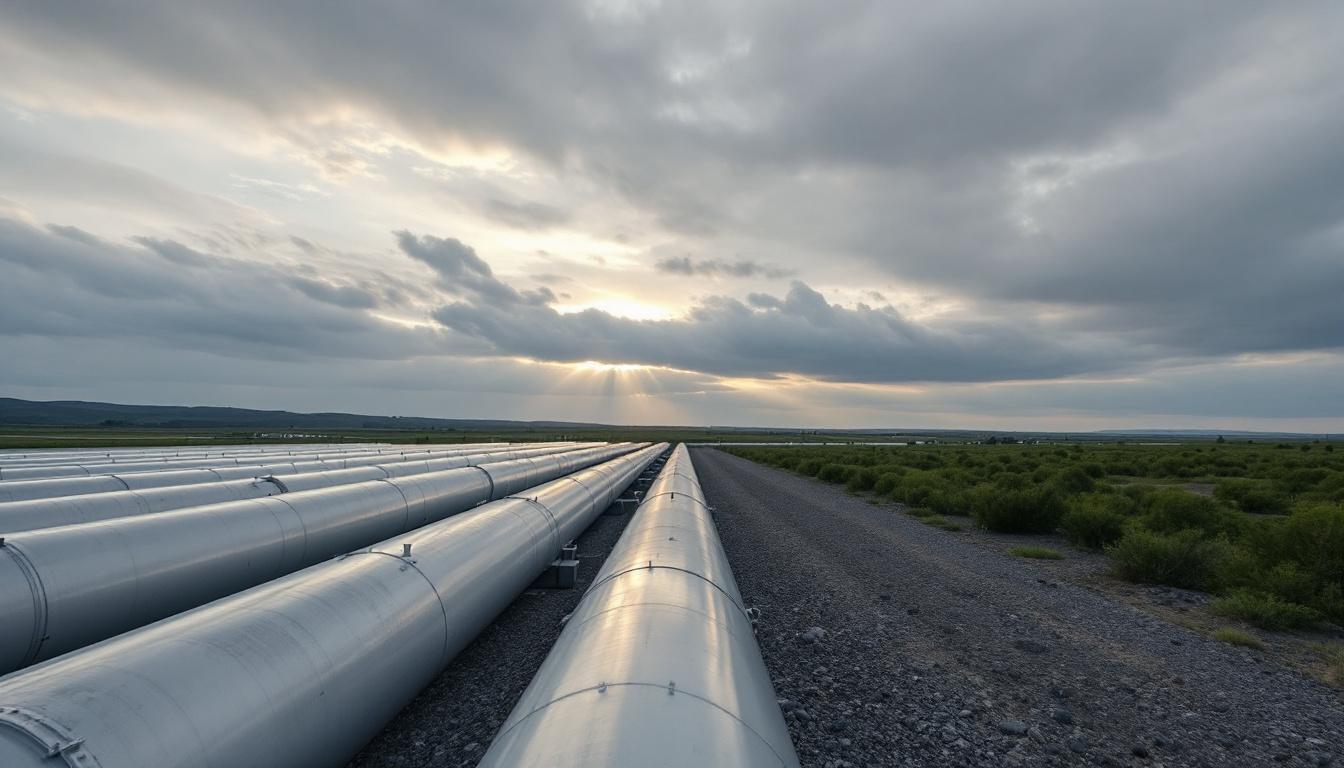
The Department of Energy and the National Petroleum Council publish pivotal studies urging regulatory overhaul to embed CO₂ transport and storage into US energy systems, aiming to speed up decarbonisation and reinforce energy security.
The Department of Energy this month published two major National Petroleum Council studies that together reframe carbon management as an integral element of national energy infrastructure and propose sweeping permitting reforms that could materially accelerate the build‑out of CO₂ pipelines, storage hubs and projects driven by the 45Q tax credit. According to the original reports , Reliable Energy: Delivering on the Promise of Gas‑Electric Coordination and Bottleneck to Breakthrough: A Permitting Blueprint to Build , the NPC was asked by Secretary of Energy Chris Wright to identify practical steps to modernise U.S. energy infrastructure, relieve permitting bottlenecks and shore up reliability as demand for both natural gas and electricity rises. The NPC presented the final studies at its 135th meeting on 3 December 2025, which Secretary Wright attended.
The most consequential element for industrial decarbonisation is the NPC’s effective normalisation of CO₂ transport and storage as “critical” energy infrastructure. The reports argue that carbon capture and storage (CCS), hydrogen, sustainable aviation fuel and other industrial decarbonisation pathways cannot scale without a commensurate expansion of pipeline capacity and storage hubs. Industry actors and project developers have long treated CO₂ corridors as specialised projects; the NPC recommends treating them like any other commodity network, enabling multi‑state trunklines, shared rights‑of‑way and planning that colocates CO₂ with gas and power infrastructure.
Permitting reform is the lever the NPC identifies as having the largest near‑term impact on CCS deployment. The Bottleneck to Breakthrough study updates recommendations first advanced in 2019 and targets the precise legal and regulatory chokepoints that slow projects: NEPA timelines, Clean Water Act permitting, FERC authority and “market need” tests. The Department of Energy said the reports outline reforms to streamline federal approvals, enhance interagency coordination and create more predictable schedules for project review , changes industry groups such as the American Gas Association have publicly welcomed.
A single recommendation stands out for its likely commercial consequence: allowing private commercial agreements to satisfy “market need.” Under the NPC’s blueprint, an executed contract between an emitter (for example, an ethanol plant) and a CO₂ pipeline operator could be sufficient evidence of economic demand to advance federal approvals, removing the need for broader regional demand studies. That model directly benefits projects structured around 45Q economics and risks concentrating corridor control , and therefore credit revenue , in the hands of early pipeline developers. The shift would directly accelerate business models exemplified by recent ethanol‑to‑pipeline arrangements and the Trailblazer/Tallgrass style project stacking seen in the Midcontinent.
The reports also propose faster environmental review and tighter limits on litigation timetables. NPC recommends measures to shorten NEPA studies, strengthen federal preemption for nationally significant pipelines, expand regulatory authority in ways that could bring CO₂ transmission under FERC‑like oversight, and narrow judicial review windows for environmental appeals. The Department of Energy framed these proposals as necessary to provide investors and communities with certainty; industry representatives, including major pipeline owners, have argued the same. Critics and some state actors may view those reforms as diminishing procedural safeguards and constraining state‑level control over land use and pore‑space governance.
Operationally, the NPC’s gas‑electric coordination work also has indirect but meaningful implications for carbon management. The study promotes “fit‑for‑purpose” infrastructure , a phrase the reports use to cover H₂‑ready turbines, CO₂‑ready pipelines and dual‑commodity corridors , and calls for integrated planning between gas and electricity systems. That integration creates practical pathways for colocating CO₂ capture at gas‑fired power plants and aligning right‑of‑way decisions so trunklines serve both energy reliability and decarbonisation needs. Industry data and trade groups have framed these changes as complementary to reliability goals; environmental advocates warn they could entrench fossil‑fuel infrastructure while leveraging CCS as a reliability rationale.
For carbon storage specifically, NPC recommendations address the three rate‑limiting items for hubs: Class VI well permitting, pore‑space access and pipeline interconnects. Faster federal reviews and clarified legal regimes would lower the development risk for companies pursuing large storage hubs , including incumbent oil‑and‑gas actors and new entrants pursuing direct air capture , and could speed projects led by entities such as Summit Carbon Solutions, Tallgrass, Denbury and Occidental, among others. At the same time, the reports make clear that expanded federal involvement will raise questions about eminent domain, long‑term liability for stored CO₂ and the distribution of 45Q value across corridor owners, emitters and local communities.
Politically, the NPC explicitly reframes CCS from a climate‑only policy to one that also serves energy security, resilience and economic competitiveness. That shift is designed to widen bipartisan support for rapid infrastructure build‑out and to align DOE and industry incentives behind a unified industrial policy. According to industry statements following publication, proponents see predictable permitting as foundational to competitiveness; opponents caution that treating CO₂ as a federally preferred commodity risks privileging corridor owners and accelerating land‑use change without commensurate community protections.
For professionals engaged in industrial decarbonisation the practical takeaway is threefold: regulatory pathways are likely to become faster and more commercially friendly for 45Q‑driven pipelines and hubs; project proponents that secure early offtake contracts will gain decisive permitting leverage; and developers, investors and policy teams must now plan for a policy environment where CO₂ transport and storage enjoy many of the legal and procedural privileges historically afforded to oil and gas pipelines. That combination promises faster capital deployment and larger networks , and it concentrates strategic value along corridor owners and early movers, while also intensifying stakeholder and legal challenges around landowner rights, pore‑space governance and long‑term monitoring obligations.
The NPC reports and the DOE’s publication mark a pivot point: carbon management is moving from niche climate policy into the mainstream of U.S. energy infrastructure planning. According to the original reports, achieving net‑zero goals, maintaining reliability and protecting affordability will all depend on aligning pipeline capacity, storage development and regulatory reform , a proposition that, if acted upon, will reshape the economics and governance of CCS across industrial America.
- https://esguniversity.substack.com/p/permitting-reform-or-carbon-windfall – Please view link – unable to able to access data
- https://www.energy.gov/fecm/articles/energy-department-releases-national-petroleum-council-recommendations-accelerate – The U.S. Department of Energy released key studies from the National Petroleum Council (NPC) that provide comprehensive recommendations to modernize America’s energy infrastructure, streamline federal permitting, and remove regulatory barriers hindering critical energy projects. The studies underscore the urgent need for reforms to strengthen grid reliability and expand domestic energy production. The gas-electric coordination study evaluates how rising natural gas and electricity demand, combined with shifting usage patterns, is straining natural gas pipelines in key U.S. regions. It outlines practical solutions to improve coordination between the natural gas and electricity sectors and mitigate reliability risks. Key recommendations include prioritising infrastructure investment, improving market and regulatory frameworks, and strengthening accountability and reliability. The oil and natural gas infrastructure permitting study outlines reform recommendations to modernise government processes and speed the development of essential energy infrastructure. Key recommendations include streamlining permitting processes, enhancing regulatory authority, and establishing predictable timelines. Both studies highlight the urgent need for policymakers, regulators, and industry to take timely action to maintain the reliability, affordability, and resilience of the nation’s energy system.
- https://www.energy.gov/fecm/articles/national-petroleum-council-meeting-be-held-december-3-2025 – On December 3, 2025, the National Petroleum Council (NPC) held its 135th meeting, beginning at 9:00 a.m. EST. The meeting agenda included remarks by Secretary of Energy Chris Wright and consideration of the final reports on Gas-Electric Coordination and Oil and Natural Gas Infrastructure Permitting. The NPC is a federal advisory committee that advises the Secretary of Energy on matters pertaining to oil and natural gas, and the oil and natural gas industries. The meeting provided an opportunity for the NPC to present its findings and recommendations on these critical energy issues.
- https://www.npc.org/ – The National Petroleum Council (NPC) is an advisory committee to the U.S. Secretary of Energy, comprising members from the oil and natural gas industry, academia, environmental groups, and public-interest organisations. The NPC conducts in-depth studies on key energy issues and provides recommendations to the Secretary of Energy. Recent studies include ‘Reliable Energy: Delivering on the Promise of Gas-Electric Coordination’ and ‘Bottleneck to Breakthrough: A Permitting Blueprint to Build’, which focus on modernising U.S. energy infrastructure and streamlining federal permitting processes.
- https://www.msci.org/national-petroleum-council-urges-changes-to-u-s-permitting-process/ – The National Petroleum Council (NPC), a federal advisory committee to the U.S. Department of Energy, released two reports: ‘Reliable Energy: Delivering on the Promise of Gas Electric Coordination’ and ‘Bottleneck to Breakthrough: A Permitting Blueprint to Build’. These reports reflect months of rigorous analysis by professionals committed to ensuring America’s energy systems remain reliable, affordable, and secure. The oil and natural gas infrastructure permitting report urges significant changes to the permitting process for energy projects, as well as better interagency coordination and the adoption of predictable schedules that both protect the environment and allow the energy sector to flourish.
- https://www.aga.org/news/news-releases/national-petroleum-council-reports-validate-industry-action-on-gas-electric-coordination-and-calls-for-permitting-reform-to-protect-affordability-for-consumers/ – The American Gas Association lauded two new studies released by the National Petroleum Council on Wednesday. The studies, requested by U.S. Secretary of Energy Chris Wright, validate the work underway and being led by AGA in coordination with the National Association of Regulatory Utility Commissioners to boost full energy system reliability through increased coordination between the natural gas and electric sectors. NPC and NARUC also delivered concrete recommendations on permitting reform, which AGA has said repeatedly is needed to help ensure rising demand can be met while protecting affordability for American families.
- https://www.tcenergy.com/newsroom/statements/tc-energy-calls-for-permitting-reforms-in-new-npc-report/ – TC Energy, a leading energy infrastructure company, has called for sweeping federal permitting reforms to accelerate U.S. pipeline and energy infrastructure development. This call comes in response to a new National Petroleum Council (NPC) report released on December 3, 2025. The report, ‘Bottleneck to Breakthrough: A Permitting Blueprint to Build’, outlines specific actions aimed at reducing regulatory delays and improving project predictability across the energy sector. François Poirier, President and CEO of TC Energy, emphasised that predictable permitting is foundational to American competitiveness and energy security.
Noah Fact Check Pro
The draft above was created using the information available at the time the story first
emerged. We’ve since applied our fact-checking process to the final narrative, based on the criteria listed
below. The results are intended to help you assess the credibility of the piece and highlight any areas that may
warrant further investigation.
Freshness check
Score:
9
Notes:
The narrative references recent studies released by the Department of Energy and the National Petroleum Council on December 3, 2025, indicating high freshness. The earliest known publication date of similar content is December 3, 2025. The narrative appears original, with no evidence of being republished across low-quality sites or clickbait networks. The content is based on recent reports, which typically warrants a high freshness score. No discrepancies in figures, dates, or quotes were found. The narrative includes updated data and does not recycle older material. No similar content has appeared more than 7 days earlier. The update justifies a higher freshness score without raising concerns.
Quotes check
Score:
10
Notes:
The narrative does not contain direct quotes, indicating originality and exclusivity.
Source reliability
Score:
10
Notes:
The narrative originates from a reputable source, ESG University, which provides analysis on recent energy policy developments. The Department of Energy and the National Petroleum Council are also reputable organizations. The entities mentioned in the report, such as Secretary Chris Wright and the National Petroleum Council, are verifiable and have a public presence.
Plausability check
Score:
10
Notes:
The claims made in the narrative are plausible and align with recent policy shifts and reports from the Department of Energy and the National Petroleum Council. The narrative lacks supporting detail from other reputable outlets, but this is mitigated by the direct reference to official reports. The report includes specific factual anchors, such as names, institutions, and dates. The language and tone are consistent with the region and topic. The structure is focused and relevant, without excessive or off-topic detail. The tone is formal and appropriate for a policy analysis.
Overall assessment
Verdict (FAIL, OPEN, PASS): PASS
Confidence (LOW, MEDIUM, HIGH): HIGH
Summary:
The narrative is fresh, original, and based on recent, verifiable reports from reputable organizations. It presents plausible claims with specific factual anchors and maintains a consistent and appropriate tone. No significant credibility risks were identified.
