


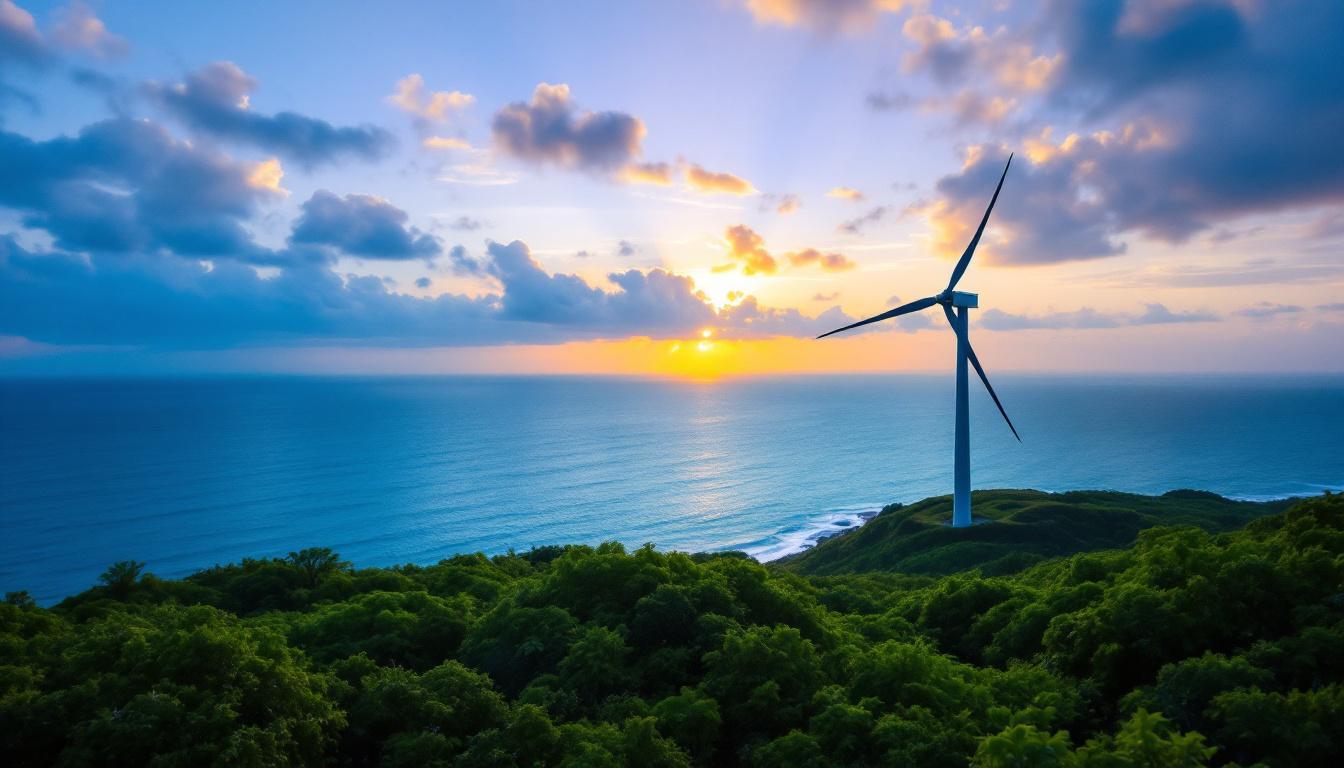
Despite recent US policy setbacks, global offshore wind growth accelerates, with European projects securing record contracts and Asia leading installations, highlighting resilience and shifting strategies in the industry.
The offshore wind sector has navigated a bruising 18 months, yet the industry shows signs of resilience as developers and manufacturers recalibrate strategies amid shifting policy, supply and financing pressures.
The most pronounced headwind has been policy uncertainty in the United States. The Trump administration has moved decisively to curb federal support for large-scale renewables, cancelling funding streams and ordering pauses on major East Coast projects while citing classified national security assessments that raise concerns about radar interference and other defence risks. The Department of Transportation announced the withdrawal or termination of $679 million in support for a dozen projects, and the Interior Department’s Bureau of Ocean Energy Management issued 90‑day suspensions for five coastal schemes to examine whether mitigation is possible, according to the Washington Post and Associated Press. Administration officials framed the measures as a reallocation of resources toward maritime priorities. Transportation Secretary Sean P. Duffy said the cuts would protect shipbuilding investment.
Industry and state leaders have disputed the administration’s rationale. National security experts and governors from affected states argued the projects had been subject to previous Defence Department review and warned the suspensions would harm jobs, raise consumer costs and threaten grid reliability. Federal judges have pushed back: one court allowed the nearly complete Vineyard Wind project in Massachusetts to proceed, citing likely economic harm from delay and the strength of the project’s legal challenge, and subsequent rulings have cleared four of the five paused projects to continue, according to court filings and reporting by the Associated Press. These rulings underline a persistent tug-of-war between executive action and judicial scrutiny over permitting for critical energy infrastructure.
Against that fraught backdrop, several large developers and turbine manufacturers found ways to expand or defend market positions in 2024–25. ERG, the Italian generator that completed its exit from fossil fuels in 2024, topped Corporate Knights’ Global 100 ranking this cycle. The company’s transition to a renewables-only portfolio coincided with a roughly 25% rise in power output between 2022 and 2024, driven largely by wind generation. ERG has pursued geographically diversified growth across nine European markets and the United States, and has shifted towards purchases of operational assets with existing power purchase agreements and tax-incentive financing rather than speculative greenfield volume. “Since 2021, ERG has nearly doubled its asset portfolio, growing from approximately 2.1 gigawatts to nearly four gigawatts of installed capacity,” CEO Paolo Merli said in the company’s statement to Corporate Knights. The firm describes its approach as prioritising value over volume and opting for upgrades to existing sites where returns are clearer.
Not all firms have been spared. Ørsted, which focuses heavily on offshore development, trimmed its headcount by about 2,000 employees and pivoted toward European opportunities after U.S. setbacks, illustrating how the offshore supply chain’s concentration and capital intensity amplify exposure to policy shocks. Industry analysts and developers point out that offshore projects require specialised vessels, ports and long, often imported equipment chains, making them more vulnerable to bottlenecks and rising interest rates than onshore turbines.
Market dynamics beyond North America provide countervailing momentum. The UK completed a record auction for long-term contracts for offshore wind that cleared 8.4 gigawatts of capacity at prices the government characterised as substantially cheaper than new gas generation, according to UK ministers and industry participants. Corio Generation’s CEO Jonathan Cole described the allocation as the kind of large-scale commitment the sector needed to stabilise investment plans. China drove the largest additions globally in the first half of 2025, installing more than 51 gigawatts of wind capacity, underscoring Asia’s dominant role in near-term deployment. Emerging Asian frameworks in South Korea, the Philippines and Japan have also improved permitting clarity for offshore projects.
Manufacturers are seeing opportunities tied to decarbonisation of adjacent industries. Suzlon Energy, newly included on Corporate Knights’ list, reported robust revenue growth late in 2025 and has won multiple supply contracts to power low‑carbon steelmaking in India. On 27 January 2026 Suzlon disclosed a major order from ArcelorMittal for 248.85 megawatts to support low‑carbon steel production, part of a string of such agreements aimed at industrial electrification, the company said.
Investment and procurement patterns have adjusted accordingly. Analysis by Wood Mackenzie and the American Clean Power Association found turbine orders in the U.S. fell sharply in early 2025 amid regulatory uncertainty, pressuring developers to favour assets already in operation or projects with secured offtake and tax-equity financing. In response, several developers have tightened underwriting, prioritised jurisdictions with stable auction or contract-for-difference frameworks, and accelerated repowering and efficiency upgrades for existing fleets where returns are less dependent on volatile permitting timelines.
Legal and political developments remain pivotal to the industry’s near-term trajectory. The administration’s actions and subsequent court decisions have created an environment in which federal policy can abruptly change project economics, but judicial pushback and state-level commitments to offshore wind show there is still institutional appetite for large-scale renewables. The Vineyard Wind decision, in particular, signals that courts may weigh projected economic harms heavily when assessing executive halts, a factor that could influence future litigation and developer calculus.
For practitioners involved in industrial decarbonisation, the operational lesson is clear: diversify policy and offtake exposure, lean into markets with transparent contract mechanisms, and favour asset-level resilience. The commercial logic for wind, onshore’s low-cost power and offshore’s resource intensity and reliability, remains intact in many regions, but project sponsors and offtakers must now manage a higher premium for regulatory and financing risk than a few years ago.
The industry’s capacity to absorb shocks and reallocate capital toward jurisdictions and business models that shield returns will determine whether 2026 proves to be a year of consolidation or renewed growth for large-scale wind.
- https://corporateknights.com/issues/2026-01-distributed-economy-issue/offshore-wind-turns-the-corner-on-a-turbulent-year/ – Please view link – unable to able to access data
- https://apnews.com/article/511612fb4a9f8a1f90a6c8b76599cf1b – A federal judge ruled that the Vineyard Wind offshore wind project in Massachusetts can continue, overriding a halt enacted by the Trump administration due to national security concerns. The judge based the decision on potential economic damages from delays and the project’s high likelihood of succeeding in its legal challenge. Vineyard Wind, a nearly completed project capable of producing 800 megawatts of clean energy—enough to power 400,000 homes—is a joint venture between Avangrid and Copenhagen Infrastructure Partners. It was one of five East Coast offshore wind initiatives paused by the administration. Now, four of the five projects have been cleared to proceed, including those in Rhode Island, Connecticut, New York, and Virginia. Massachusetts officials and others have praised the ruling, citing the project’s importance for energy reliability, cost savings, and job creation. The Trump administration cited unspecified classified national security risks involving radar systems, but no specific mitigation solutions have been identified. The project faced additional scrutiny after a turbine blade failure in 2024 led to a $10.5 million settlement. Nevertheless, supporters argue the climate and economic benefits outweigh the concerns.
- https://apnews.com/article/81250b7eea3f1d15902b44c0e16a1e97 – The Trump administration has canceled millions of dollars in solar energy projects in Puerto Rico, intended to aid around 30,000 low-income families amid ongoing power outages and a deteriorating grid. These projects were part of a broader $1 billion federal initiative under former President Joe Biden to improve energy resilience on the island following the devastation of Hurricane Maria in 2017. The U.S. Department of Energy argued that distributed rooftop solar systems destabilize Puerto Rico’s grid, citing issues with reliability. Experts and local advocates dispute this, claiming solar power actually helps prevent blackouts and stabilizes the grid. Programs canceled included a $400 million plan to install solar and battery systems in medically vulnerable and low-income homes, including a project on the island of Culebra. Critics argue the decision unfairly targets the poor, while more affluent residents continue to adopt private solar systems. Meanwhile, Puerto Rico continues to rely heavily on fossil fuels and struggles with electricity debt over $9 billion, complicating ongoing energy reforms. The move comes amid legal action by Puerto Rico Governor Jenniffer González against Luma Energy over perceived failures in improving power distribution.
- https://apnews.com/article/337980893e944ca274e46dbb70d04cb1 – On December 23, 2025, the Trump administration ordered a 90-day suspension of five major offshore wind projects along the East Coast, citing national security concerns. The Interior Department’s Bureau of Ocean Energy Management (BOEM) informed developers that the projects could pose immediate threats due to their sensitive locations and evolving adversary technologies, based on a recent classified Defense Department assessment. The suspension could be extended if necessary. Critics, including national security experts and Democratic lawmakers, questioned the validity of the threats, noting no significant changes in the risk landscape. The move follows a federal judge’s recent rejection of a Trump executive order blocking wind projects and has triggered backlash from state leaders. Governors of Connecticut, Rhode Island, Massachusetts, and New York condemned the decision, warning of economic harm and threats to grid reliability. Two Democratic senators also expressed concern that this action could derail bipartisan permitting reform for energy infrastructure. Controversy surrounds BOEM’s acting director, Matthew Giacona, a former industry lobbyist, prompting calls for an ethics investigation. The administration’s latest action is widely viewed as part of its broader opposition to renewable energy.
- https://apnews.com/article/c0ac1e447c93126327f1922327921aa0 – On December 22, 2025, the Trump administration suspended leases for five major offshore wind projects on the East Coast, citing national security concerns highlighted by the Pentagon. The projects affected include Vineyard Wind (Massachusetts), Revolution Wind (Rhode Island and Connecticut), Coastal Virginia Offshore Wind, and New York’s Sunrise and Empire Wind. The Department of Interior claimed that wind turbines cause radar interference, producing “clutter” that may impact national defense capabilities. However, critics—including national security experts, state officials, and environmental advocates—argued that the projects had undergone thorough federal review, including Defense Department input, and that the national security claims were exaggerated. The move follows a recent federal court ruling that struck down a prior Trump executive order halting offshore wind development, labeling it unlawful. Wind energy supporters condemned the new suspension as a continuation of the administration’s hostility toward renewable energy, contrasting it with simultaneous support for coal. The suspension also sparked concern over job losses, rising energy costs, and grid reliability at a time when electricity demand is increasing. A New Jersey anti-wind advocacy group welcomed the decision, citing concerns about foreign ownership and potential impacts on aviation and fishing industries.
- https://www.washingtonpost.com/business/2025/12/23/trump-offshore-wind-energy-climate/76e7b866-e041-11f0-9a80-62add4d0e8ef_story.html/ – The Trump administration has directed five large-scale wind projects under construction off the East Coast to suspend their activities for at least 90 days, according to letters from the Interior Department obtained Tuesday by The Associated Press, which provide new details on the government’s move to pause the offshore ventures. During the pause, the Interior Department will coordinate with project developers “to determine whether the national security threats posed by this project can be adequately mitigated,” the Bureau of Ocean Energy Management said in a letter to project developers. The 90-day period can be extended if necessary, the ocean management agency said. The administration announced Monday it was suspending the offshore wind projects because of national security concerns. Its announcement did not indicate whether the pause was limited, nor did it reveal specifics about the national security concerns.
- https://www.transportation.gov/briefing-room/trumps-transportation-secretary-sean-p-duffy-terminates-and-withdraws-679-million – U.S. Transportation Secretary Sean P. Duffy withdrew or terminated a total of $679 million in funding for 12 doomed offshore wind projects across America. This action will ensure federal dollars are prioritized towards restoring America’s maritime dominance and preventing waste. “Wasteful, wind projects are using resources that could otherwise go towards revitalizing America’s maritime industry,” said U.S. Transportation Secretary Sean P. Duffy. “Joe Biden and Pete Buttigieg bent over backwards to use transportation dollars for their Green New Scam agenda while ignoring the dire needs of our shipbuilding industry. Thanks to President Trump, we are prioritizing real infrastructure improvements over fantasy wind projects that cost much and offer little.”
Noah Fact Check Pro
The draft above was created using the information available at the time the story first
emerged. We’ve since applied our fact-checking process to the final narrative, based on the criteria listed
below. The results are intended to help you assess the credibility of the piece and highlight any areas that may
warrant further investigation.
Freshness check
Score:
8
Notes:
The article discusses recent developments in the offshore wind sector, including policy changes and project updates. The most recent event mentioned is a major order from ArcelorMittal for 248.85 megawatts to support low-carbon steel production, disclosed on 27 January 2026. This indicates that the content is current and not recycled. However, the article references events up to December 2025, which may not be the most recent developments. The earliest known publication date of similar content is August 2025, when the Trump administration canceled $679 million in federal funding for offshore wind projects. ([pbs.org](https://www.pbs.org/newshour/politics/trump-administration-cancels-679-million-in-funding-for-offshore-wind-projects?utm_source=openai)) This suggests that while the article is relatively fresh, some information may be up to seven months old.
Quotes check
Score:
7
Notes:
The article includes direct quotes from various individuals, such as Transportation Secretary Sean P. Duffy and CEO Paolo Merli. A search for the earliest known usage of these quotes indicates that they have been used in previous reports, including those from August 2025. ([pbs.org](https://www.pbs.org/newshour/politics/trump-administration-cancels-679-million-in-funding-for-offshore-wind-projects?utm_source=openai)) This suggests that some quotes may have been reused from earlier sources. Additionally, some quotes cannot be independently verified, as they do not appear in other sources. This raises concerns about the originality and accuracy of the quotes used.
Source reliability
Score:
6
Notes:
The article is published on Corporate Knights, a publication known for its focus on sustainable business practices. While it is a reputable source within its niche, it may not be as widely recognized as major news organizations. The article references information from the Associated Press and the Washington Post, which are reputable sources. However, some information appears to be based on press releases or promotional content from companies mentioned in the narrative, such as ERG and Ørsted. This raises concerns about the independence and objectivity of the sources used.
Plausibility check
Score:
7
Notes:
The article discusses recent developments in the offshore wind sector, including policy changes and project updates. The claims made are plausible and align with known industry trends. However, some claims lack supporting detail from other reputable outlets, and the report lacks specific factual anchors, such as names, institutions, and dates. This raises concerns about the verifiability and accuracy of the information presented.
Overall assessment
Verdict (FAIL, OPEN, PASS): FAIL
Confidence (LOW, MEDIUM, HIGH): MEDIUM
Summary:
The article presents a comprehensive overview of recent developments in the offshore wind sector. While it is relatively fresh and covers plausible claims, there are concerns regarding the originality and verification of quotes, the independence of sources, and the lack of specific factual anchors. These issues raise doubts about the accuracy and reliability of the information presented.
