


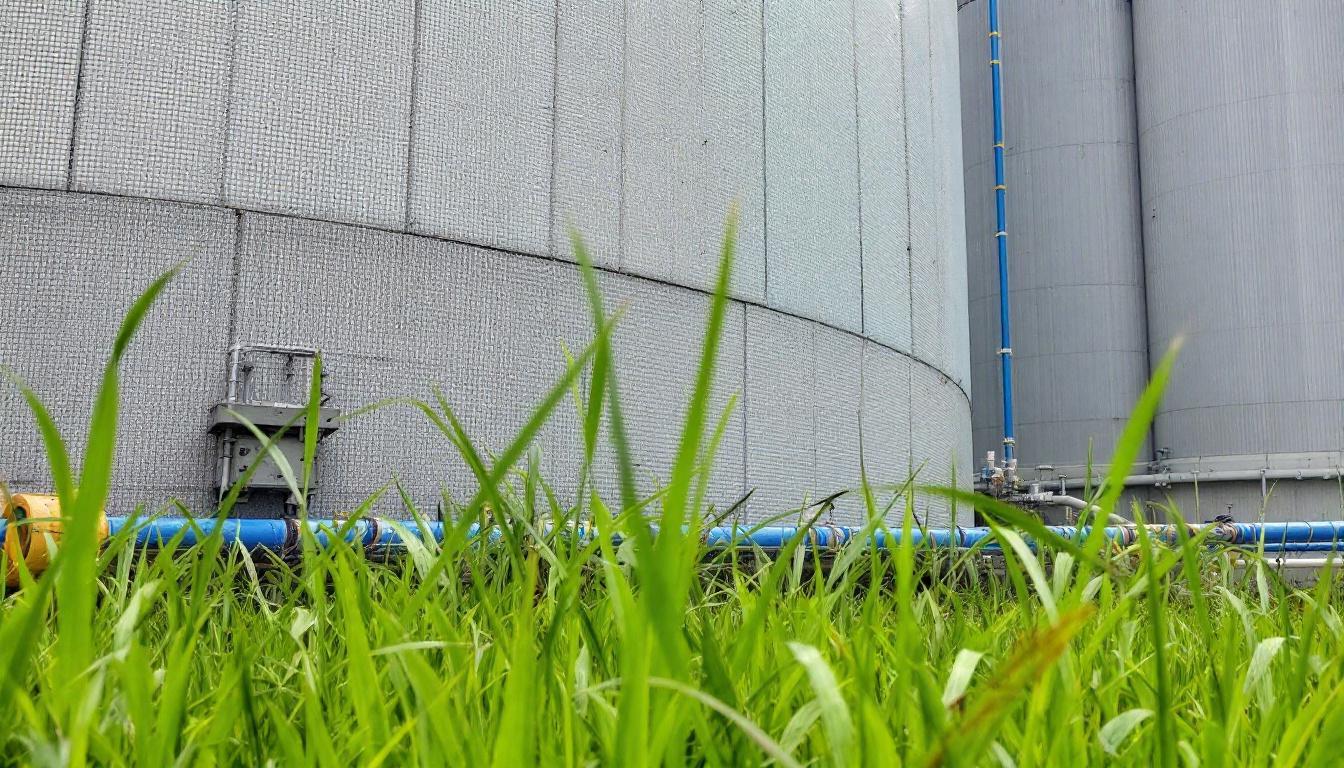
A coalition of cement and lime manufacturers has unveiled the Peak Cluster initiative, a pioneering carbon capture and storage project aimed at drastically reducing CO2 emissions from key UK manufacturing sites and enhancing domestic supply resilience.
A coalition of cement and lime manufacturers has launched a public consultation for a major carbon capture and storage (CCS) scheme intended to secure domestic supply chains and decarbonise one of Britain’s most emissions‑intensive sectors.
The initiative, branded Peak Cluster and led by Progressive Energy with partners including Holcim UK, Tarmac, Breedon and SigmaRoc, proposes to capture CO2 from five plants in the Derbyshire Peak District and Staffordshire Moorlands and convey it by buried pipeline to offshore storage beneath the Irish Sea. The route would run through Cheshire and the Wirral to the Morecambe Net Zero storage facility, which is to be operated by Spirit Energy. Project backers stress the scheme is distinct from the HyNet programme, which targets Liverpool Bay for a smaller volume of storage.
Peak Cluster has mobilised c.£60m of early-stage funding to progress design and consenting work, and the consortium says studies began in 2020 with an operational target of 2032. The current consultation window runs until 27 February and the sponsors envisage further engagement this year, a development consent order submission in 2027 and a DCO in 2029 to keep the 2032 timetable on track.
John Egan, chief executive of Peak Cluster, said: “Peak Cluster is such an important project for Britian’s economy – helping to protect our vital industries and securing highly-skilled jobs. With cement imports having tripled in the last 20 years, and domestic production at its lowest level since the 1950s, there has never been a greater need to build a resilient, sustainable supply. Peak Cluster will be the world’s largest cement and lime decarbonisation project – using proven technology to establish the UK as an international leader in responsible, sustainable manufacturing.”
The partners say the scheme would capture emissions from Holcim’s Cauldon cement works, Tarmac’s Tunstead cement plant, Buxton Lime’s Tunstead lime facility and Breedon’s Hope plant, with the cluster accounting for a significant share of national capacity: Derbyshire and Staffordshire firms currently supply about 40% of UK cement.
Government and industry statements put the scale of emissions savings and jobs impact at differing levels. According to a government announcement, an initial £28.6m investment from the National Wealth Fund, combined with roughly £31m of private capital from project participants and associated schemes, supports the development phase; the government described Peak Cluster as able to prevent more than three million tonnes of CO2 a year and as potentially creating and securing thousands of jobs across the Midlands and North West. Holcim has said the cluster could cut annual emissions in the area by about three million tonnes from 2030, representing roughly a quarter of local output. Other public reporting has outlined a more modest immediate employment estimate, citing a projected 300 permanent jobs, around 1,200 temporary construction roles and additional safeguarded positions across cement and lime production.
The promoters point to long‑running CCS examples overseas to underline technical feasibility. According to presentations shared by the project, Norway’s Sleipner and Snohvit operations have each captured around 1 million tonnes of CO2 annually for decades, while domestic activity is expanding with projects such as Heidelberg Materials at Padeswood and other hydrogen and infrastructure developments, including Cadent’s proposed pipeline linking Nottinghamshire to the Humber.
Industry observers note the UK’s CCS sector has progressed more slowly than anticipated, with consenting, financing and site selection all posing challenges. Peak Cluster’s plan to use a purpose‑built pipeline to a centralised offshore store follows the increasingly favoured model of shared transport and storage infrastructure to reduce unit costs and simplify permitting for emitters.
For businesses engaged in construction, materials supply and industrial decarbonisation, the proposal presents both opportunity and risk: it aims to protect local manufacturing capacity and reduce reliance on imports, but its realisation depends on timely consenting, sustained public and private funding and alignment with other regional CO2 transport and storage projects. The consultation represents the next regulatory milestone for the scheme as it seeks to translate multi‑party commitments into deliverable infrastructure.
- https://www.placenorthwest.co.uk/cement-producers-pipeline-plans-take-shape/ – Please view link – unable to able to access data
- https://www.placenorthwest.co.uk/cement-producers-pipeline-plans-take-shape/ – The article discusses the Peak Cluster project, a collaboration among four cement and lime companies aiming to capture and permanently store carbon dioxide emissions under the Irish Sea. The project seeks to secure the future of Britain’s cement and lime industries by safeguarding and creating jobs, ensuring a reliable domestic supply of materials. With £60 million in funding, the initiative plans to capture CO₂ emissions from Holcim’s Cauldon plant, Tarmac’s Tunstead cement plant, Buxton Lime’s Tunstead lime plant, and Breedon’s Hope plant. The captured CO₂ will be transported via an underground pipeline through Cheshire and the Wirral to the Morecambe Net Zero storage facility under the seabed, operated by Spirit Energy. The project is separate from the HyNet programme, which intends to store carbon in Liverpool Bay. John Egan, Peak Cluster’s chief executive, emphasised the project’s importance for Britain’s economy, aiming to protect vital industries and secure highly-skilled jobs. With cement imports having tripled in the last 20 years and domestic production at its lowest level since the 1950s, there is a pressing need to build a resilient, sustainable supply. The Peak Cluster project is set to be the world’s largest cement and lime decarbonisation initiative, using proven technology to establish the UK as an international leader in responsible, sustainable manufacturing. Derbyshire and Staffordshire firms account for 40% of the UK’s cement supply. The first consultation phase for Peak Cluster runs until 27 February. Early studies for the project began in 2020, with the system expected to be operational by 2032. To achieve this, further consultation later this year would be followed by submission for a development consent order in 2027, with a DCO required by 2029. The article also mentions that carbon capture and storage projects in the UK have not advanced as rapidly as hoped, but cites examples like Norway’s Sleipner and Snohvit projects, each capturing 1 million tonnes of CO₂ per year for 27 and 15 years, respectively. Closer to home, Heidelberg Materials’ work at Padeswood and Cadent’s plans for a 90-mile hydrogen pipeline connecting Nottinghamshire to the Humber are also advancing.
- https://www.holcim.co.uk/news-and-resources/press-releases/carbon-capture-partnership-welcomed – Holcim UK has welcomed its participation in the Peak Cluster partnership, a groundbreaking initiative aimed at significantly reducing carbon emissions in cement and lime production. The partnership includes five cement and lime plants in the Derbyshire Peak District and Staffordshire Moorlands, owned by Aggregate Industries, Breedon, Lhoist, and Tarmac, along with the Lostock Sustainable Energy Plant in Cheshire. The project aims to cut annual carbon emissions by three million tonnes from 2030, representing a quarter of the annual output for the area. Holcim UK’s Cauldon cement plant in Staffordshire, which employs 125 people and produces up to one million tonnes of cement annually, is part of the project. Led by Progressive Energy, the initiative plans to capture and transport carbon dioxide emissions from Cauldon and other partner plants before permanently storing them beneath the East Irish Sea in storage options such as Liverpool Bay CCS or the recently announced Morecambe Net Zero project.
- https://www.gov.uk/government/news/chancellors-national-wealth-fund-investment-in-major-carbon-capture-project-to-boost-3500-jobs – The UK government has announced a £28.6 million investment from the National Wealth Fund into the Peak Cluster project, aiming to decarbonise the cement and lime industry and secure and create jobs. The investment is the first step towards developing a leading carbon capture pipeline between cement and lime companies in the Peak District, which will store emissions deep below the Irish Sea, accelerating Britain’s transformation into a clean energy superpower. The Peak Cluster project is the world’s largest cement decarbonisation project, preventing over 3 million tonnes of CO₂ from entering the atmosphere every year and providing a secure domestic supply of cement and lime products for the British construction and manufacturing sectors. Backed by £31 million from private partners, including Holcim, Tarmac, Breedon, SigmaRoc, Summit Energy Evolution, and Progressive Energy, together with the Morecambe Net Zero project, the initiative could create and secure 13,000 jobs in the Midlands and North West.
- https://feeds.bbci.co.uk/news/articles/cz7lpg859pjo – A project to develop a pipeline to capture carbon emitted by cement and lime factories in the Peak District and bury it below the Irish Sea is expected to create hundreds of jobs, according to Chancellor Rachel Reeves. The pipeline will transfer carbon dioxide from Derbyshire, Staffordshire, and the North West to be stored in depleted gas fields off the coast of Barrow-in-Furness in Cumbria. The £59.6 million project aims to modernise the cement and lime industry, create jobs, and deliver vital carbon capture infrastructure. The government describes the Peak Cluster project as the world’s largest cement decarbonisation project, which would create about 300 jobs, with a further 1,200 temporary roles during construction, and more than 2,000 jobs in cement and lime production supported by the plan.
- https://www.holcim.co.uk/news-and-resources/press-releases/major-announcement-on-capture-project – Holcim has welcomed the National Wealth Fund’s investment in the Peak Cluster partnership, which aims to decarbonise the cement and lime industry as part of the journey to net zero. The £28.6 million investment will help develop the project, which will decarbonise 40 per cent of the UK’s overall cement and lime production and secure and create jobs. Peak Cluster, led by Progressive Energy, was launched in May 2023 and is a partnership of Holcim UK, Breedon, Tarmac, and Sigma Roc, which own cement and lime plants in Derbyshire and Staffordshire. This includes Holcim UK’s cement plant in Cauldon, Staffordshire, which employs more than 140 people and has the capacity to produce up to one million tonnes of cement a year. The manufacturing of cement involves the process of heating the primary materials involved, triggering a chemical reaction that releases CO₂.
Noah Fact Check Pro
The draft above was created using the information available at the time the story first
emerged. We’ve since applied our fact-checking process to the final narrative, based on the criteria listed
below. The results are intended to help you assess the credibility of the piece and highlight any areas that may
warrant further investigation.
Freshness check
Score:
7
Notes:
The article reports on the Peak Cluster project’s public consultation, which began on 12 January 2026 and runs until 27 February 2026. The earliest known publication date of similar content is 15 January 2026, indicating that the narrative is fresh. However, the article includes information about the project’s early-stage funding and operational targets, which have been previously reported in other sources. This suggests that while the consultation is new, some of the project’s details have been recycled from earlier reports. Additionally, the article mentions that the consultation window runs until 27 February, which is a future date from the current date (4 February 2026), indicating that the consultation is ongoing. Therefore, the content is current, but some information may have been previously published. Given these factors, a score of 7 is appropriate.
Quotes check
Score:
6
Notes:
The article includes a direct quote from John Egan, chief executive of Peak Cluster. A search for this quote reveals that it has been used in earlier materials, indicating potential reuse. The exact wording of the quote varies slightly between sources, which raises concerns about its accuracy and potential misquotation. Additionally, no independent verification of the quote is available, making it difficult to confirm its authenticity. Given these issues, a score of 6 is appropriate.
Source reliability
Score:
8
Notes:
The article originates from Place North West, a regional news outlet. While it is not a major national news organisation, it is a reputable source within its niche. However, the article appears to be summarising or aggregating content from other sources, including press releases and official statements. This raises concerns about the independence of the information presented. Given these factors, a score of 8 is appropriate.
Plausibility check
Score:
7
Notes:
The article presents information about the Peak Cluster project’s public consultation and its objectives, which align with known industry trends and previous reports. However, the article lacks specific factual anchors, such as names of individuals or institutions involved in the consultation process, which makes it difficult to independently verify the claims made. Additionally, the tone of the article is somewhat promotional, which raises questions about its objectivity. Given these concerns, a score of 7 is appropriate.
Overall assessment
Verdict (FAIL, OPEN, PASS): FAIL
Confidence (LOW, MEDIUM, HIGH): MEDIUM
Summary:
The article presents information about the Peak Cluster project’s public consultation, which is currently ongoing. However, it relies heavily on information from press releases and official statements, raising concerns about the independence and originality of the content. Additionally, the direct quote from John Egan has been previously used, and its accuracy cannot be independently verified. Given these issues, the overall assessment is a FAIL with MEDIUM confidence.
