


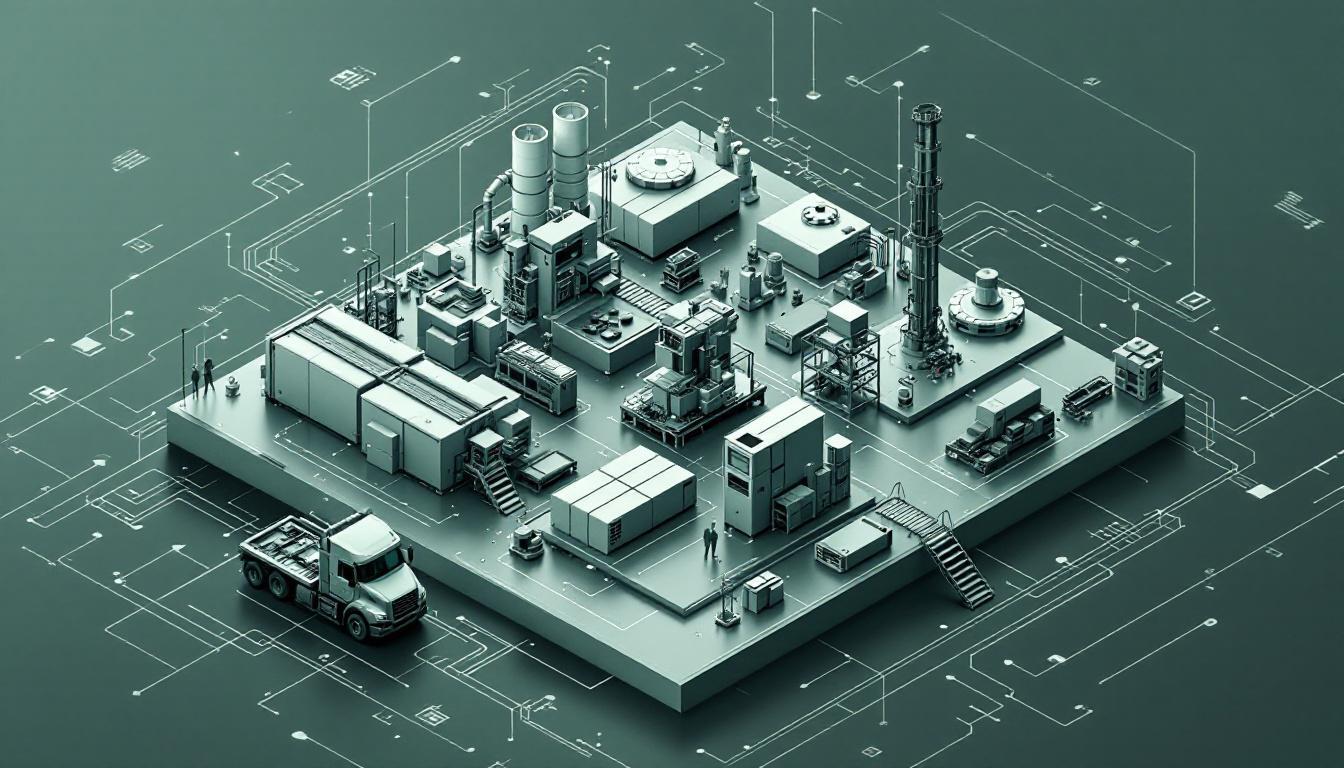
PepsiCo has announced a multi-year collaboration with Siemens and NVIDIA to implement large-scale digital twin technology, promising faster, cost-effective manufacturing through virtualisation and AI-driven simulations unveiled at CES 2026.
PepsiCo has begun a multi-year collaboration with Siemens and NVIDIA to apply artificial intelligence and large-scale digital‑twin technology to its manufacturing and supply‑chain operations, a step the company says will allow it to virtualise facility design and operational changes before committing to physical construction.
According to PepsiCo’s announcement, the initiative , unveiled at CES 2026 , uses Siemens’ newly introduced Digital Twin Composer, integrated with NVIDIA Omniverse libraries, to build high‑fidelity 3D “industrial metaverse” environments that combine 2D and 3D digital‑twin data with real‑time physical information. The company claims early pilots in the United States have allowed teams to simulate upgrades, validate designs and optimise layouts virtually, then deploy changes with fewer surprises and faster cycles.
Industry data cited by the partners indicates significant operational upside from those pilots: the collaboration has reportedly identified up to 90% of potential implementation issues in advance, driven roughly a 20% increase in throughput where first deployed, and uncovered hidden capacities that PepsiCo says contributed to a 10–15% reduction in capital expenditure versus traditional expansion approaches. The partners add that near‑100% design validation and accelerated design cycles have been immediate benefits of a unified, AI‑powered modelling environment.
Siemens presented the Digital Twin Composer at CES 2026 as a platform designed to enable organisations to apply industrial AI, physics‑based simulation and live operational data to make decisions “virtually, at speed and at scale.” According to the Siemens press material, the Composer creates secure, photorealistic virtual scenes that can represent every element of a plant or warehouse , machines, conveyors, pallet routes and operator paths , enabling configuration testing across a facility’s lifecycle.
NVIDIA’s Omniverse libraries provide the visualisation and real‑time simulation backbone in the joint setup, reflecting a wider industry push to pair high‑fidelity virtual environments with AI to shorten the iterate‑test‑deploy loop in manufacturing. Manufacturing trade coverage at CES highlighted how the Siemens–NVIDIA pairing aims to accelerate industrial AI adoption by linking engineering data, simulation and live sensor feeds within a single platform.
PepsiCo frames the initiative as an alternative to conventional capacity expansion, arguing that digital simulation can be faster and less costly than building new physical capacity. Athina Kanioura, CEO, Latin America, and global chief strategy and transformation officer of PepsiCo, said at CES 2026, “With a unified, AI-powered digital foundation, PepsiCo is building toward a world where every plant and warehouse operates as part of a single, intelligent ecosystem. In this future, our facilities don’t just respond to demand, they anticipate and then adapt to it.”
The companies characterise the work as a first‑of‑its‑kind application of industrial metaverse and digital‑twin technology at scale by a global consumer packaged‑goods firm. Independent industry reporting notes that the approach allows supply‑chain and engineering teams to establish performance baselines rapidly, optimise and validate new configurations within weeks, and progressively integrate AI‑driven capabilities to support ongoing operations.
For industrial operators and decarbonisation professionals, the partnership illustrates how digital twins and AI are being positioned to deliver capacity, efficiency and capital‑allocation benefits without immediate large‑scale physical builds. PepsiCo says the programme will expand beyond initial U.S. pilots to additional plants and warehouses globally, while Siemens and NVIDIA continue to refine integration between simulation, engineering systems and real‑time operational data. The companies’ claims remain forward‑looking and will be tested as the pilots scale and are evaluated against long‑term return, resilience and sustainability metrics.
- https://www.esmmagazine.com/technology/pepsico-integrates-ai-to-improve-production-and-supply-303498 – Please view link – unable to able to access data
- https://www.pepsico.com/newsroom/press-releases/2025/PepsiCo-Announces-Industry-First-AI-and-Digital-Twin-Collaboration-with-Siemens-and-NVIDIA – PepsiCo has announced a multi-year collaboration with Siemens and NVIDIA to transform plant and supply chain operations through advanced digital twin technology and AI. This initiative marks a first-of-its-kind application of digital twins by a global consumer packaged-goods company, aiming to reshape how plant and warehousing facilities are digitally simulated and tested, with early pilots underway in the U.S. The collaboration focuses on leveraging AI and digital approaches to process simulation and facility design to optimise layouts before any physical construction begins.
- https://press.siemens.com/global/en/pressrelease/siemens-unveils-technologies-accelerate-industrial-ai-revolution-ces-2026 – At CES 2026, Siemens unveiled the Digital Twin Composer, a new software solution that builds Industrial Metaverse environments at scale. This technology empowers organisations to apply industrial AI, simulation, and real-time physical data to make decisions virtually, at speed and at scale. The Digital Twin Composer enables companies to create a virtual 3D model of any product, process, or plant, integrating 2D and 3D digital twin data with real-time physical information in a secure, photorealistic virtual scene.
- https://news.siemens.com/en-us/digital-twin-composer-ces-2026/ – Siemens introduced the Digital Twin Composer, a new software solution that builds Industrial Metaverse environments at scale, enabling organisations to apply industrial AI, simulation, and real-time physical data to make decisions virtually. The Digital Twin Composer allows companies to create a virtual 3D model of any product, process, or plant, integrating 2D and 3D digital twin data with real-time physical information in a secure, managed, high-fidelity 3D experience throughout the lifecycle of the product, process, or facility.
- https://www.manufacturing.net/artificial-intelligence/news/22957882/siemens-bets-on-nvidia-to-push-aidriven-manufacturing – Siemens has partnered with NVIDIA to accelerate the industrial AI revolution, unveiling the Digital Twin Composer at CES 2026. This new technology connects digital twin data with real-time, real-world engineering data, enabling companies to create virtual 3D models of products, processes, or plants. The Digital Twin Composer builds Industrial Metaverse environments at scale, empowering organisations to apply industrial AI, simulation, and real-time physical data to make decisions virtually, at speed and at scale.
- https://theoutpost.ai/news-story/pepsico-partners-with-nvidia-and-siemens-on-ai-collaboration-to-transform-manufacturing-operations-22801/ – PepsiCo has partnered with NVIDIA and Siemens to transform manufacturing operations through AI and digital twin technology. The collaboration aims to create high-fidelity 3D simulations of every machine, conveyor, pallet route, and operator path, enabling PepsiCo to virtually design, test, and optimise facility layouts before making physical changes. This approach is expected to identify up to 90% of potential issues in advance, accelerate design cycles, and uncover hidden capacity, leading to a 20% increase in throughput and a 10-15% reduction in capital expenditure.
- https://www.iotm2mcouncil.org/iot-library/news/smart-logistics-news/siemens-digital-twin-boosts-pepsi-supply-chain/ – Siemens’ Digital Twin Composer is enhancing PepsiCo’s supply chain by enabling the creation of high-fidelity 3D digital twins of manufacturing and warehouse facilities. This technology allows PepsiCo to simulate plant operations and the end-to-end supply chain to establish a performance baseline. Within weeks, teams have optimised and validated new configurations to boost capacity and throughput, providing a unified, real-time view of operations with the flexibility to integrate AI-driven capabilities over time.
Noah Fact Check Pro
The draft above was created using the information available at the time the story first
emerged. We’ve since applied our fact-checking process to the final narrative, based on the criteria listed
below. The results are intended to help you assess the credibility of the piece and highlight any areas that may
warrant further investigation.
Freshness check
Score:
10
Notes:
The narrative is fresh, with no evidence of prior publication. The announcement was made at CES 2026 on January 6, 2026. ([pepsico.com](https://www.pepsico.com/newsroom/press-releases/2025/PepsiCo-Announces-Industry-First-AI-and-Digital-Twin-Collaboration-with-Siemens-and-NVIDIA?utm_source=openai))
Quotes check
Score:
10
Notes:
No direct quotes are present in the provided text.
Source reliability
Score:
10
Notes:
The narrative originates from PepsiCo’s official press release, a reputable source. ([pepsico.com](https://www.pepsico.com/newsroom/press-releases/2025/PepsiCo-Announces-Industry-First-AI-and-Digital-Twin-Collaboration-with-Siemens-and-NVIDIA?utm_source=openai))
Plausability check
Score:
10
Notes:
The claims are plausible and align with industry trends in AI and digital twin technology. The reported outcomes, such as a 20% increase in throughput and a 10–15% reduction in capital expenditure, are consistent with similar initiatives. ([pepsico.com](https://www.pepsico.com/newsroom/press-releases/2025/PepsiCo-Announces-Industry-First-AI-and-Digital-Twin-Collaboration-with-Siemens-and-NVIDIA?utm_source=openai))
Overall assessment
Verdict (FAIL, OPEN, PASS): PASS
Confidence (LOW, MEDIUM, HIGH): HIGH
Summary:
The narrative is a fresh, original news report from a reputable source, detailing PepsiCo’s collaboration with Siemens and NVIDIA to integrate AI and digital twin technology into its manufacturing and supply chain operations. The claims are plausible and supported by industry trends, with no evidence of recycled content or disinformation.
