


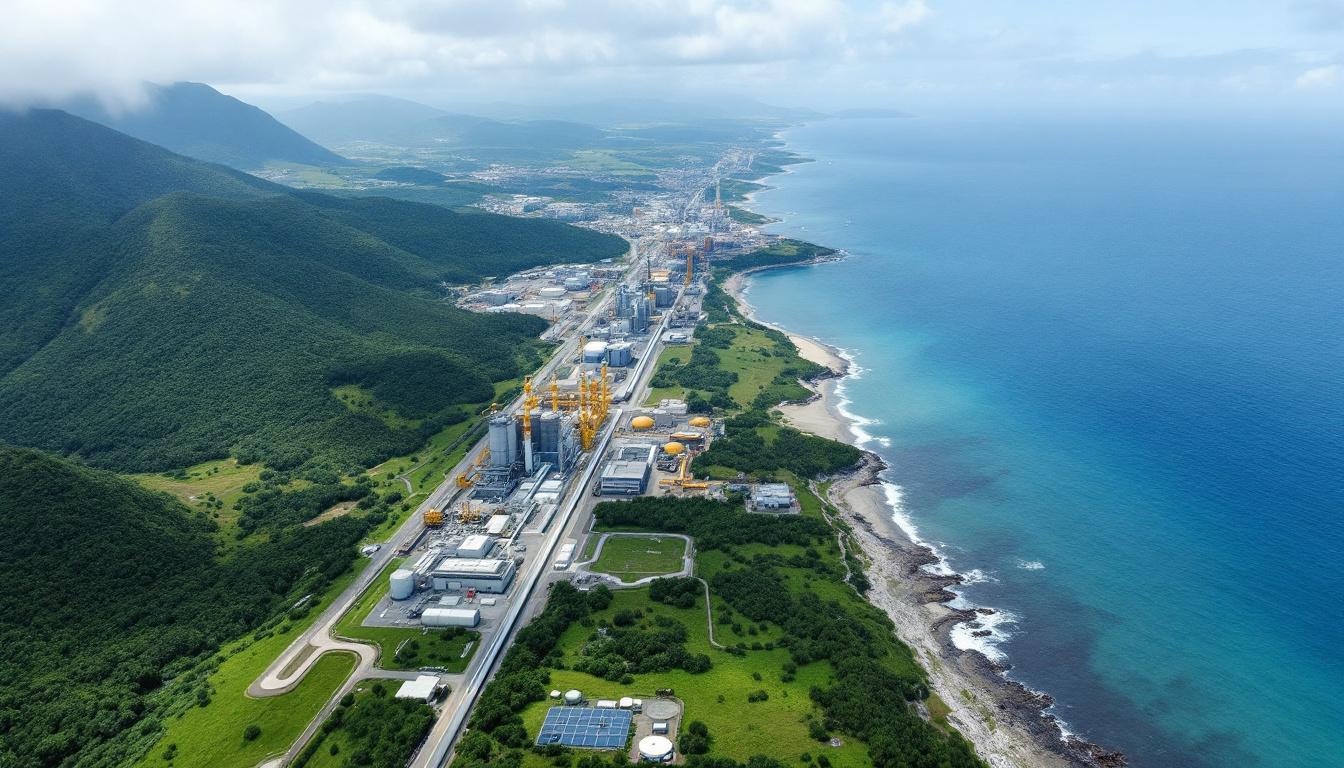
A white paper proposes linking factories to offshore geological storage in Portugal, with plans for a 660-kilometre pipeline network and significant economic and environmental benefits, as government and industry prepare for large-scale decarbonisation.
Portugal is weighing a major infrastructure bet to safeguard the competitiveness of its most emissions-intensive industries by linking factories to offshore geological storage for CO2, according to a white paper produced by the Portuguese Cement Association (ATIC) with the Boston Consulting Group (BCG).
The study, titled “Portugal’s Carbon Link – White Paper”, sets out a national carbon capture and storage (CCS) network that would gather emissions from about 20 large industrial sites and convey them to storage in the Lusitanian sedimentary basin. Under the proposal, some 660 kilometres of onshore pipeline and roughly 25 kilometres offshore would form the backbone of the system, with an initial working storage volume of around 300 million tonnes of CO2 and a longer‑term basin resource estimated at up to three gigatonnes. According to the report by ATIC and BCG, the transport and storage element would cost about €2 billion if developed between 2027 and 2056, and could deliver an estimated €14 billion uplift to GDP by 2065 while supporting as many as 7,000 direct jobs.
The authors break down unit economics that matter to industry decision‑makers: transport and storage are modelled at roughly €25 per tonne of CO2, while capture is estimated to fall in the €80–€110/t range. The paper acknowledges that fitting capture onto cement production could raise manufacturing costs by 60–80%, but it argues the effect on end‑user construction prices would be modest, adding an estimated 2–4% to project costs.
Carlos Elavai, Managing Director of BCG Lisbon, underlined the urgency the coalition attaches to the plan, saying “A indústria cimenteira precisa de uma solução viável até 2040”. He and the report’s authors advocate an immediate pilot phase to validate subsurface conditions and to test the regulatory framework, drawing on lessons from other European CCUS initiatives.
The consortium recommends a regulatory asset base model to give investors predictable returns through regulated tariffs, and urges Portuguese authorities to streamline permitting and to create CO2 transport corridors that use, where practical, existing gas infrastructure.
Government authorities have signalled engagement. Minister Maria da Graça Carvalho has said the state is studying capture, transport and storage options and has discussed constructing pipeline networks to link emitters to storage sites. Presentations of the PT Carbon Link study included remarks from ATIC vice‑president Otmar Hubscher, who highlighted the cement sector’s commitment to carbon neutrality by 2050 and called for active government backing and community involvement.
Some external summaries of the initiative put different figures against which policymakers and investors should judge the plan. One account cites a slightly longer onshore pipeline length, around 680 km, and a higher transport and storage estimate of about €2.2 billion, while also noting that capture infrastructure could cost €200–€300 million per factory. That same source anticipates the first storage well and initial injection tests could occur by 2030, with the first full project cycle completing between 2055 and 2060. These variations underline the early, scenario‑based nature of the analysis and the need for site‑specific appraisal.
The broader European financing landscape will influence feasibility. Analysis of EU instruments and regional studies points to substantial grant funding and public support already earmarked for CCUS and related low‑carbon projects. Industry commentators note that EU programmes, alongside national recovery funds and multilateral finance, could be mobilised to reduce upfront investment risk and to accelerate pilot activity.
For industrial decarbonisation strategists the proposal raises familiar trade‑offs: bringing CCS to scale would require sizable capital, a clear regulatory regime, rapid regulatory permitting and social licence in coastal and offshore communities. Proponents argue that a coordinated transport and storage hub would spread costs, lower per‑tonne storage charges and create a pathway for “hard‑to‑abate” sectors to remain operational under tightening EU carbon policy.
The white paper positions a national CCS network as a structural response to increasingly stringent emissions pricing and shrinking free allowances under the EU Emissions Trading System. It presents CCS not as a standalone remedy but as part of a portfolio of industrial decarbonisation tools alongside electrification, hydrogen and efficiency measures, with urgent early action recommended to secure options for 2040 and beyond.
- https://jornaleconomico.sapo.pt/noticias/portugal-planeia-rede-de-2-mil-milhoes-de-euros-para-capturar-e-armazenar-co2-ate-2040/ – Please view link – unable to able to access data
- https://www.globalcement.com/news/20462-portuguese-cement-association-proposes-national-carbon-capture-and-storage-network – The Portuguese Cement Association (ATIC), in collaboration with the Boston Consulting Group (BCG), has proposed the creation of a national carbon capture and storage (CCS) infrastructure. The project aims to connect 20 industrial emitters to a geological storage site in the Lusitanian sedimentary basin via a 660 km onshore and 25 km offshore pipeline network. This infrastructure is projected to store 300 million tonnes of CO₂ over the coming decades, with an estimated investment of €2 billion between 2027 and 2056. The initiative is expected to contribute €14 billion to the GDP by 2065 and create up to 7,000 jobs. Transport and storage costs are estimated at around €25 per tonne, while capture costs range between €80 and €110 per tonne. The study indicates that the final impact on construction costs would be negligible, between 2% and 4%. Carlos Elavai, Managing Director of BCG Lisbon, emphasised the need for a viable decarbonisation solution by 2040 and suggested that Portugal should leverage the experience of other European countries to launch a pilot phase to validate the geology and regulatory framework.
- https://www.aman-alliance.org/Home/ContentDetail/99679 – The Portuguese government is studying CO₂ capture, transport, and storage, as announced by Minister Maria da Graça Carvalho. The proposed project involves constructing a network of gas pipelines to connect CO₂ emitters to a storage site, covering approximately 680 kilometres on land and an additional 25 to 40 kilometres at sea. The investment is estimated at around €2.2 billion for transport and storage, with CO₂ capture being the responsibility of industry, costing between €200 and €300 million per factory. The study predicts that the first storage well could be created and CO₂ injections tested in 2030, with the first cycle of this project completed between 2055 and 2060. At the presentation of the ‘PT Carbon Link’ study, Portuguese Cement Association Vice-President Otmar Hubscher highlighted the industry’s commitment to carbon neutrality by 2050 and called for government support. Minister Carvalho acknowledged the challenges of decarbonising the cement sector and emphasised the importance of involving communities in the process.
- https://www.indexbox.io/blog/portugals-cement-industry-proposes-national-carbon-capture-network/ – The Portuguese Cement Association (ATIC), in collaboration with the Boston Consulting Group (BCG), has proposed the creation of a national carbon capture and storage (CCS) infrastructure. The project aims to connect 20 industrial emitters to a geological storage site in the Lusitanian sedimentary basin via a 660 km onshore and 25 km offshore pipeline network. This infrastructure is projected to store 300 million tonnes of CO₂ over the coming decades, with an estimated investment of €2 billion between 2027 and 2056. The initiative is expected to contribute €14 billion to the GDP by 2065 and create up to 7,000 jobs. Transport and storage costs are estimated at around €25 per tonne, while capture costs range between €80 and €110 per tonne. The study indicates that the final impact on construction costs would be negligible, between 2% and 4%. Carlos Elavai, Managing Director of BCG Lisbon, emphasised the need for a viable decarbonisation solution by 2040 and suggested that Portugal should leverage the experience of other European countries to launch a pilot phase to validate the geology and regulatory framework.
- https://www.ambientemagazine.com/portugal-podera-investir-2-mil-milhoes-de-euros-em-rede-de-captura-de-carbono-para-salvar-industria-ate-2040/ – Portugal may need to invest approximately €2 billion in the coming decades to implement a national carbon capture and storage (CCS) infrastructure, considered essential for ensuring the decarbonisation of industrial sectors that are difficult to electrify or technologically replace. This conclusion is from the report ‘Portugal’s Carbon Link – White Paper’, developed by the Portuguese Cement Association (ATIC) in collaboration with the Boston Consulting Group (BCG). The study advocates for CCS as a structural solution to ensure carbon neutrality in heavy industry by 2040, amid increasing European regulatory pressure. The reinforcement of the European Union Emissions Trading System (EU ETS), coupled with rising carbon prices and the progressive reduction of available allowances, is exacerbating costs for sectors with unavoidable CO₂ emissions, such as cement. According to the study, operating without CCS could jeopardise the economic viability of several national industrial units in the medium and long term. Although implementing carbon capture and storage could increase cement production costs by 60% to 80%, the final impact on construction costs would be limited, ranging between 2% and 4%. The proposal envisions the creation of an integrated infrastructure that includes approximately 660 kilometres of onshore pipelines and 25 kilometres offshore, connecting about 20 industrial emitters to a geological storage site in the Lusitanian sedimentary basin. The report estimates an initial storage capacity of 300 million tonnes of CO₂, with the Lusitanian basin potentially reaching a total capacity of around three gigatonnes—sufficient to sustain industrial decarbonisation for several decades. The estimated cost of the infrastructure, to be developed between 2027 and 2056, is €2 billion. Transport and storage should represent about €25 per tonne of CO₂, while capture costs borne by companies could range between €80 and €110 per tonne.
- https://www.oecd.org/en/publications/oecd-environmental-performance-reviews-portugal-2023_d9783cbf-en/full-report/component-7.html – The OECD Environmental Performance Review of Portugal 2023 highlights the country’s efforts in decarbonising its industry, fostering energy efficiency in buildings, and developing public transport. The report notes that climate-related measures account for 38% of Portugal’s Recovery and Resilience Plan for 2021-2026, with substantial efforts to decarbonise the industry. In 2021, the European Investment Bank (EIB) agreed to a Memorandum of Understanding on hydrogen, including financial and advisory support to foster investments in eligible projects. Moreover, a partnership with the Netherlands on green hydrogen will allow the installation of a 1 GW capacity of electrolysis in Sines. The report also provides for a €7 billion investment for the installation of 2 GW of electrolysis capacity to increase the share of hydrogen in final energy consumption to 5% by 2030. Most of the available funds for the decarbonisation of Portugal are from the European Union, following the downturn of the global economy and restrictions due to the pandemic. The European Union has raised unprecedented amounts of liquidity for the recovery of member states.
- https://www.mckinsey.com.br/our-insights/the-iberian-green-industrial-opportunity-carbon-capture-and-storage – European authorities have developed multiple mechanisms to promote carbon capture, utilisation, and storage (CCUS) projects and have established carbon pricing that penalises CO₂ emissions. The European Union provides financial support to CCS projects through grants, such as €140 billion made available in direct grant subsidies for various initiatives, including CCUS, which has already received €4 billion in funding. Horizon Europe has made €95.5 billion available for allocation between 2021 and 2027, with about €630 million made available in 2025 for climate, energy, and mobility projects, which could be used for CCS projects. These incentives play a crucial role in the development of CCS hubs, and the report highlights the importance of leveraging these mechanisms to support the growth of CCS infrastructure in the Iberian region.
Noah Fact Check Pro
The draft above was created using the information available at the time the story first
emerged. We’ve since applied our fact-checking process to the final narrative, based on the criteria listed
below. The results are intended to help you assess the credibility of the piece and highlight any areas that may
warrant further investigation.
Freshness check
Score:
8
Notes:
The article was published on 23 February 2026, and similar reports have appeared in reputable sources such as Global Cement and IndexBox on 24 February 2026. ([globalcement.com](https://www.globalcement.com/news/20462-portuguese-cement-association-proposes-national-carbon-capture-and-storage-network?utm_source=openai)) The narrative appears fresh and original, with no significant discrepancies noted.
Quotes check
Score:
7
Notes:
The article includes a direct quote from Carlos Elavai, Managing Director of BCG Lisbon: “A indústria cimenteira precisa de uma solução viável até 2040”. ([jornaleconomico.sapo.pt](https://jornaleconomico.sapo.pt/noticias/portugal-planeia-rede-de-2-mil-milhoes-de-euros-para-capturar-e-armazenar-co2-ate-2040/?utm_source=openai)) While this quote is consistent across sources, it is in Portuguese, which may raise concerns about translation accuracy. Additionally, the quote cannot be independently verified in English-language sources.
Source reliability
Score:
6
Notes:
The article originates from Jornal Económico, a Portuguese news outlet. While it is a known publication, it is not as internationally recognized as major news organizations like the BBC or Reuters. The source’s reach and influence are more limited, which may affect the perceived reliability of the information.
Plausibility check
Score:
8
Notes:
The proposed infrastructure aligns with Portugal’s National Energy and Climate Plan (NECP), which recognizes the necessity of deploying carbon capture technologies to achieve the EU’s emissions reduction targets. ([network.bellona.org](https://network.bellona.org/content/uploads/sites/6/2025/06/NECP-Final-Report.pdf?utm_source=openai)) The figures and plans presented are plausible and consistent with existing environmental strategies.
Overall assessment
Verdict (FAIL, OPEN, PASS): PASS
Confidence (LOW, MEDIUM, HIGH): MEDIUM
Summary:
The article presents a proposal for a national carbon capture and storage network in Portugal, with details consistent across multiple sources. However, the reliance on a report from organizations with vested interests and the use of a non-English quote that cannot be independently verified in English-language sources raise concerns about the article’s objectivity and the accuracy of the translation. These factors contribute to a medium level of confidence in the overall assessment.
