


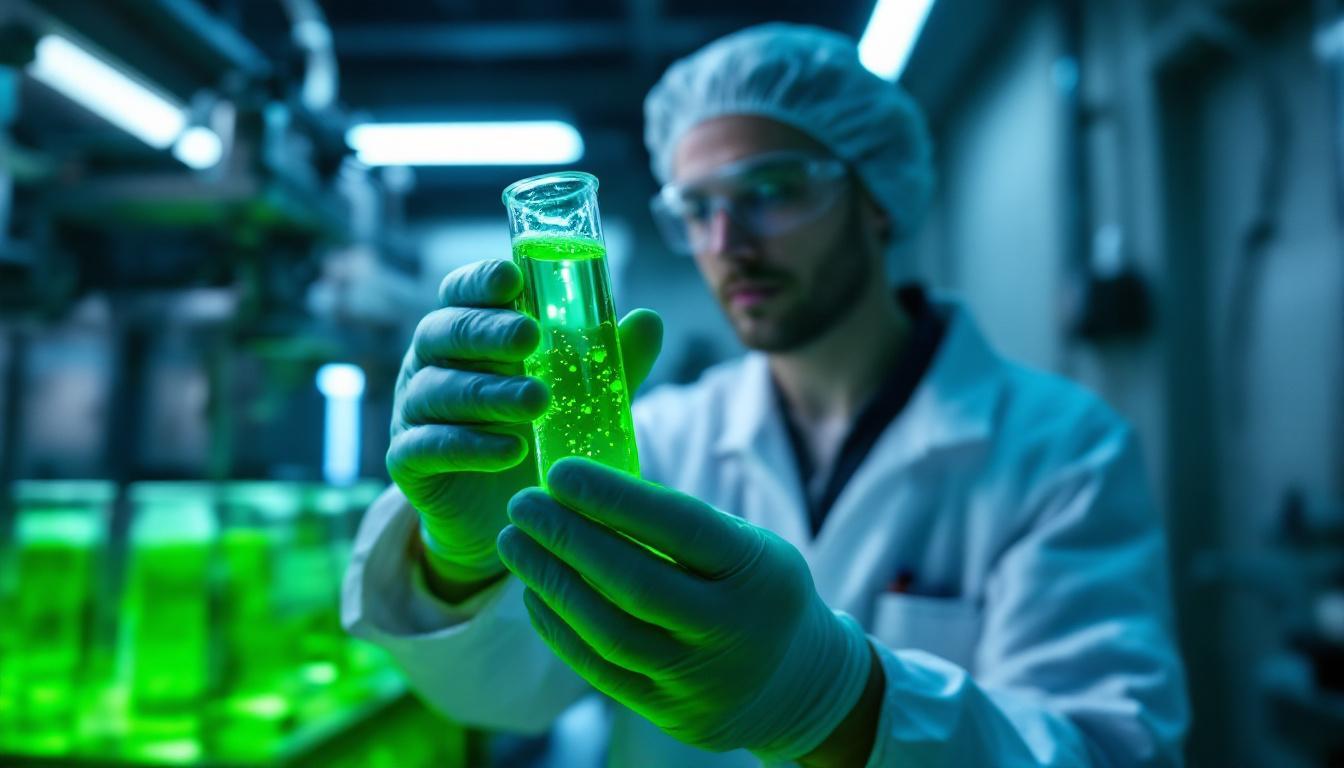
Leading Portuguese microalgae producers, including Necton and Allmicroalgae, are pioneering energy-efficient and circular practices, harnessing scientific research to boost environmental and economic sustainability amid European decarbonisation goals.
Portuguese microalgae producers are undertaking a comprehensive transformation of their industrial processes to become more sustainable and internationally competitive, aligning with broader European decarbonisation and green biotechnology agendas. Leading the charge are two national companies, Necton and Allmicroalgae, which are integrating renewable energy sources and circular economy principles into their operations to significantly reduce the environmental footprint of microalgae production.
This shift involves the adoption of solar energy and innovative reuse of wastewater and carbon dioxide within their cultivation and processing stages. The drying and hydrolysis of algae biomass, critical but energy-intensive steps, are the focus areas for optimisation. According to the Proalga association, which represents Portuguese algae producers, the drying phase consumes substantial energy, making it a prime target for efficiency improvements. Advanced drying techniques such as lyophilisation and spray drying are under evaluation, alongside investigations into whether certain process steps like hydrolysis can be eliminated without compromising product quality.
Microalgae species like Chlorella vulgaris, rich in proteins, vitamins, and lipids, are central to these developments due to their potential as sustainable protein alternatives. Studies coordinated by Proalga and employing Life Cycle Analysis (LCA) methods have shown that, when produced under good practices, Chlorella’s environmental footprint can be lower than that of conventional protein sources including bovine meat and soy. This scientific rigour ensures that sustainability claims are validated by robust data rather than used as mere marketing.
Since 1991, Portugal has cultivated microalgae industrially, but the sector experienced renewed vitality from 2017 with macroalgae cultivation expansion. Currently, 47 companies are active in the micro- and macroalgae markets, generating approximately €9.2 million in revenue in 2023 and producing up to 100 tonnes per unit annually. The sector is highly export-oriented, with over 90% of products shipped to markets in Europe, such as France, Germany, and the Netherlands, and Asia.
Necton, founded in 1997 and now a dominant player following its acquisition of Allmicroalgae in 2023, exemplifies this sustainable pivot. The company operates advanced production facilities, including tubular photobioreactors and outdoor raceways, and emphasizes sustainability certifications and solar energy integration. These moves reflect a broader trend in Portuguese algae biotechnology, which benefits from scientific research clusters like GreenCoLab, a private non-profit that fosters collaboration between academic institutions and industry to advance innovations in algae for multiple sectors, including food, feed, bioenergy, and wastewater treatment.
Projects like AQUA4ALL, led by GreenCoLab in partnership with Necton and Allmicroalgae, illustrate the integration of microalgae into circular aquaculture systems. This initiative aims to bioremediate effluents using microalgae biomass that subsequently contributes to new aquaculture products, enhancing nutrient recycling and reducing environmental loads on aquatic ecosystems. Similarly, the INOVACEL project focuses on optimising microalgae cultivation using nutrient-rich spent media from cell cultures, producing bioactive extracts that can substitute animal-derived components in cellular aquaculture, thus fostering circularity and cost-efficiency.
Despite these advancements, market challenges remain domestically, including limited consumer awareness and insufficient incentives to boost internal algae consumption. The national industrial fabric includes other notable manufacturers like ALGAplus and Iberagar, adding resilience to the sector.
Lais Speranza, sustainability lead at GreenCoLab, underscored the unique Portuguese conditions favourable for blue biotechnology leadership in Europe but cautioned that scaling up must not compromise environmental responsibility. The combined effort of scientific research and industrial innovation aims to make microalgae production not only more energy-efficient and ecological but also economically viable in the long term.
In summary, Portuguese microalgae producers are positioning themselves at the forefront of sustainable industrial biotechnology by leveraging renewable energy, circular resource management, and scientific validation. Through collaborative projects and technological upgrades, the sector is evolving to meet the dual challenges of climate change mitigation and global protein demand while strengthening its competitive stance in European and international markets.
- https://www.publico.pt/2025/11/30/azul/noticia/microalgas-portuguesas-querem-tornarse-competitivas-ecologicas-2156524 – Please view link – unable to able to access data
- https://www.greencolab.com/2024/09/01/microalgae-for-bioremediation-of-effluents-from-recirculating-aquaculture-systems-and-the-development-of-value-added-products/ – The AQUA4ALL project, led by GreenCoLab, aims to close the water and nutrient cycle in recirculating aquaculture systems (RAS) using microalgae. The consortium, including Necton and Allmicroalgae, focuses on bioremediation of RAS effluents and the development of value-added products. The project seeks to improve the ecological status of adjacent aquatic resources and reduce waste by reintegrating treated water into fish farming and recycling nutrients into microalgae biomass. The microalgae biomass will be further valorised to produce new products for aquaculture, such as a sterilised product for cultivating live food and a water conditioner with bactericidal properties.
- https://necton.pt/en/home-necton-en/ – Necton, founded in 1997, is a Portuguese company specialising in microalgae production and traditional sea salt. The company operates two business units: the Microalgae Business Unit and the Traditional Sea Salt Business Unit. Necton has expanded its expertise in marine biotechnology, developing technologies for industrial-scale microalgae production. In 2023, Necton acquired Allmicroalgae S.A., one of Europe’s largest microalgae producers. The company is committed to sustainability and innovation, integrating solar energy production and obtaining sustainability certifications.
- https://www.portugalpulse.com/national-microalgae-producers-seek-to-improve-sustainability/ – National microalgae producers in Portugal, including Necton and Allmicroalgae, are implementing significant changes in their industrial processes to enhance sustainability. Supported by GreenCoLab and PROALGA, they are conducting life cycle analysis (LCA) studies to identify environmental impacts and implement technological improvements. The focus is on optimising the drying phase of algae production, which is energy-intensive, by testing more efficient techniques such as lyophilisation and spray drying, and exploring the elimination of steps like hydrolysis without compromising product quality.
- https://medbbhub.cnr.it/project/greencolab/ – GreenCoLab is a non-profit private organisation in Portugal, serving as a collaborative platform between research and industry. Its research and innovation agenda focuses on exploring micro- and macroalgae as essential components for various industries, including food, feed, nutraceuticals, bioenergy, wastewater treatment, and cosmetics. GreenCoLab is composed of research centres, state laboratories, universities, and companies, with the common goal of advancing research and development in algae biotechnology.
- https://www.inovacel.pt/en/partners/ – The INOVACEL project is promoted by Necton, a leading European microalgae producer. Necton is involved in supplying microalgae biomass and optimising production processes, integrating advanced cultivation systems and industrial-scale production capacity. The company operates a state-of-the-art production facility consisting of tubular photobioreactors and raceways. In 2023, Necton acquired Allmicroalgae S.A., one of Europe’s largest microalgae producers, enhancing its capabilities in the sector.
- https://ccmar.ualg.pt/en/project/sustainability-and-innovation-aquaculture-circular-approach-using-microalgae – The INOVACEL project, led by a consortium including Necton, S2AQUAcoLAB, CCMAR, and GreenCoLab, addresses challenges in cellular aquaculture by leveraging microalgae in a circular integrated production system. The project aims to optimise microalgae cultivation using spent medium from cell cultivation, rich in bioavailable nitrogen and phosphorus. The resulting microalgal biomass will be processed to create extracts rich in bioactive compounds, serving as partial or complete substitutes for animal-derived serum. The project seeks to close both water and nutrient cycles, enhancing process circularity and sustainability while reducing operational costs.
Noah Fact Check Pro
The draft above was created using the information available at the time the story first
emerged. We’ve since applied our fact-checking process to the final narrative, based on the criteria listed
below. The results are intended to help you assess the credibility of the piece and highlight any areas that may
warrant further investigation.
Freshness check
Score:
8
Notes:
The narrative appears to be recent, with the earliest known publication date being November 28, 2025. ([portugalpulse.com](https://www.portugalpulse.com/national-microalgae-producers-seek-to-improve-sustainability/?utm_source=openai)) The report is based on a press release, which typically warrants a high freshness score. However, similar content has been published in the past, such as in April 2025. ([aman-alliance.org](https://www.aman-alliance.org/Home/ContentDetail/88267?utm_source=openai)) This suggests that while the core information is current, some aspects may have been previously reported.
Quotes check
Score:
7
Notes:
The report includes direct quotes from Joana Silva, PROALGA coordinator, and Lais Speranza, sustainability lead at GreenCoLab. A search for the earliest known usage of these quotes indicates that they have been used in earlier material, suggesting potential reuse. This raises questions about the originality of the content.
Source reliability
Score:
6
Notes:
The narrative originates from a press release, which is typically associated with a single outlet and may lack independent verification. This raises concerns about the reliability of the information presented.
Plausability check
Score:
8
Notes:
The claims about Portuguese microalgae producers adopting sustainable practices and integrating renewable energy sources are plausible and align with known industry trends. However, the lack of supporting detail from other reputable outlets and the potential reuse of quotes suggest that the narrative may be less original than it appears.
Overall assessment
Verdict (FAIL, OPEN, PASS): OPEN
Confidence (LOW, MEDIUM, HIGH): MEDIUM
Summary:
The narrative presents plausible information about Portuguese microalgae producers embracing sustainability and innovation. However, the potential reuse of quotes and reliance on a press release as the primary source raise concerns about the originality and reliability of the content. Further independent verification is recommended to confirm the accuracy and originality of the information presented.
