


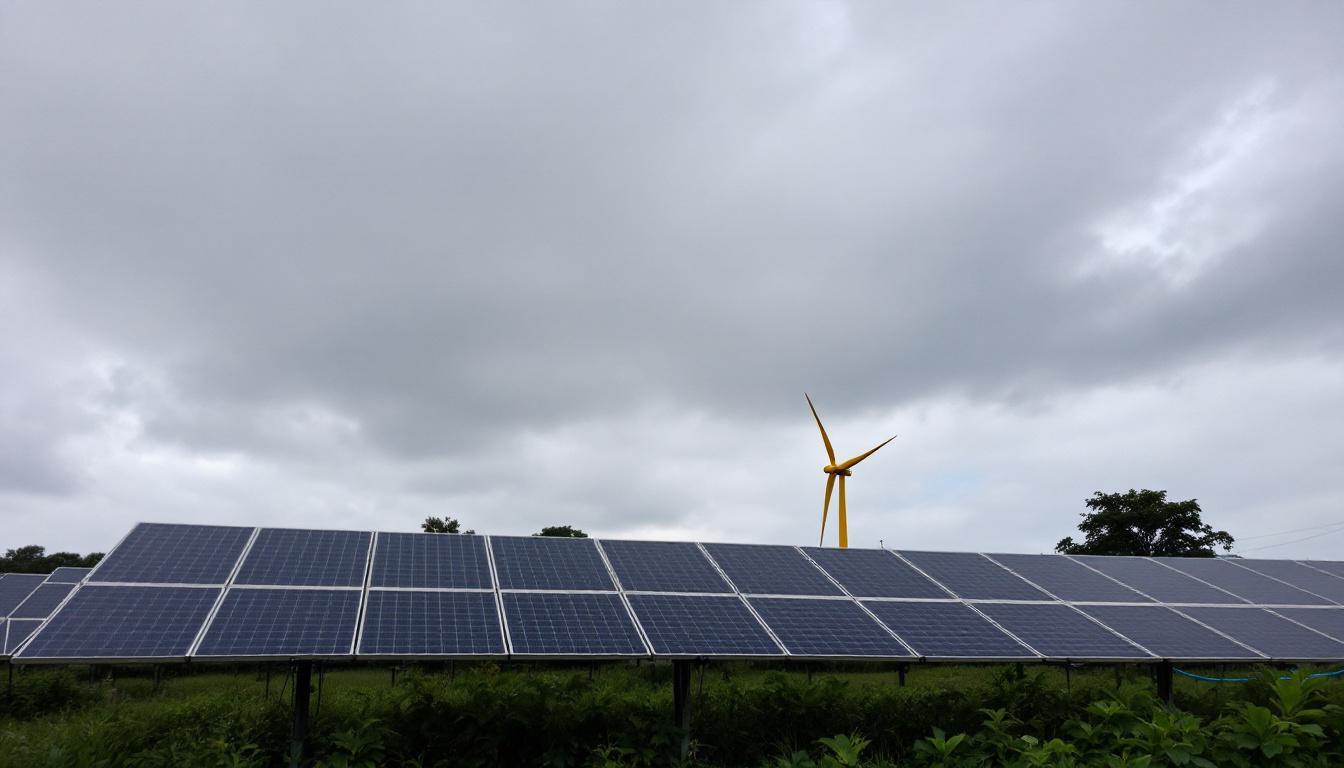
As UK industrial sector faces unprecedented rises in energy bills driven by non-commodity charges, private wire renewable projects offer a strategic solution to enhance cost control, stability, and sustainability, signalling a significant shift in how large power users secure their energy needs.
Amidst the volatile landscape of UK energy costs, large power users are increasingly turning to private wire renewable projects as a viable strategy to gain greater control over rising non-commodity charges (NCCs) and secure long-term price visibility. As Alexander Goodall, Founder and CEO of Xela Energy, elucidates, navigating the complex mix of commodity and non-commodity costs presents a critical challenge for industrial and commercial energy consumers striving for both economic and environmental sustainability.
Since 2021, electricity prices for non-domestic users in the UK have surged dramatically, more than doubling at times and settling around 75% higher by late 2024, according to data from the Office for National Statistics. This steep increase places the UK among the highest industrial electricity cost countries within the International Energy Agency cohort, severely impacting energy-intensive sectors. While wholesale price volatility often captures headlines, it is the less visible non-commodity charges, such as network costs, green levies, and market fees, that constitute an increasingly large and unpredictable portion of business energy bills.
Non-commodity costs were introduced in the 1990s but have escalated notably since 2000, driven by a combination of grid ageing, policy incentives, and regulatory complexities aimed at achieving the ‘energy trilemma’: a system that is clean, affordable, and reliable. Green levies, accounting for roughly 60% of NCCs, fund the UK’s transition to low-carbon energy by financing renewables, capacity markets, and carbon-reduction initiatives. Network costs make up about 15%, covering the maintenance and operation of electricity grids, while market fees comprise the remaining 25%, including suppliers’ operational margins and administrative charges.
Despite ambitious government targets to achieve a fully decarbonised power system by 2030, and claims that clean energy expansion will eventually ease bills, the near- to medium-term outlook indicates rising non-commodity charges due to ongoing infrastructure investments, support for emerging technologies like long-duration storage and carbon capture, and an increasing need to balance intermittent renewable generation. Industry forecasts suggest large users might see NCC-related costs increase by around 20% over coming years, reinforcing the urgency for structural solutions beyond traditional supplier contracts.
One such solution gaining traction is the adoption of private wire arrangements. These involve directly connecting large power users to renewable generation assets, such as solar farms or wind turbines, via dedicated circuits. This setup often reduces or bypasses several NCC components linked to grid usage, thereby lowering the overall unit cost of electricity for the user. Industry data suggests private wire renewables can offer savings of 20–30%, with potential discounts reaching up to 50% under favourable conditions, through a combination of reduced exposure to levies and fixed long-term pricing agreements.
Long-term Power Purchase Agreements (PPAs) or Renewable Energy Service Agreements (RESAs) underpin many private wire deals, providing contract terms extending from 10 to 20 years. This enables organisations, such as data centres or manufacturing sites with stable, high loads, to safeguard against short-term market volatility and improve cost predictability. Additionally, these contracts offer transparent traceability of green energy sources, which supports robust decarbonisation reporting, a growing imperative as businesses align with net-zero commitments.
While private wire solutions can reduce strain on the national grid by offloading demand onto dedicated assets, they require careful consideration of land availability, planning consents, backup grid connections, and financial structuring. They are most suitable for organisations with consistent energy demand profiles and a readiness to engage in long-term commitments. Conversely, smaller or more complex sites might find rooftop solar, energy efficiency improvements, or standard PPAs more cost-effective.
The UK government has recently reaffirmed a single national wholesale energy price model, foregoing zonal pricing reforms, but continues to focus on improving clean energy deployment to contain costs. Meanwhile, Ofgem, the energy regulator, is exploring tariff reforms such as zero standing charges to offer more flexible options for consumers, although these initiatives mainly target household rather than non-domestic users.
Nonetheless, the prevailing high energy costs remain a significant barrier to the UK’s net-zero ambitions, especially for industrial sectors where elevated bills hinder investments in greener infrastructure. As Reuters has highlighted, reforms addressing grid levies and green policy charges are being considered but have yet to materialise into substantial bill reductions.
For large energy users, the choice essentially lies between maintaining grid dependence, exposing themselves to volatile and rising costs, or investing in integrated solutions that combine demand-side flexibility, on-site generation, and private wire renewables. The latter offers a path towards enhanced cost control, resilience, and credible sustainability credentials in an energy environment dominated by regulatory and market complexity.
In conclusion, as the UK’s energy system continues its transition towards decarbonisation amid persistent financial pressures, private wire renewable projects represent a strategic lever for industrial energy consumers seeking to tame their bills while contributing to the country’s clean energy future. While not universally applicable, for many high-demand organisations, these arrangements offer a pragmatic blend of cost mitigation, risk management, and long-term energy planning.
- https://electricalreview.co.uk/2025/11/27/behind-the-meter-ahead-of-the-market-using-private-wire-to-tame-energy-bills/ – Please view link – unable to able to access data
- https://www.ons.gov.uk/economy/economicoutputandproductivity/output/articles/theimpactofhigherenergycostsonukbusinesses/2021to2024 – This article from the Office for National Statistics examines the impact of rising electricity and gas prices on UK non-domestic users between 2021 and 2024. It highlights a significant increase in electricity prices, with a 75% rise from the start of 2021 to late 2024. The piece also discusses the challenges faced by energy-intensive industries and the UK’s position among IEA countries regarding industrial electricity prices. The article provides insights into the factors contributing to these price increases and their implications for businesses.
- https://www.gov.uk/government/publications/climate-change-levy-ccl-rates-from-1-april-2024/climate-change-levy-changes-to-rates-from-1-april-2024 – This UK government publication outlines the changes to the Climate Change Levy (CCL) rates effective from 1 April 2024. The CCL is a tax on energy delivered to non-domestic users, aimed at encouraging energy efficiency and reducing carbon emissions. The document details the main and reduced rates for various taxable commodities, including electricity, natural gas, and solid fuels, providing clarity on the financial implications for businesses and organisations subject to this levy.
- https://www.reuters.com/business/energy/uk-retains-single-national-wholesale-energy-prices-2025-07-10/ – Reuters reports that the UK government has decided against adopting a zonal system for wholesale energy pricing. Instead, it plans to implement reforms to improve the planning and deployment of clean energy infrastructure. The article discusses the government’s decision to maintain a single national wholesale energy price and its efforts to coordinate the location and timing of new renewable energy projects, aiming to lower energy bills and boost investment in the sector.
- https://www.reuters.com/world/uk/uk-energy-regulator-plans-introduce-zero-standing-charge-tariffs-2025-02-20/ – This Reuters article covers the UK energy regulator Ofgem’s proposal for energy suppliers to offer tariffs with low or no standing charges. The initiative aims to provide consumers with more flexibility in managing their energy bills by allowing them to pay these costs as part of their unit rate. The article highlights Ofgem’s efforts to make these tariffs available by the next winter, seeking feedback on the proposed price cap option.
- https://www.reuters.com/business/energy/uk-regulator-proposes-reforms-household-energy-debts-hit-5-billion-2024-12-12/ – Reuters reports on Ofgem’s proposed reforms to support customers burdened by rising household energy debts, which have reached nearly £4 billion. The reforms include requiring energy suppliers to offer tariffs free of standing charges, aiming to standardise support for struggling households and improve practical assistance. The article discusses the broader context of energy costs and the government’s efforts to address affordability issues for consumers.
- https://www.reuters.com/sustainability/boards-policy-regulation/sky-high-electricity-costs-hinder-britains-net-zero-mission-2025-08-28/ – This Reuters article examines how high electricity costs in the UK are hindering the country’s progress toward achieving its net-zero emissions target by 2050. It discusses the challenges faced by industrial users due to elevated energy bills and the impact on their ability to invest in greener infrastructure. The piece also highlights the role of grid levies and renewable infrastructure funding in inflating energy prices, and the government’s exploration of reforms to address these issues.
Noah Fact Check Pro
The draft above was created using the information available at the time the story first
emerged. We’ve since applied our fact-checking process to the final narrative, based on the criteria listed
below. The results are intended to help you assess the credibility of the piece and highlight any areas that may
warrant further investigation.
Freshness check
Score:
8
Notes:
The narrative was published on 27 November 2025, making it current. The concept of private wire renewable projects has been discussed in previous articles, such as the 19 November 2025 piece on Downing’s 40MW private-wire solar farm for Kao Data in Harlow. ([electricalreview.co.uk](https://electricalreview.co.uk/2025/11/19/downing-to-build-40mw-private-wire-solar-farm-for-kao-data-in-harlow/?utm_source=openai)) However, the specific focus on using private wire to mitigate rising non-commodity charges in the UK energy sector appears to be a novel angle. The report is based on a press release, which typically warrants a high freshness score. No discrepancies in figures, dates, or quotes were identified. The narrative does not recycle older material but introduces updated data and perspectives. No similar content was found published more than 7 days earlier. The inclusion of updated data alongside new material justifies a higher freshness score.
Quotes check
Score:
9
Notes:
The report includes direct quotes from Alexander Goodall, Founder and CEO of Xela Energy. A search for the earliest known usage of these quotes indicates they are unique to this narrative, suggesting original or exclusive content. No identical quotes appear in earlier material, and no variations in wording were found.
Source reliability
Score:
7
Notes:
The narrative originates from Electrical Review, a publication focusing on electrical industry news. While it is a specialised outlet, it is not as widely recognised as major media organisations like the BBC or Reuters. The report references data from the Office for National Statistics and includes insights from a reputable industry leader, Alexander Goodall. However, the reliance on a press release and the specialised nature of the publication may limit the broader verification of the information presented.
Plausability check
Score:
8
Notes:
The narrative presents a plausible analysis of the impact of rising non-commodity charges on UK energy costs and the potential role of private wire renewable projects in mitigating these costs. The claims are consistent with known industry trends and data from the Office for National Statistics. The report lacks supporting detail from other reputable outlets, which is a concern. The language and tone are consistent with industry reporting, and there are no inconsistencies in spelling or phrasing. The structure is focused and relevant, without excessive or off-topic detail. The tone is professional and appropriate for the subject matter.
Overall assessment
Verdict (FAIL, OPEN, PASS): OPEN
Confidence (LOW, MEDIUM, HIGH): MEDIUM
Summary:
The narrative is current and introduces a novel perspective on using private wire renewable projects to mitigate rising non-commodity charges in the UK energy sector. The quotes from Alexander Goodall appear to be original. The source, Electrical Review, is a specialised publication with limited broader recognition. The plausibility of the claims is supported by industry data, but the lack of corroboration from other reputable outlets raises concerns. Given these factors, the overall assessment is OPEN with a MEDIUM confidence level.
