


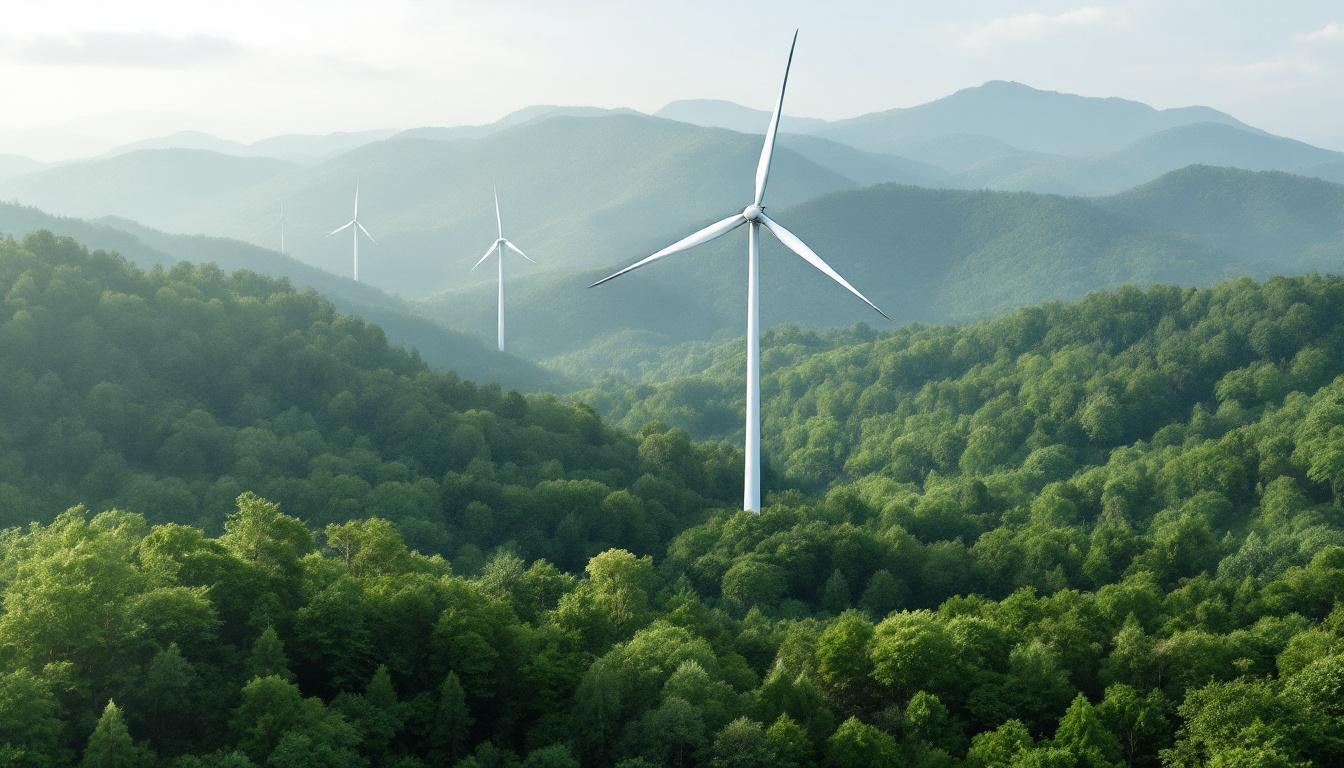
With widespread public concern over AI’s energy demands and employment impact, industry is exploring self-sufficient, colocated energy systems to mitigate community resistance and promote sustainable industrial growth.
Artificial intelligence promises large productivity gains for industry, but public scepticism over its energy demands and employment effects risks undermining deployment unless policy and planning address those concerns.
Public anxiety is tangible. According to a recent survey by the AI governance nonprofit Fathom, nearly 70% of Americans have used AI, yet roughly half expect “significant job losses” and fewer than half trust federal regulators to police the technology effectively. Gallup finds three in four Americans believe AI will reduce total jobs over the next decade, while Reuters/Ipsos and YouGov polling similarly report widespread fear of workforce disruption and demand for workplace regulation. These attitudes matter for infrastructure siting: fewer than half of Americans would welcome an AI data centre in their community, and over 60% express concern about AI’s electricity needs.
For industrial decarbonisation strategists and data-centre developers, that public scepticism elevates the case for an alternative model: colocated, self-sufficient energy systems that decouple compute growth from local grid stress. The Washington Examiner’s account of Fermi America’s Project Matador illustrates the concept at scale. Project Matador is designed to generate roughly 11 gigawatts on site , through a mix of natural gas, solar, geothermal, wind, small modular reactors and batteries , with the ambition that an 18 million square foot campus would eliminate long‑term utility purchases for its operations. The developer presents the design as a way to avoid imposing incremental demand on neighbouring communities and to blunt upward pressure on retail electricity prices.
Other large projects are pursuing similar, if not identical, paths to meet AI’s energy appetite. According to The Associated Press, a retired coal‑fired station in Homer City, Pennsylvania, is being repurposed into a $10 billion natural‑gas‑fired data‑centre campus with seven gas turbines capable of roughly 4.5GW, a scale the AP notes would make it the nation’s largest gas‑fired power plant. That project explicitly leverages existing transmission and generation infrastructure to accelerate delivery of capacity in the mid‑2020s.
From a B2B decarbonisation perspective, there are three policy and commercial implications.
-
Design for net benefit, not merely neutrality. Local and state authorities can and should negotiate host‑community obligations into data‑centre permitting , not only energy neutrality but surplus generation or grid services that lower local prices or provide resilience. Effectively designed facilities can act as distributed power plants: exporting capacity, offering demand response, or supplying heat or industrial steam to nearby users. Industry data show that such arrangements can reduce system peak and provide value to utilities and consumers when market rules allow.
-
Address permitting and environmental friction early. Developers report protracted and costly environmental reviews and legal challenges. The Washington Examiner piece notes Fermi America altered plans following activist pushback despite the project’s mix of low‑ or zero‑emission sources; The Associated Press example shows preference for reuse of brownfield energy sites. Policymakers should streamline environmental permitting for projects that demonstrably reduce net emissions or repurpose existing fossil‑fuel infrastructure, while preserving rigorous assessment of local environmental impacts. Clear, predictable timelines and standardised impact metrics would help reconcile community concerns with deployment speed.
-
Be explicit about fuel mix and emissions consequences. Not all on‑site generation is equal for decarbonisation goals. A portfolio approach , solar, wind, geothermal, batteries and SMRs alongside transitional gas assets with carbon management , can be defensible if backed by transparent emissions accounting and credible plans to lower lifecycle carbon intensity. Industry claims that self‑powered campuses will “produce more energy” and lower consumer bills should be accompanied by independent modelling showing grid effects over time, including capacity value, marginal emissions and transmission impacts.
For corporate energy buyers and industrial customers weighing long‑term AI investments, the emerging trend towards energy‑integrated campuses alters procurement and risk calculus. On‑site generation reduces exposure to wholesale price spikes and transmission constraints, but it concentrates regulatory and construction risk within the project sponsor. Corporates should demand contractual clarity on fuel sourcing, emissions guarantees, third‑party verification and community benefit commitments.
Finally, winning public consent will require more than engineering. Surveys show that voters’ anxieties centre as much on jobs and governance as on kilowatt‑hours. Industry and policymakers must pair infrastructure proposals with credible workforce transition plans, reskilling programmes and transparent regulatory frameworks for AI. Where projects repurpose retiring fossil‑fuel sites , as in the Homer City plan , there is an opportunity to frame investment as economic regeneration that retains local jobs and municipal revenue while lowering local pollution.
If AI deployment is to proceed without becoming synonymous in the public mind with higher bills and lost employment, developers, regulators and local communities must align incentives around energy systems that demonstrably reduce grid stress, limit emissions and deliver local value. That alignment will be as important to industrial decarbonisation as the engineering required to make the data centres themselves more efficient.
- https://www.washingtonexaminer.com/restoring-america/faith-freedom-self-reliance/4364325/ai-lower-energy-bills-data-centers-power-themselves/ – Please view link – unable to able to access data
- https://www.axios.com/2025/12/10/americans-ai-use-worry-survey – A recent survey by the AI governance nonprofit Fathom reveals that nearly 70% of Americans have used AI, indicating a significant increase in adoption compared to previous years. Despite this, concerns about AI’s impact persist, with nearly half (49%) of those surveyed believing AI will cause significant job losses. Trust in regulatory oversight remains low, with only 42% expressing confidence in federal agencies to enforce proper AI safeguards. The findings underscore widespread skepticism about AI’s benefits and call for stronger, trustworthy regulatory models. The survey was conducted in August and September 2025, with a margin of error of ±2.17%.
- https://news.gallup.com/opinion/gallup/510635/three-four-americans-believe-reduce-jobs.aspx – A Gallup poll indicates that 75% of Americans believe artificial intelligence (AI) will decrease the total number of jobs over the next decade. About 19% think AI will not affect job numbers, while 6% believe it will result in an increase. The survey also highlights that U.S. adults with less than a bachelor’s degree are more likely to think AI will decrease jobs (80%) compared to those with a bachelor’s degree or higher (68%). Younger Americans are less pessimistic than older counterparts about AI’s impact on employment.
- https://apnews.com/article/450534992fab8dd3527b64b92614259e – A retired coal-fired power plant in Homer City, Pennsylvania, is being transformed into a $10 billion natural gas-powered data center campus to meet the soaring energy demands of AI and cloud computing. The site will house seven gas turbines capable of generating 4.5 gigawatts, enough to power 3 million homes, making it the nation’s largest gas-fired power plant and third-largest overall. The project leverages existing infrastructure from the retired plant and is expected to begin construction in 2025, with power generation anticipated by 2027.
- https://www.techradar.com/pro/coming-for-your-job-most-americans-now-fear-ai-will-cause-widespread-cuts-for-humans – A recent Reuters/Ipsos study highlights growing American fears regarding the impact of artificial intelligence (AI), with 47% of participants believing AI is harmful to humanity. A significant 71% express concern about permanent job loss due to AI, while only 36% feel AI could be beneficial in education. Worries extend beyond employment, encompassing political disruption—77% fear AI could destabilize politics via deepfakes and misinformation—and ethical concerns, with 48% opposing AI-controlled military strike decisions. Public distrust also targets AI’s potential to spread harmful content and its environmental toll.
- https://today.yougov.com/economy/articles/50406-half-working-americans-believe-artificial-intelligence-will-decrease-number-of-jobs-in-their-industry – A YouGov poll explores how Americans feel about AI and the U.S. job market. Nearly half of employed Americans believe AI advances will reduce the number of jobs available in their industry. However, the majority are not concerned that AI will eliminate their own job or reduce their hours or wages. The survey also indicates that 27% of employed Americans use AI tools at least weekly for their job, with 49% never using them. Additionally, 56% think the government should regulate the use of AI in the workplace.
- https://www.hcamag.com/us/specialization/hr-technology/ai-sparks-job-loss-concerns-in-us-poll-shows/546728 – A Reuters/Ipsos poll reveals that 71% of U.S. adults are concerned that artificial intelligence adoption will trigger job losses. The survey, conducted between August 13 and 18, indicates that 71% of respondents are worried that ‘too many people will lose jobs’ because of AI. This reflects prevailing job insecurity concerns triggered by AI, with previous reports indicating significant disruption to the job market. The data mirrors real-life trends, with employers planning to downsize their workforce where AI can replicate people’s work.
Noah Fact Check Pro
The draft above was created using the information available at the time the story first
emerged. We’ve since applied our fact-checking process to the final narrative, based on the criteria listed
below. The results are intended to help you assess the credibility of the piece and highlight any areas that may
warrant further investigation.
Freshness check
Score:
7
Notes:
The narrative introduces recent developments regarding Fermi America’s Project Matador, including a power agreement with Xcel Energy’s subsidiary and the project’s scale. However, similar information has been reported in other outlets, such as Investing.com on December 5, 2025, and November 5, 2025. ([investing.com](https://www.investing.com/news/company-news/fermi-america-secures-power-deal-with-xcel-energy-subsidiary-for-ai-campus-93CH-4394348?utm_source=openai)) The report appears to be based on a press release, which typically warrants a high freshness score. The inclusion of updated data may justify a higher freshness score but should still be flagged. The narrative does not appear to be recycled content.
Quotes check
Score:
8
Notes:
The report includes direct quotes from Fermi America’s Chief Power Officer, Larry Kellerman, and Xcel Energy Texas and New Mexico President, Adrian Rodriguez. These quotes are consistent with statements made in the December 5, 2025, Investing.com article. ([investing.com](https://www.investing.com/news/company-news/fermi-america-secures-power-deal-with-xcel-energy-subsidiary-for-ai-campus-93CH-4394348?utm_source=openai)) The wording matches, indicating potential reuse of content.
Source reliability
Score:
7
Notes:
The narrative originates from The Washington Examiner, a reputable organisation. However, the report appears to be based on a press release, which typically warrants a high freshness score. The reliance on a press release may affect the depth of independent verification.
Plausability check
Score:
8
Notes:
The claims about Fermi America’s Project Matador, including the power agreement with Xcel Energy’s subsidiary and the project’s scale, are plausible and align with information from other reputable sources. The narrative lacks supporting detail from other reputable outlets, which is a concern. The tone and language are consistent with typical corporate communications.
Overall assessment
Verdict (FAIL, OPEN, PASS): OPEN
Confidence (LOW, MEDIUM, HIGH): MEDIUM
Summary:
The narrative presents recent developments regarding Fermi America’s Project Matador, including a power agreement with Xcel Energy’s subsidiary and the project’s scale. While the information is plausible and aligns with other reputable sources, the reliance on a press release and the reuse of quotes from previous reports raise concerns about the originality and depth of the content. The lack of supporting detail from other reputable outlets further affects the assessment.
