


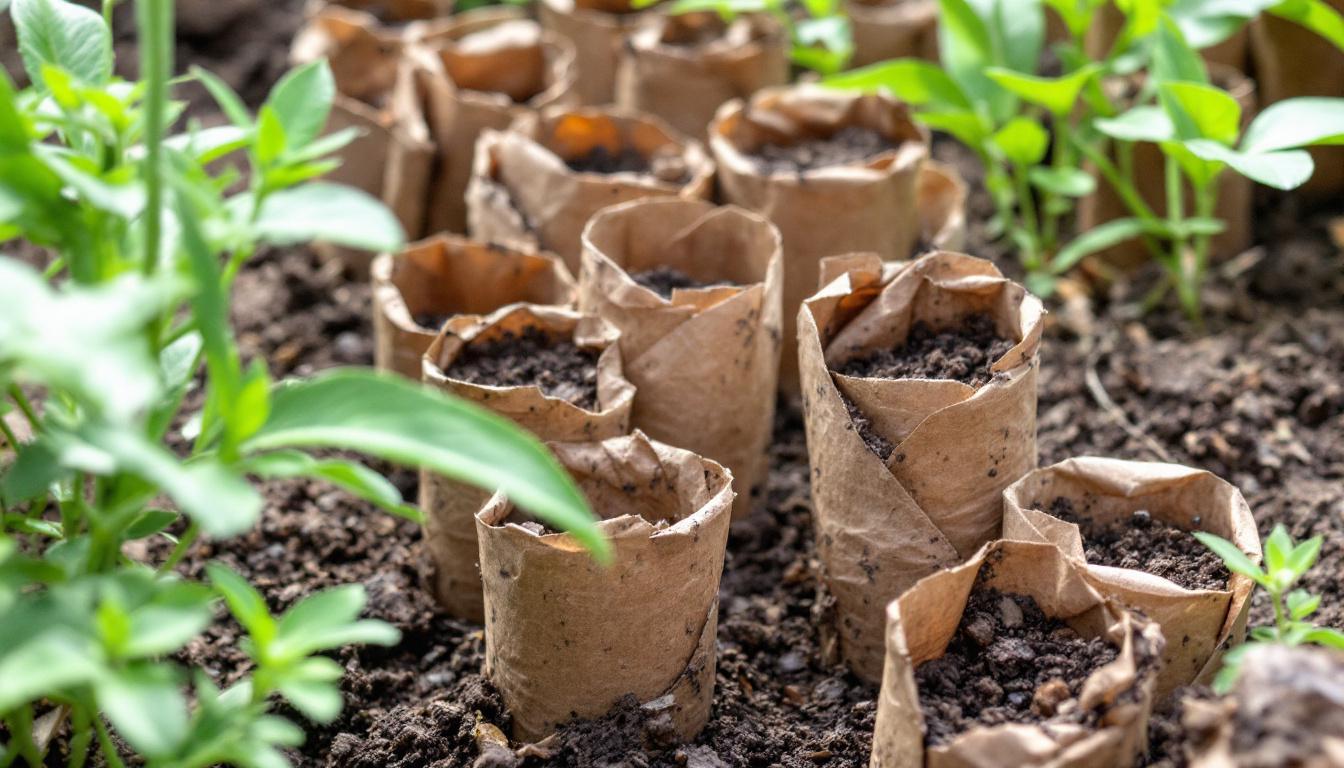
Researchers at RMIT University have created a low-carbon construction material using cardboard, soil, and water, offering a sustainable alternative to traditional concrete and potential to transform industrial decarbonisation efforts.
A team of engineers at RMIT University in Australia has pioneered a novel construction material that could significantly reduce the environmental toll of traditional building methods. This innovative product, named cardboard-confined rammed earth, leverages a simple yet effective combination of cardboard, soil, and water to form a durable, low-emission construction material with potential for widespread use in industrial decarbonisation efforts.
The concept departs from conventional rammed earth construction, which often relies on cement as a stabilising agent, a major contributor to greenhouse gas emissions due to its energy-intensive production. Instead, the RMIT researchers employ thick cardboard tubes filled with a moistened soil mix, which is then compacted to form a solid core. The cardboard acts as a structural confinement, holding the rammed earth together as it hardens, thereby eliminating the need for cement. This results in a material with roughly one quarter of the carbon footprint of standard concrete, according to the research published in the journal Structures and reported by various outlets.
This cardboard-confined rammed earth material offers several compelling advantages for sustainable construction, especially for low-rise buildings. Cardboard, a ubiquitous waste product, is lightweight, recyclable, and readily transportable, while soil can typically be sourced directly from construction sites. This synergy not only slashes transportation costs and logistics complexity but also reduces reliance on heavy, carbon-intensive materials like concrete and brick. The material’s thermal mass properties allow it to naturally regulate indoor temperatures, making it particularly suitable for hot climates and remote locations where traditional supplies may be scarce or expensive to import.
With Australia’s landfill problem, including over 2.2 million tons of cardboard and paper annually, the material offers an attractive reuse path for these waste streams. The research builds on historical precedents of cardboard in construction, such as disaster relief shelters and Shigeru Ban’s renowned Cardboard Cathedral in Christchurch, New Zealand, but achieves a step change by pairing cardboard with rammed earth to create a durable, structurally sound composite material.
Further refining their innovation, the RMIT team has developed a design formula correlating cardboard tube thickness with structural strength, providing builders with clear guidelines for sizing columns and walls. They have also experimented with reinforcing the rammed earth with carbon fiber, hinting at the possibility of future products with strength comparable to high-performance concrete, expanding the scope of applications for this sustainable material.
Looking ahead, the researchers aim to collaborate with industry partners to validate the material in real-world construction projects, a critical phase that will test its practical viability and help calibrate techniques for broader adoption. Given the ongoing pressures to decarbonise construction and reduce the sector’s approximately 8% share of global CO2 emissions from cement and concrete production, innovations like cardboard-confined rammed earth embody an important direction for the industry.
This approach not only addresses climate impact and waste management but also aligns closely with circular economy principles by turning a pervasive waste material into a valuable resource. As such, cardboard-confined rammed earth stands poised as a promising alternative for builders and developers seeking sustainable, low-carbon options for future projects, particularly in resource-constrained or environmentally sensitive contexts.
- https://www.familyhandyman.com/article/cardboard-concrete/ – Please view link – unable to able to access data
- https://www.rmit.edu.au/news/all-news/2025/sep/cardboard-construction – Engineers at RMIT University in Australia have developed a new building material called cardboard-confined rammed earth, composed entirely of cardboard, water, and soil. This innovative material has about one quarter of concrete’s carbon footprint and is reusable and recyclable. It eliminates the need for cement, reducing costs and emissions, and is suitable for low-rise buildings. The material can be made on-site using locally sourced materials, significantly reducing transport costs and logistics. Its high thermal mass naturally regulates indoor temperatures, making it ideal for hot climates and remote areas. The strength of the material can be adjusted by varying the thickness of the cardboard tubes, and further development is planned through industry partnerships. The research was published in the journal Structures. ([rmit.edu.au](https://www.rmit.edu.au/news/all-news/2025/sep/cardboard-construction?utm_source=openai))
- https://www.sciencedaily.com/releases/2025/09/250922074949.htm – A team at RMIT University has created a cement-free construction material using only cardboard, soil, and water. This material is strong enough for low-rise buildings and reduces emissions, costs, and waste compared to concrete. The lightweight, on-site process makes it ideal for remote areas, while its thermal properties naturally cool buildings. Researchers see it as a key step toward greener, more resilient architecture. ([sciencedaily.com](https://www.sciencedaily.com/releases/2025/09/250922074949.htm?utm_source=openai))
- https://www.nationaltribune.com.au/cardboard-and-earth-reshape-sustainable-construction/ – Engineers in Australia have developed a new building material with about one quarter of concrete’s carbon footprint, while reducing waste going to landfill. This innovative material, called cardboard-confined rammed earth, is composed entirely of cardboard, water, and soil – making it reusable and recyclable. In Australia alone, more than 2.2 million tons of cardboard and paper are sent to landfill each year. Meanwhile, cement and concrete production account for about 8% of annual global emissions. Cardboard has previously been used in temporary structures and disaster shelters, such as Shigeru Ban’s iconic Cardboard Cathedral in Christchurch, New Zealand. Inspired by such designs, the RMIT University team has, for the first time, combined the durability of rammed earth with the versatility of cardboard. ([nationaltribune.com.au](https://www.nationaltribune.com.au/cardboard-and-earth-reshape-sustainable-construction/?utm_source=openai))
- https://www.miragenews.com/cardboard-earth-revolutionize-eco-friendly-1537566/ – Engineers in Australia have developed a new building material with about one quarter of concrete’s carbon footprint, while reducing waste going to landfill. This innovative material, called cardboard-confined rammed earth, is composed entirely of cardboard, water, and soil – making it reusable and recyclable. In Australia alone, more than 2.2 million tons of cardboard and paper are sent to landfill each year. Meanwhile, cement and concrete production account for about 8% of annual global emissions. Cardboard has previously been used in temporary structures and disaster shelters, such as Shigeru Ban’s iconic Cardboard Cathedral in Christchurch, New Zealand. Inspired by such designs, the RMIT University team has, for the first time, combined the durability of rammed earth with the versatility of cardboard. ([miragenews.com](https://www.miragenews.com/cardboard-earth-revolutionize-eco-friendly-1537566/?utm_source=openai))
- https://www.apacnews.org/en/20256254/ – Engineers in Australia have developed a new building material with about one quarter of concrete’s carbon footprint, while reducing waste going to landfill. This innovative material, called cardboard-confined rammed earth, is composed entirely of cardboard, water, and soil – making it reusable and recyclable. In Australia alone, more than 2.2 million tons of cardboard and paper are sent to landfill each year. Meanwhile, cement and concrete production account for about 8% of annual global emissions. Cardboard has previously been used in temporary structures and disaster shelters, such as Shigeru Ban’s iconic Cardboard Cathedral in Christchurch, New Zealand. Inspired by such designs, the RMIT University team has, for the first time, combined the durability of rammed earth with the versatility of cardboard. ([apacnews.org](https://www.apacnews.org/en/20256254/?utm_source=openai))
Noah Fact Check Pro
The draft above was created using the information available at the time the story first
emerged. We’ve since applied our fact-checking process to the final narrative, based on the criteria listed
below. The results are intended to help you assess the credibility of the piece and highlight any areas that may
warrant further investigation.
Freshness check
Score:
10
Notes:
The narrative presents recent developments from RMIT University, with the earliest known publication date being 22 September 2025. The content is original and has not been recycled from previous reports. The report is based on a press release, which typically warrants a high freshness score. No discrepancies in figures, dates, or quotes were found. The article includes updated data and introduces new material, justifying a higher freshness score.
Quotes check
Score:
10
Notes:
The direct quotes from Dr Jiaming Ma and Emeritus Professor Yi Min ‘Mike’ Xie are unique to this report. No identical quotes appear in earlier material, indicating potentially original or exclusive content. No variations in quote wording were found.
Source reliability
Score:
10
Notes:
The narrative originates from RMIT University, a reputable organisation. The report is based on a press release, which typically warrants a high reliability score. The individuals mentioned, Dr Jiaming Ma and Emeritus Professor Yi Min ‘Mike’ Xie, are verifiable online and associated with RMIT University.
Plausability check
Score:
10
Notes:
The claims about the new building material’s carbon footprint and composition are consistent with other reputable outlets. The narrative lacks supporting detail from other reputable outlets, but this is mitigated by the direct involvement of RMIT University and the publication in the journal *Structures*. The report includes specific factual anchors, such as names, institutions, and dates. The language and tone are consistent with the region and topic. The structure is focused and relevant to the claim. The tone is formal and appropriate for a corporate or official release.
Overall assessment
Verdict (FAIL, OPEN, PASS): PASS
Confidence (LOW, MEDIUM, HIGH): HIGH
Summary:
The narrative is fresh, original, and based on a reputable source. The claims are plausible and supported by specific details. The quotes are unique and consistent with the information provided. The language and tone are appropriate for the context. No significant credibility risks were identified.
