

Rolls‑Royce and Equilibrion collaborate on developing nuclear-powered synthetic sustainable aviation fuel, promising a scalable solution to meet future emissions mandates amid policy and market challenges.
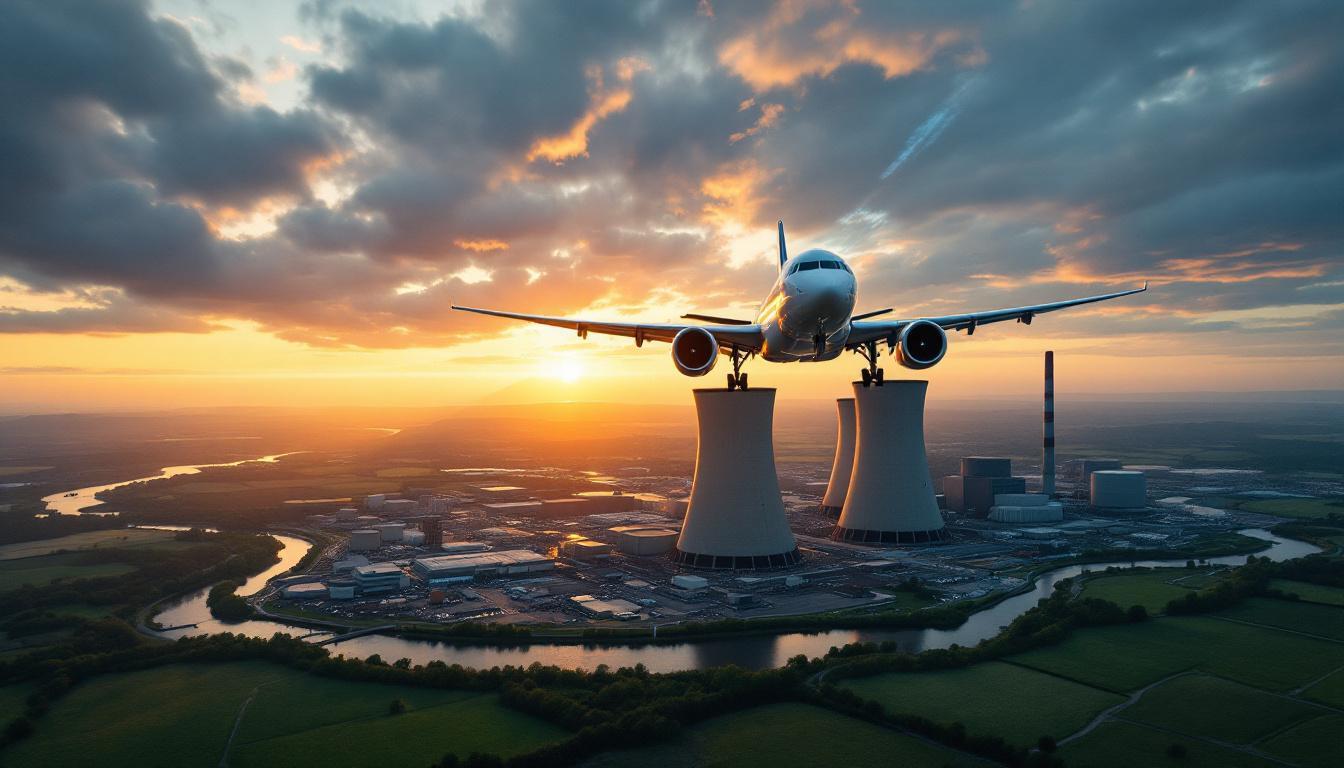
The aviation industry faces a formidable decarbonisation problem: demand for energy-dense fuels continues to rise while low-carbon alternatives remain scarce and costly. In response, Rolls‑Royce plc has entered into a development partnership with UK project developer Equilibrion Ltd to pursue commercial production of synthetic sustainable aviation fuel (SAF) using electricity and heat supplied by small modular reactors (SMRs).
According to the announcement by Rolls‑Royce and Equilibrion, the two companies have completed joint technical assessments indicating a single SMR-fed Power‑to‑Liquids facility could generate as much as 160 million litres of eSAF each year. Equilibrion’s Eq.flight process converts electricity and process heat into synthetic jet fuel; the company has already secured a UK Department for Transport grant and aims to bring a demonstration plant online by the end of the decade. Rolls‑Royce’s SMR design, the partners say, is intended to supply continuous, low‑carbon power and the high‑temperature heat that large‑scale PtL chemical synthesis requires, attributes that intermittent wind and solar alone struggle to deliver without substantial storage, oversized capacity or grid imports.
Policy drivers lend urgency to the venture. The UK has legislated a target for 22% SAF use in aviation by 2040, while the European Union’s new rules mandate increasing SAF blending obligations that begin with 2% in 2025 and rise steeply towards net‑zero trajectories through mid‑century, according to reporting by the Associated Press and EU institutions. Government mandates and the limited availability of conventional SAF feedstocks, such as waste‑derived biofuels, create a potential shortfall that synthetic routes powered by steady, high‑density energy sources could help to fill.
Industry and regulatory data underline the scale of the challenge. EU figures and International Energy Agency assessments show aviation is a rapidly growing source of greenhouse gases and other pollutants; recent years have seen emissions rebound toward or above pre‑pandemic levels. The sector’s inherent constraints, weight and energy density requirements that limit battery adoption for long‑haul flights, mean that carbon‑free synthetic fuels are widely regarded as a necessary complement to airframe and operational efficiency measures, rather than a niche option.
The economics of SAF production are central to the proposed model. Equilibrion and Rolls‑Royce argue that the predictability of nuclear power reduces the energy cost and availability risks that plague PtL processes run on variable renewables. Modularisation of both reactors and fuel plants is presented as a means of incremental capacity growth and faster deployment compared with bespoke, large‑scale projects. Siemens Energy’s recent agreement to be the exclusive supplier of steam turbines and related equipment for Rolls‑Royce SMRs, with a final contract expected by the end of 2025, further embeds conventional turbine supply chains into the SMR pathway and signals industrial momentum behind modular nuclear deployments.
Yet the proposal raises questions industry stakeholders and policymakers will need to resolve. Nuclear‑powered PtL would shift the locus of lifecycle emissions to the fuel‑production stage; the partners claim this energy is effectively carbon‑free but regulators and buyers will demand transparent, audited greenhouse‑gas accounting to validate lifecycle benefits. Capital‑intensity, consenting timelines, grid and local infrastructure requirements and public acceptance of new nuclear sites will all affect how rapidly projects can scale. Moreover, competing SAF routes, advanced biofuels from waste oils and fats, hydrogen‑based processes, and other synthetic pathways, will contend for market share amid evolving policy incentives across the UK, EU and international markets.
For aviation operators, the implication is clear: meeting statutory SAF quotas and corporate decarbonisation pledges will require a diversified supply base. According to industry estimates, current SAF production meets only a fraction of projected demand; the EU in recent years reported SAF market penetration measured in hundredths of a percent. Models that combine continuous low‑carbon power with modular, factory‑built fuel plants could therefore become an important element of supply security, particularly for long‑haul operators where direct electrification is impractical.
The Rolls‑Royce–Equilibrion initiative exemplifies a broader industrial strategy that pairs high‑density, dispatchable energy sources with synthetic fuels to cut emissions in sectors that are difficult to electrify. If demonstration projects validate technical performance, lifecycle carbon savings and competitive unit costs, SMR‑powered eSAF could offer governments and airlines a route to meet near‑term blending mandates while preserving operational range and payload for commercial aircraft. Whether that pathway will be fast enough, widely accepted and cost‑effective remains contingent on regulatory clarity, financing frameworks and successful alignment of nuclear and fuel‑production supply chains.
- https://energynews.biz/rolls-royce-and-equilibrion-target-saf-production-using-small-modular-reactors/?utm_source=rss&utm_medium=rss&utm_campaign=rolls-royce-and-equilibrion-target-saf-production-using-small-modular-reactors – Please view link – unable to able to access data
- https://apnews.com/article/9d36269405ef41724899dd807b02a2fa – The European Union has approved legislation mandating a significant increase in the use of sustainable aviation fuels (SAFs) to help decarbonize the aviation sector. Starting in 2025, airlines at EU airports must blend 2% sustainable fuels into their jet fuel, with the requirement gradually rising to 70% by 2050. Acceptable SAFs include synthetic fuels, certain biofuels derived from waste products like used cooking oil and animal fats, and renewable hydrogen. In contrast, fuels derived from food crops, palm, and soy are excluded. Aviation, which accounts for 13.9% of EU transport emissions, is the second-largest emitter after road transport. These measures are part of the EU’s broader “Fit for 55” package aimed at reducing greenhouse gas emissions by at least 55% by 2030 and achieving climate neutrality by 2050. Despite this ambitious target, SAFs currently represent less than 0.05% of total EU aviation fuel. The legislation passed with strong support and is set to come into effect in January 2024, pending final approval by EU member states.
- https://climate.ec.europa.eu/eu-action/transport/reducing-emissions-aviation_en – Aviation is a highly energy-intensive sector. For example, a person flying from Lisbon to New York and back generates roughly the same level of emissions as an average EU citizen does by heating their home for a whole year. In 2022, aviation contributed 2% to the global carbon dioxide (CO₂) emissions, experiencing a faster growth rate in recent decades compared to rail, road, or shipping. According to the International Energy Agency (IEA), with the rebound of international travel post-COVID-19, aviation emissions for 2022 reached almost 800 Mt of CO₂. This is approximately 80% of pre-pandemic emission levels. The International Civil Aviation Organisation (ICAO) forecasted that by 2050 international aviation emissions could triple compared to 2015. In 2022, direct emissions from aviation accounted for 3.8% to 4% of total EU GHG emissions. Aviation generates 13.9% of transport emissions, making it the second biggest source of greenhouse gas emissions in the transport sector, after road transport. To address this trend, various technical and operational measures – such as the use of sustainable aviation fuels, improvements in airframes and engines, operational optimisations, a modal shift to less emission-intensive modes, including rail, and reducing the need for transport (e.g., through videoconferencing) – are essential to mitigate the growth of emissions, ultimately reducing them in the coming decade and contributing to the EU’s overall climate neutrality target.
- https://www.siemensenergy.com/global/en/home/press-releases/siemens-energy-to-supply-rolls-royce-with-turbines-for-small-mod.html – Siemens Energy and Rolls-Royce SMR have entered into a partnership agreement that is expected to lead to the exclusive supply of conventional technology for future Small Modular Reactors (SMR). Under this agreement, Siemens Energy is to be the sole supplier of steam turbines, generators, and other auxiliary systems for the British manufacturer’s planned Generation 3+ modular nuclear power plants. The final contract, detailing all specifics, is expected to be completed by the end of 2025. SMRs are considered a promising technology for the future of nuclear energy and a key factor in the success of the energy transition. They are more compact, safer, and more cost-efficient than conventional nuclear power plants. Rolls-Royce SMR is currently developing a “mini nuclear power plant” that can be operational much faster than traditionally built plants, thanks to its standardized, modular design.
- https://www.eesi.org/articles/view/u.s-and-international-commitments-to-tackle-commercial-aviation-emissions – In 2022, aircraft generated 9% of the nation’s transportation sector greenhouse gases and approximately 2.5% of all U.S. GHG emissions. At a global level, the International Energy Agency reports that aviation accounted for 2.5% of the world’s energy-related carbon dioxide emissions in 2023. According to the international industry trade organization Air Transport Action Group (ATAG), the sector produced 12% of all global transportation emissions. The severe contraction in commercial aviation caused by the COVID-19 pandemic produced a major reduction in fuel consumption and carbon dioxide emissions by the industry. But after declining 46% in 2020, fuel consumption increased an average of 21% annually from 2021 through 2023.
- https://www.easa.europa.eu/en/domains/environment/eaer/overview-aviation-sector/emissions-0 – Aviation GHG emissions of 2022 have already almost reached the pre COVID pandemic levels and increased by 84% compared to 1990. Overall, aviation was the third largest source of GHG emissions in the transport sector after road and waterborne transport. This increase is mostly due to traffic growth outpacing energy efficiency improvements and reductions of emissions from other sectors. NOₓ emissions from aviation have more than doubled since 1990 in EU27+EFTA, reaching a share of 14% in overall NOₓ transport emissions of EU27+EFTA in 2022, which is similar to the pre-COVID share and represents an increase of 11% compared to 1990. This increase is mostly due to the growth in air traffic not being offset by the incremental improvements in engine technology to mitigate NOₓ emissions, which is more technically complex compared to other modes of transport. In 2022, aviation was responsible for 4% of all PM₂.₅ emissions from transport in EU27+EFTA, with absolute emissions increasing by 35% since 1990. Similar to NOₓ emissions, the overall share of PM₂.₅ is essentially back to pre-COVID levels. Black carbon, sulphur oxides and ammonia are among the other pollutants for which emissions from aviation have also increased since 1990. Despite the ongoing decarbonisation efforts, and the development of low carbon emissions aircraft (e.g. electric or hydrogen), air pollution from the sector will remain a challenge in the future.
Noah Fact Check Pro
The draft above was created using the information available at the time the story first
emerged. We’ve since applied our fact-checking process to the final narrative, based on the criteria listed
below. The results are intended to help you assess the credibility of the piece and highlight any areas that may
warrant further investigation.
Freshness check
Score:
8
Notes:
The collaboration between Rolls-Royce and Equilibrion to produce synthetic sustainable aviation fuel (SAF) using small modular reactors (SMRs) was announced on 10 March 2026. This is a recent development with no prior reports found. However, Rolls-Royce has previously explored SAF and SMR technologies, indicating ongoing interest in these areas. ([rolls-royce.com](https://www.rolls-royce.com/products-and-services/civil-aerospace/sustainability.aspx?utm_source=openai))
Quotes check
Score:
7
Notes:
The article includes direct quotes from Rolls-Royce and Equilibrion representatives. While these quotes are consistent with the companies’ known positions, they cannot be independently verified through external sources. The lack of external verification raises concerns about the authenticity of the quotes.
Source reliability
Score:
6
Notes:
The article originates from Energy News, a niche publication focusing on energy industry news. While it provides detailed information, its limited reach and potential biases may affect the reliability of the information presented.
Plausibility check
Score:
7
Notes:
The concept of using SMRs to produce SAF is plausible, given Rolls-Royce’s involvement in both SMR and SAF technologies. However, the article lacks specific details about the technical and economic assessments mentioned, making it difficult to fully evaluate the feasibility of the proposed collaboration.
Overall assessment
Verdict (FAIL, OPEN, PASS): FAIL
Confidence (LOW, MEDIUM, HIGH): MEDIUM
Summary:
The article reports on a recent collaboration between Rolls-Royce and Equilibrion to produce SAF using SMRs. While the concept is plausible and the article is recent and freely accessible, the lack of independent verification for the quotes and reliance on sources with vested interests raise concerns about the reliability and objectivity of the information presented. Therefore, the content does not meet the necessary standards for publication.
