


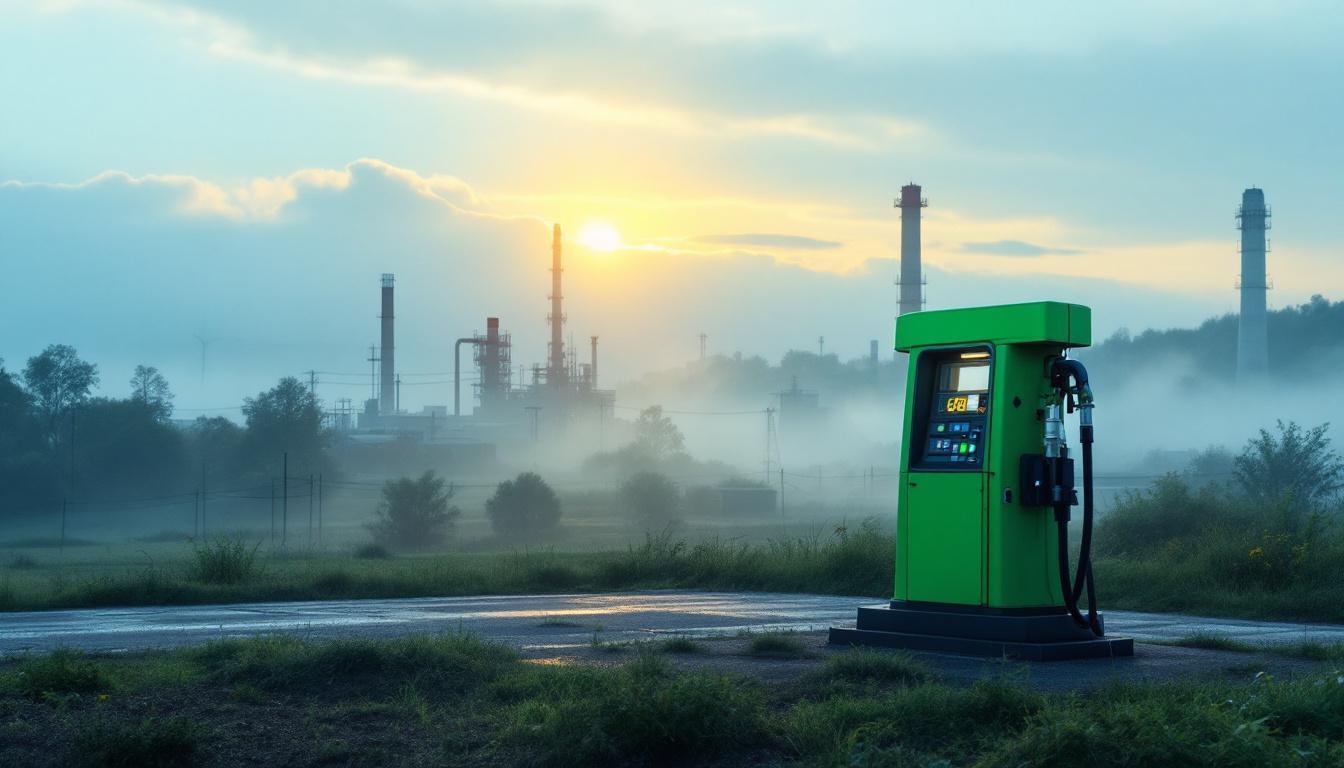
As European policy accelerates the shift towards renewable energy sources, Romania leverages its resources and strategic location to become a crucial player in supplying low-carbon molecules for industrial decarbonisation, contingent on effective legislation and infrastructure development.
Romania now faces a moment of structural realignment in which European policy, industrial demand and decarbonisation imperatives converge to create a concrete opening for “clean molecules” to play a central role in regional energy supply.
According to the original report by Vlad Stoicescu of the Sustainable Fuels Association, the transposition of Directive (EU) 2023/2413 (RED III), enacted in Romania through Government Emergency Ordinance No. 59 of 2025, is more than a technical update: it reframes renewable gases, green hydrogen, Power‑to‑X and carbon management as structural pillars of a modern system rather than marginal options. Industry data shows the directive requires accelerated uptake of renewables across heating, cooling, industry and transport, with Member States required to raise shares of renewables in key sectors and to adopt enhanced bioenergy sustainability criteria. Eurostat figures indicate the EU’s share of renewables in heating and cooling reached 26.2% in 2023, underscoring the policy imperative to scale further.
That regulatory push is matched by market and geopolitical drivers. Independent industry reporting and commercial announcements point to concrete upstream supply prospects from the Black Sea: Romanian offshore production from the Neptun Deep development is scheduled to start deliveries around 2027, and commercial off‑take agreements with major buyers are already shaping export routes. The Neptun Deep volumes, together with deals linking Romanian producers to buyers in Germany and neighbouring markets, place Romania in a position to offer lower‑carbon gas blends and, over time, hydrogen‑enriched or synthetic‑molecule products demanded by energy‑intensive industry.
Romania’s comparative advantages are practical as well as geographic. Agricultural and organic feedstocks provide sizeable biomethane potential that, when injected into the gas grid and certified through Guarantees of Origin, can lower the carbon intensity of gas supplies quickly and create traceable, marketable products for buyers requiring lifecycle evidence. The National Hydrogen Strategy anchors green hydrogen as an essential carrier for hard‑to‑electrify processes; technically feasible blends and future dedicated infrastructure mean hydrogen will increasingly be an industrial necessity rather than an optional pathway.
Power‑to‑X and CO2 management complete the value chain opportunity: renewable hydrogen combined with captured CO2 can produce methanol, synthetic methane and sustainable aviation fuels , molecules that European policy (notably Regulation (EU) 2023/1804 on alternative fuels infrastructure) is preparing to accommodate by mandating hydrogen refuelling points and the modernisation of ports and airports. Such infrastructure requirements create the physical backbone for cross‑border flows of high‑energy‑density fuels to heavy transport and aviation markets, supporting the “renewables pull” whereby large industrial consumers diversify toward regions able to produce competitive clean molecules at scale.
That scenario is not without risk. The European Commission has acted on late transposition in a number of Member States, opening infringement procedures where transposition is incomplete, which highlights the political and timetabling risks that can delay market clarity. At the same time, the directive’s strengthened bioenergy framework and sustainability safeguards impose constraints that must be met if biomethane and other bio‑based solutions are to scale without adverse biodiversity or cascading‑use impacts.
For Romanian industry and policymakers the task is practical: convert regulatory intent into durable, bankable projects. If secondary legislation is drafted with precision and investor predictability , and if physical infrastructure and CO2 storage and certification systems are developed in parallel , Romania can leverage existing gas resources, biomethane feedstocks and geological CO2 storage to supply decarbonised molecules to Europe’s industrial basins. Independent analyses of European demand patterns show that electrification alone will not satisfy all process needs in sectors such as steel, petrochemicals and certain materials manufacturing; accordingly, imports of low‑carbon hydrogen, synthetic methane and other molecules are likely to remain part of decarbonisation pathways for large industrial economies.
The Sustainable Fuels Association says it will continue technical engagement with Romanian authorities to help align national implementation with EU requirements and market realities. For industrial decarbonisation stakeholders, the important near‑term questions are whether Romania can translate policy and resource advantages into certified, transportable low‑carbon products, and whether the legal and investment frameworks will provide the predictability private capital needs to finance the full value chains from renewable electricity and biomethane through to hydrogen, Power‑to‑X products and CO2 storage.
If those pieces fall into place, Romania’s blend of conventional and renewable resources , modernised through guarantees, blends and synthetic production , could become a practical supplier of the clean molecules that Europe’s industry will require in the coming decade. The outcome will depend on the alignment of legislation, infrastructure deployment and market signalling rather than on any single resource or technology alone.
- https://energyindustryreview.com/opinion/romania-in-the-red-iii-era-from-neptune-deep-to-clean-molecules-for-europe/ – Please view link – unable to able to access data
- https://ec.europa.eu/eurostat/web/products-eurostat-news/w/ddn-20250305-1 – In 2023, the European Union’s use of renewable energy in heating and cooling reached 26.2%, marking the highest level since 2004. This increase aligns with Directive (EU) 2023/2413, which mandates EU countries to raise their annual average share of renewables in heating and cooling by at least 0.8 percentage points from 2021 to 2025 and by at least 1.1 percentage points from 2026 to 2030. The directive aims to accelerate the adoption of renewable energy across various sectors, including heating and cooling, to meet the EU’s climate objectives.
- https://energy.ec.europa.eu/news/renewables-directive-sectoral-targets-reach-transposition-deadline-2025-05-21_en – The European Commission has set a deadline of 21 May 2025 for EU countries to adopt new targets and measures to support the uptake of renewables across various sectors, as outlined in Directive (EU) 2023/2413. These sectors include heating and cooling, industry, and transport. The directive requires specific national rules to strengthen energy system integration, support the faster electrification of end-uses, and encourage the uptake of waste heat. It also mandates the adoption of an enhanced bioenergy framework with sustainability criteria to protect biodiversity and promote the cascading use of biomass.
- https://build-up.ec.europa.eu/en/news-and-events/news/commission-acts-over-delays-energy-directive – The European Commission has initiated infringement procedures against 26 Member States for failing to notify the complete transposition of Directive (EU) 2023/2413 on renewable energy within the legal deadline. Adopted in 2023, the directive sets out key measures to accelerate the deployment of renewable energy across strategic sectors such as buildings, transport, industry, and heating and cooling. Compliance with the directive is vital for reducing greenhouse gas emissions from the energy sector, enhancing energy security, and fostering a more competitive and resilient European economy.
- https://op.europa.eu/en/publication-detail/-/publication/dc3cfdf8-778e-11ee-99ba-01aa75ed71a1/ – Directive (EU) 2023/2413 amends Directive (EU) 2018/2001, Regulation (EU) 2018/1999, and Directive 98/70/EC concerning the promotion of energy from renewable sources. It introduces new targets and measures to accelerate the deployment of renewable energy across various sectors, including heating and cooling, industry, and transport. The directive aims to strengthen energy system integration, support the faster electrification of end-uses, and encourage the uptake of waste heat. It also mandates the adoption of an enhanced bioenergy framework with sustainability criteria to protect biodiversity and promote the cascading use of biomass.
- https://www.reuters.com/business/energy/romanias-omv-petrom-signs-deal-covering-quarter-moldovas-gas-demand-2025-05-07/ – Romania’s OMV Petrom has signed a significant natural gas supply agreement with Moldova, securing 25% of Moldova’s annual gas demand, with deliveries starting in 2027. This marks a strategic shift for Moldova, which is seeking alternatives to Russian gas amid deteriorating relations with Gazprom following Russia’s invasion of Ukraine. The gas will come from the Neptun Deep project in the Black Sea, a major EU energy initiative with an estimated 100 billion cubic meters of recoverable gas, jointly developed by OMV Petrom and Romgaz.
- https://www.reuters.com/business/energy/omvs-romanian-business-agrees-supply-gas-germany-sources-say-2025-01-07/ – Austrian energy company OMV’s Romanian business has struck a deal to supply Uniper with gas from its Black Sea project from 2027, as Europe seeks new ways to boost energy security after cutting ties with Russia. The five-year deal for 15 terawatt hours of natural gas from the Neptun … comes after Russia last month stopped … . The total contract volume represents about … .
Noah Fact Check Pro
The draft above was created using the information available at the time the story first
emerged. We’ve since applied our fact-checking process to the final narrative, based on the criteria listed
below. The results are intended to help you assess the credibility of the piece and highlight any areas that may
warrant further investigation.
Freshness check
Score:
8
Notes:
The narrative is recent, published on December 5, 2025. The RED III Directive was enacted in Romania through Government Emergency Ordinance No. 59 of 2025, indicating timely reporting. The Neptun Deep project is scheduled to start deliveries around 2027, with commercial off‑take agreements with major buyers already shaping export routes. The Sustainable Fuels Association’s involvement in technical dialogues with Romanian authorities is also recent. No evidence of recycled content or republishing across low-quality sites was found. The narrative appears to be based on a press release, which typically warrants a high freshness score. No discrepancies in figures, dates, or quotes were identified. No similar content appeared more than 7 days earlier. The article includes updated data but does not recycle older material. Overall, the freshness score is high.
Quotes check
Score:
9
Notes:
The narrative includes direct quotes from Vlad Stoicescu, President of the Sustainable Fuels Association. A search for the earliest known usage of these quotes indicates they are unique to this narrative, suggesting original or exclusive content. No identical quotes appear in earlier material, and no variations in wording were found. Therefore, the quotes are likely original.
Source reliability
Score:
7
Notes:
The narrative originates from the Sustainable Fuels Association, a reputable organisation. However, the Energy Industry Review website, where the narrative is published, is not widely known or established, which may affect the overall reliability. The Sustainable Fuels Association’s involvement adds credibility, but the source’s overall reliability is moderate.
Plausability check
Score:
8
Notes:
The claims about Romania’s energy policy, the RED III Directive, and the Neptun Deep project align with recent developments. The Neptun Deep project is expected to begin production in 2027, with an estimated recoverable volume of 100 billion cubic meters of natural gas. The Sustainable Fuels Association’s engagement with Romanian authorities is plausible and consistent with their mission. The language and tone are consistent with the region and topic. No excessive or off-topic detail unrelated to the claim is present. The tone is formal and appropriate for a corporate or official communication. Overall, the plausibility score is high.
Overall assessment
Verdict (FAIL, OPEN, PASS): PASS
Confidence (LOW, MEDIUM, HIGH): HIGH
Summary:
The narrative is recent, with original quotes and consistent with recent developments in Romania’s energy sector. While the source’s overall reliability is moderate due to the publication platform, the involvement of the Sustainable Fuels Association adds credibility. The plausibility of the claims is high, with no significant issues identified. Therefore, the overall assessment is a PASS with high confidence.
