


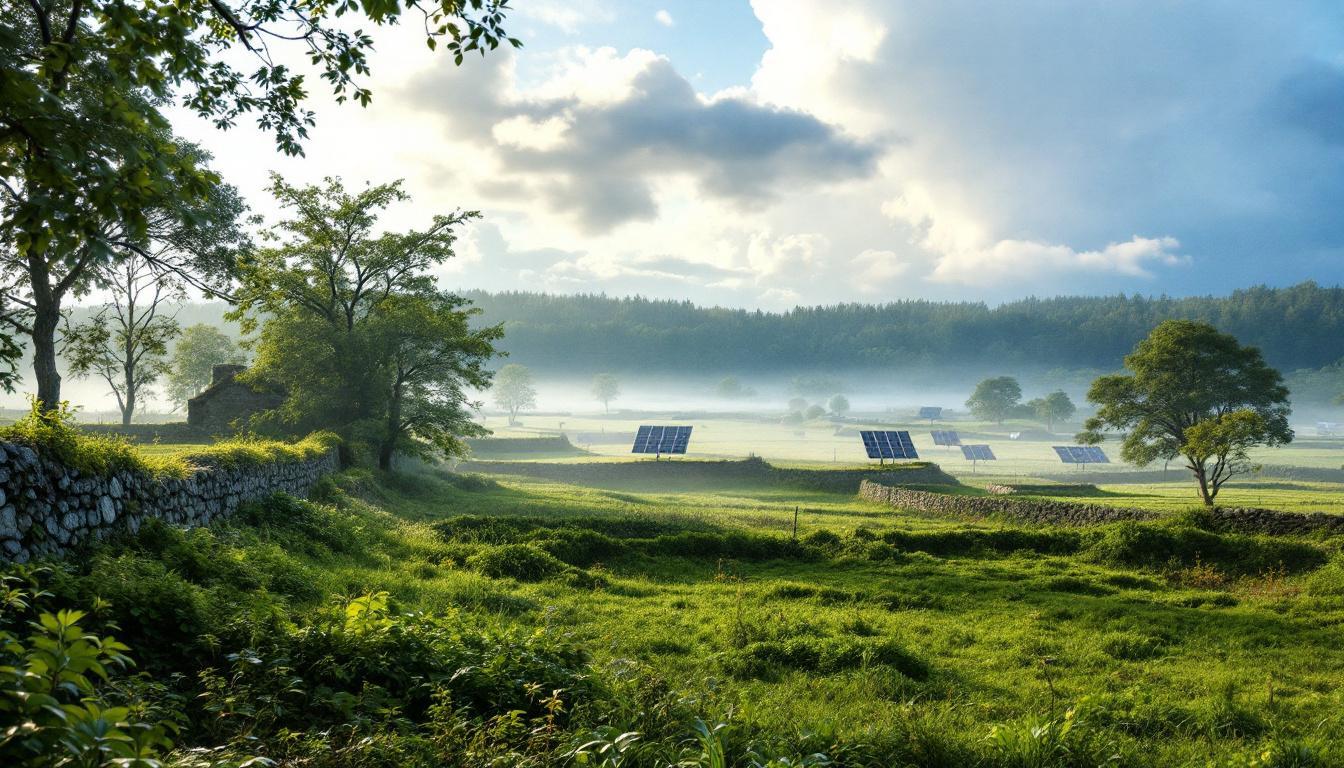
Romania is rapidly transforming into one of Europe’s most dynamic solar markets, with installations expected to surpass 7 GW in early 2026, driven by policy support, European funding, and growing prosumer participation, heralding a significant shift in regional clean energy ambitions.
Romania is rapidly scaling up photovoltaic capacity, transforming from a modest regional player into one of Europe’s most dynamic solar markets as it seeks to reduce reliance on coal and meet EU decarbonisation objectives. According to Oilprice.com, the country expected installed solar capacity to exceed 7 GW in early 2026, a milestone underpinned by robust policy support, European funding and a surge in small-scale adopters.
Industry reporting shows the pace of deployment accelerated sharply in 2025. PV Magazine reports Romania added roughly 2.2 GW that year, lifting cumulative capacity past the 7 GW mark, with utility-scale projects and distributed installations both rising. Now.Solar offers a slightly higher tally, recording 2.5 GW of new PV in 2025 and estimating around 7.6 GW by the end of the year, a performance that made Romania one of the fastest-growing markets among Europe’s largest. These figures align with national regulator data cited by Serbia-Energy, which states the prosumer segment , households and businesses generating on-site power , approached 290,000 participants and more than 3.3 GW of installed capacity by late 2025.
The growth has multiple drivers. PV Magazine and sector sources point to a clearer regulatory framework, revenue-support mechanisms such as contracts-for-difference (CfDs), and EU financing channels including the Recovery and Resilience Facility and the Modernisation Fund that subsidise upfront costs for residential and commercial systems. European lenders are also active: Oilprice.com notes backing from the European Investment Bank and the European Bank for Reconstruction and Development, including a cited €34 million loan targeting 190 MW of new PV in the southwest.
Large-scale utility projects are central to the expansion. Oilprice.com and regional outlets detail multiple flagship developments: a 760 MW solar complex slated to start construction near Bucharest, approvals for a 1 GW facility in the northwest, and the Dama scheme, reported by industry sources, planned at about 1.04 GW with a 500 MW energy storage system and a target operational date in the third quarter of 2028. Developers including Scatec, Rezlov Energy, Monsson and major national players such as OMV Petrom are active across portfolios that range from industrial rooftop deployments to multi-hundred-megawatt ground-mounted parks. According to Balkan Green Energy reporting reproduced in the industry press, Scatec has reached financial close on 190 MW of Romanian projects, a step the company’s CEO Terje Pilskog framed as confirmation of market attractiveness and the strength of the CfD framework: “Reaching financial close and starting construction of our first projects in Romania is an important step and confirms the attractiveness of the Romanian market and the strength of the CfD [contracts-for-difference] framework. With long-term revenue visibility and a robust financing structure in place, the projects are well positioned for construction and delivery. We look forward to advancing the projects together with our partner Defic Globe and contributing to Romania’s energy transition,” said CEO Terje Pilskog.
The entry of international capital is complemented by operational milestones at the utility scale. EDP Renewables announced the commissioning of the 60 MWp Albina plant in western Romania late in 2024, which the company estimates will produce roughly 67 GWh annually and displace over 33,000 tonnes of CO2 a year. Separately, Eurowind Energy committed EUR 174.8 million to a 220 MW park in Vișina, Dâmbovița County, projected to deliver some 400 GWh a year, underscoring private-sector confidence in Romania’s grid and permitting regime.
Geography and grid integration remain material considerations for industrial decarbonisation strategies. Oilprice.com and technical sources highlight that Romania’s sunniest regions , including the Black Sea coast, Northern Dobruja and Oltenia , offer favourable insolation around 1,600 kWh/m2/year, while roughly 210 sunny days annually support high effective capacity factors for fixed-tilt and single-axis tracking arrays. At the same time, rapid additions of intermittent generation are elevating the importance of storage and grid reinforcement; several large projects incorporate batteries or propose storage options to support dispatchability and system stability.
Policy context is central to the sector’s trajectory. Romania has set an ambition to reach 8.2 GW of solar by 2030 and to raise the share of renewables in final energy consumption to 30.7% by the same year, targets framed as part of a broader shift away from lignite and heavy oil inherited from earlier decades. The Guardian has reported Romania’s strong improvement in emissions intensity since 1990, crediting EU accession, emissions trading and targeted modernisation funding with accelerating the country’s decarbonisation pathway. Nevertheless, meeting near-term climate and security goals will hinge on coordinated planning that aligns new generation with transmission upgrades, flexible capacity and storage.
For industrial energy users and decarbonisation planners, the Romanian market offers multiple opportunities and risks. The rapid growth in prosumer capacity and availability of public and private financing can support corporate on-site generation and power purchase agreements. Yet project developers and large energy consumers must factor in evolving grid constraints, curtailment risk, permitting timelines and the need for co-located storage or flexible backup to secure offtake and ensure reliability.
Market forecasts vary but point to sustained expansion: Now.Solar projects Romania could reach as much as 24 GW of PV by 2030 under optimistic scenarios built on continuing policy support and investment flows, while broader EU estimates suggest solar will play a dominant role in meeting bloc-wide capacity targets. For companies engaged in industrial decarbonisation, Romania’s rapid deployment phase presents a test case of scaling variable renewables in a transitioning power system , one where financial structures like CfDs, EU capital and an expanding prosumer base are reshaping how corporate buyers, utilities and developers plan investment and operations.
- https://oilprice.com/Alternative-Energy/Solar-Energy/Romania-About-to-Break-Ground-on-Biggest-Solar-Farm-in-Europe.html – Please view link – unable to able to access data
- https://www.pv-magazine.com/2026/01/14/romania-installs-2-2-gw-of-solar-in-2025/ – In 2025, Romania added 2.2 GW of solar capacity, surpassing 7 GW in total. This growth was driven by a favourable regulatory framework and increased funding, with utility-scale installations nearly doubling year-on-year. The residential and commercial sectors each contributed close to 1.8 GW, while utility-scale projects accounted for around 3.5 GW. The Romanian Photovoltaic Industry Association (RPIA) highlighted that subsidies supporting upfront installation costs through the National Recovery and Resilience Facility and Modernisation Fund were key drivers for residential and commercial installations.
- https://now.solar/2025/12/16/romania-installs-2-5-gw-of-pv-capacity-in-2025-one-third-of-total-at-year-end-romania-insider/ – Romania installed 2.5 GW of photovoltaic capacity in 2025, marking a 45% increase from the previous year and accounting for approximately one-third of the expected total capacity of 7.6 GW by year-end. This performance positioned Romania as the fastest-growing market among Europe’s ten largest. Projections suggest Romania will reach 24 GW of installed photovoltaics by 2030, becoming the sixth fastest-growing market out of the top 10. At the European level, SolarPower Europe projected that total solar energy in the EU will reach 718 GW of installed capacity by 2030, well below the target of 750 GW.
- https://www.pv-magazine.com/2025/01/31/romania-s-2024-solar-additions-hit-1-7-gw/ – In 2024, Romania installed 1.7 GW of solar capacity, comprising 600 MW from utility-scale projects and 1.1 GW from distributed generation installations. This brought the country’s cumulative installed capacity to nearly 5 GW. The Romanian Photovoltaic Industry Association (RPIA) noted that the nation’s solar sector is gradually moving toward maturity, underpinned by a more stable legislative framework striving to reduce uncertainties and volatility. A 2025 target of deploying 2 GW looks attainable based on the association’s current data, with more than 1.6 GW of sites under construction at various stages as of this month.
- https://edp.com/en/investors/europe/romania/investor-information/market-notifications/edp-inaugurates-its-largest-utility-scale-solar-farm-romania – EDP Renewables inaugurated the Albina photovoltaic plant in western Romania, marking its largest utility-scale solar farm in the country. The 60 MWp (48.8 MWac) facility, operational since late 2024, is expected to generate around 67 GWh of solar energy annually, enough to meet the electricity needs of nearly 40,000 Romanian households. Its generation will also help avoid more than 33,000 tons of CO₂ emissions each year, contributing to decarbonising the national energy mix.
- https://serbia-energy.eu/romania-prosumer-solar-market-nears-290000-participants-surpasses-3-3-gw-capacity/ – Romania’s prosumer solar market experienced rapid growth towards the end of 2025, with nearly 290,000 registered prosumers and installed capacity surpassing 3.3 GW, according to the national energy regulator ANRE. By November, the country counted just under 288,000 prosumers, combining for 3.35 GW of generation capacity. This reflects annual growth of almost 48% in participants and more than 43% in installed capacity, illustrating the rapid spread of rooftop and on-site solar across Romania. Households dominate numerically, with around 258,000 prosumers, while companies, public institutions, and other legal entities make up just over 30,000.
- https://www.romania-insider.com/danish-eurowind-largest-solar-park-romania-june-2025 – Danish renewable energy developer Eurowind Energy announced a EUR 174.8 million investment to develop its largest solar park in Romania, located in Vișina, Dâmbovița County. The new solar facility will have an installed capacity of 220 MW, making it one of the largest solar projects in the country. The facility is expected to generate around 400 GWh of renewable electricity annually, sufficient to power approximately 150,000 households. The solar park will be built on a 354-hectare site and will feature over 400,000 photovoltaic panels. The company plans to support grid stability by potentially integrating storage solutions as needed.
Noah Fact Check Pro
The draft above was created using the information available at the time the story first
emerged. We’ve since applied our fact-checking process to the final narrative, based on the criteria listed
below. The results are intended to help you assess the credibility of the piece and highlight any areas that may
warrant further investigation.
Freshness check
Score:
5
Notes:
The article from OilPrice.com was published on 23 February 2026. The Dama Solar project, cited as Europe’s largest solar farm, received all necessary approvals in December 2024, with construction expected to commence in spring or summer 2025. ([news.goalfore.com](https://news.goalfore.com/detail/77428/all-permits-issued-in-romania-for-europes-biggest-solar-power-plant.html?utm_source=openai)) This suggests that the article’s information is current, but the specific claim of ‘about to break ground’ may be outdated, as construction was anticipated to begin in 2025.
Quotes check
Score:
4
Notes:
The article includes a quote from Terje Pilskog, CEO of Scatec, regarding the financial close and construction of projects in Romania. This quote is consistent with statements made in other sources, such as the one from Balkan Green Energy News. ([news.goalfore.com](https://news.goalfore.com/detail/77428/all-permits-issued-in-romania-for-europes-biggest-solar-power-plant.html?utm_source=openai)) However, the exact date of the original statement is not specified, making it challenging to verify the freshness and context of the quote.
Source reliability
Score:
6
Notes:
OilPrice.com is a news outlet focusing on energy markets. While it provides industry-specific news, it may not be as widely recognised as major news organisations like the BBC or Reuters. The article references other reputable sources, such as Balkan Green Energy News and Now.Solar, which adds credibility. However, the reliance on a single source for the main claim about the Dama Solar project raises concerns about source independence.
Plausibility check
Score:
7
Notes:
The article’s claims about Romania’s rapid expansion in solar energy, including the Dama Solar project, align with other reports. For instance, Restart Energy announced a 500 MW solar park in Arad province, with construction expected to begin in the second quarter of 2025. ([iene.eu](https://www.iene.eu/restart-energy-agrees-grid-connection-for-romanias-second-biggest-solar-park-p7337.html?utm_source=openai)) However, the specific claim that the Dama Solar project is about to break ground in early 2026 contradicts earlier reports stating that construction was expected to start in 2025.
Overall assessment
Verdict (FAIL, OPEN, PASS): FAIL
Confidence (LOW, MEDIUM, HIGH): MEDIUM
Summary:
The article presents information about Romania’s solar energy expansion, including the Dama Solar project. While some claims align with other reports, the specific assertion that the Dama Solar project is about to break ground in early 2026 contradicts earlier reports stating that construction was expected to start in 2025. The reliance on a single source for this claim raises concerns about source independence. Additionally, the freshness of the information is questionable, as construction was anticipated to begin in 2025. Given these discrepancies and concerns, the article does not meet the necessary standards for publication.
