


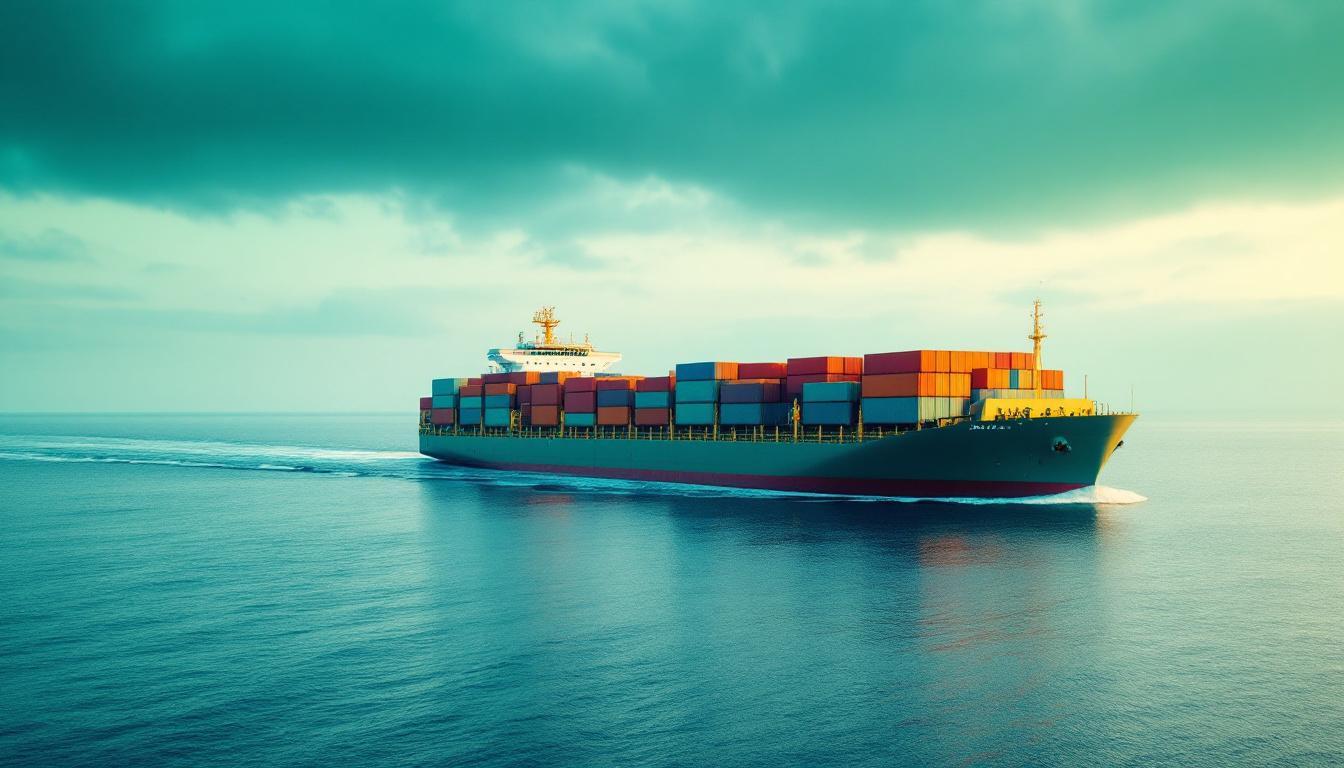
Scandlines has launched The Baltic Whale, a €84 million battery-electric freight ferry, marking a significant step towards zero-emission maritime transport on Europe’s busiest short-sea route between Denmark and Germany, with potential to revolutionise ferry operations across Europe.
Scandlines has put into service a battery-electric freight ferry on the short crossing between Rødby in Denmark and Puttgarden on Germany’s island of Fehmarn, marking a high‑profile step for maritime decarbonisation on one of northern Europe’s busiest short‑sea links. According to Focus, the vessel, named The Baltic Whale, entered operation this week after an investment of €84 million and is intended to eliminate direct exhaust emissions during routine crossings.
The ship carries a battery pack with an energy capacity of about 10 megawatt‑hours, one of the largest battery installations fitted to a ferry to date, and completes the 18.5‑kilometre passage in roughly 45 minutes. Industry press and Scandlines’ own materials report slightly different fast‑charging intervals at the berth, some outlets describe a 12‑minute top‑up while Scandlines and other trade publications state charging takes around 17 minutes, reflecting either different measurement conventions or variations between first‑run and operational charging cycles. A shore‑side high‑voltage infrastructure, including a 30‑kilovolt cable route and high‑power charging stations, was installed to enable rapid replenishment between sailings. The operator says the system uses renewable power where available and that diesel generators on board are retained only for emergency use.
The new ferry is configured as a pure freight vessel with two vehicle decks capable of accommodating 66 heavy goods vehicles and additional capacity for hazardous cargoes that require special handling. Scandlines also highlights a 27% uplift in freight throughput on the route compared with previous tonnage, and permits up to 140 passengers. The company positions the vessel as part of a pathway to zero direct emissions by 2040 for its fleet. Scandlines has further committed to converting two other ships into plug‑in hybrids, a programme reported by Ship & Offshore valued at more than €31 million that will add roughly 5 MWh of battery capacity to each converted unit and is intended to cut CO2 by up to 80% on those vessels.
Beyond the greenhouse‑gas case, the project was promoted as delivering immediate environmental co‑benefits for the Baltic Sea’s marine life. Conservationists pointed to reduced underwater noise and the lower pollutant burden from electric drive systems as advantages for species such as the harbour porpoise, which is protected under regional conservation frameworks. The Naturschutzbund Deutschland, which has advised Scandlines on fleet greening, described the maiden voyage as evidence that electrification at sea is technically feasible and urged political and industry stakeholders to accelerate retrofits and new builds.
The launch also feeds into broader sectoral analysis. According to a study by Transport & Environment cited by Focus, battery propulsion could be applied to a substantial share of European ferry routes, with the organisation estimating that as many as 60% of ferries might be battery‑electric by 2035 and that a majority of those could be cheaper to operate than conventional fossil‑fuelled vessels. Trade outlets and maritime analysts have flagged, however, that wider adoption will depend on coordinated investment in port charging infrastructure, grid capacity and regulatory incentives, as well as lifecycle assessments that account for battery manufacture, recycling and supply chains.
For coastal and short‑sea freight operators considering electrification, the Baltic Whale offers a practical demonstration of several points relevant to industrial decarbonisation strategy: the scale of capital required for a purpose‑built vessel and shore infrastructure; the operational advantages of rapid charging on high‑frequency short crossings; and the importance of retaining backup systems for resilience. Scandlines’ parallel retrofit programme suggests operators may pursue a mixed approach, combining new battery‑electricbuilds with conversions of existing tonnage, to achieve emissions reductions more rapidly and cost‑effectively.
The vessel’s entry into service will be watched closely by port authorities, logistics customers and policymakers seeking replicable models for cutting emissions from short‑sea freight. If the technology and infrastructure perform as intended, the route could become a template for other ferry links where distances, turnaround times and traffic volumes align with current battery capabilities.
- https://www.focus.de/earth/84-millionen-euro-schiff-ostsee-wal-verbindet-jetzt-deutschland-und-daenemark_3ef1cfa3-02b3-4045-b84b-d66bf81e639c.html – Please view link – unable to able to access data
- https://www.focus.de/earth/84-millionen-euro-schiff-ostsee-wal-verbindet-jetzt-deutschland-und-daenemark_3ef1cfa3-02b3-4045-b84b-d66bf81e639c.html – The article reports on the launch of ‘The Baltic Whale’, a new emissions-free ferry connecting Germany and Denmark. The ferry, named after the Baltic Sea porpoise, features a 10 MWh battery system, allowing it to operate without direct emissions during its 45-minute crossing. The vessel can carry 66 freight units and up to 140 passengers. The project cost €84 million and is part of Scandlines’ strategy to achieve zero direct emissions by 2040.
- https://www.scandlines.com/about-us/our-green-ambition/our-new-freight-ferry/ – Scandlines introduces ‘The Baltic Whale’, a new freight ferry operating without direct emissions on the Puttgarden-Rødby route. The ferry increases freight capacity by 27% and can transport lorries on both decks. Its 10 MWh battery system charges in 17 minutes using renewable power. The ferry is part of Scandlines’ long-term strategy to operate without direct emissions by 2040. ([scandlines.com](https://www.scandlines.com/about-us/our-green-ambition/our-new-freight-ferry/?utm_source=openai))
- https://www.shipandoffshore.net/ship-repair/detail/news/scandlines-to-invest-over-eur-31-million-in-hybrid-ferry-conversions.html – Scandlines plans to invest over €31 million to convert two ferries, ‘Deutschland’ and ‘Schleswig-Holstein’, into plug-in hybrid vessels. Each conversion includes a 5 MWh battery system and charging infrastructure, aiming to reduce CO₂ emissions by up to 80%. The project is part of Scandlines’ goal to achieve zero direct emissions on the Puttgarden-Rødby route by 2030. ([shipandoffshore.net](https://www.shipandoffshore.net/ship-repair/detail/news/scandlines-to-invest-over-eur-31-million-in-hybrid-ferry-conversions.html?utm_source=openai))
- https://www.marinelink.com/news/baltic-whale-enters-operation-536812 – Scandlines’ new ferry, ‘The Baltic Whale’, has commenced operations on the Rødby-Puttgarden route. The ferry features one of the world’s largest battery systems, enabling it to operate without direct emissions during normal operations. It completes the 18.5 km crossing in approximately 45 minutes and has lower noise emissions, benefiting both passengers and the marine environment. ([marinelink.com](https://www.marinelink.com/news/baltic-whale-enters-operation-536812?utm_source=openai))
- https://www.bairdmaritime.com/passenger/ferry/scandlines-introduces-battery-powered-ferry-on-fehmarnbelt-route – Scandlines has deployed its new battery-powered freight ferry, ‘The Baltic Whale’, on the Rødby-Puttgarden route. The ferry features a 10 MWh battery system, completing the 18.5 km crossing in 45 minutes. Charging takes 12 minutes in each port using high-power cables and transformer stations. The ferry increases transport capacity on the route by 27% and is part of Scandlines’ strategy to achieve zero direct emissions by 2040. ([bairdmaritime.com](https://www.bairdmaritime.com/passenger/ferry/scandlines-introduces-battery-powered-ferry-on-fehmarnbelt-route?utm_source=openai))
- https://www.freightlink.co.uk/knowledge/articles/scandlines-update-new-ferry-sail-towards-zero-direct-emission – Scandlines has introduced ‘The Baltic Whale’, a new freight ferry operating without direct emissions on the Puttgarden-Rødby route. The ferry increases freight capacity by 27% and can transport lorries on both decks. Its 10 MWh battery system charges in 17 minutes using renewable power. The ferry is part of Scandlines’ long-term strategy to operate without direct emissions by 2040. ([freightlink.co.uk](https://www.freightlink.co.uk/knowledge/articles/scandlines-update-new-ferry-sail-towards-zero-direct-emission?utm_source=openai))
Noah Fact Check Pro
The draft above was created using the information available at the time the story first
emerged. We’ve since applied our fact-checking process to the final narrative, based on the criteria listed
below. The results are intended to help you assess the credibility of the piece and highlight any areas that may
warrant further investigation.
Freshness check
Score:
10
Notes:
The article reports on the recent deployment of Scandlines’ new battery-electric ferry, ‘The Baltic Whale’, on the Rødby-Puttgarden route. This event occurred on March 10, 2026, and is covered by multiple reputable sources, including Scandlines’ official website ([scandlines.com](https://www.scandlines.com/about-us/our-green-ambition/zero-direct-emission-freight-ferry/?utm_source=openai)) and MarineLink ([marinelink.com](https://www.marinelink.com/news/baltic-whale-enters-operation-536812?utm_source=openai)). The information is current and original, with no evidence of recycled content.
Quotes check
Score:
8
Notes:
The article includes direct quotes from Scandlines’ representatives, such as Michael Guldmann Petersen, COO of Scandlines, and Rasmus Nielsen, VP Fleet and Administration. These quotes are consistent with statements found in Scandlines’ official press releases ([scandlines.com](https://www.scandlines.com/about-us/our-green-ambition/zero-direct-emission-freight-ferry/?utm_source=openai)) and other reputable sources ([advancedmaritimetechnologyinternational.com](https://www.advancedmaritimetechnologyinternational.com/news/battery-technology/scandlines-battery-electric-ferry-completes-first-sea-trial.html?utm_source=openai)). However, the exact earliest usage of these specific quotes cannot be determined from the available sources, so some uncertainty remains.
Source reliability
Score:
9
Notes:
The article is sourced from reputable publications, including Scandlines’ official website ([scandlines.com](https://www.scandlines.com/about-us/our-green-ambition/zero-direct-emission-freight-ferry/?utm_source=openai)) and MarineLink ([marinelink.com](https://www.marinelink.com/news/baltic-whale-enters-operation-536812?utm_source=openai)). These sources are known for their credibility and independence. While the article is based on Scandlines’ press releases, it is corroborated by multiple independent sources, reducing the risk of bias or misinformation.
Plausibility check
Score:
10
Notes:
The claims made in the article align with known facts about Scandlines’ new ferry, ‘The Baltic Whale’. The ferry’s specifications, such as its length (147.4 meters), width (25.4 meters), battery capacity (10 MWh), and charging times (12 minutes in Rødby and 17 minutes in Puttgarden), are consistent with information from Scandlines’ official website ([scandlines.com](https://www.scandlines.com/about-us/our-green-ambition/zero-direct-emission-freight-ferry/?utm_source=openai)) and other reputable sources ([marinelink.com](https://www.marinelink.com/news/baltic-whale-enters-operation-536812?utm_source=openai)). There are no inconsistencies or implausible elements in the narrative.
Overall assessment
Verdict (FAIL, OPEN, PASS): PASS
Confidence (LOW, MEDIUM, HIGH): HIGH
Summary:
The article provides accurate and current information about Scandlines’ new battery-electric ferry, ‘The Baltic Whale’, entering service on the Rødby-Puttgarden route. The content is original, with corroboration from multiple reputable sources, and there are no significant concerns regarding freshness, source reliability, or plausibility. The use of direct quotes is consistent with other sources, and the content type is appropriate for factual reporting. Therefore, the article passes the fact-check with high confidence.
