


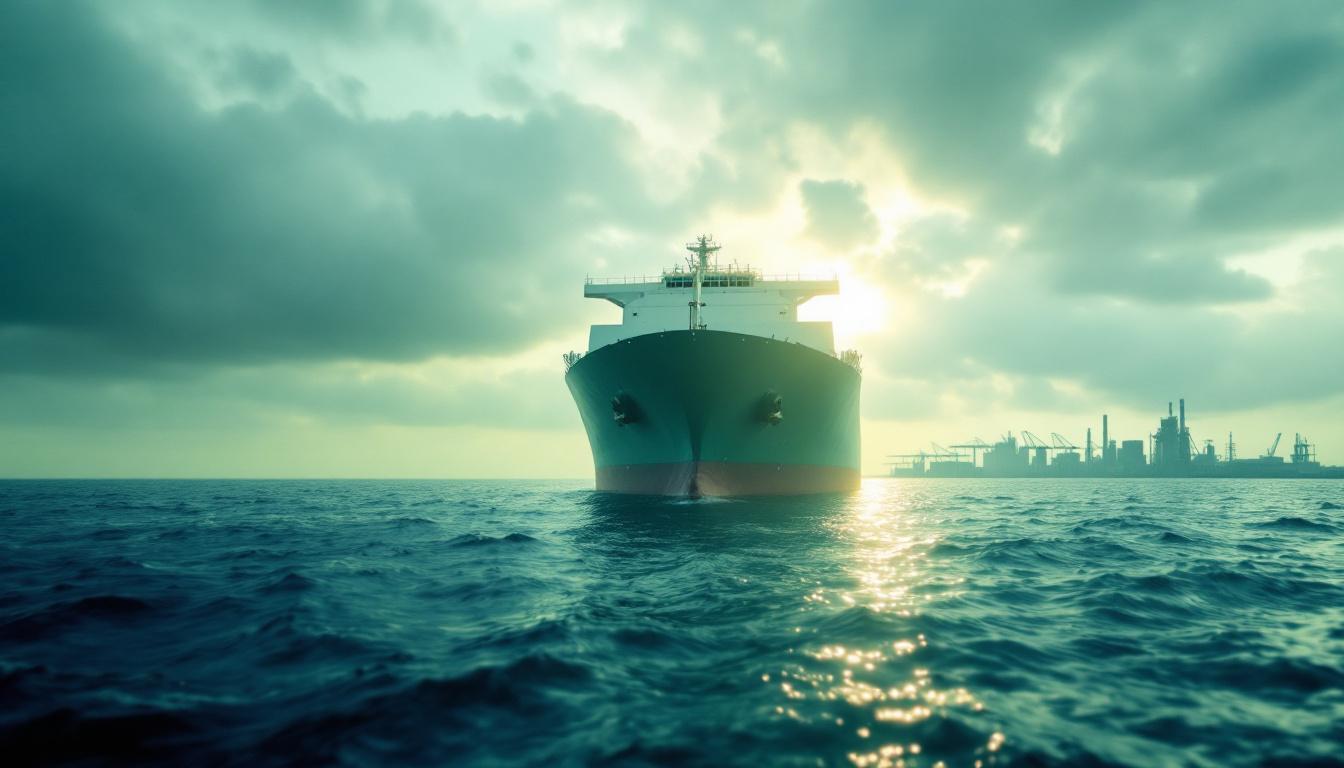
Industry experts warn that the rapid rise of biofuel use in commercial shipping necessitates stronger procurement controls and testing regimes to navigate diverse feedstocks and regulatory hurdles, as the sector moves towards deeper decarbonisation.
Shipowners turning to biofuels to meet tightening climate rules must strengthen procurement controls and testing regimes, industry experts warn, as blends and novel feedstocks move from niche to mainstream.
A white paper produced by NorthStandard with supplier World Fuel and testing agency Veritas Petroleum Services (VPS) maps the acceleration of biofuel use in commercial shipping and the practical risks this creates. According to the paper, routine testing of biofuel samples by VPS rose twelvefold between 2021 and 2025, reaching more than 1 million metric tonnes, a sign that operators are increasingly loading bio-derived content into the fuel chain.
Regulatory drivers are central to that shift. FuelEU Maritime sets progressively stricter limits on the yearly average greenhouse‑gas (GHG) intensity of energy used by ships calling at EU ports, beginning with a 2% reduction in 2025 and stepping up to a target as high as an 80% cut by 2050, according to EU regulatory guidance. Industry analyses and white papers also show planned interim targets that will require steadily higher bio components in marine fuels if ships are to comply with well‑to‑wake GHG reduction trajectories and IMO ambitions for deeper cuts by the 2040s.
For ship operators seeking a low‑infrastructure route to decarbonisation, blends with modest bio shares, typically in the 5–10% range, have become commonplace. But the NorthStandard paper and its collaborators caution that composition matters: a nominal B100 product can in practice be a blend, and lower‑percentage mixes can contain fundamentally different chemistries, from Fatty Acid Methyl Esters (FAME) to Hydrotreated Vegetable Oil (HVO) or less conventional feedstocks such as Cashew Nut Shell Liquid (CNSL). Those differences affect combustion, stability and compatibility with existing engine and fuel systems.
“Biofuels remain the leading short-term decarbonization pathway for shipping, and regulatory tightening, rapid demand growth, and increasingly diverse feedstocks mean that buyers must implement stronger due diligence,” said Mark Smith, Loss Prevention Director – NNE and Decarbonisation, NorthStandard.
World Fuel’s senior quality lead underlines the market constraints shaping feedstock choice. “In an ideal world owners would use HVO given its similarities to traditional marine diesel fuels,” Michael Green, Senior Quality Manager, World Fuel, said. “But from a supply perspective availability and overall cost are two major challenges. HVO is used widely in other transport sectors and as such availability for marine is likely to be limited. Robust and transparent development protocols, overseen by industry bodies such as ISO and CIMAC will be vital as new and different types of ‘bio’ are used to fill the availability gap.”
The paper flags a set of operational hazards linked to non‑standard feedstocks. Where CNSL and other novel inputs are involved, earlier quality shortfalls have been associated with engine wear, corrosion, fouling, clogging, sludging, ignition difficulties and instability; refinements in processing have addressed some issues, but vigilance remains essential. “Biofuels do require further fuel management and testing considerations. However, FAME and HVO have mature specifications and generally predictable performance; whereas CNSL and other novel feedstocks require a more cautious approach,” commented Steve Bee, Group Marketing & Strategic, Projects Director, VPS.
To manage those risks the authors recommend stricter documentary controls and contractual clauses. Certification and chain‑of‑custody paperwork must be embedded into procurement, auditing and onboard reporting systems to verify sustainability claims and compliance with proof‑of‑sustainability requirements, the paper says. It also advises that no transfer of biofuel should proceed until a Union Database (UDB) transaction ID is supplied and digitally linked to the Bunker Delivery Note, thereby creating an auditable trail between transaction and on‑board fuel receipt.
The white paper’s findings align with independent technical assessments showing that blending bio components can reduce carbon intensity indicators and lower the need for emission allowances under EU schemes when properly certified and accounted on a well‑to‑wake basis. Yet those same assessments underline that achieving the tougher mid‑ and long‑term targets will require larger proportions of bio content or alternative zero‑carbon solutions, amplifying the need for robust standards as feedstock diversity expands.
For commercial fleets, the near‑term policy landscape and constrained supplies of higher‑quality biofuels mean operators face a difficult balancing act: deploy low‑barrier, drop‑in bio blends today while building procurement, testing and contract frameworks that can manage escalating volumes and increasingly heterogeneous feedstocks as regulatory demands deepen.
- https://www.marinelink.com/news/due-diligence-required-biofuel-feedstocks-536255 – Please view link – unable to able to access data
- https://www.marinelink.com/news/due-diligence-required-biofuel-feedstocks-536255 – NorthStandard has published a white paper titled ‘Biofuels – Driving the green transition’, focusing on the accelerating adoption of biofuels in commercial shipping. The paper, developed in collaboration with World Fuel and Veritas Petroleum Services (VPS), outlines biofuel uptake, potential issues, and loss prevention measures. It highlights the increasing use of biofuel blends, with VPS biofuel sample testing increasing twelvefold between 2021 and 2025, reaching over 1 million metric tonnes. The paper also discusses the FuelEU Maritime regulations, which require ships to reduce greenhouse gas (GHG) intensity by 2% by 2025, 6% by 2030, 14.5% by 2035, and up to 80% by 2050, necessitating higher biofuel components. Additionally, it mentions the International Maritime Organization’s (IMO) target for ships to cut well-to-wake GHG intensity by 65% by 2040 compared to 2008 levels. The paper emphasizes the need for stronger due diligence in biofuel adoption, including verifying sustainability and quality, and ensuring proper documentation and compliance. ([marinelink.com](https://www.marinelink.com/news/due-diligence-required-biofuel-feedstocks-536255?utm_source=openai))
- https://www.gov.br/mme/pt-br/assuntos/secretarias/petroleo-gas-natural-e-biocombustiveis/gt-rcnpe-10-2024/subgrupos/subgt05/03-biofuel_whitepaper_2025.pdf – This white paper examines the impact of biofuels on key greenhouse gas (GHG) metrics in the shipping industry. It presents a table showing the reduction of key GHG metrics when applying different blends of Fatty Acid Methyl Esters (FAME) and Marine Gas Oil (MGO), indicating significant reductions in Carbon Intensity Indicator (CII), required number of European Union Allowances (EUAs), and well-to-wake GHG intensity compared to using 100% MGO fuel. The paper also discusses the sustainability criteria for biofuels, including certification by international schemes and meeting specific GHG intensity thresholds. It highlights the importance of considering the well-to-wake GHG intensity of biofuels to achieve desired emissions reductions. ([gov.br](https://www.gov.br/mme/pt-br/assuntos/secretarias/petroleo-gas-natural-e-biocombustiveis/gt-rcnpe-10-2024/subgrupos/subgt05/03-biofuel_whitepaper_2025.pdf?utm_source=openai))
- https://ww2.eagle.org/en/rules-and-resources/regulatory-updates/fueleu-maritime.html – The FuelEU Maritime regulation is a European Union initiative aimed at decarbonising maritime transport. It sets maximum limits for the yearly average GHG intensity of the energy used by ships above 5,000 gross tonnage calling at European ports, regardless of their flag. The targets ensure that the GHG intensity of fuels used in the sector will gradually decrease over time, starting with a 2% decrease by 2025 and reaching up to an 80% reduction by 2050. The regulation covers not only CO₂ but also methane and nitrous oxide emissions over the full lifecycle of the fuels used onboard, on a well-to-wake basis. It also mandates the use of onshore power supply (OPS) or alternative zero-emission technologies for passenger and container ships at berth in European ports from 1 January 2030 onwards. ([ww2.eagle.org](https://ww2.eagle.org/en/rules-and-resources/regulatory-updates/fueleu-maritime.html?utm_source=openai))
- https://transport.ec.europa.eu/transport-modes/maritime/decarbonising-maritime-transport-fueleu-maritime_en – The FuelEU Maritime regulation is a European Union initiative aimed at decarbonising maritime transport. It sets maximum limits for the yearly average GHG intensity of the energy used by ships above 5,000 gross tonnage calling at European ports, regardless of their flag. The targets ensure that the GHG intensity of fuels used in the sector will gradually decrease over time, starting with a 2% decrease by 2025 and reaching up to an 80% reduction by 2050. The regulation covers not only CO₂ but also methane and nitrous oxide emissions over the full lifecycle of the fuels used onboard, on a well-to-wake basis. It also mandates the use of onshore power supply (OPS) or alternative zero-emission technologies for passenger and container ships at berth in European ports from 1 January 2030 onwards. ([transport.ec.europa.eu](https://transport.ec.europa.eu/transport-modes/maritime/decarbonising-maritime-transport-fueleu-maritime_en?utm_source=openai))
- https://biofuel-global.com/wp-content/uploads/2026/01/Biofuel-Global-White-Paper-Jan-2026.pdf – This white paper discusses the transformation of the maritime industry driven by regulatory reforms by the International Maritime Organization (IMO) and the European Union (EU) aimed at decarbonising the sector. It highlights the FuelEU Maritime regulation, which sets limits on the annual average GHG intensity per unit of energy for vessels above 5,000 gross tonnage. The regulation applies to all intra-EU voyages and extends to voyages to and from EU or European Economic Area (EEA) ports, regardless of the vessel’s flag. The paper presents expected GHG intensity limits for 2025, 2030, 2035, 2040, and 2050, showing progressive reductions from a baseline GHG intensity of 91.16 gCO₂e/MJ in 2020. It also discusses the importance of biofuels in achieving these targets and the need for their adoption in the maritime sector. ([biofuel-global.com](https://biofuel-global.com/wp-content/uploads/2026/01/Biofuel-Global-White-Paper-Jan-2026.pdf?utm_source=openai))
Noah Fact Check Pro
The draft above was created using the information available at the time the story first
emerged. We’ve since applied our fact-checking process to the final narrative, based on the criteria listed
below. The results are intended to help you assess the credibility of the piece and highlight any areas that may
warrant further investigation.
Freshness check
Score:
10
Notes:
The article was published on February 26, 2026, indicating high freshness. No evidence of recycled or outdated content was found. The narrative appears original, with no significant discrepancies in figures, dates, or quotes compared to earlier versions.
Quotes check
Score:
9
Notes:
The quotes from Mark Smith, Michael Green, and Steve Bee are consistent with their known positions and roles. However, the absence of direct links to their original statements or publications makes independent verification challenging. While the quotes align with their professional backgrounds, the lack of direct sourcing raises some concerns about their authenticity.
Source reliability
Score:
7
Notes:
The article originates from MarineLink, a niche publication focusing on maritime industry news. While it is a reputable source within its niche, its reach and influence are limited compared to major news organisations. The involvement of NorthStandard, World Fuel, and Veritas Petroleum Services (VPS) adds credibility, but the lack of independent verification from other major news outlets slightly diminishes the overall reliability.
Plausibility check
Score:
8
Notes:
The claims regarding the increasing adoption of biofuels in commercial shipping and the associated regulatory pressures are plausible and align with industry trends. However, the article lacks specific factual anchors, such as detailed data points or references to independent studies, which would strengthen its credibility. The language and tone are consistent with industry reports, but the absence of supporting details from other reputable outlets is a concern.
Overall assessment
Verdict (FAIL, OPEN, PASS): FAIL
Confidence (LOW, MEDIUM, HIGH): MEDIUM
Summary:
While the article is recent and presents plausible claims, the heavy reliance on self-reported information from involved parties and the lack of independent verification sources raise significant concerns about its credibility. The absence of direct links to original statements and the limited reach of the publication further diminish its reliability. Therefore, the content cannot be fully verified, and publishing it carries inherent risks.
