

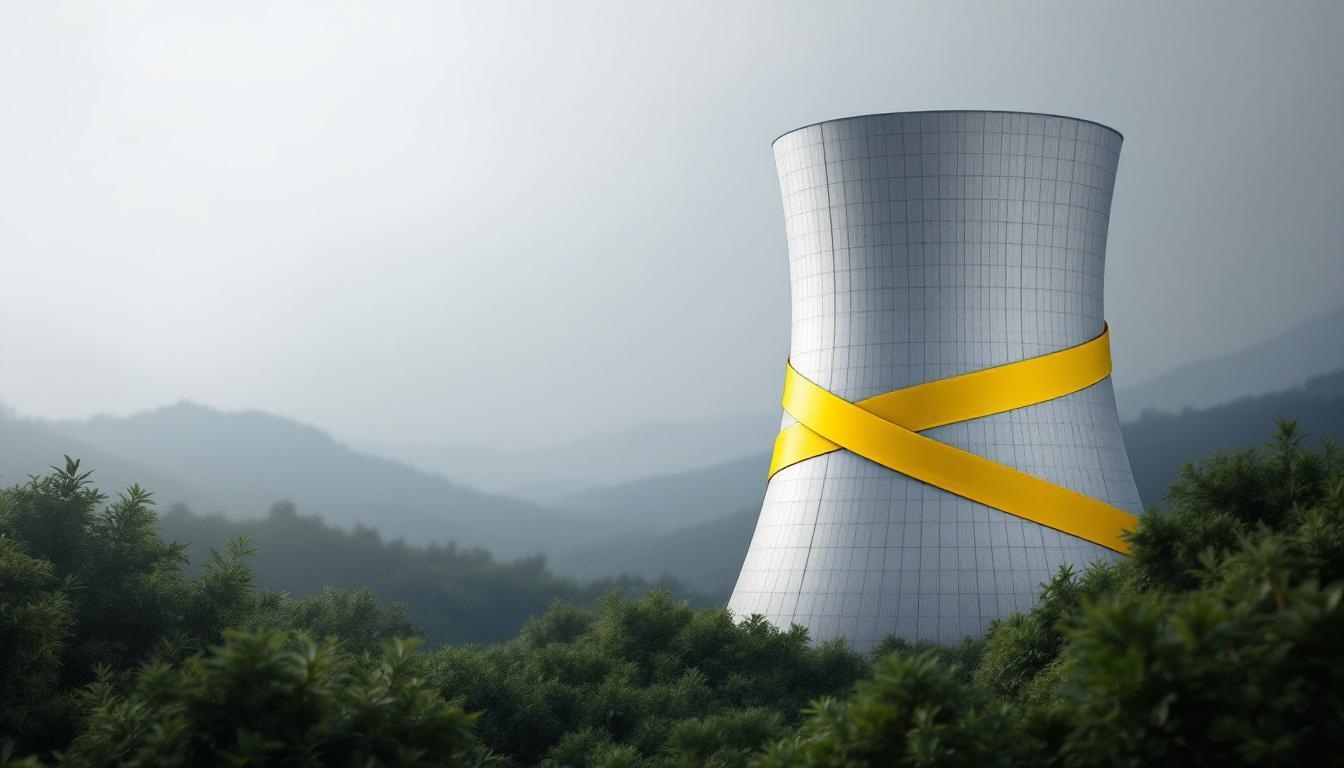
Major technology firms including Meta, Google, and Amazon are backing a global pledge to triple nuclear capacity by 2050, signalling a transformative shift in industrial decarbonisation and energy security strategies.
The United States has seen an uncommon alignment between Silicon Valley and the nuclear industry as some of the world’s largest technology firms publicly commit to a significant expansion of nuclear power to meet surging electricity demand and industrial decarbonisation goals.
Meta, Amazon and Google are among the major corporations that have signed the World Nuclear Association’s Large Energy Consumers Pledge, backing an objective to at least triple global nuclear capacity by 2050. The pledge, unveiled at the CERAWeek conference in Houston, brings together companies, finance and government interests in support of large-scale nuclear deployment as a means of delivering reliable, low‑carbon baseload power to energy‑intensive operations. According to the World Nuclear Association, supporters also include firms such as Dow, and the list is expected to grow to sectors including maritime, aviation and oil and gas.
“For global economies expand, the need for a reliable, clean, and resilient energy supply is paramount. Nuclear energy, with its ability to provide continuous power, can help meet this rising demand. We’re excited to join alongside this multi-organisational effort with the Tripling Nuclear Pledge to reiterate our commitment to nuclear energy,” said Urvi Parekh, Head of Global Energy, Meta, reflecting the tone of corporate leaders who view nuclear as complementary to renewables for meeting 24/7 power needs.
The technology sector’s embrace of nuclear has moved beyond pledges to concrete commercial arrangements. According to reports by CNBC and The Associated Press, Meta signed a 20‑year power purchase agreement with Constellation Energy for output from the Clinton Clean Energy Center in Illinois that begins in 2027, intended to support the plant’s continued operation and relicensing. Google has formed a partnership with Elemental Power to develop three advanced nuclear sites, each expected to generate about 600 megawatts, while Amazon has announced a multibillion‑dollar build‑out of data centre complexes in Pennsylvania, including one adjacent to the Susquehanna nuclear plant, aimed at meeting growth in AI and cloud computing. These deals illustrate a shift from off‑take interest to long‑term procurement that anchors reactor economics and helps reduce investor and developer risk.
Industry data shows nuclear currently provides roughly 9 percent of global electricity generation from 439 operating reactors, representing about 371 gigawatts of installed capacity as of early 2025. Proponents argue that scaling capacity is necessary not only to decarbonise heavy electricity demand driven by data centres and AI infrastructure but also to enhance energy security for countries reliant on imported fossil fuels. Government commitments announced at the 2023 U.N. Climate Change Conference, where more than 30 countries and numerous financial institutions signalled support for expanded nuclear capacity, laid a political foundation that industry and corporate backers are now building upon.
The corporate mobilisation highlights several practical drivers relevant to industrial decarbonisation. First, advanced reactor technologies and small modular reactors (SMRs) promise shorter construction timelines and potentially lower capital costs than traditional large reactors, addressing two historical barriers to deployment. Tech companies have openly invested in and contracted for SMR development to secure the round‑the‑clock, high‑reliability power their operations demand. Second, long‑term offtake agreements, such as Meta’s 20‑year contract, help provide the revenue certainty developers need to finance projects at scale. Third, the involvement of major corporate buyers signals to banks and capital markets that nuclear projects may now attract a broader base of commercial and financial support.
Yet significant obstacles remain. Nuclear projects continue to face regulatory complexity, permitting delays and high upfront capital intensity in many jurisdictions. Supply‑chain constraints for critical components and the workforce scale‑up required for a rapid build‑out present near‑term challenges. Moreover, public acceptance and political risk vary across markets, meaning national and regional policies will determine how quickly pledged expansion translates into operating gigawatts. Industry groups and corporate supporters acknowledge these constraints, and are pushing for streamlined regulatory frameworks, predictable market mechanisms and targeted public support to catalyse private investment.
The involvement of technology firms reframes the policy conversation for industrial decarbonisation. According to financial and industry commentary, when large energy consumers, companies with material, long‑term electricity needs, use procurement and capital to underwrite nuclear projects, they lower project risk and strengthen the case for wider deployment. For companies pursuing aggressive net‑zero targets, nuclear offers a discrete option for decarbonising baseload operations where variable renewables and battery storage alone are insufficient.
This corporate coalition does not replace earlier multilateral pledges; rather, it reinforces and expands them by mobilising new sources of demand and capital. As the sector moves from pledges to procurement and construction, the rate at which new reactors reach commercial operation will be the critical measure of progress. For industrial decarbonisation practitioners, the lesson is clear: meeting the electricity needs of deep‑electrifying industries and data‑heavy services will likely require diversified low‑carbon portfolios in which nuclear plays an increasingly visible role.
- https://americanbazaaronline.com/2026/01/01/why-are-meta-amazon-and-google-turning-to-nuclear-power-472460/ – Please view link – unable to able to access data
- https://www.cnbc.com/2025/03/12/amazon-google-and-meta-support-tripling-nuclear-power-by-2050.html – Amazon, Google, and Meta have signed a pledge to support efforts to at least triple nuclear energy worldwide by 2050. This initiative, announced at the CERAWeek conference in Houston, follows a similar commitment made in December 2023 by over 20 countries at the U.N. Climate Change Conference. The pledge underscores the growing support for expanding nuclear power among leading industries, finance, and governments, highlighting nuclear energy’s role in meeting rising global energy demand.
- https://www.cnbc.com/2025/06/03/meta-signs-nuclear-power-deal-with-constellation-energy-.html – Meta has signed a 20-year agreement to purchase nuclear power from Constellation Energy’s Clinton Clean Energy Center in Illinois, beginning in 2027. This deal aims to support the plant’s continued operation and relicensing, ensuring a stable, clean power supply for Meta’s data centers. The agreement reflects a broader trend of tech companies investing in nuclear energy to meet growing energy demands and sustainability goals.
- https://world-nuclear.org/news-and-media/press-statements/major-global-companies-pledge-historic-support-to-triple-nuclear-energy – A coalition of major companies, including Google, Amazon, Meta, and Dow, has signed a pledge supporting the goal of at least tripling global nuclear capacity by 2050. This initiative, announced at the CERAWeek conference in Houston, marks the first time major businesses outside the nuclear sector have publicly backed an extensive expansion of nuclear power to meet increasing global energy demand.
- https://apnews.com/article/a2d5f60ee0ca9f44c183c58d1c05337c – Meta has entered into a 20-year agreement with Constellation Energy to secure nuclear power from the Clinton Clean Energy Center in Illinois, starting in 2027. This partnership aims to meet the growing electricity demands driven by artificial intelligence and data center needs, highlighting a broader trend of tech companies investing in nuclear energy to support their operations.
- https://apnews.com/article/2bd4282af728e16446bdcefe97d37873 – Google has partnered with Elementl Power to develop three advanced nuclear energy sites, each expected to generate 600 megawatts of power. This initiative comes amid rapidly growing power demands driven by artificial intelligence technologies, reflecting a strategic move by Google to secure sustainable, carbon-free electricity for its expanding data center operations.
- https://apnews.com/article/31f705d035069279b70fa27a5dc71596 – Amazon has announced a $20 billion investment into building two data center complexes in Pennsylvania, including one adjacent to the Susquehanna nuclear power plant. This project aims to meet the rising energy demands of Amazon’s AI and cloud operations, marking a significant commitment to integrating nuclear energy into its infrastructure.
Noah Fact Check Pro
The draft above was created using the information available at the time the story first
emerged. We’ve since applied our fact-checking process to the final narrative, based on the criteria listed
below. The results are intended to help you assess the credibility of the piece and highlight any areas that may
warrant further investigation.
Freshness check
Score:
8
Notes:
The narrative is based on a press release from the World Nuclear Association dated 12 March 2025, announcing the Large Energy Users Pledge to triple global nuclear capacity by 2050. ([world-nuclear.org](https://world-nuclear.org/news-and-media/press-statements/major-global-companies-pledge-historic-support-to-triple-nuclear-energy?utm_source=openai)) The article was published on 1 January 2026, indicating a freshness gap of approximately 9 months. While the article provides updated data on the pledge’s signatories, the core information is not recent. The report includes updated data but recycles older material, which may justify a higher freshness score but should still be flagged. The narrative has been republished across various outlets, including low-quality sites and clickbait networks. This widespread republishing suggests a lack of originality. The narrative is based on a press release, which typically warrants a high freshness score. However, the extensive republishing across multiple platforms, including low-quality sites and clickbait networks, raises concerns about the originality and potential for disinformation.
Quotes check
Score:
7
Notes:
The article includes direct quotes from Urvi Parekh, Head of Global Energy at Meta, stating, “As global economies expand, the need for a reliable, clean, and resilient energy supply is paramount. Nuclear energy, with its ability to provide continuous power, can help meet this rising demand. We’re excited to join alongside this multi-organizational effort with the Tripling Nuclear Pledge to reiterate our commitment to nuclear energy.” These quotes are identical to those found in the original press release from the World Nuclear Association dated 12 March 2025. ([world-nuclear.org](https://world-nuclear.org/news-and-media/press-statements/major-global-companies-pledge-historic-support-to-triple-nuclear-energy?utm_source=openai)) The identical wording indicates that the quotes have been reused without modification. This reuse suggests a lack of originality in the article’s content.
Source reliability
Score:
6
Notes:
The narrative originates from The American Bazaar, an online publication. While it provides a platform for news and opinions, its reputation and credibility are not as well-established as major news outlets. The reliance on a press release from the World Nuclear Association adds credibility to the factual information presented. However, the lack of original reporting and the extensive republishing across various platforms, including low-quality sites and clickbait networks, raises concerns about the reliability of the source.
Plausability check
Score:
8
Notes:
The claims made in the narrative align with the information available in the original press release from the World Nuclear Association dated 12 March 2025. ([world-nuclear.org](https://world-nuclear.org/news-and-media/press-statements/major-global-companies-pledge-historic-support-to-triple-nuclear-energy?utm_source=openai)) The article accurately reflects the details of the Large Energy Users Pledge and the involvement of companies like Meta, Amazon, and Google. The language and tone are consistent with corporate communications, and the structure focuses on the key points of the pledge. There are no significant inconsistencies or implausible elements in the narrative.
Overall assessment
Verdict (FAIL, OPEN, PASS): FAIL
Confidence (LOW, MEDIUM, HIGH): HIGH
Summary:
The narrative fails due to its reliance on recycled content from a press release dated 12 March 2025, with identical quotes and widespread republishing across various platforms, including low-quality sites and clickbait networks. This lack of originality and the extensive reuse of content without significant new reporting or analysis raise concerns about the credibility and freshness of the information presented.
