


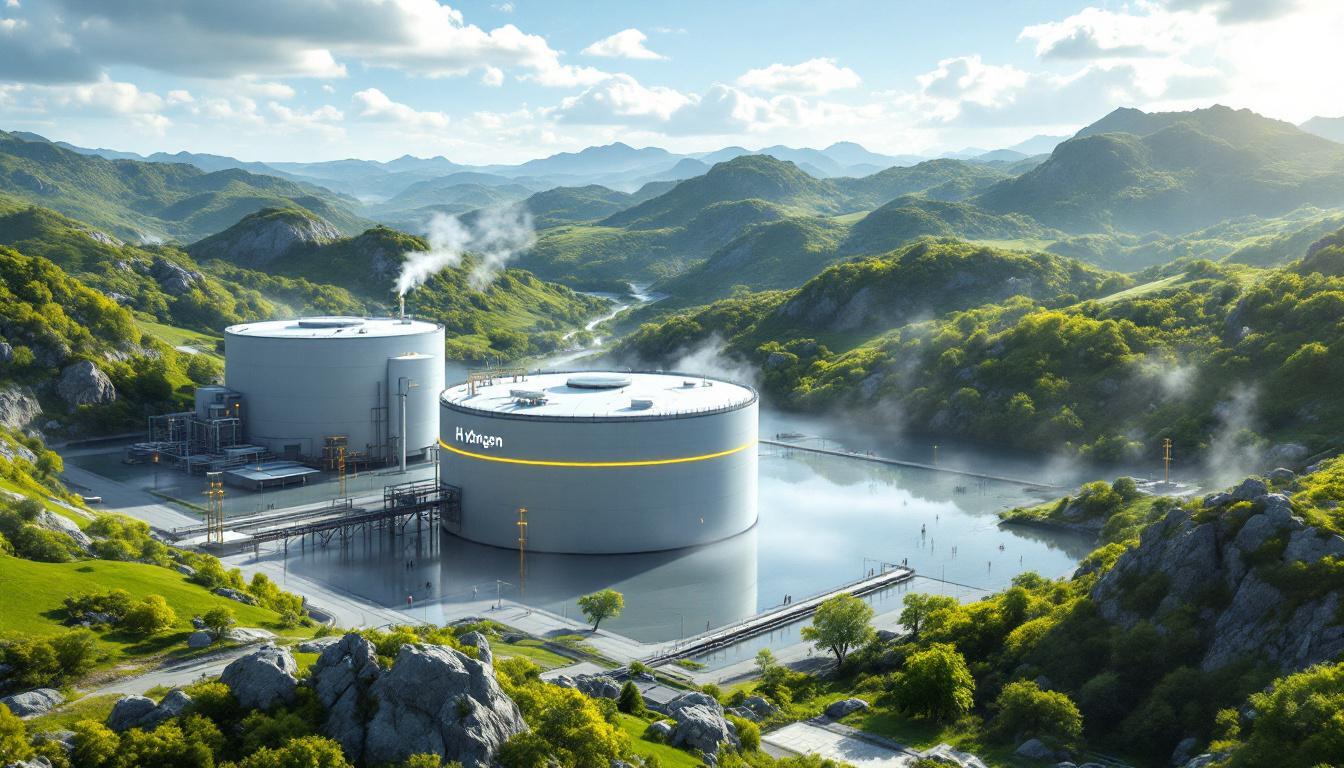
Spain unveils a €355 million funding call under the second phase of its Renoval scheme, targeting hydrogen technologies to accelerate industrial decarbonisation and boost the country’s position as a European hydrogen hub amid extensive public and private sector investments.
Spain has opened a €355 million funding call under the second phase of its Renoval scheme that explicitly includes hydrogen technologies, offering a new pool of support for industrial decarbonisation projects that convert existing manufacturing lines.
According to h2-view, the Ministry for Ecological Transition and Demographic Challenge (MITECO) approved the call to be financed from Spain’s post‑Covid recovery funds. Hydrogen equipment such as electrolysers and fuel cells are eligible for base aid equal to 15% of eligible costs, with individual projects able to claim up to €150 million. The scheme is split into two incentive tracks aimed at small businesses and larger firms respectively, and applications are open until 25 February. Projects may stack these incentives with other EU programmes provided they do not duplicate the same eligible costs, and applicants must demonstrate social and environmental benefits plus job creation. Hydrogen proposals will, however, compete directly with “all types” of clean technologies including solar, wind, batteries, heat pumps, biogas and hydropower.
Further detail published by FuelCellChina indicates the RENOVAL2 programme designates a two‑tier envelope: €25 million for projects up to €30 million and €330 million for projects above €30 million, with the application window opening on 22 January and closing on 25 February 2026. FuelCellChina also notes potential increases in aid intensity in designated areas, signalling regional nuances that may raise support above the base rate in certain cases.
The Renoval2 call sits alongside a suite of Spanish measures aimed at anchoring the country as a European hydrogen hub. Government plans unveiled in 2024 target green hydrogen meeting 74% of industrial hydrogen demand by 2030 and raised the national electrolyser capacity ambition to 12 GW. Industry momentum has followed: major firms including Repsol and Moeve have reached final investment decisions on large hydrogen projects, and Spanish hydrogen equipment firms are drawing private capital , BusinessWire reported that H2SITE closed a €36 million Series B to scale hydrogen separation reactors to multi‑ton per day capacity by 2026. Those private investments point to a growing domestic supply chain for electrolysers and balance‑of‑plant technologies, even as public support is distributed across many clean technologies.
Spain’s broader industrial hydrogen financing package extends beyond Renoval2. The Clean Hydrogen Observatory reports that Spain has committed €1.22 billion to seven hydrogen hub “megaprojects” totalling about 2.3 GW across regions including Aragon, Andalusia, Castilla y León and Galicia. A further €297.3 million has been allocated to strategic manufacturing projects aimed at electrolyser components, wind and solar parts, batteries and heat pumps. Separately, reporting for the EU IPCEI Hy2Use initiative shows Spain has committed €524 million to five large‑scale renewable hydrogen projects expected to add roughly 425 MW of electrolysis capacity and produce some 55,200 tonnes of green hydrogen annually. Those parallel programmes underline a two‑track approach: supporting both large integrated hubs and distributed industrial decarbonisation.
International monitoring and recent government grant rounds suggest Renoval2 complements earlier deployment support rather than duplicating it. The Clean Energy Ministerial’s Global Hydrogen Review 2024 recorded Spanish grants totalling €150 million awarded to 12 projects that together added about 309 MW of electrolysis capacity, and noted that these allocations were expected to mobilise substantial private investment. According to the review, additional national allocations have targeted demonstration and value‑chain projects, reinforcing a broader strategy to scale both production and manufacturing capability.
For industrial decarbonisation decision makers, the Renoval2 call offers an immediate route to public financing for process conversion projects that incorporate hydrogen technologies, but it comes with important caveats. Projects must demonstrate wider socio‑environmental benefits and compete in a cross‑technology pool where funding priorities are not hydrogen‑specific. The ability to stack funding with other EU instruments is useful, but applicants should ensure there is no overlap in eligible cost coverage. Regional aid differentials reported in the programme design may favour projects in designated areas, so careful structuring of consortiums and cost allocation will be critical to maximise aid intensity.
Taken together, Renoval2 and Spain’s other recent hydrogen commitments reveal a policy mix intended to accelerate both demand‑side decarbonisation within industry and supply‑side scale‑up of the hydrogen value chain. For firms planning retrofit or conversion projects, early engagement with regional authorities and alignment with parallel funding streams will be essential to capture available support and to position projects within Spain’s expanding hydrogen ecosystem.
- https://www.h2-view.com/story/spain-opens-e355m-clean-technologies-funding-call-hydrogen-included/2136232.article/?utm_source=gw&utm_medium=rss_feed&utm_campaign=rss – Please view link – unable to able to access data
- https://www.h2-view.com/story/spain-opens-e355m-clean-technologies-funding-call-hydrogen-included/2136232.article/?utm_source=gw&utm_medium=rss_feed&utm_campaign=rss – Spain’s Ministry for Ecological Transition and Demographic Challenge (MITECO) has approved the second call under its Renoval scheme, allocating €355 million to support industrial decarbonisation projects, including hydrogen technologies like electrolysers and fuel cells. Projects can claim up to 15% of eligible costs, up to €150 million per project, for converting existing manufacturing lines. The funding is divided into two incentive programmes targeting small businesses and larger firms, with applications open until 25 February. This initiative is part of Spain’s broader strategy to become a European hydrogen hub, leveraging its renewable resources and infrastructure.
- https://www.fuelcellchina.com/Industry_information_details/7767.html – Spain’s Ministry for Ecological Transition and Demographic Challenge (MITECO) has approved the RENOVAL2 programme, allocating €355 million to support industrial decarbonisation projects, including hydrogen technologies like electrolysers and fuel cells. The programme offers two funding tracks: €25 million for projects up to €30 million and €330 million for projects exceeding €30 million. Base aid intensity is 15% of eligible costs, with potential increases to 35% and €350 million in designated areas. Applications open on January 22 and close on February 25, 2026.
- https://observatory.clean-hydrogen.europa.eu/media/news/spain-unleashes-eu15bn-hydrogen-and-green-tech-blitz – Spain has announced €1.22 billion in funding for seven hydrogen hub megaprojects totaling 2.3GW across regions including Aragon, Andalusia, Castilla y León, and Galicia. The funding, part of the H2 Valleys programme, aims to anchor large-scale domestic hydrogen production and industrial use. Additionally, €297.3 million is allocated for 34 strategic manufacturing projects focused on electrolyser systems, wind and solar components, battery technologies, and heat pumps, strengthening Spain’s position in the global clean tech sector.
- https://www.businesswire.com/news/home/20250120970914/en/Hydrogen-equipment-pioneer-H2SITE-successfully-raises-EUR36-million-from-a-consortium-of-investors-co-led-by-Hy24-and-SC-Net-Zero-Ventures – H2SITE, a Spanish hydrogen equipment pioneer, has successfully raised €36 million in a Series B funding round co-led by Hy24 and SC Net Zero Ventures. The investment will support the deployment of H2SITE’s innovative hydrogen separation technology, focusing on scaling up to multi-ton per day reactors by 2026. The technology addresses challenges in hydrogen transportation, making it more accessible and cost-effective, and has been implemented in 15 projects across Western Europe.
- https://www.cleanenergyministerial.org/content/uploads/2025/02/globalhydrogenreview2024.pdf – The Global Hydrogen Review 2024 provides an overview of hydrogen policies and projects worldwide. Spain has awarded €150 million to 12 projects for a combined electrolysis capacity of 309 MW, including 3 hydrogen refuelling stations and 9 heavy-duty vehicles. The grant is expected to mobilise over €578 million in private investments. Additionally, Spain has announced €1.2 billion for renewable hydrogen, with €300 million allocated for 30 demonstration projects and €230 million for 40 projects across the hydrogen value chain.
- https://www.discovergreenhydrogen.com/articles/hydrogen-news/2025/june/spain-commits-524-million-to-five-green-hydrogen-projects-under-eu’s-ipcei-hy2use-scheme/ – Spain’s Ministry for the Ecological Transition and the Demographic Challenge (MITECO) has allocated €524 million to five large-scale renewable hydrogen projects under the EU’s Important Project of Common European Interest (IPCEI) Hy2Use initiative. The projects, located in regions including Andalusia, Aragon, Asturias, the Basque Country, and the Region of Murcia, are expected to add 425 MW of electrolysis capacity, powered by solar, wind, and hydroelectric sources, collectively producing 55,200 tonnes of green hydrogen annually.
Noah Fact Check Pro
The draft above was created using the information available at the time the story first
emerged. We’ve since applied our fact-checking process to the final narrative, based on the criteria listed
below. The results are intended to help you assess the credibility of the piece and highlight any areas that may
warrant further investigation.
Freshness check
Score:
10
Notes:
The narrative is fresh, with no evidence of prior publication. The earliest known publication date is January 5, 2026. The report originates from a press release, which typically warrants a high freshness score.
Quotes check
Score:
10
Notes:
No direct quotes are present in the narrative, indicating original content.
Source reliability
Score:
8
Notes:
The report originates from a reputable organisation, H2 View, which enhances its reliability. However, the specific author is not identified, which slightly reduces the score.
Plausability check
Score:
9
Notes:
The claims align with Spain’s recent initiatives in renewable hydrogen funding. The RENOVAL2 programme, approved by MITECO and managed by IDAE, is set to open applications on January 22, 2026, with a closing date of February 25, 2026. ([fuelcellchina.com](https://www.fuelcellchina.com/Industry_information_details/7767.html?utm_source=openai)) The funding structure and eligibility criteria mentioned are consistent with official announcements. The narrative does not include any surprising or impactful claims that are not covered elsewhere.
Overall assessment
Verdict (FAIL, OPEN, PASS): PASS
Confidence (LOW, MEDIUM, HIGH): HIGH
Summary:
The narrative is fresh, original, and aligns with Spain’s recent renewable hydrogen funding initiatives. The source is reputable, and the claims are plausible and consistent with official information.
