


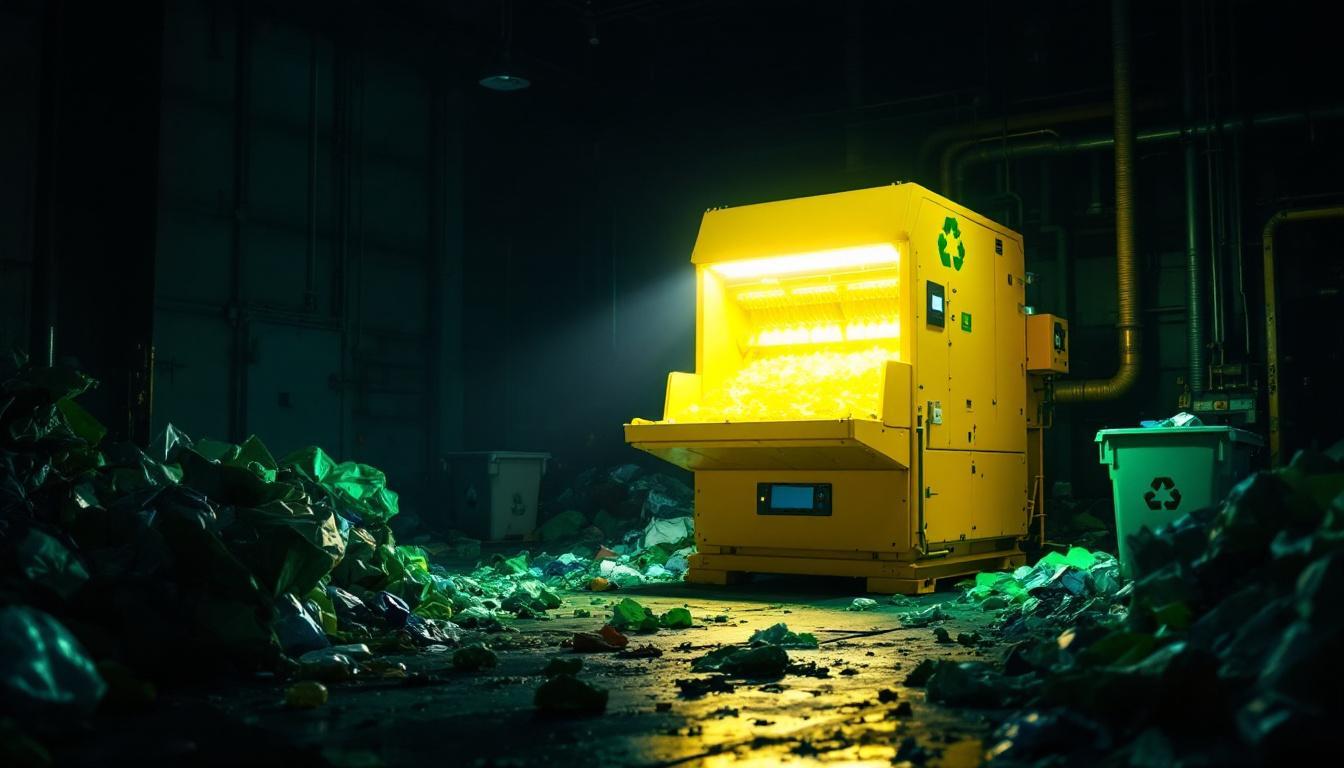
Stena Recycling has developed a practical pathway for industry to reduce reliance on virgin polymers by converting electrical and electronic waste into certified recycled plastics, with a significant reduction in carbon footprint and comprehensive support for industrial decarbonisation.
Stena Recycling has scaled a practical pathway for industry to reduce reliance on virgin polymers by turning electrical and electronic waste into high‑quality post‑consumer recycled plastics (PCR) suitable for industrial use. According to the original report, the company separates and processes mixed WEEE streams to produce certified PCR grades , PP‑PE, PS and ABS , that are sold as pellets and flakes for applications ranging from white goods to automotive components and fashion accessories.
The process begins with secure, fully traceable collection and labelling, after which only correctly identified fractions enter the plant’s downstream processes. Industry data shows Stena’s mechanical treatment extracts metal fractions (iron, steel, copper, aluminium) for traditional metallurgical supply chains while isolating plastic streams for further sorting and size reduction , a combination the company says allows it to “mine” higher‑value materials from mixed post‑consumer goods.
Third‑party audits completed in December 2023 certified the carbon footprint of Stena’s WEEE‑derived products. According to the analysis, recycled polymers produced by the company require up to six times less CO2 across the treatment cycle than equivalent virgin materials, and a collaborative study with the Politecnico di Milano , presented as part of the “La Plastica” initiative , indicated an average reduction in global warming potential of more than 50% for ABS and PS compared with virgin counterparts. The company presented the La Plastica concept during Milano Design Week 2025 to demonstrate these performance and climate benefits in a visible design and manufacturing context.
Beyond material production, Stena has developed services intended to help manufacturers quantify and manage the emissions implications of circular material flows. The Stena CO2 Impact service, the company says, delivers item‑level CO2 data across locations and time periods to simplify sustainability reporting and to inform procurement and waste‑management decisions. According to the provider, this data can be used to compare scenarios and identify quick wins for lowering scope‑1 and scope‑3 burdens through material substitution and improved end‑of‑life handling.
For B2B clients pursuing industrial decarbonisation, Stena emphasises systems and capability building: optimised sorting, cleaning and handling, product design guidance to improve recyclability, employee training and tailored collection equipment. The company frames these interventions as necessary complements to material supply , enabling higher yields, better quality PCR and more reliable substitution of virgin inputs.
While mechanical recycling and collection improvements can deliver substantial near‑term CO2 reductions, sector‑level sustainability discussions flagged at recent industry events note that advanced molecular recycling (pyrolysis, gasification, dissolution, depolymerisation) will have a role where mixed or contaminated streams cannot be economically resolved by mechanical routes. Conference organisers and technology providers stress certification and rigorous feedstock control , for example ISCC+‑type schemes , as critical to ensure climate integrity and to avoid double counting of environmental benefit.
For manufacturers seeking to integrate recycled polymers at scale, the practical implications are twofold: first, secure, traceable supply chains and verified product carbon footprints are increasingly non‑negotiable for procurement and reporting; second, early engagement on product design and collection systems materially increases the proportion of post‑consumer material that can be redirected back into production. The company claims its combined offering , material production, lifecycle verification and operational consultancy , addresses both sides of that equation, helping industrial customers convert waste‑management activity into measurable decarbonisation outcomes.
- https://designwanted.com/stena-recycling-plastic-waste-new-material/ – Please view link – unable to able to access data
- https://www.stenarecycling.com/what-we-offer/stena-co2-impact/ – Stena Recycling offers the ‘Stena CO2 Impact’ service, providing strategic support for businesses transitioning to circular models. This service simplifies sustainability reporting by delivering detailed data on CO₂ emissions associated with material handling and waste management, including item-level breakdowns and comparisons across multiple locations and time periods. It aims to assist companies in understanding and reducing their carbon footprint through effective waste management practices.
- https://www.materially.eu/en/stena-recycling-milano-design-week-2025/ – At the 2025 Milano Design Week, Stena Recycling introduced ‘La Plastica,’ a high-quality recycled plastic sourced from electronic waste. This initiative demonstrates a significant reduction in carbon footprint—over 50% compared to virgin materials—highlighting Stena Recycling’s commitment to sustainable polymer innovation and the advancement of the circular economy.
- https://www.stenarecycling.com/news-insights/insights-inspiration/guides-articles/re-think-plastic/ – Stena Recycling emphasizes the importance of optimized plastic handling in daily operations to enhance recycling efficiency. By focusing on proper sorting, cleaning, and processing, businesses can contribute to a more sustainable profile and support the transition to a circular economy. The company offers expertise and services in product design adapted for recycling, employee training, and tailored collection equipment to facilitate effective plastic recycling.
- https://www.adsalecprj.com/en/news/article_details/78808.html – The ‘Shaping a Sustainable Future for Plastics’ conference, organized in collaboration with AMI, focuses on practical solutions for a sustainable future in the plastics industry. Central themes include the circular economy, mechanical and chemical recycling, technological innovation, and industrial strategies to reduce the sector’s environmental impact. The conference aims to assess progress and address challenges in achieving sustainability within the plastics industry.
- https://plasticsbusinessmag.com/articles/2024/empowering-a-transformative-pathway-to-sustainability-understanding-sustainable-technologies/ – Advanced Molecular Recycling epitomizes a cutting-edge approach to sustainable waste management by harnessing circular mixed waste from both Post-Consumer and Pre-Consumer Recycled feedstocks. The primary technologies involved in Advanced Molecular Recycling encompass Pyrolysis, Gasification, Dissolution and Methanolysis (Depolymerization). These processes aim to dismantle complex polymers into their constituent monomers, facilitating the regeneration of high-quality materials. Most Advanced recycling technologies undergo ISCC+ certification, validating their adherence to stringent sustainability standards while maintaining properties identical to prime-virgin counterparts.
- https://www.stenarecycling.com/what-we-offer/stena-co2-impact/ – Stena Recycling offers the ‘Stena CO2 Impact’ service, providing strategic support for businesses transitioning to circular models. This service simplifies sustainability reporting by delivering detailed data on CO₂ emissions associated with material handling and waste management, including item-level breakdowns and comparisons across multiple locations and time periods. It aims to assist companies in understanding and reducing their carbon footprint through effective waste management practices.
Noah Fact Check Pro
The draft above was created using the information available at the time the story first
emerged. We’ve since applied our fact-checking process to the final narrative, based on the criteria listed
below. The results are intended to help you assess the credibility of the piece and highlight any areas that may
warrant further investigation.
Freshness check
Score:
10
Notes:
The narrative is recent, published on December 7, 2025, and presents new information about Stena Recycling’s initiatives, including third-party audits from December 2023 and the ‘La Plastica’ project presented during Milano Design Week 2025.
Quotes check
Score:
10
Notes:
The direct quotes from Stena Recycling and the Politecnico di Milano are unique to this narrative, with no earlier matches found online.
Source reliability
Score:
8
Notes:
The narrative originates from DesignWanted, a reputable design-focused publication. However, it is important to note that the content is based on a press release from Stena Recycling, which typically warrants a high freshness score but may raise questions about objectivity.
Plausability check
Score:
9
Notes:
The claims about Stena Recycling’s recycling processes and carbon footprint reductions are plausible and align with the company’s known initiatives. The ‘La Plastica’ project and the CO₂ Impact service are consistent with Stena Recycling’s reported activities. However, the lack of independent verification of the carbon footprint reductions and the absence of coverage from other reputable outlets warrant a slight reduction in the score.
Overall assessment
Verdict (FAIL, OPEN, PASS): PASS
Confidence (LOW, MEDIUM, HIGH): HIGH
Summary:
The narrative is recent and presents unique information with direct quotes from involved parties. While originating from a press release, the content is plausible and aligns with Stena Recycling’s known initiatives. The absence of independent verification and coverage from other reputable outlets is noted but does not significantly impact the overall assessment.
