


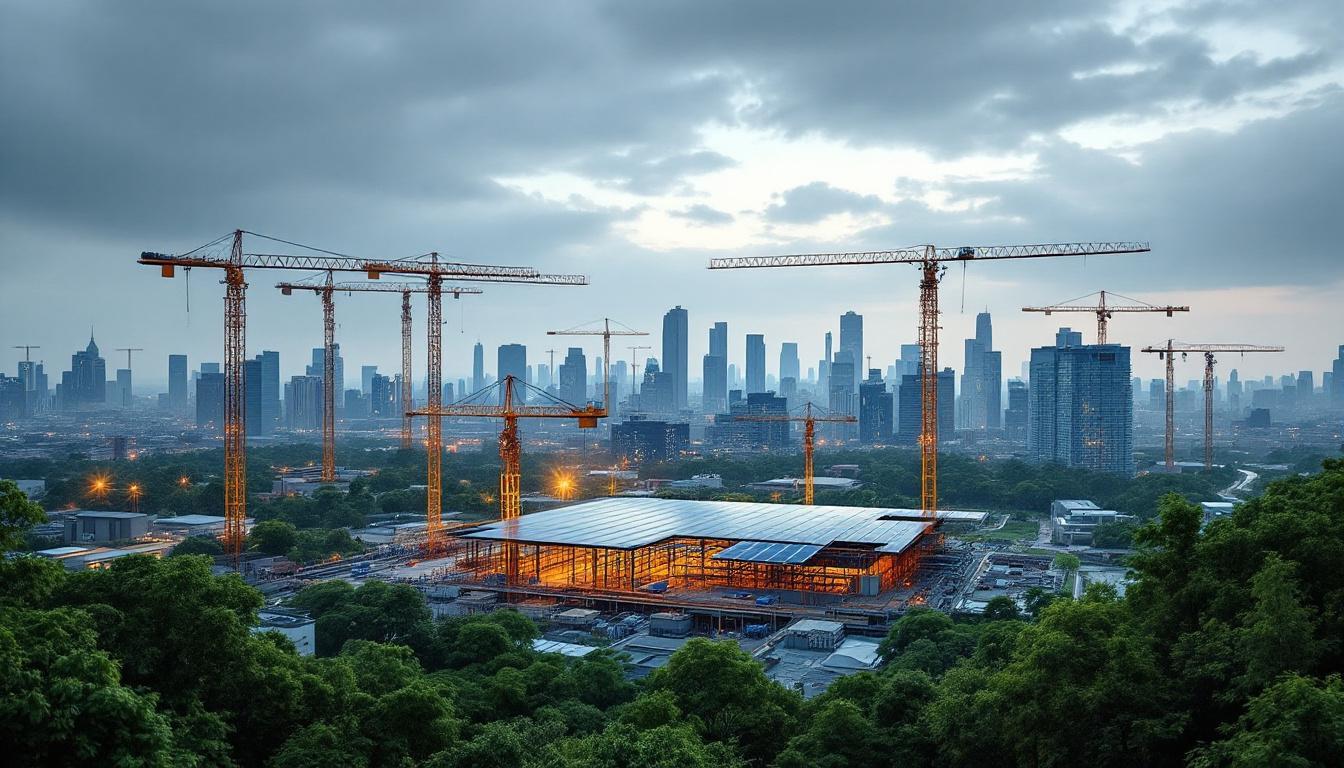
A new industry analysis forecasts the global market for sustainable construction materials will more than triple over the next decade, propelled by regulatory pressures, technological innovations, and rising demand for low-carbon solutions across Asia, Europe, and North America.
A new industry analysis paints a picture of rapid expansion for materials intended to slash construction’s climate footprint, forecasting that the global market for sustainable construction inputs will more than triple over the next decade. According to a report by Transparency Market Research, the sector was worth US$220.3 billion in 2023 and is projected to grow at a compound annual rate of 11.2% from 2024 to 2034, reaching roughly US$702.3 billion by the end of that period. A related release summarising the study underscores mounting regulatory pressure and technological progress as the principal catalysts for the shift.
The growth narrative rests on several interlocking trends. Low‑carbon cement formulations, greater use of recycled steel and aluminium, and the emergence of plant‑ and fungus‑derived composites are combining to reduce embodied carbon while improving thermal and durability performance in buildings. The reports note that urban expansion in Asia Pacific, driven by large projects in China, India, Japan and South Korea, accounts for a major portion of near‑term demand, with mature markets in North America and Europe sustaining uptake through strict energy and construction codes and established green‑building certification frameworks.
Material‑level economics are also changing behaviour. The research highlights that alternatives such as blended cements using industrial by‑products, reclaimed timber, and recycled plastics can lower lifecycle operating costs through reduced energy needs and diminished maintenance, strengthening the business case for adoption despite higher initial procurement prices in some cases. Interior products, low‑emission paints, recycled flooring, eco‑friendly insulation and similar items, are identified as a leading application band, propelled by occupant health and indoor‑air quality concerns. Residential construction remains the largest end‑use market, while commercial and industrial sectors are scaling adoption to meet corporate net‑zero targets and regulatory obligations.
Recycled metals are singled out as the largest material category today, with the report pointing to their ability to deliver structural performance comparable to virgin metals at substantially lower processing emissions. Other fast‑growing segments include green cement, bamboo, cellulose‑based insulation, hempcrete and experimental materials such as mycelium composites and ferrock.
The analysis signals both headwinds and opportunity. Barriers flagged include higher upfront costs for certain advanced products, limited awareness and supply constraints in some emerging regions, and the need for broader recycling infrastructure to scale bio‑based and circular solutions. Nonetheless, the authors argue that falling production costs, public‑private partnerships and improving policy incentives are beginning to alleviate these constraints. They suggest especially strong investor interest in scalable, low‑carbon inputs that can deliver measurable emissions reductions and reliable return on investment over asset lifetimes.
Market structure is evolving rapidly, with major industrial suppliers and specialist manufacturers repositioning portfolios. Transparency Market Research and accompanying summaries highlight strategic moves by chemical and building‑materials groups: BASF’s investments in advanced insulation and low‑carbon binders, Kingspan’s emphasis on circularity through its Planet Passionate programme, and Owens Corning’s focus on recycled content and greenhouse‑gas reduction. Flooring and textile suppliers such as Forbo and Interface have set out commitments and product deployments intended to reduce product‑level carbon footprints, while Alumasc’s recent acquisition activity illustrates consolidation among niche providers of architectural metal and rainwater systems.
For stakeholders involved in industrial decarbonisation, the findings underline several practical implications. Procurement strategies that evaluate whole‑life carbon and operating costs will increasingly favour materials that deliver demonstrable energy and emissions savings. Developers and contractors should anticipate tightening compliance requirements and an expanding suite of incentives tied to national and supranational climate goals. Meanwhile, producers able to scale manufacturing of low‑carbon binders, increase recycled content, and demonstrate supply‑chain traceability are likely to capture disproportionate value as capital allocators prioritise ESG outcomes.
The studies recommend that investors and corporate buyers focus on technologies and business models that combine performance parity with established products, clear emissions advantages, and the capacity to scale geographically. Over the coming decade, those criteria will be decisive in determining which solutions move from early adoption to industry standard.
- https://www.openpr.com/news/4377564/global-sustainable-construction-materials-industry-analysis – Please view link – unable to able to access data
- https://www.transparencymarketresearch.com/sample/sample.php?flag=S&rep_id=85374 – This report provides a comprehensive analysis of the global sustainable construction materials market, highlighting key drivers such as green construction practices and strict environmental requirements. It discusses the significant contribution of the construction industry to global carbon dioxide emissions and the growing demand for materials that reduce environmental impact. The report also covers innovations in green concrete, recycled steel, and bio-based composites, emphasizing their role in enhancing energy performance and sustainability. Additionally, it examines the impact of rapid urbanization and infrastructure expansion in emerging economies on market growth, noting the financial benefits of adopting sustainable materials, including savings in energy consumption and waste management.
- https://www.transparencymarketresearch.com/checkout.php?rep_id=85374&type=S – This document offers detailed insights into the market size and forecast for sustainable construction materials. It reports that the global market was valued at US$ 220.3 billion in 2023 and is projected to grow at a compound annual growth rate (CAGR) of 11.2% from 2024 to 2034, reaching US$ 702.3 billion by the end of 2034. The report highlights the shift in the construction industry towards mainstream adoption of sustainable materials, moving beyond niche alternatives to becoming central to residential, commercial, and industrial construction worldwide.
- https://www.transparencymarketresearch.com/zin-cair-batteries-market.html – This market research report focuses on the global zinc-air batteries market, providing an in-depth analysis of market trends, growth drivers, and forecasts. It discusses the technological advancements in zinc-air battery technology, their applications in various industries, and the competitive landscape. The report also examines the impact of environmental regulations and the growing demand for sustainable energy solutions on the market’s growth trajectory.
- https://www.transparencymarketresearch.com/specialty-carbon-black-market.html – This report delves into the global specialty carbon black market, analyzing key factors influencing market dynamics, including demand from end-use industries, technological innovations, and regulatory impacts. It provides forecasts for market growth and discusses the competitive landscape, highlighting major players and their strategic initiatives. The report also examines the role of specialty carbon black in various applications and its significance in the context of sustainable materials.
- https://www.transparencymarketresearch.com/wollastonite-powder-market.html – This market research report provides a comprehensive analysis of the global wollastonite powder market, covering aspects such as market size, growth trends, and key applications. It discusses the demand for wollastonite powder in various industries, including construction, ceramics, and plastics, and examines the impact of environmental regulations on market growth. The report also highlights the competitive landscape and profiles major players in the market.
- https://www.transparencymarketresearch.com/green-building-materials-market.html – This report offers an in-depth analysis of the global green building materials market, focusing on the adoption of sustainable materials in construction. It discusses the benefits of green building materials, such as reduced carbon footprints, energy efficiency, and enhanced durability. The report also examines the market’s growth drivers, including increasing environmental awareness, government regulations, and technological advancements in material science. Additionally, it provides forecasts for market growth and insights into the competitive landscape.
Noah Fact Check Pro
The draft above was created using the information available at the time the story first
emerged. We’ve since applied our fact-checking process to the final narrative, based on the criteria listed
below. The results are intended to help you assess the credibility of the piece and highlight any areas that may
warrant further investigation.
Freshness check
Score:
3
Notes:
⚠️ The article references a report by Transparency Market Research dated August 19, 2024, but the publication date of the article is February 4, 2026, indicating a significant delay. Additionally, similar projections have been reported by other sources, such as a November 21, 2023, report by Transparency Market Research estimating the green building materials market to reach USD 983 billion by 2031. ([globenewswire.com](https://www.globenewswire.com/news-release/2023/11/21/2784133/32656/en/Green-Building-Materials-Market-is-Projected-to-Reach-USD-983-billion-by-2031-with-a-12-7-CAGR-Analysis-by-Transparency-Market-Research-Inc.html?utm_source=openai)) This suggests that the information may be outdated and not original.
Quotes check
Score:
2
Notes:
⚠️ The article includes direct quotes from the Transparency Market Research report. However, these quotes are not independently verifiable, as the original report is behind a paywall. This lack of verifiability raises concerns about the authenticity and accuracy of the quoted information.
Source reliability
Score:
4
Notes:
⚠️ The article cites Transparency Market Research, a reputable market research firm. However, the report is behind a paywall, limiting access to the full content and raising concerns about the transparency and reliability of the information presented.
Plausibility check
Score:
5
Notes:
⚠️ The projected growth of the sustainable construction materials market aligns with global trends towards green building practices. However, the lack of independent verification and the presence of similar reports from other sources suggest that the information may be recycled or outdated.
Overall assessment
Verdict (FAIL, OPEN, PASS): FAIL
Confidence (LOW, MEDIUM, HIGH): HIGH
Summary:
⚠️ The article relies on a single, paywalled source for its information, lacks independent verification, and presents recycled content from previous reports. These factors significantly undermine its credibility and reliability.
