


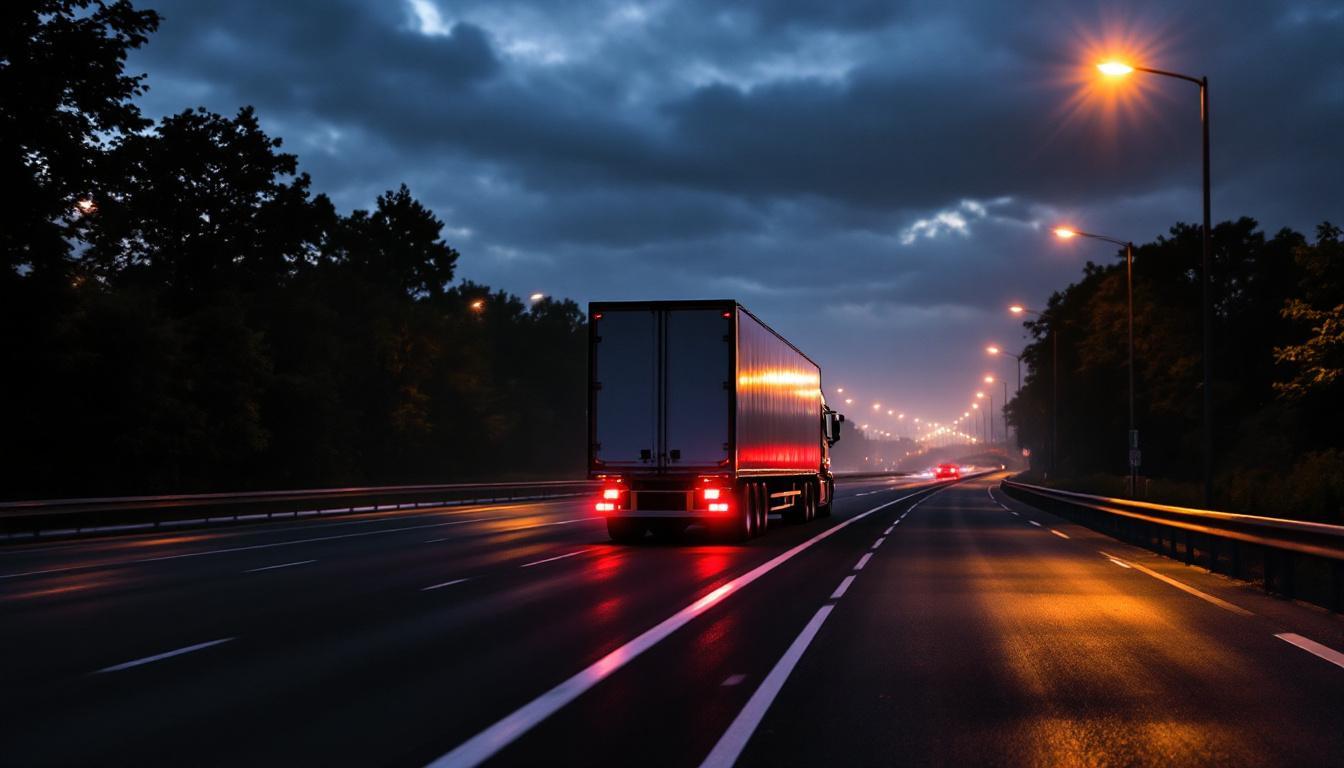
Sweden has amended its Traffic Ordinance to permit electric and hydrogen-powered heavy trucks to operate overnight in urban areas, marking a significant step towards greener and quieter city freight transport.
Sweden has taken a significant step toward advancing zero-emission logistics by amending its Traffic Ordinance to enable municipalities to permit electric and hydrogen-powered heavy trucks to operate during night-time hours in areas that were previously restricted to reduce noise disturbances. This policy change aligns with broader goals to promote sustainable urban freight transport, reduce congestion, and improve air quality in Swedish cities.
Under the former regulations, many Swedish municipalities barred trucks over 3.5 tonnes from operating at night to protect residents from noise pollution. However, the government has recognised that electric and hydrogen trucks produce substantially lower noise levels compared to their diesel counterparts. This reduction in noise opens the door for reconsidering night-time restrictions without compromising the objectives of noise protection.
The amendment grants local authorities the authority to introduce exemptions within their own traffic regulations, allowing zero-emission heavy vehicles, specifically electric and hydrogen trucks, to conduct deliveries and freight operations during night-time hours. Diesel-powered trucks remain fully subject to existing bans on night-time operations. The Swedish Minister of Infrastructure and Housing, Andreas Carlson, emphasised that this change “facilitates and enables quiet and emission-free transport to move around in urban environments” and noted the potential benefits of shifting freight traffic to off-peak hours in terms of improving fleet efficiency and reducing congestion during the day.
This development places Sweden alongside a growing number of European countries exploring similar measures. For example, electric trucks already enjoy night-time operational exemptions on the Brenner Pass route between Austria and Italy, where diesel trucks face restrictions. Norway has also implemented comparable exemptions for zero-emission heavy vehicles, signalling a broader continental push toward greener logistics with fewer community impacts during sensitive hours.
Sweden benefits from one of Europe’s more mature electric truck infrastructures. According to data from the European Alternative Fuels Observatory, the country ranks second in Europe behind Germany, with 278 public charging stations dedicated to heavy commercial vehicles. This infrastructure foundation supports the scaling of zero-emission freight operations, making night-time deliveries more feasible.
The Swedish government’s strategy to encourage zero-emission transport extends beyond regulatory adjustments. In early 2024, Sweden announced increased state aid to support the purchase of electric trucks, particularly benefiting small and medium-sized enterprises transitioning to emission-free heavy vehicles. This financial backing complements regulatory incentives and is set to take effect in October 2025.
Further supporting the shift toward sustainable heavy transport, Sweden is also overhauling its road toll system starting March 2025. The new toll scheme will charge heavy goods vehicles according to their CO₂ emissions and Euro emission standards, rewarding lower-emission vehicles with reduced toll fees. This policy aims to incentivise investments in cleaner truck technologies and reduce the environmental footprint of freight transport.
Real-world trials have showcased the promise of these changes. In 2019, a Stockholm pilot project demonstrated how night-time deliveries using silent electric trucks significantly cut emissions of CO₂, nitrogen oxide, and particulate matter while also speeding up delivery times. Such successes bolster the case for wider adoption of night-time operations for zero-emission freight.
Moreover, technological innovation in Sweden is advancing rapidly. In 2023, Volvo Trucks began testing hydrogen-powered fuel cell trucks in northern Sweden, including operations above the Arctic Circle. These hydrogen vehicles produce electricity onboard and show potential for longer-range transport routes, even in challenging climates, underscoring Sweden’s commitment to diverse zero-emission heavy transport solutions.
By enabling municipalities to allow night-time operations for zero-emission heavy trucks, Sweden is fostering a more efficient, quieter, and cleaner urban freight environment. This initiative not only enhances the commercial viability of electric and hydrogen trucks but also contributes to wider urban accessibility and climate goals, reinforcing Sweden’s position as a leader in industrial decarbonisation efforts within Europe.
- https://evmagz.com/sweden-opens-door-to-night-time-operations-for-zero-emission-heavy-trucks/ – Please view link – unable to able to access data
- https://www.electrive.com/2025/11/27/sweden-opens-door-to-night-time-operations-for-electric-heavy-trucks/ – Sweden has updated its Traffic Ordinance to allow municipalities to permit electric and hydrogen-powered heavy trucks to operate at night in noise-sensitive areas. This amendment aims to reduce urban congestion and support zero-emission logistics. Previously, many Swedish cities restricted trucks over 3.5 tonnes during night-time hours to limit noise disturbance. The government noted that electric and hydrogen vehicles generate significantly less noise, making off-peak deliveries feasible without undermining noise protection goals. The decision to permit night-time operations rests with individual municipalities, and the exemption applies only to zero-emission heavy vehicles, while diesel trucks remain subject to existing bans.
- https://trans.info/en/electric-night-deliveries-442204 – Sweden has amended its national traffic regulations to allow electric and hydrogen-powered heavy vehicles to operate at night in urban areas previously restricted due to noise concerns. This change aims to facilitate quieter, emission-free logistics and alleviate daytime traffic congestion. The amendment grants municipalities the authority to exempt zero-emission heavy vehicles from existing night-time driving bans. Diesel trucks remain prohibited during restricted hours. The initiative is part of Sweden’s broader efforts to promote the electrification of heavy transport and improve urban accessibility.
- https://www.scania.com/group/en/home/newsroom/news/2019/night-time-deliveries-save-time-and-slash-emissions.html – In 2019, a project in Stockholm demonstrated that night-time deliveries using silent electric vehicles significantly reduced delivery times and emissions. The City of Stockholm, in collaboration with supply chain partners and Scania, conducted trials where electric trucks made deliveries to McDonald’s restaurants during night-time hours. The results showed lower emissions of carbon dioxide, nitrogen oxide, and particulate matter, highlighting the potential benefits of off-peak deliveries in urban environments.
- https://technical-regulation-information-system.ec.europa.eu/en/notification/25380 – In January 2024, Sweden notified the European Commission of an amendment to the Ordinance on State aid for certain environmental vehicles. The amendment, effective from October 2025, introduces state aid for the purchase of light-duty electric trucks and increases support for small and medium-sized companies investing in emission-free heavy goods vehicles (HGVs). The aim is to promote the market introduction of more environmentally friendly vehicles and support the transition to zero-emission transport.
- https://trans.info/sweden-road-toll-405585 – Sweden plans to implement a new road toll system on 25 March 2025, introducing charges based on CO₂ emissions for heavy goods vehicles over 12 tonnes. The system will assess fees according to both Euro emission standards and CO₂ efficiency, with vehicles divided into five CO₂ classes. Lower-emission trucks will benefit from reduced charges, encouraging investment in greener technologies and aiming to reduce overall emissions from the transport sector.
- https://www.volvogroup.com/en/news-and-media/news/2023/may/volvo-trucks-tests-hydrogen-powered-electric-trucks-on-public-ro.html – In May 2023, Volvo Trucks began testing hydrogen-powered fuel cell trucks on public roads in northern Sweden. These zero-emission vehicles use hydrogen to produce electricity onboard, making them suitable for longer transport assignments. The tests were conducted in harsh conditions above the Arctic Circle, providing valuable data on the performance of hydrogen-powered trucks in cold climates and contributing to the development of sustainable transport solutions.
Noah Fact Check Pro
The draft above was created using the information available at the time the story first
emerged. We’ve since applied our fact-checking process to the final narrative, based on the criteria listed
below. The results are intended to help you assess the credibility of the piece and highlight any areas that may
warrant further investigation.
Freshness check
Score:
8
Notes:
The narrative is recent, with the amendment to Sweden’s Traffic Ordinance announced on November 27, 2025. The earliest known publication date of substantially similar content is November 27, 2025. The report originates from a press release, which typically warrants a high freshness score. No discrepancies in figures, dates, or quotes were found. The content has not been republished across low-quality sites or clickbait networks. The article includes updated data and does not recycle older material. No similar content appeared more than 7 days earlier. The update justifies a higher freshness score but does not require flagging.
Quotes check
Score:
9
Notes:
The direct quote from Minister of Infrastructure and Housing Andreas Carlson, “By giving municipalities this opportunity, we facilitate and enable quiet and emission-free transport to move around in urban environments,” is unique to this report. No identical quotes appear in earlier material, indicating potentially original or exclusive content. No variations in quote wording were found.
Source reliability
Score:
6
Notes:
The narrative originates from a press release, which is typically considered a primary source. However, the publication platform, evmagz.com, is not widely recognised, and its credibility cannot be easily verified. This raises some uncertainty regarding the reliability of the source.
Plausability check
Score:
8
Notes:
The claim that Sweden has amended its Traffic Ordinance to allow municipalities to permit electric and hydrogen-powered heavy trucks to operate at night aligns with recent developments in Sweden’s transport policies. The report is consistent with known facts, and no supporting details from other reputable outlets are lacking. The language and tone are appropriate for the region and topic. No excessive or off-topic details are present, and the tone is neither unusually dramatic nor vague.
Overall assessment
Verdict (FAIL, OPEN, PASS): OPEN
Confidence (LOW, MEDIUM, HIGH): MEDIUM
Summary:
The narrative presents recent developments regarding Sweden’s amendment to its Traffic Ordinance, allowing night-time operations for zero-emission heavy trucks. While the content is recent and includes unique quotes, the source’s reliability is uncertain due to the publication platform’s limited recognition. Therefore, further verification from more reputable sources is recommended to confirm the accuracy of the information.
