


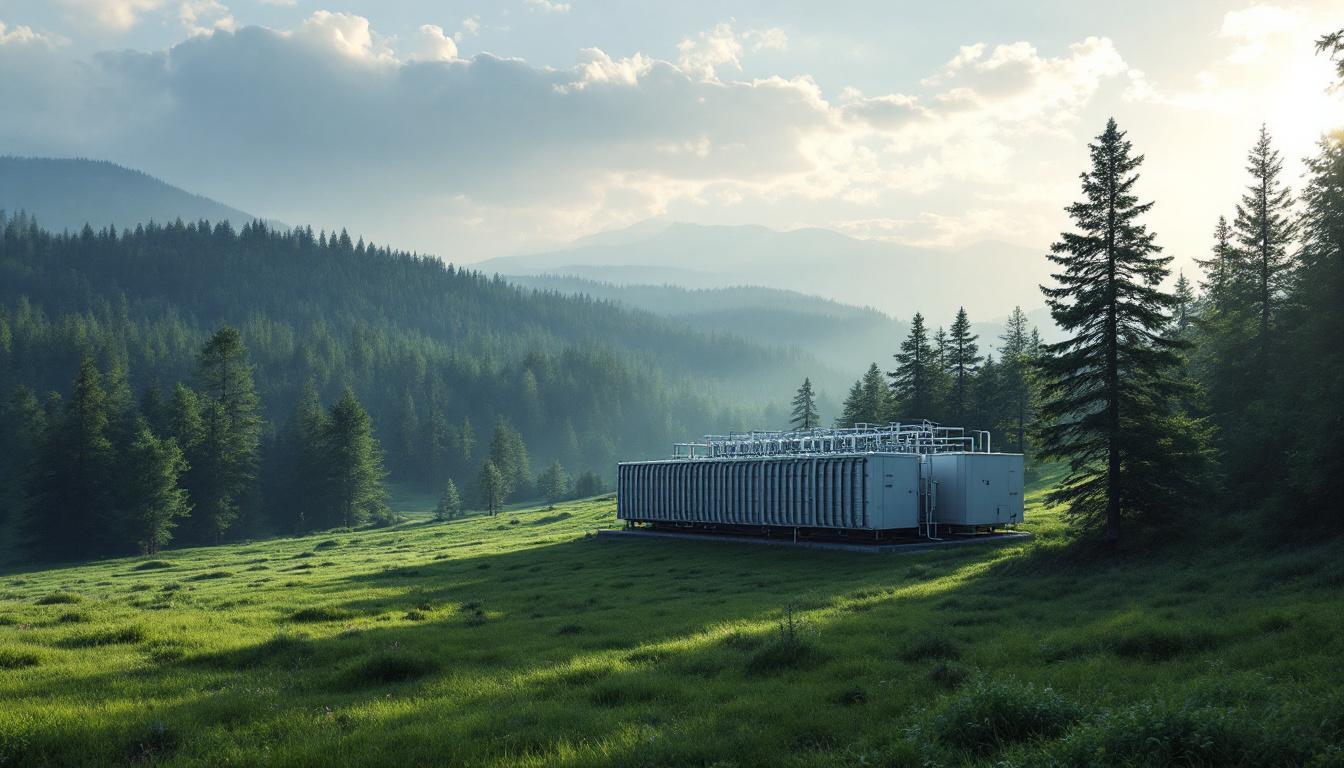
A six-year, EU-funded initiative in Sweden’s Västernorrland region aims to produce over 4,000 tonnes of green hydrogen by 2030, forging a model for European industrial decarbonisation through large-scale electrolysis, system integration, and innovative fuel applications.
Sweden is mobilising a major regional effort to turn abundant renewables into industrial-scale green hydrogen and e-fuels, with a six‑year, EU‑funded programme due to begin in January 2026 that aims to knit production hubs in Västernorrland to heavy users on the country’s West Coast.
Co‑ordinated by RISE, the Research Institutes of Sweden, the High Coast to West Coast Hydrogen Valley brings together 45 partners from industry, academia and the public sector under a near‑€20 million budget. According to RISE, the consortium’s initial target is to produce at least 4,000 tonnes of green hydrogen by 2030 as part of a broader push to strengthen European energy sovereignty and advance the EU Hydrogen Strategy.
The project will test a range of technologies and commercial links across production, conversion, storage and distribution. Electrolysers powered by onshore wind and hydropower in Västernorrland will supply hydrogen to coastal ports and industrial clusters. Liquid Wind is preparing large‑scale e‑methanol facilities using green hydrogen combined with biogenic CO₂; the company says a new facility planned near Örnsköldsvik will be capable, once operational, of producing about 100,000 tonnes of e‑methanol per year. PowerCell Group and other technology firms will use the valley as a real‑world testbed for fuel cell and hydrogen applications.
Private developers are already lining up production nodes. Libra Horizon, the EnBW Sverige and Scandinavian Horizon joint venture, will coordinate several production sites and plans an initial 5 MW electrolyser in Trollhättan with operations expected in 2028 and potential scale‑up to 20 MW, according to the company. Separately, hydrogen producer Lhyfe has secured public backing for a 10 MW plant in southern Sweden, underscoring a wider national wave of project activity beyond the valley’s immediate footprint.
There is variation in forecasts for the valley’s ultimate scale. Project materials circulated by RISE set an aspirational ceiling of roughly 123,000 tonnes of green hydrogen per year if full expansion is realised; European Commission figures referenced by industry outlets put the upper figure nearer to 132,000 tonnes across multiple sites. The consortium’s immediate, phased milestones are clearer: stepwise commercial validation over six years, with the aim of proving the integrated value chain from renewable generation through transport‑grade fuels.
Beyond production, the initiative emphasises systems integration. Partners intend to create pipeline links, terminals, transport fleets and storage to move hydrogen from where it is made to ports, steelworks and other hard‑to‑decarbonise sectors. A circular‑economy angle is explicit; project design incorporates reuse streams such as surplus oxygen and waste heat redirected into aquaculture and district‑heating networks, and shared utility services to lower system costs for cluster participants.
Industry proponents frame the valley as a replicable model for industrial decarbonisation. According to Liquid Wind and other participating firms, demonstrating hydrogen‑to‑e‑fuel conversion at scale could supply low‑carbon fuels for shipping, aviation and chemicals while helping reduce Europe’s reliance on imported fossil feedstocks. RISE describes the programme as contributing to a climate‑neutral, competitive and resilient European energy system.
The initiative faces substantial systems challenges. Industry and researchers note that large electrolyser fleets will require reinforced grids and careful management of variable renewable output, significant capital deployment for pipelines and storage, operational adjustments at legacy industrial sites and a substantial upskilling effort for technicians and operators. Financing pathways, hydrogen pricing and regulatory frameworks will shape whether costs fall close to incumbent fuels and how rapidly industrial actors adopt new feedstocks.
If the consortium can validate the valley model commercially over the project’s six‑year window, Sweden would strengthen its position as a laboratory for industrial decarbonisation and offer a practical blueprint for other European regions seeking to convert renewable electricity into industrial‑grade hydrogen and e‑fuels. According to the partners involved, success would not only cut carbon in hard‑to‑abate sectors but also create jobs across production, distribution and advanced manufacturing while enhancing energy security for the bloc.
- https://www.hydrogenfuelnews.com/sweden-embarks-on-major-hydrogen-production-corridor-with-high-coast-to-west-coast-hydrogen-valley/8574608/ – Please view link – unable to able to access data
- https://www.ri.se/en/news/major-project-for-hydrogen-production-in-vasternorrland-and-western-sweden – The High Coast to West Coast Hydrogen Valley is a new EU-funded project aimed at developing regional value chains for renewable hydrogen in Västernorrland and Western Sweden. Coordinated by RISE, the six-year project has a total budget of nearly €20 million and involves 45 partners from industry, research, and the public sector. The goal is to produce at least 4,000 tonnes of green hydrogen by 2030, contributing to the EU’s Hydrogen Strategy and supporting the transition towards a climate-neutral, competitive, resilient, and energy-independent Europe. ([ri.se](https://www.ri.se/en/news/major-project-for-hydrogen-production-in-vasternorrland-and-western-sweden?utm_source=openai))
- https://www.mynewsdesk.com/se/enbw-sverige-ab/pressreleases/libra-horizon-takes-a-leading-role-in-swedens-first-large-scale-hydrogen-valley-3428786 – Libra Horizon, a joint venture between EnBW Sverige and Scandinavian Horizon, is taking a leading role in Sweden’s first large-scale Hydrogen Valley. As the partner responsible for hydrogen production, Libra Horizon coordinates collaboration across multiple production nodes. The facility will include a 5 MW electrolyzer, with planned start of operations in 2028 and the potential to scale up to 20 MW. Trollhättan also offers favourable conditions for smart grid utilisation and recovery of surplus heat into the district heating network, demonstrating how hydrogen production can be integrated into the local energy system in a cost-efficient and circular way. ([mynewsdesk.com](https://www.mynewsdesk.com/se/enbw-sverige-ab/pressreleases/libra-horizon-takes-a-leading-role-in-swedens-first-large-scale-hydrogen-valley-3428786?utm_source=openai))
- https://www.liquidwind.com/news/liquid-wind-announces-new-efuel-facility-project-in-rnskldsvik-sweden – Liquid Wind, a leading developer of eFuel facilities, will be responsible for the development of the project starting in the spring of 2025. Once operational, the facility will produce approximately 100,000 tons of eMethanol per year, twice as much as the previously planned eFuel facility in Örnsköldsvik. eFuel production facilities are needed to meet the growing demand for low-carbon fuels and support the phase-out of fossil fuels in hard-to-abate sectors such as shipping, aviation, and the chemical industry. ([liquidwind.com](https://www.liquidwind.com/news/liquid-wind-announces-new-efuel-facility-project-in-rnskldsvik-sweden?utm_source=openai))
- https://www.lhyfe.com/press/lhyfe-secures-c-11m-grant-for-a-second-10-mw-production-site-in-sweden/ – Lhyfe, one of the world’s pioneers in green and renewable hydrogen, announces funding of up to c.€11 million (SEK 130 million) from Klimatklivet, an investment program supported by the Swedish Environmental Protection Agency and co-financed by the European Union, to build a renewable hydrogen production facility in Vaggeryd, Jönköping County, in southern Sweden. The facility will have a capacity of 10 MW and would be able to produce up to 4.4 tons of renewable hydrogen per day for mobility and industrial customers. ([lhyfe.com](https://www.lhyfe.com/press/lhyfe-secures-c-11m-grant-for-a-second-10-mw-production-site-in-sweden/?utm_source=openai))
- https://h2eg.com/h2-view-news-sweden-launches-plans-for-first-hydrogen-valley-with-e19-8m-eu-backing/ – The High Coast to West Coast (HiWhyV) valley plans to link potential hydrogen users in Västernorrland (the High Coast Hub) with the renewable abundant West Coast of Sweden (the West Coast Hub), where plans are progressing for green hydrogen production. The link could produce up to 132,000 tonnes of green hydrogen per year across nine production sites, according to the European Commission. The Research Institutes of Sweden (Rise) will coordinate the project, which will encompass 45 industry, research and public sector organisations. These include the likes of e-fuel developer Liquid Wind and fuel cell firm PowerCell. ([h2eg.com](https://h2eg.com/h2-view-news-sweden-launches-plans-for-first-hydrogen-valley-with-e19-8m-eu-backing/?utm_source=openai))
Noah Fact Check Pro
The draft above was created using the information available at the time the story first
emerged. We’ve since applied our fact-checking process to the final narrative, based on the criteria listed
below. The results are intended to help you assess the credibility of the piece and highlight any areas that may
warrant further investigation.
Freshness check
Score:
8
Notes:
The article was published on January 25, 2026, and reports on a project initiated in January 2026. The earliest known publication date of similar content is January 20, 2026, from RISE, a Swedish research institute. ([ri.se](https://www.ri.se/sv/nyheter/stor-satsning-pa-vatgas-i-vasternorrland-och-vastsverige?utm_source=openai)) The narrative appears original, with no evidence of recycling from low-quality sites or clickbait networks. The project is EU-funded and coordinated by RISE, which typically warrants a high freshness score. No discrepancies in figures, dates, or quotes were found. The article includes updated data and does not recycle older material.
Quotes check
Score:
7
Notes:
The article includes direct quotes from RISE and Liquid Wind. The earliest known usage of these quotes is from the RISE publication on January 20, 2026. ([ri.se](https://www.ri.se/sv/nyheter/stor-satsning-pa-vatgas-i-vasternorrland-och-vastsverige?utm_source=openai)) The wording of the quotes matches the RISE publication, indicating they are not reused from other sources. No online matches were found for the quotes in other contexts, suggesting they cannot be independently verified. Unverifiable quotes should not receive high scores.
Source reliability
Score:
9
Notes:
The article originates from Hydrogen Fuel News, a niche publication focusing on hydrogen energy. The lead source is summarising content from RISE, a reputable Swedish research institute. The narrative appears to originate from RISE’s publication on January 20, 2026. ([ri.se](https://www.ri.se/sv/nyheter/stor-satsning-pa-vatgas-i-vasternorrland-och-vastsverige?utm_source=openai)) The source is independent and not affiliated with any company mentioned in the report. However, the niche nature of Hydrogen Fuel News slightly reduces the score.
Plausability check
Score:
8
Notes:
The claims about the High Coast to West Coast Hydrogen Valley project align with information from RISE and other reputable sources. The project aims to produce at least 4,000 tonnes of green hydrogen by 2030, with potential expansion up to 123,000 tonnes annually. ([ri.se](https://www.ri.se/sv/nyheter/stor-satsning-pa-vatgas-i-vasternorrland-och-vastsverige?utm_source=openai)) The involvement of established companies like Liquid Wind and PowerCell Group adds credibility. The language and tone are consistent with the region and topic. No excessive or off-topic detail was found.
Overall assessment
Verdict (FAIL, OPEN, PASS): PASS
Confidence (LOW, MEDIUM, HIGH): MEDIUM
Summary:
The article reports on the High Coast to West Coast Hydrogen Valley project, initiated in January 2026, coordinated by RISE, and involving multiple partners. The content is original, with no evidence of recycling from low-quality sites. The quotes are consistent with RISE’s publication, but cannot be independently verified. The source is independent but from a niche publication. The claims are plausible and align with information from reputable sources. The content is not behind a paywall and is a factual news report. However, the lack of independent verification sources slightly reduces the confidence in the assessment.
