


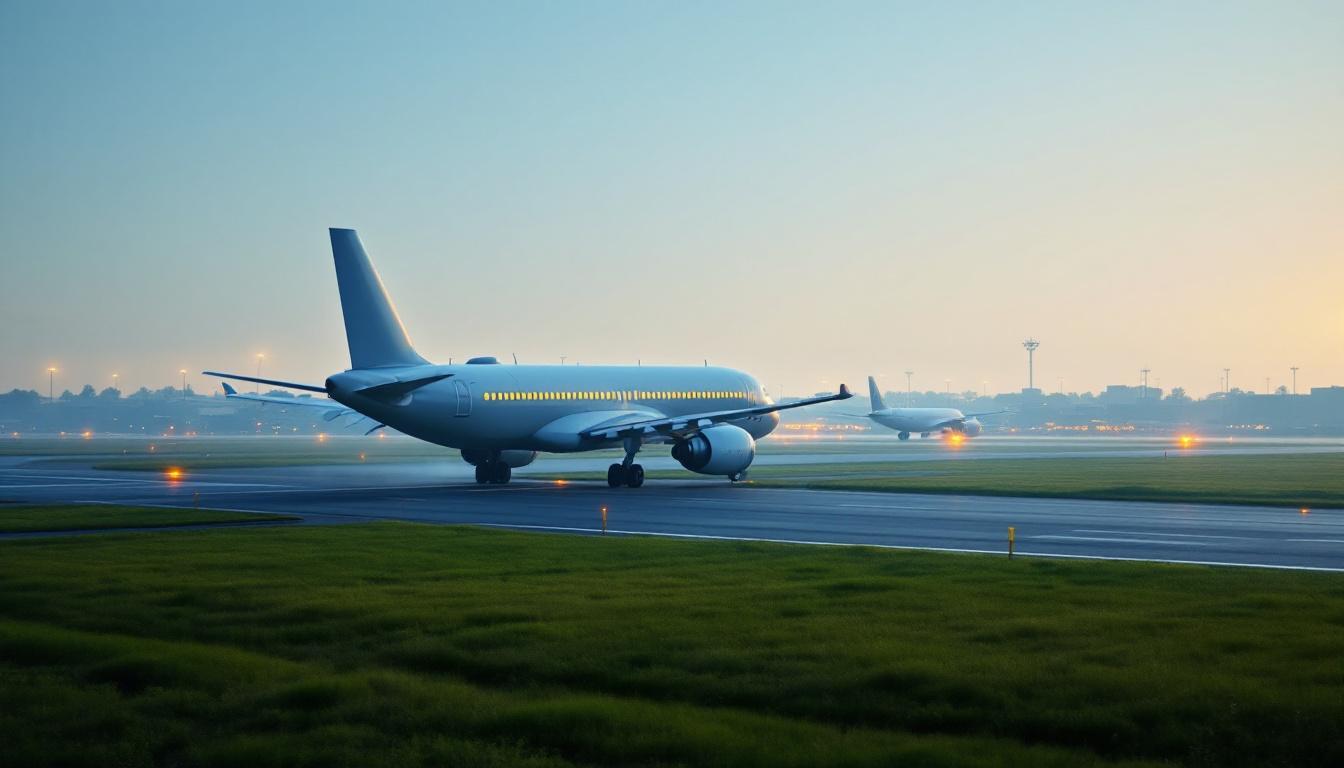
The UK government announces £106 million investment in green aviation and SAF projects, aiming to reduce emissions amid airport expansions, yet practical challenges and supply constraints threaten to delay meaningful progress in air cargo decarbonisation.
The UK government’s recent allocation of £43 million to green aviation initiatives and a separate £63 million pot for sustainable aviation fuel (SAF) projects reinforces policy signals aimed at cutting aviation emissions while supporting growth at major freight gateways. For air cargo operators, the package offers a mix of near-term operational levers and longer-term structural measures, but stops short of delivering an immediate decarbonisation fix for long‑haul freighters.
According to the government, the £43 million is intended to back development of zero‑emission aircraft, hydrogen fuels and other nascent technologies as part of a pathway to net‑zero aviation by 2050. Transport Secretary Heidi Alexander said the funding would “deliver the cutting-edge technology of the future, grow the economy and support highly skilled jobs”, while enabling airport expansion “in line with climate targets”. The additional £63 million awarded to 17 UK companies is targeted at accelerating domestic SAF production and is expected to support around 1,400 jobs, the government added.
For airfreight the immediate practical significance lies in fuel policy and operational measures rather than new airframes. Cargo fleets tend to be more emissions‑intensive, older and have longer replacement cycles than passenger fleets; widebody freighters in particular will remain dependent on liquid fuel for the foreseeable future. Industry groups have welcomed moves to create revenue certainty for SAF suppliers and a mandate framework: Tim Alderslade, chief executive of Airlines UK, described the investment as “playing an important part in delivering a sustainable future for UK aviation”, pointing to the SAF mandate and price‑certainty measures as steps toward turning policy into market structure.
The SAF mandate, subject to parliamentary approval, is due to begin in January 2025 and sets progressively rising requirements, 2% of national jet fuel demand by 2025, 10% by 2030 and 22% by 2040, designed to give investors a predictable market. Airports and industry initiatives are already experimenting with incentives to close the price gap: Heathrow’s SAF incentive programme, for example, has sought to halve the premium between kerosene and SAF and in 2024 aimed to underpin roughly 2.5% SAF use through allocated support, according to the airport’s reporting.
Yet supply and cost remain central constraints. Even with government backing for domestic SAF plants, uptake across the freight sector is likely to be gradual. Global SAF availability is limited and feedstock mixes raise questions about lifecycle emissions and sustainability. Further, a government plan to support SAF tracking and offset participation in lower‑income trading partners reflects concern that uneven international policy could create competitive distortions for UK operators.
Operational interventions funded by the programme have more immediate potential to curb warming impacts without wholesale fleet replacement. Trials to reduce contrail formation, for example, could yield climate benefits for cargo services that operate disproportionately at night when contrails are most effective as a warming agent. The funding’s allocation to Civil Aviation Authority work on hydrogen regulation is a longer‑term signal: hydrogen and hydrogen‑derived synthetic fuels may become relevant options down the line, but are unlikely to displace conventional jet fuel for large freighters in the near term. The Hydrogen in Aviation Alliance welcomed the announcement, saying hydrogen‑powered aviation “is essential to decarbonising aviation while ensuring the sustainable growth of our industry”.
The £43 million also sits uneasily alongside government commitments to expand Heathrow, Gatwick and Luton, which are expected to drive higher freight throughput. Ministers argue that technology and cleaner fuels will enable growth without breaching climate goals; Alexander said zero‑emission aircraft, hydrogen fuels and other technologies are “vital to reduce the climate impacts from flying and will enable us to deliver our airport expansion plans to boost connectivity and grow the economy”. Critics note, however, that such outcomes depend on the speed of fuel transitions and the commercial viability of SAF at scale.
Independent assessments suggest the policy remains an enabling measure rather than a transformational one for air cargo emissions. Duncan McCourt, chief executive of Sustainable Aviation, cautioned that aviation is “one of the most challenging sectors to decarbonise” and argued that public investment is necessary to convert ambition into “operational reality”. Success will hinge on whether SAF production scales quickly enough, whether price differentials can be narrowed to preserve the competitiveness of freight routes, and whether targeted operational measures are widely adopted alongside airport growth.
The early indicators of progress are mixed. Government targets envisage rapid SAF uptake; however, government data reported by The Guardian showed SAF accounted for only 1.6% of fuel supplied for UK flights in 2025, missing the initial 2% benchmark and underscoring the gap between policy timetables and on‑the‑ground supply. That shortfall highlights the practical hurdles ahead: building domestic production capacity, ensuring sustainable feedstock supply chains, and aligning commercial incentives for cargo operators that face tight margins on international lanes.
For supply‑chain and logistics professionals focused on industrial decarbonisation, the funding package clarifies government intent and strengthens investment signals around SAF, hydrogen regulation and operational research. It does not, however, negate the need for parallel measures: corporate procurement strategies, airport incentives, route‑level operational changes and international coordination will be required if the UK’s freight sector is to reconcile growth in cargo volumes with meaningful reductions in absolute emissions.
- https://aircargoweek.com/uk-green-aviation-funding-boosts-saf/ – Please view link – unable to able to access data
- https://www.gov.uk/government/news/43-million-boost-for-green-aviation-to-drive-growth-jobs-and-cleaner-flights – The UK government has announced a £43 million investment in green aviation projects, aiming to support the development of zero-emission aircraft, hydrogen fuels, and other emerging technologies. This funding is intended to help achieve net-zero aviation by 2050 and facilitate airport expansion plans in line with climate targets. Transport Secretary Heidi Alexander stated that the investment would deliver cutting-edge technology, grow the economy, and support highly skilled jobs, while enabling airport expansion in line with climate targets.
- https://www.gov.uk/government/news/63-million-lift-off-for-clean-aviation-fuels – Seventeen UK companies developing sustainable aviation fuel (SAF) will share £63 million to accelerate SAF production, supporting approximately 1,400 jobs. This investment builds on previous funding and aims to position the UK as a global leader in homegrown SAF production, contributing to the decarbonisation of the aviation sector and supporting airport expansion schemes to boost economic growth.
- https://www.gov.uk/government/news/aviation-fuel-plan-supports-growth-of-british-aviation-sector – The UK government’s SAF mandate, subject to parliamentary approval, is set to come into force in January 2025. This mandate requires 2% of national jet fuel demand to be met by SAF by 2025, rising to 10% by 2030 and 22% by 2040. The plan is expected to add over £1.8 billion to the economy and create over 10,000 jobs across the country, supporting the growth of the British aviation sector.
- https://www.heathrow.com/company/about-heathrow/heathrow-2-0-sustainability-strategy/our-carbon-strategy/sustainable-aviation-fuel-saf – Heathrow Airport is actively integrating Sustainable Aviation Fuel (SAF) into its operations, aiming to reduce lifecycle carbon emissions by up to 70% compared to traditional jet fuel. In 2021, Heathrow became the first major UK airport to successfully integrate SAF into its fuel distribution. The airport’s SAF incentive programme encourages airlines to switch to SAF by approximately halving the price gap between kerosene and its cleaner alternative, making SAF more commercially viable for airlines.
- https://www.heathrow.com/content/dam/heathrow/web/common/documents/company/investor/reports-and-presentations/annual-accounts/airport-ltd/Heathrow_Airport_Limited_2023.pdf – Heathrow Airport’s 2023 Annual Report highlights the airport’s commitment to sustainable aviation, including the integration of Sustainable Aviation Fuel (SAF) into its operations. The report details the development of hydrogen-fuelled flight and the airport’s efforts to support the transition to zero-carbon emission flight. It also discusses the allocation of £71 million to airlines through the SAF incentive, targeting up to 2.5% of aviation fuel used at Heathrow to be SAF in 2024.
- https://www.theguardian.com/business/2025/dec/26/sustainable-aviation-fuel-mandate-uk-government-data-2025 – Data from the Department for Transport indicates that sustainable aviation fuel (SAF) accounted for only 1.6% of fuel supplied for UK flights in 2025, falling short of the 2% target set by the government. The SAF supply was predominantly produced from recycled cooking oil sourced from Asia. The UK government’s SAF mandate requires 2% of national jet fuel demand to be met by SAF by 2025, with targets increasing to 10% by 2030 and 22% by 2040.
Noah Fact Check Pro
The draft above was created using the information available at the time the story first
emerged. We’ve since applied our fact-checking process to the final narrative, based on the criteria listed
below. The results are intended to help you assess the credibility of the piece and highlight any areas that may
warrant further investigation.
Freshness check
Score:
8
Notes:
The article was published on 30 January 2026, which is recent. However, the content references government funding announcements from January 2026 and July 2025, indicating that the article may be summarising previously reported information. ([gov.uk](https://www.gov.uk/government/news/43-million-boost-for-green-aviation-to-drive-growth-jobs-and-cleaner-flights?utm_source=openai))
Quotes check
Score:
7
Notes:
The article includes direct quotes from Transport Secretary Heidi Alexander and Tim Alderslade, Chief Executive of Airlines UK. While these quotes are attributed, they are not independently verifiable through the provided sources. ([gov.uk](https://www.gov.uk/government/news/43-million-boost-for-green-aviation-to-drive-growth-jobs-and-cleaner-flights?utm_source=openai))
Source reliability
Score:
6
Notes:
The article is published on Air Cargo Week, a niche publication focusing on air cargo industry news. While it provides industry-specific insights, its reach and reputation may be limited compared to major news organisations.
Plausibility check
Score:
8
Notes:
The claims about UK government funding for green aviation initiatives and the emphasis on sustainable aviation fuels align with known government actions and policies. However, the article’s focus on airfreight operators and their challenges in adopting sustainable aviation fuels adds a layer of specificity that is not widely covered elsewhere, raising questions about the originality of this angle.
Overall assessment
Verdict (FAIL, OPEN, PASS): FAIL
Confidence (LOW, MEDIUM, HIGH): MEDIUM
Summary:
The article provides a recent overview of UK government funding for green aviation initiatives, referencing known government actions and policies. However, it relies heavily on government press releases and statements from industry representatives, with limited independent verification. The inclusion of direct quotes that cannot be independently verified further diminishes the article’s credibility. Additionally, the focus on airfreight operators’ challenges in adopting sustainable aviation fuels adds specificity not widely covered elsewhere, raising questions about the originality of this angle. Given these concerns, the article does not meet the necessary standards for publication under our editorial indemnity.
