


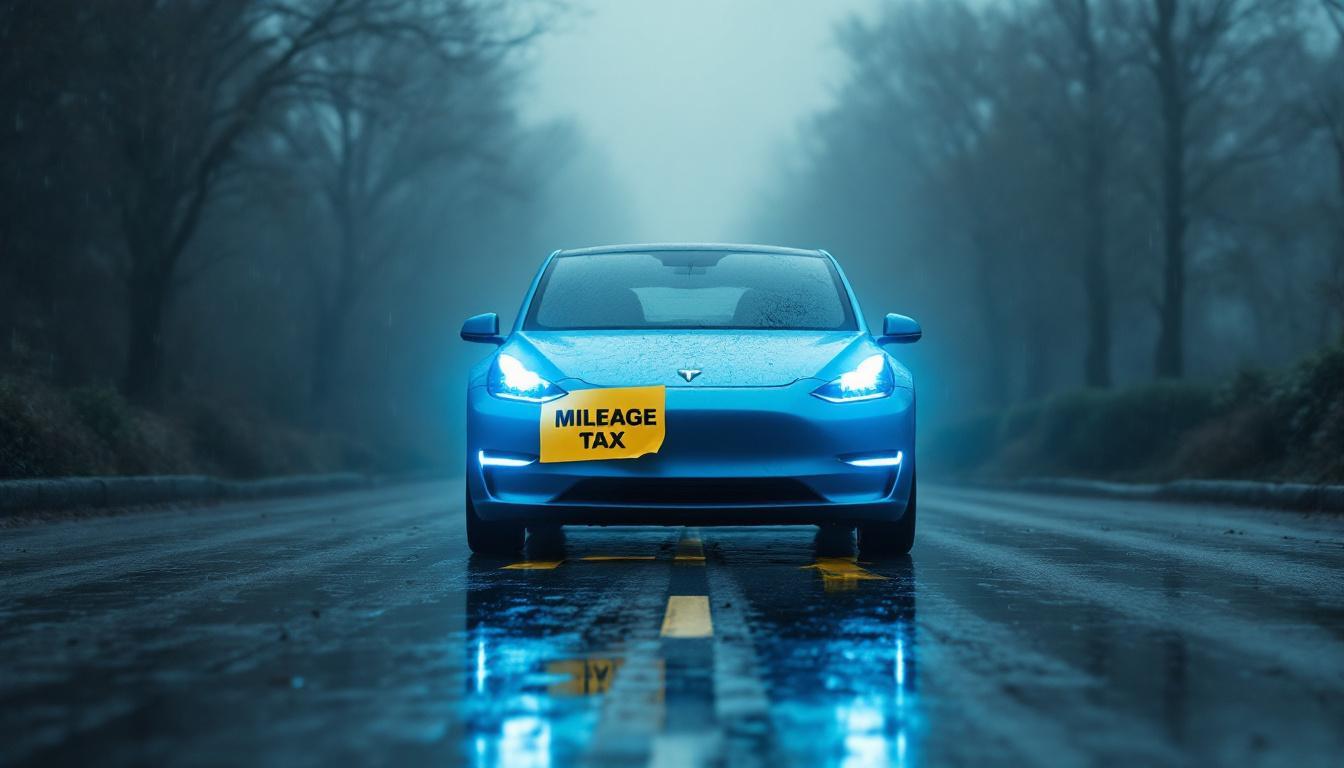
The UK plans introduced a pay-per-mile road tax for electric and hybrid vehicles from 2028, prompting concerns over its potential to hinder EV adoption amid a broader push for greener transport infrastructure.
The UK government’s recent announcement to introduce a pay-per-mile road tax on electric vehicles (EVs) and plug-in hybrids (PHEVs) from April 2028 marks a surprising and somewhat contentious turn in its approach to accelerating the clean transport transition. While efforts over the past years have focused heavily on incentivising EV uptake through grants and infrastructure investment, this new levy, set at 3p per mile for fully electric vehicles and 1.5p for plug-in hybrids, is being introduced primarily to recoup revenue lost from declining petrol and diesel fuel duty as electric vehicle adoption grows.
According to the Office for Budget Responsibility (OBR), the mileage charge is expected to generate around £1.4 billion annually by the late 2020s, roughly half the level of fuel duty currently paid by petrol drivers. For an average EV driver covering 8,500 miles per year, that translates into approximately £255 annually in road tax. While this amount remains significantly lower than traditional fuel taxes, the timing and introduction of such a tax have raised concerns among clean transport advocates and industry observers, who fear it could undermine efforts to boost electric car adoption, especially as the UK still aims for a complete phase-out of new petrol and diesel vehicle sales by 2030.
Analysis accompanying the policy announcement warned that the new tax could reduce EV sales by up to 440,000 vehicles over the next five years. This potential drop is notable since EV demand in the UK has already shown signs of plateauing, partly due to high upfront costs despite government subsidies. Such a tax could disincentivise prospective buyers, complicating the transition to cleaner transport modes vital for the UK’s commitment to net-zero greenhouse gas emissions by 2050.
Interestingly, the government appears aware of the potential negative impact of the mileage-based levy and has simultaneously introduced counterbalancing measures aimed at supporting EV sales. These include raising the Vehicle Excise Duty (VED) expensive car supplement threshold from £40,000 to £50,000 for electric vehicles, which could encourage ownership of higher-value EVs. Additionally, the government has committed a sizeable £1.3 billion fund to extend the Electric Car Grant, providing up to £3,750 off new EVs priced below £37,000, and an additional £200 million investment in expanding EV charging infrastructure nationwide.
These investments come as part of a broader package aiming to smooth the transition to electric mobility. Beyond purchase incentives, the UK government recently announced a further £63 million dedicated to EV infrastructure, including grants for local authorities to expand affordable at-home charging and funds aimed at electrifying NHS ambulance and medical fleets. These initiatives complement a larger £4 billion commitment to develop over 100,000 new public chargepoints by 2030, supported by a £381 million Local Electric Vehicle Infrastructure (LEVI) Fund. The objective is to resolve critical barriers faced by UK drivers who lack access to off-street parking and to create thousands of green jobs while fostering economic growth.
Despite these positive infrastructure and subsidy measures, there is a perception of inconsistency in UK EV policy. The introduction of a mileage tax close on the heels of generous incentives risks sending mixed signals to consumers and industry stakeholders alike. Opponents argue this complicates the policy landscape unnecessarily and could slow the pace of EV adoption at a critical juncture, especially as the UK government pledges to phase out petrol and diesel vehicle sales within less than five years.
From a fiscal perspective, the mileage tax reflects the government’s need to address the long-term decline in fuel duty revenue, which the OBR estimates could reduce by nearly 0.6% of GDP by 2050. However, balancing immediate revenue needs with the urgent imperative to decarbonise road transport presents a policy challenge. Industry experts suggest a phased or carefully designed approach would have better supported sustained growth in electric vehicle markets without risking consumer resistance.
The UK government’s split approach, combining expanded subsidies and charging infrastructure investments with a novel tax on electric miles, paints a complex picture. While the expanded grants and infrastructure funding demonstrate a robust commitment to the electric vehicle revolution, the mileage-based road tax risks dampening momentum just as the UK strives to meet its ambitious environmental targets. Policymakers will need to closely monitor and possibly adjust this tax’s impact to ensure it does not stall progress toward cleaner, more sustainable transportation.
- https://cleantechnica.com/2025/11/28/stupid-uk-putting-road-tax-on-evs-in-2028/ – Please view link – unable to able to access data
- https://www.reuters.com/world/uk/uks-obr-says-new-mileage-charge-electric-cars-be-introduced-2025-11-26/ – The UK’s Office for Budget Responsibility (OBR) announced that a new mileage-based charge for electric and plug-in hybrid vehicles will be implemented starting April 2028. This measure is projected to generate £1.4 billion ($1.85 billion) in revenue. The proposed levy is aimed at compensating for the anticipated loss of fuel duty revenue—estimated at 0.6% of GDP by 2050—due to the increasing use of electric vehicles. It will be set at approximately half the current fuel duty rate paid by petrol vehicle drivers.
- https://www.reuters.com/business/finance/budget-2025-key-measures-uks-reeves-tax-heavy-budget-2025-11-26/ – UK Finance Minister Rachel Reeves unveiled a budget that includes significant tax increases projected to raise £26.1 billion annually by 2029/30. Key measures include a freeze on income tax thresholds from 2028-31, expected to bring in £7.6 billion, and a new annual tax on homes valued over £2 million starting in April 2028, generating £400 million. While fuel duty rates will remain frozen, a mileage-based tax will be introduced for electric and plug-in hybrid vehicles, anticipated to raise £1.4 billion.
- https://moneyweek.com/personal-finance/tax/electric-vehicle-pay-per-mile-tax – Beginning April 2028, electric vehicle (EV) drivers in the UK will be subject to a new per-mile tax, as announced by Chancellor Rachel Reeves in the Autumn Budget. Fully electric vehicles will be charged 3p per mile, while plug-in hybrids will pay 1.5p per mile, with rates adjusting annually for inflation. The tax aims to mirror fuel duty paid by petrol and diesel car users and is projected to generate £1.1 billion in 2028-29, rising to £1.9 billion by 2030-31. However, the Office for Budget Responsibility warns the move could reduce EV demand, with an estimated 440,000 fewer EVs sold by 2030-31.
- https://www.reuters.com/sustainability/climate-energy/britain-introduce-2-billion-package-help-switch-evs-2025-11-22/ – Britain is set to introduce a £1.5 billion ($2 billion) package aimed at accelerating the transition to electric vehicles (EVs). The initiative includes £1.3 billion to expand the Electric Car Grant scheme, which has already supported over 35,000 drivers since July by reducing upfront EV purchase costs by up to £3,750. The upcoming budget on November 26 will also allocate an additional £200 million for expanding EV charging infrastructure across the country. This move supports the UK’s broader goal of achieving net-zero greenhouse gas emissions by 2050 and phasing out new petrol and diesel car sales by 2030. Despite government efforts, EV demand has plateaued due to high initial costs. The opposition Conservative Party criticized the initiative, arguing it overlooks the financial struggles of ordinary families amid rising taxes and inflation.
- https://www.gov.uk/government/news/new-63-million-boost-for-britains-electric-vehicle-revolution – The UK government has announced a £63 million investment package to enhance the country’s electric vehicle infrastructure. This includes a £25 million scheme for local authorities to expand access to affordable at-home charging, allowing consumers to save up to £1,500 annually compared to running a petrol or diesel car. The initiative also involves an £8 million fund to electrify ambulances and medical fleets across over 200 NHS sites, aiming to save millions in costs that can be reinvested into patient care. This funding builds upon the £400 million invested in charging infrastructure and recent updates to the Zero Emission Vehicle Mandate, aiming to kickstart economic growth, create thousands of green jobs, and reduce costs for consumers.
- https://www.gov.uk/government/news/charging-into-the-future-government-set-to-deliver-over-100000-more-ev-chargepoints – The UK government is set to roll out over 100,000 new local electric vehicle (EV) chargepoints across England, making it easier for drivers without access to off-street parking to charge their vehicles. This initiative is part of a £4 billion investment to support the transition to EVs, with the goal of having around 300,000 public chargers available by 2030. The expansion is supported by the £381 million Local Electric Vehicle Infrastructure (LEVI) Fund, providing support to industry and local authorities. This move aims to create high-paid jobs, boost investment, and deliver on the Plan for Change by putting more money in the pockets of hardworking families.
Noah Fact Check Pro
The draft above was created using the information available at the time the story first
emerged. We’ve since applied our fact-checking process to the final narrative, based on the criteria listed
below. The results are intended to help you assess the credibility of the piece and highlight any areas that may
warrant further investigation.
Freshness check
Score:
10
Notes:
The narrative presents recent developments regarding the UK’s introduction of a pay-per-mile road tax on electric vehicles (EVs) and plug-in hybrids (PHEVs) starting in April 2028. This information aligns with announcements made in late November 2025, including reports from Reuters and MoneyWeek. ([reuters.com](https://www.reuters.com/world/uk/uks-obr-says-new-mileage-charge-electric-cars-be-introduced-2025-11-26/?utm_source=openai)) The article does not appear to be recycled or republished content. The inclusion of updated data and specific policy details suggests a high freshness score.
Quotes check
Score:
10
Notes:
The article does not contain direct quotes. The information is paraphrased from various sources, including Reuters and MoneyWeek. ([reuters.com](https://www.reuters.com/world/uk/uks-obr-says-new-mileage-charge-electric-cars-be-introduced-2025-11-26/?utm_source=openai)) The absence of direct quotations indicates that the content is potentially original or exclusive.
Source reliability
Score:
8
Notes:
The narrative originates from CleanTechnica, a reputable organisation known for its coverage of clean energy and technology topics. While CleanTechnica is a single-outlet source, its focus on clean technology and energy provides a level of credibility. However, the lack of corroboration from multiple reputable outlets may warrant caution.
Plausability check
Score:
9
Notes:
The claims regarding the UK’s introduction of a pay-per-mile road tax on EVs and PHEVs starting in April 2028 are consistent with recent announcements from the UK government. The projected revenue generation and the potential impact on EV sales align with reports from Reuters and MoneyWeek. ([reuters.com](https://www.reuters.com/world/uk/uks-obr-says-new-mileage-charge-electric-cars-be-introduced-2025-11-26/?utm_source=openai)) The narrative’s tone and language are consistent with typical reporting on government policy changes.
Overall assessment
Verdict (FAIL, OPEN, PASS): PASS
Confidence (LOW, MEDIUM, HIGH): HIGH
Summary:
The narrative provides timely and original information regarding the UK’s upcoming pay-per-mile road tax on EVs and PHEVs, with details corroborated by reputable sources. The absence of direct quotes and reliance on paraphrased information from CleanTechnica, a single-outlet source, slightly reduces the overall reliability. However, the consistency of the information with other reputable outlets and the plausibility of the claims support a high confidence in the narrative’s accuracy.
